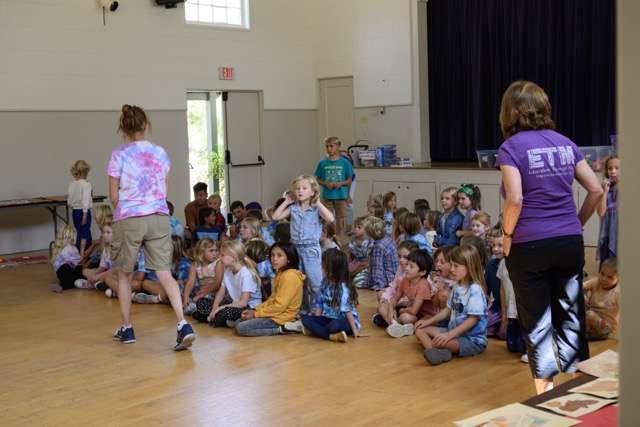
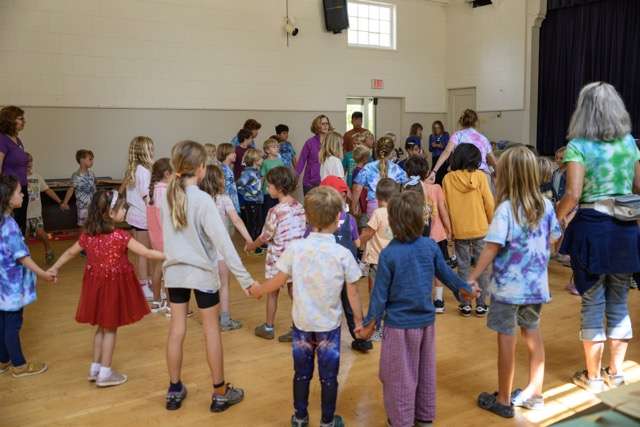
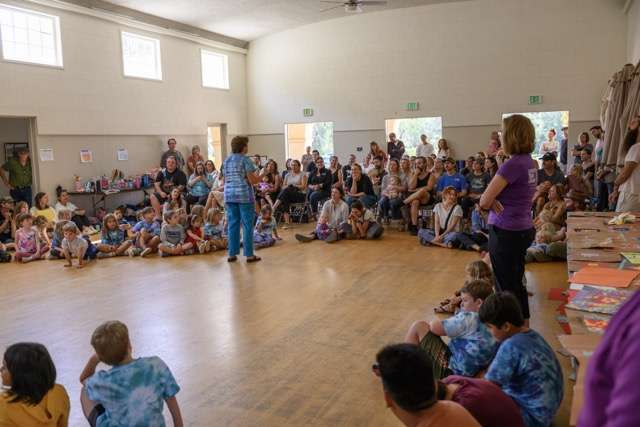
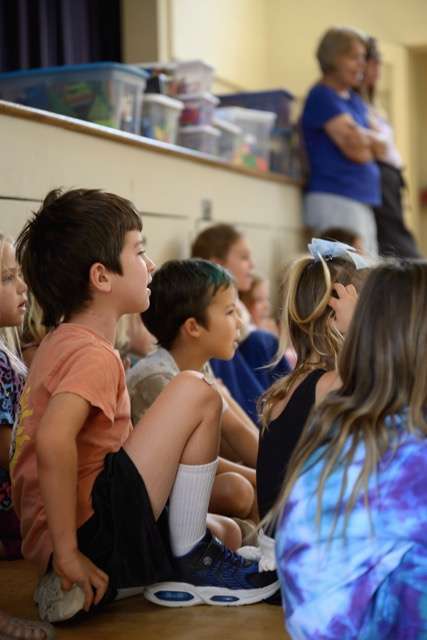
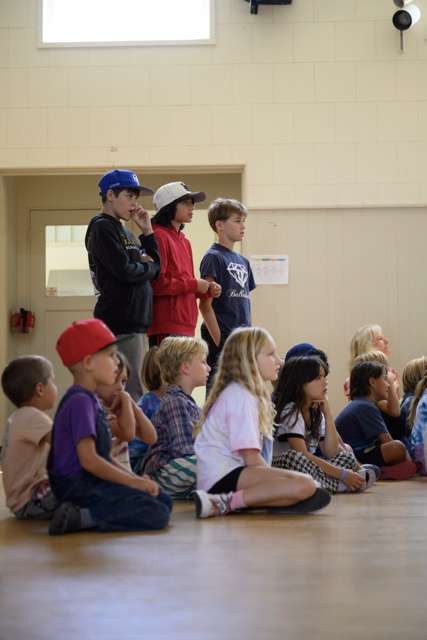
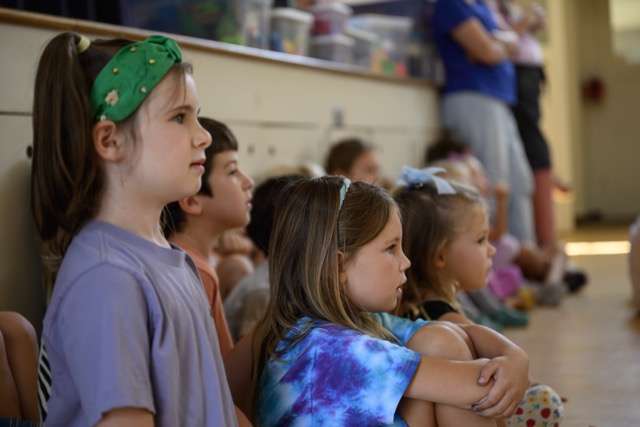
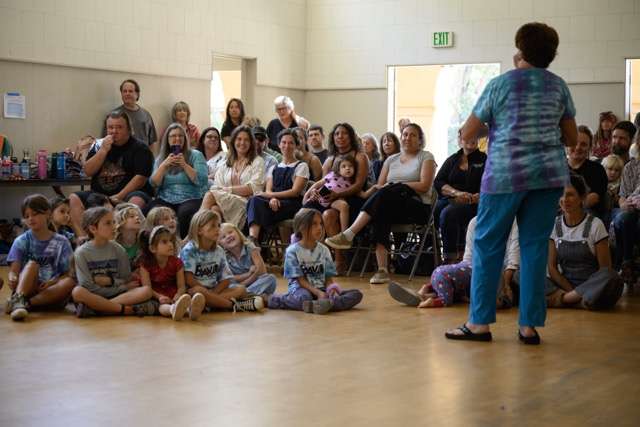
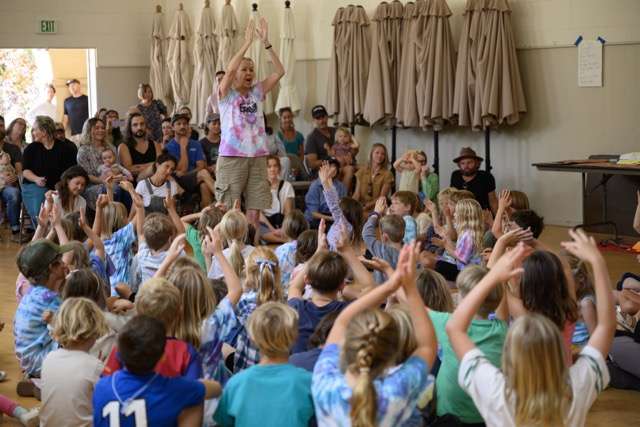
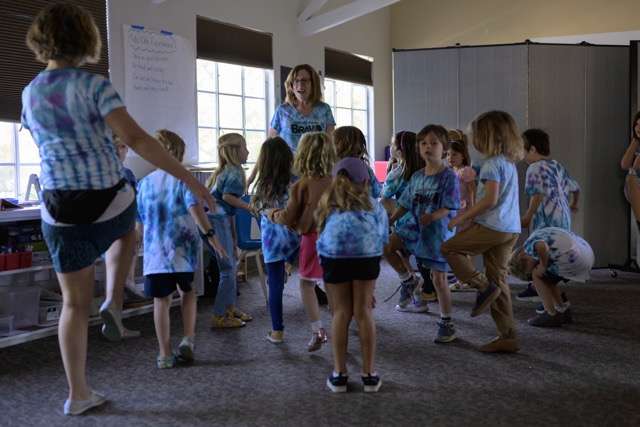
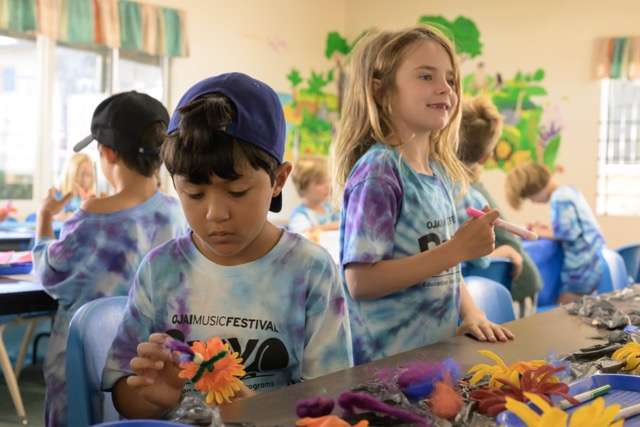
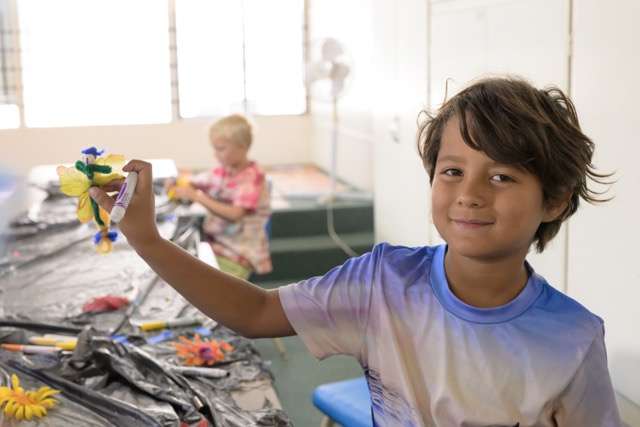
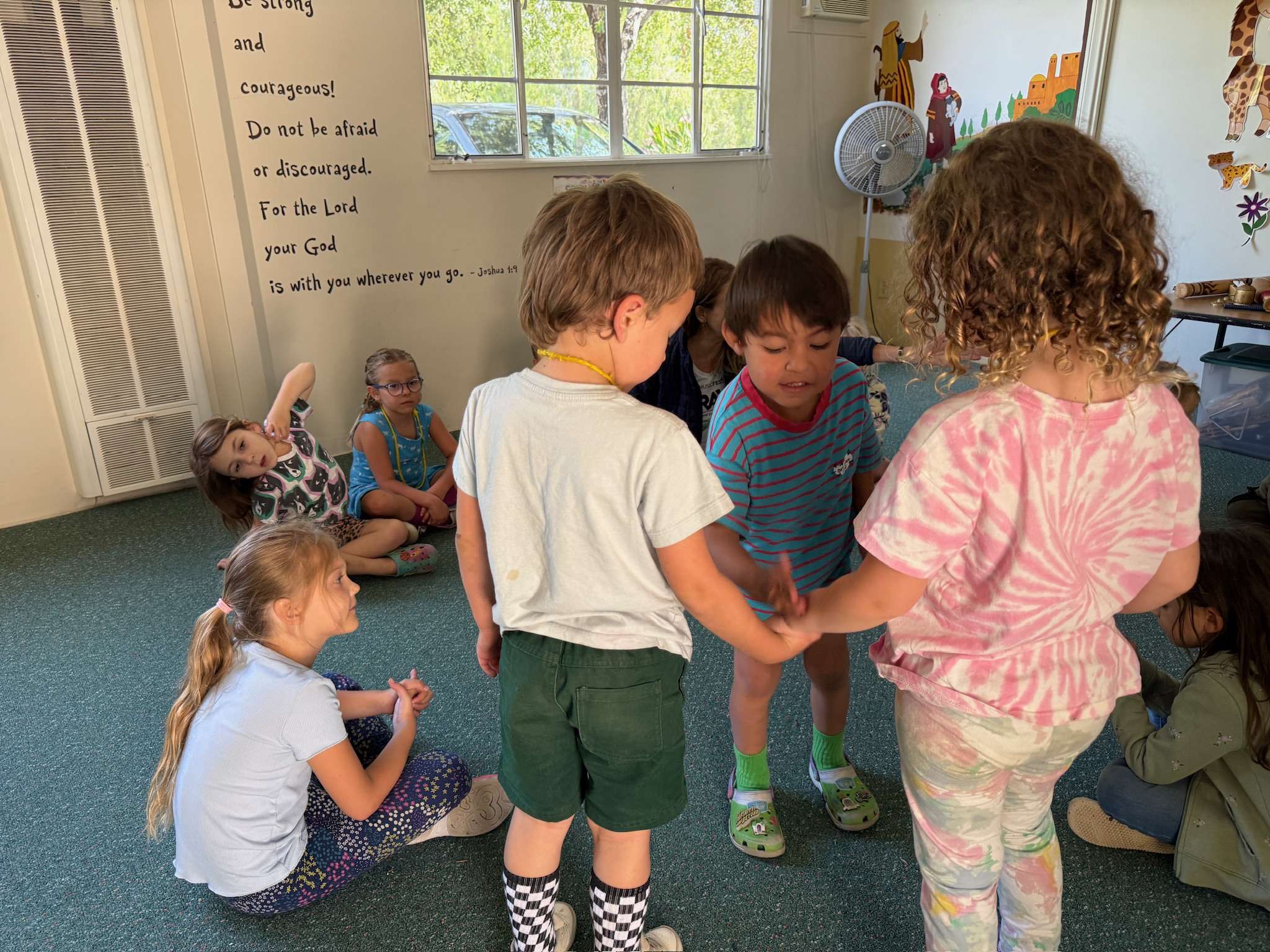
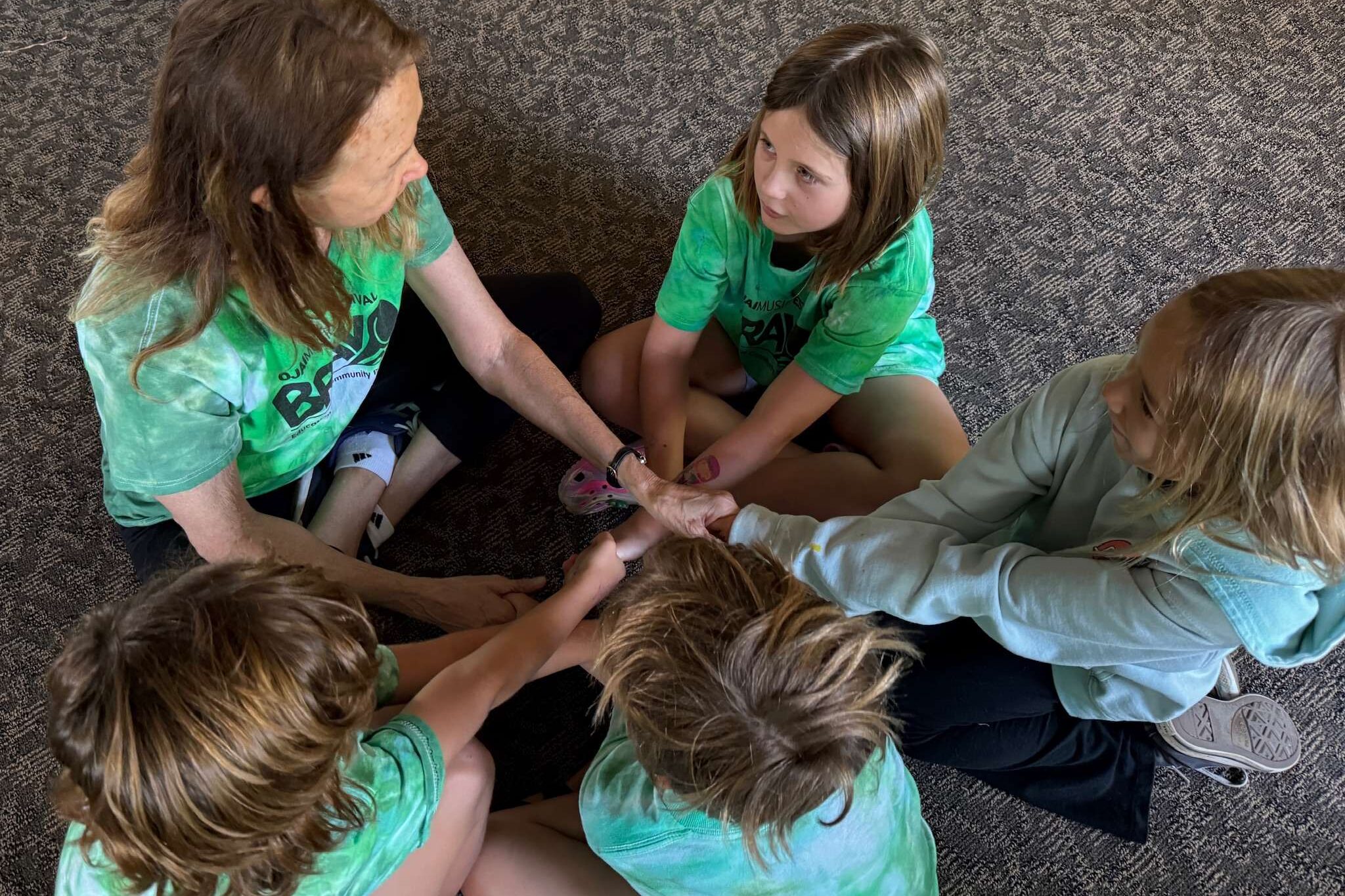
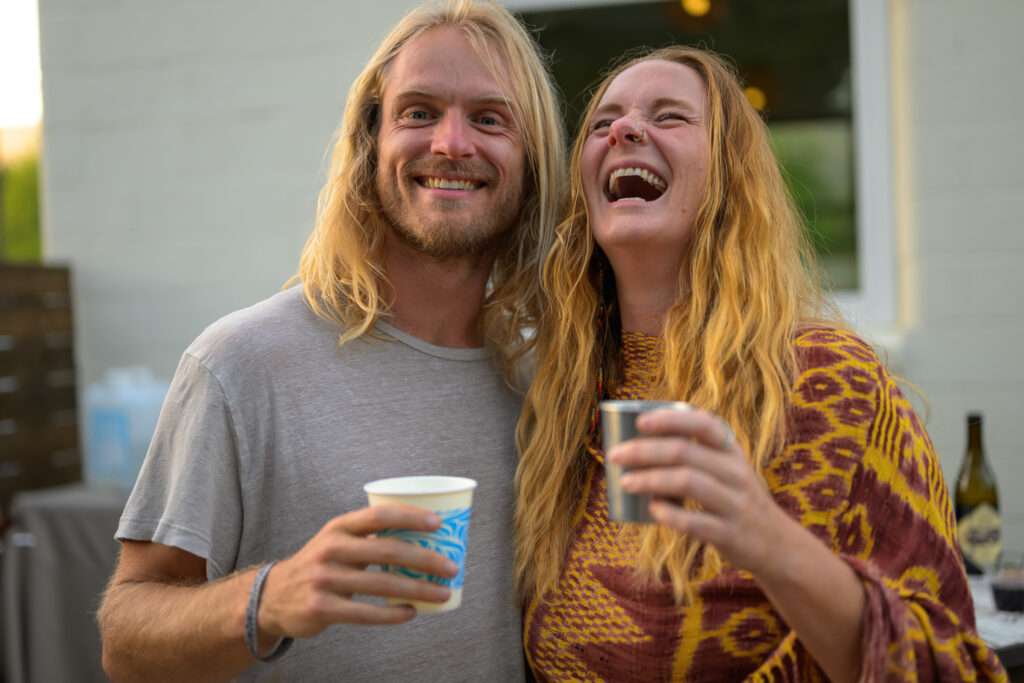
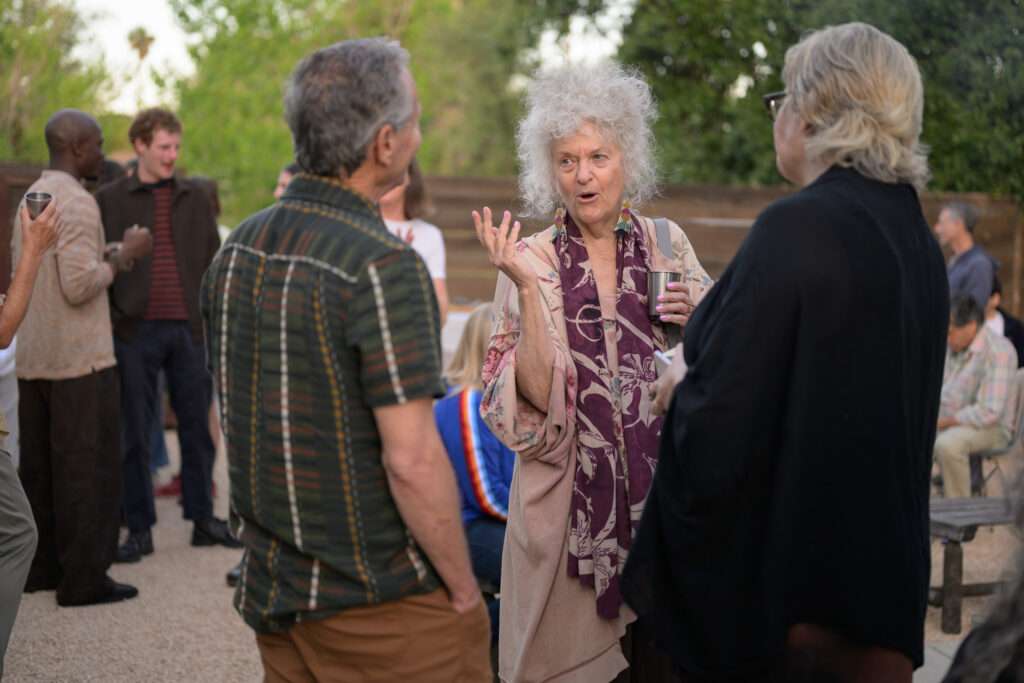
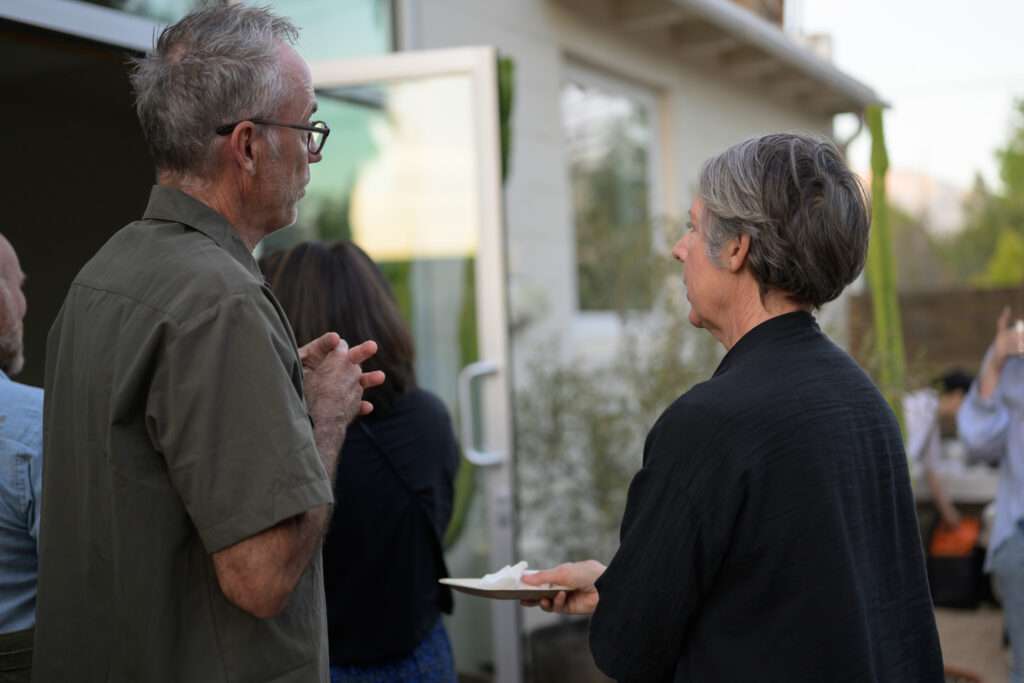
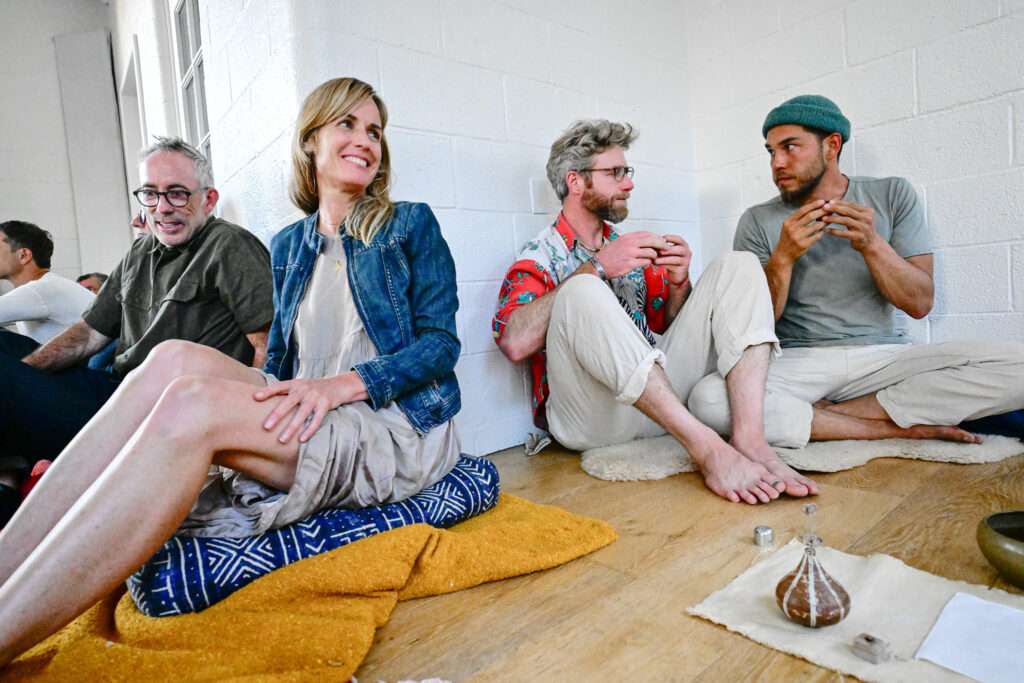
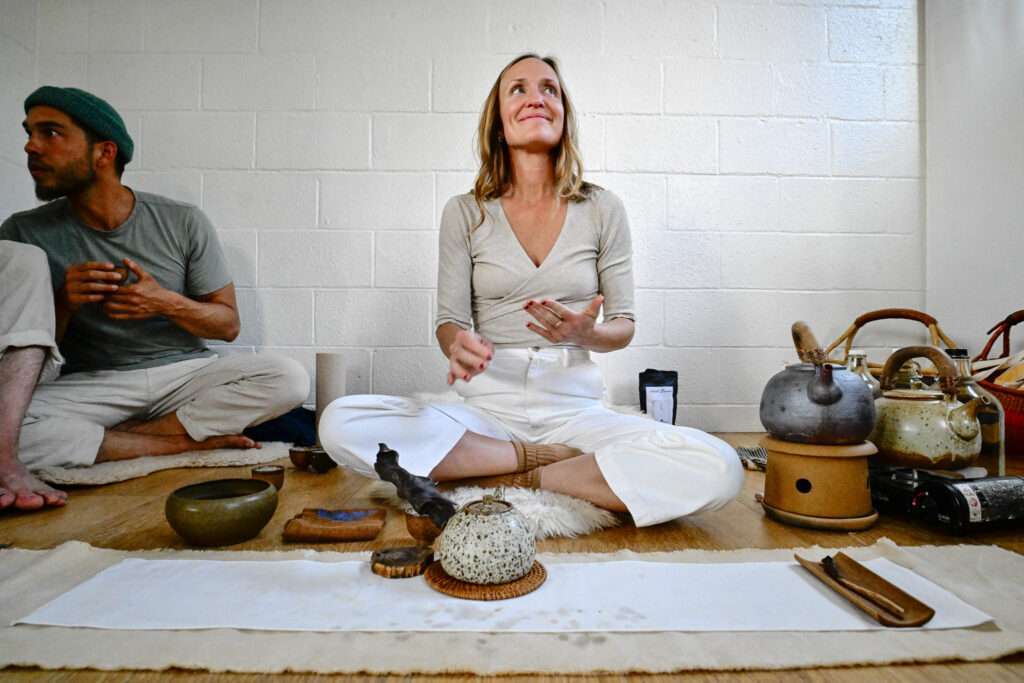
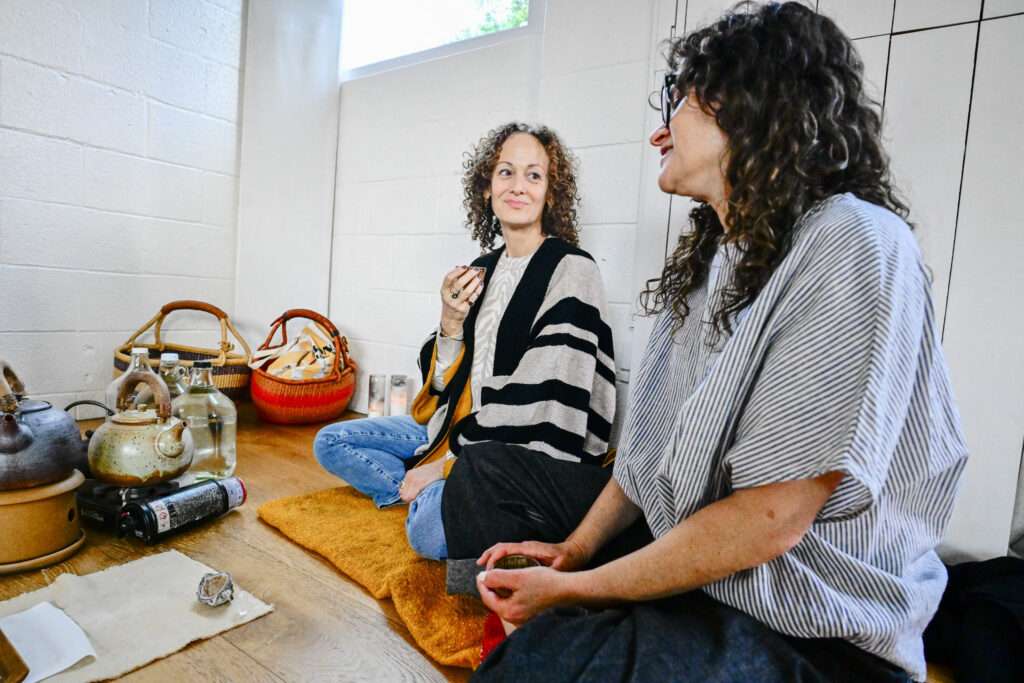
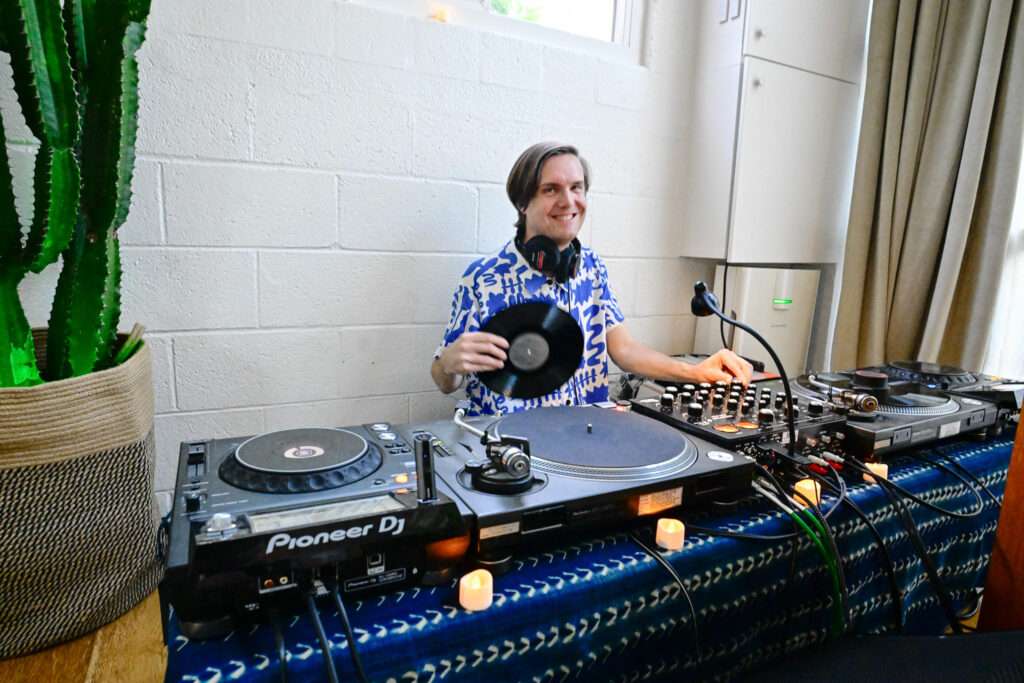
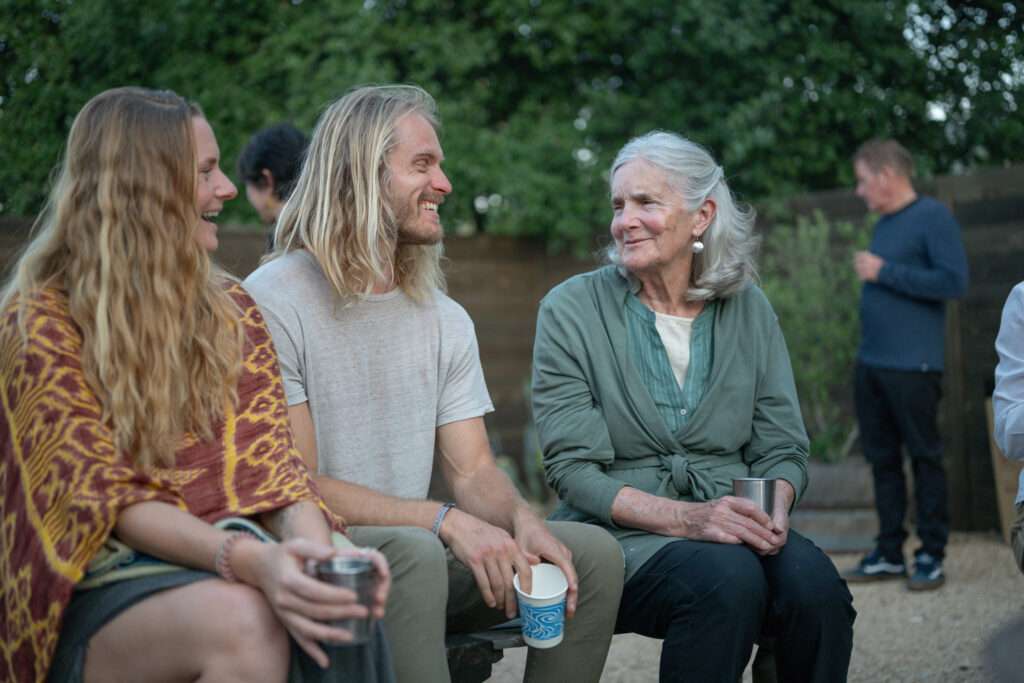
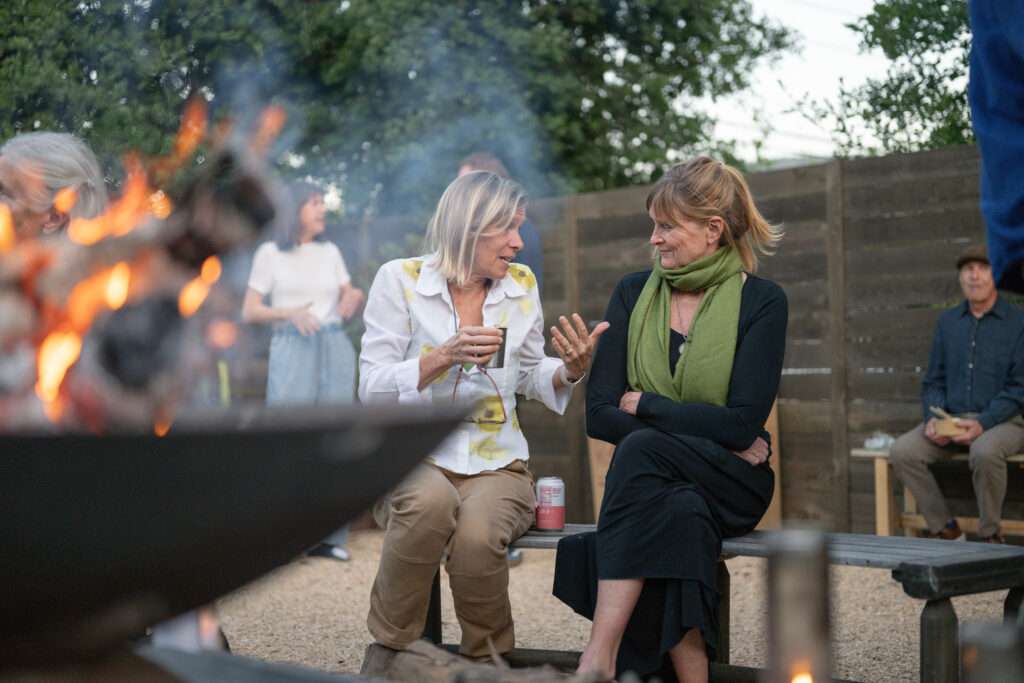
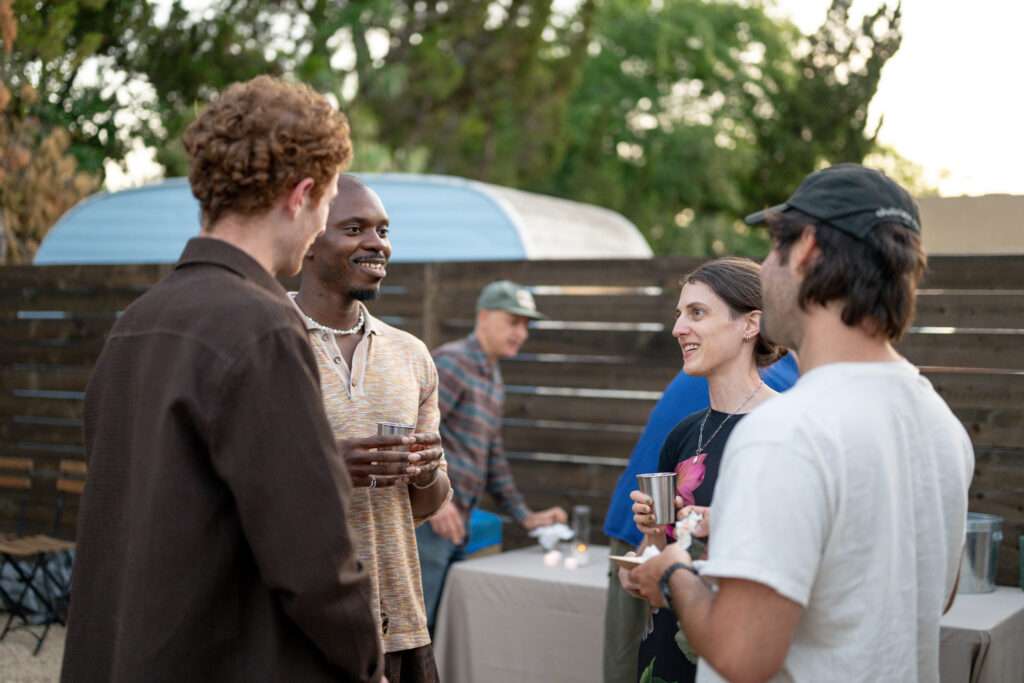
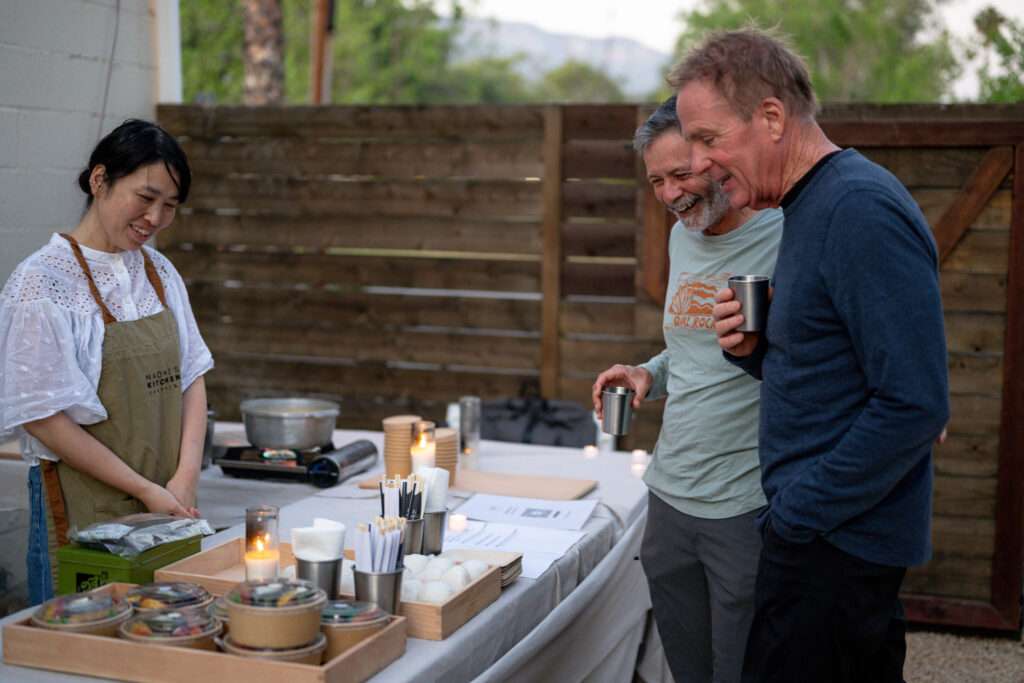
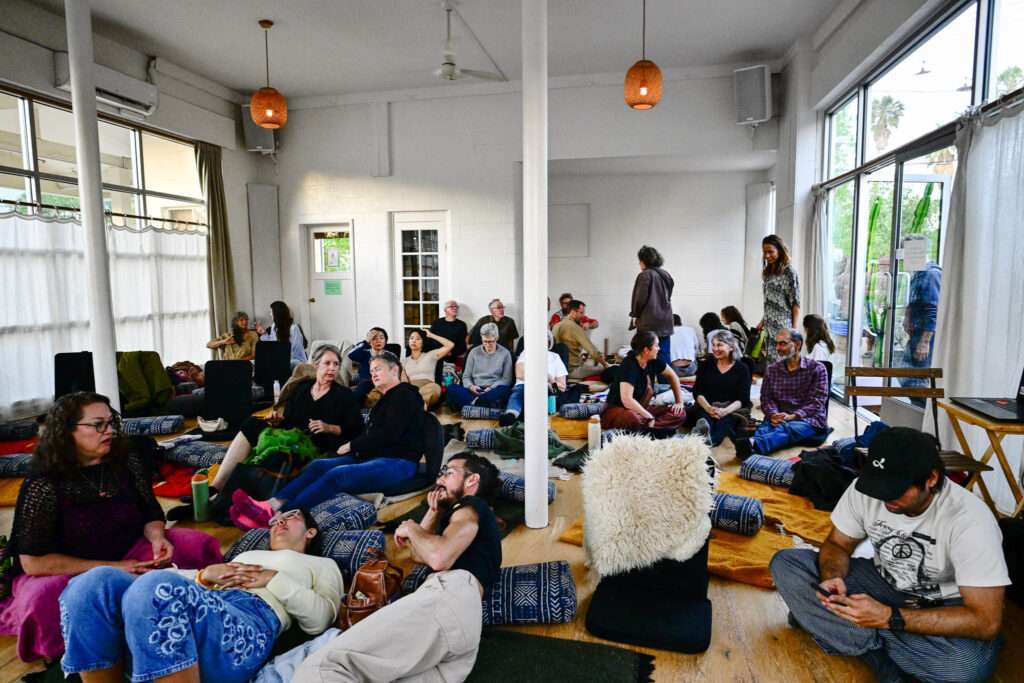
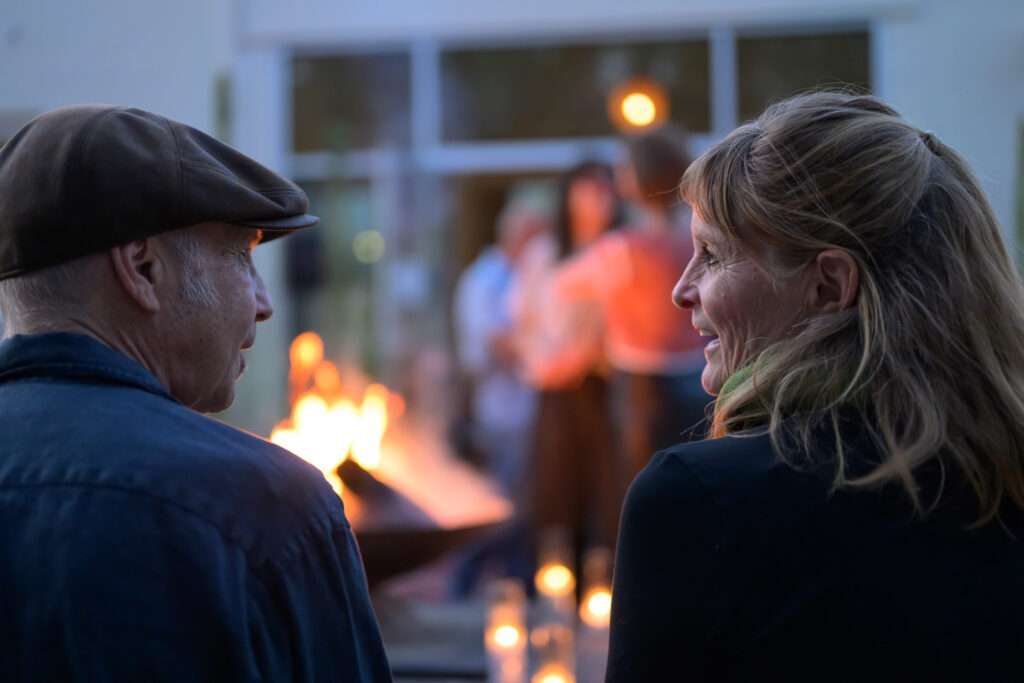
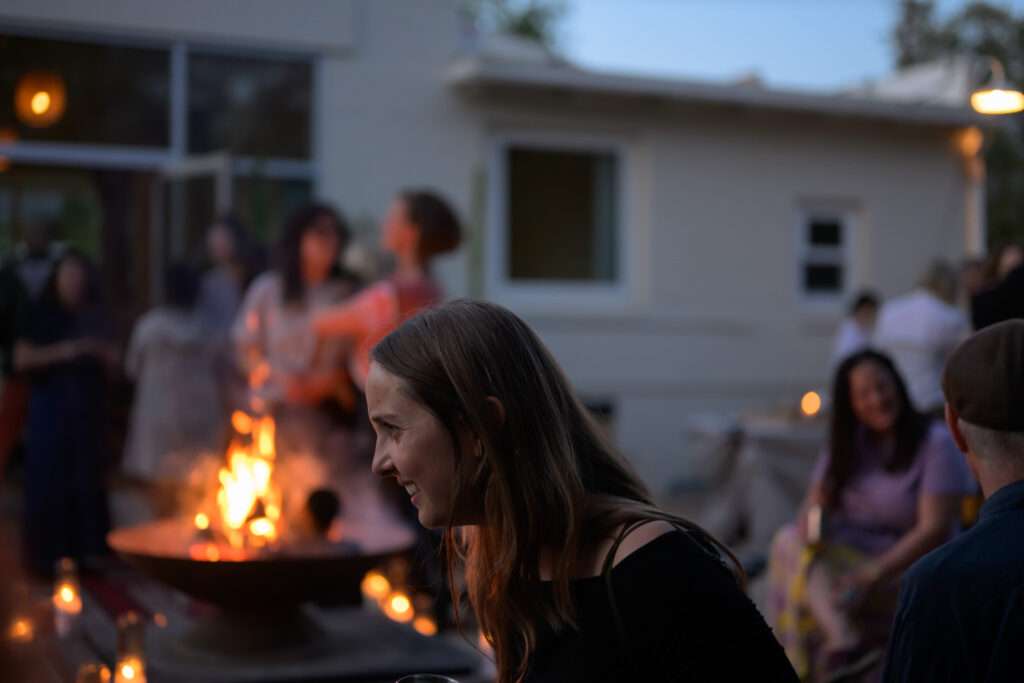
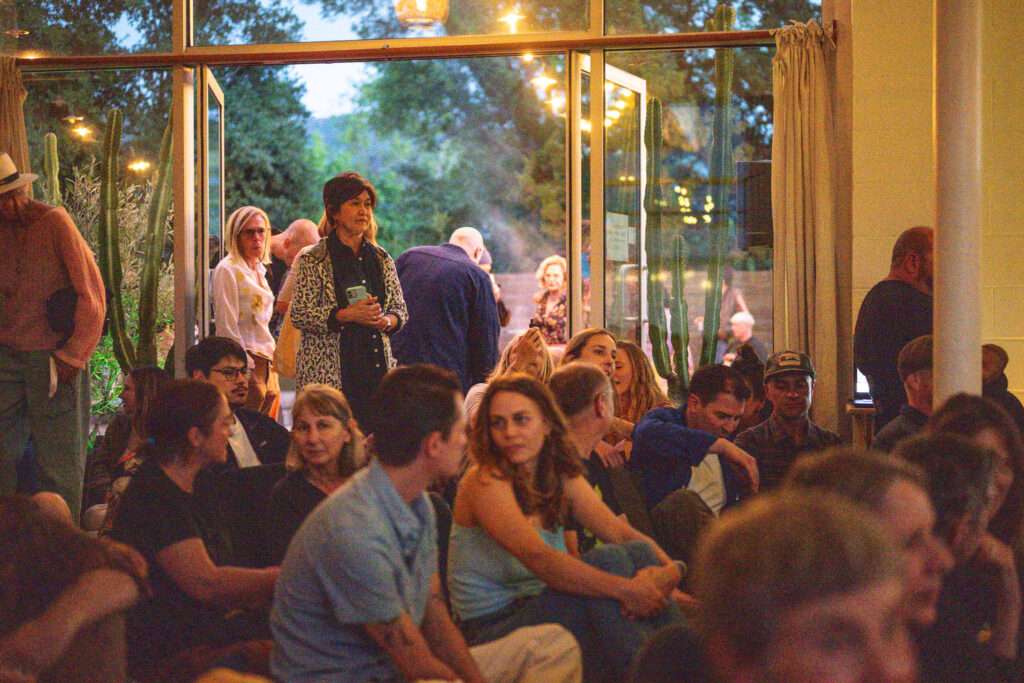
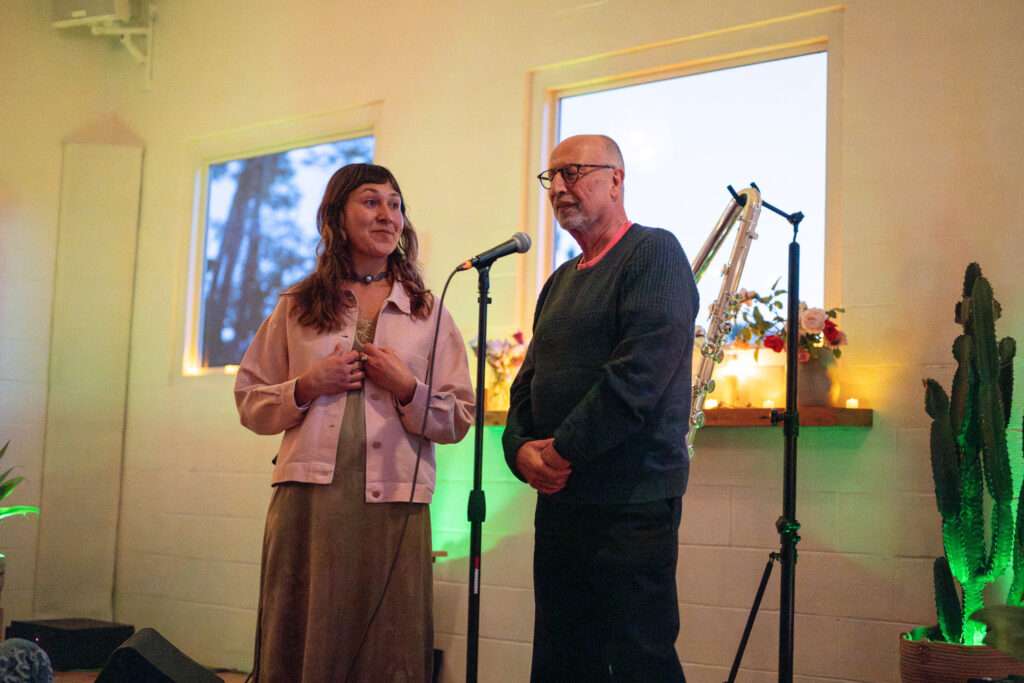
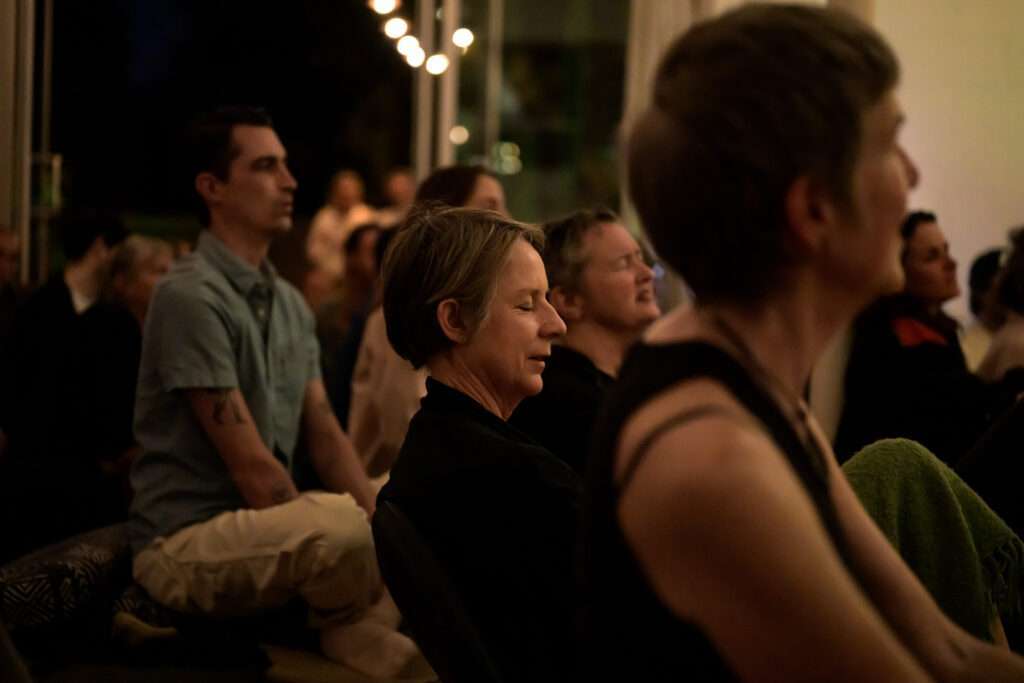
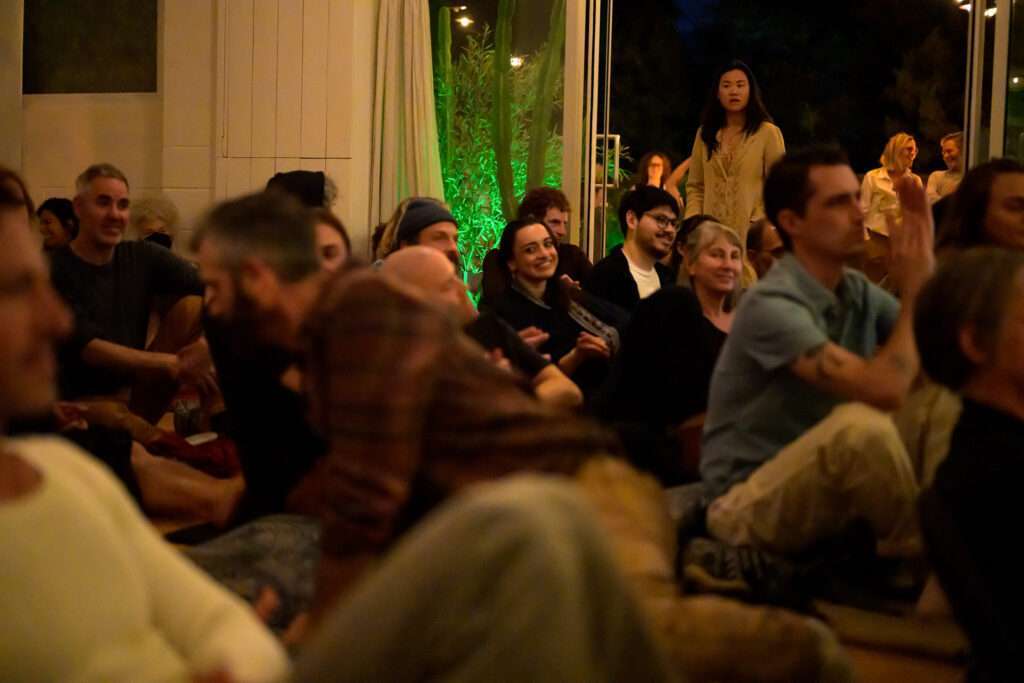
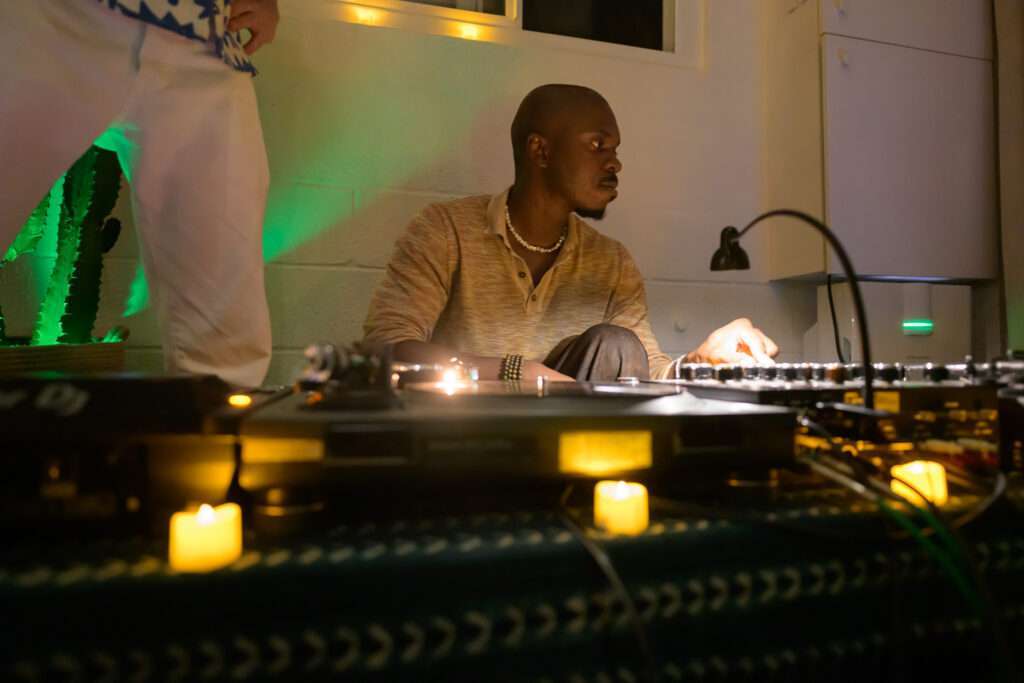
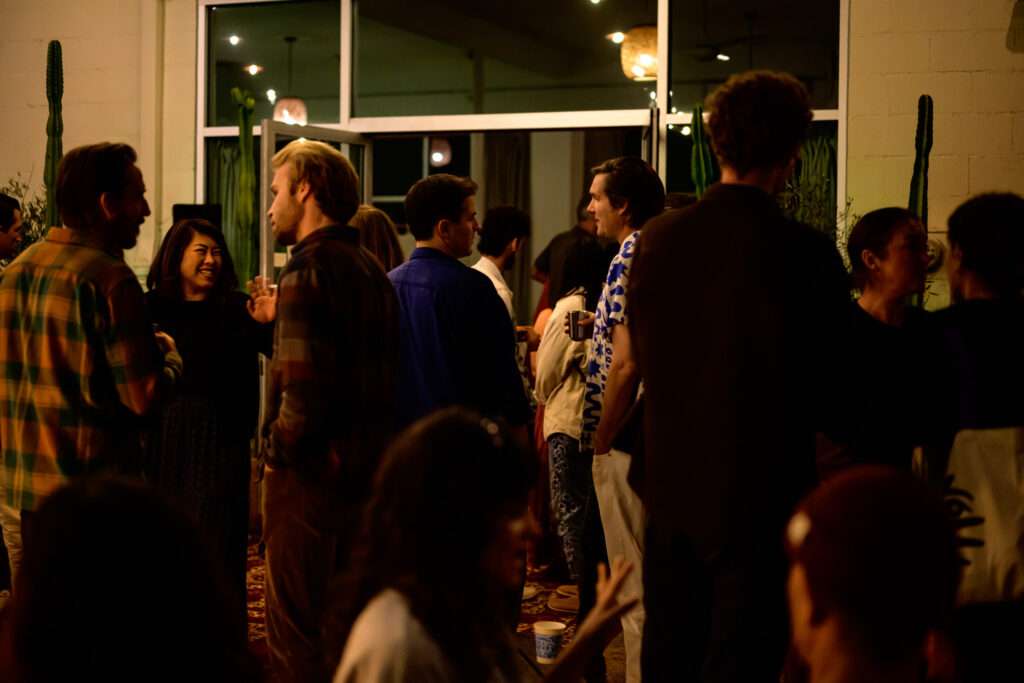
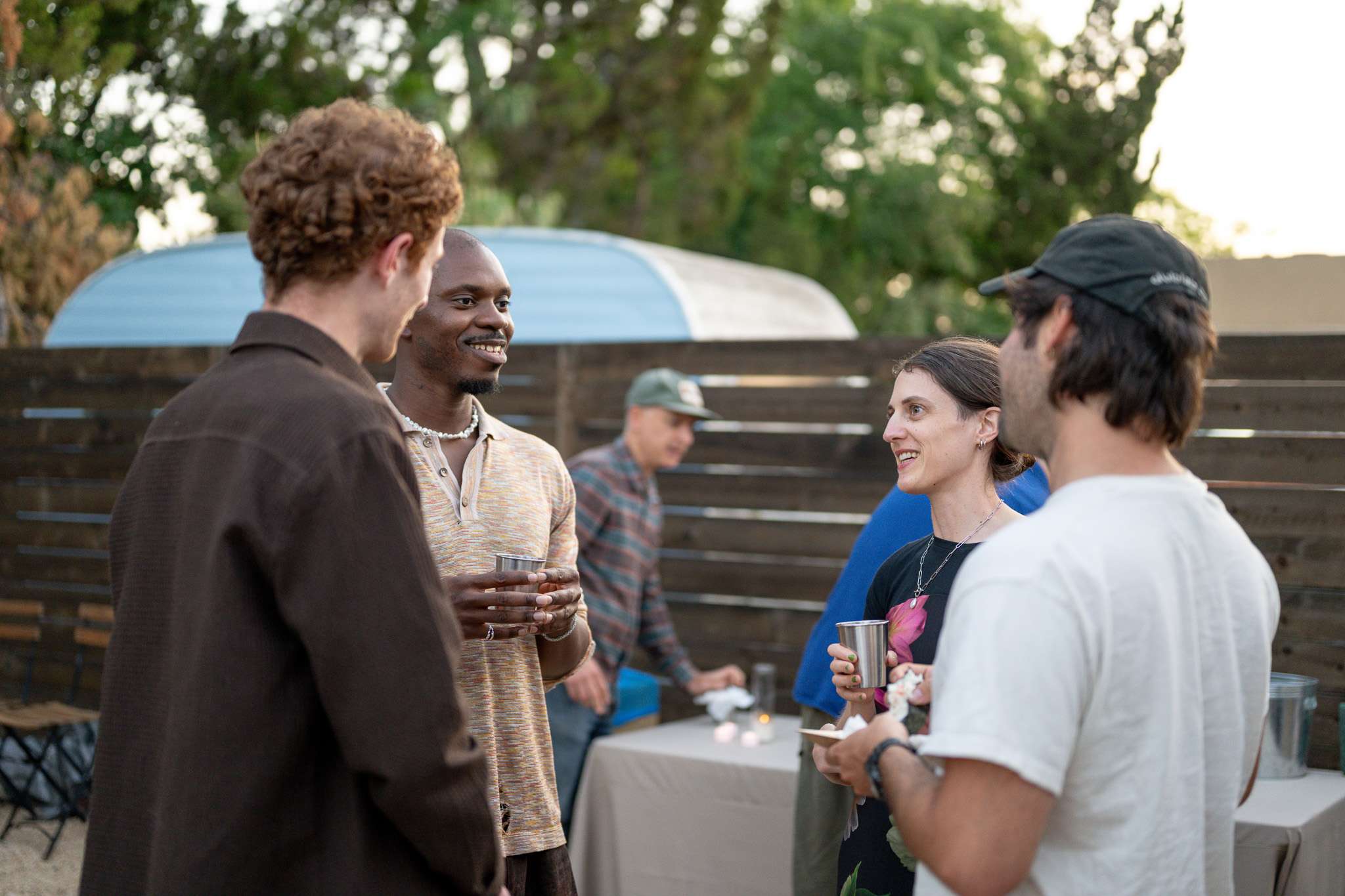
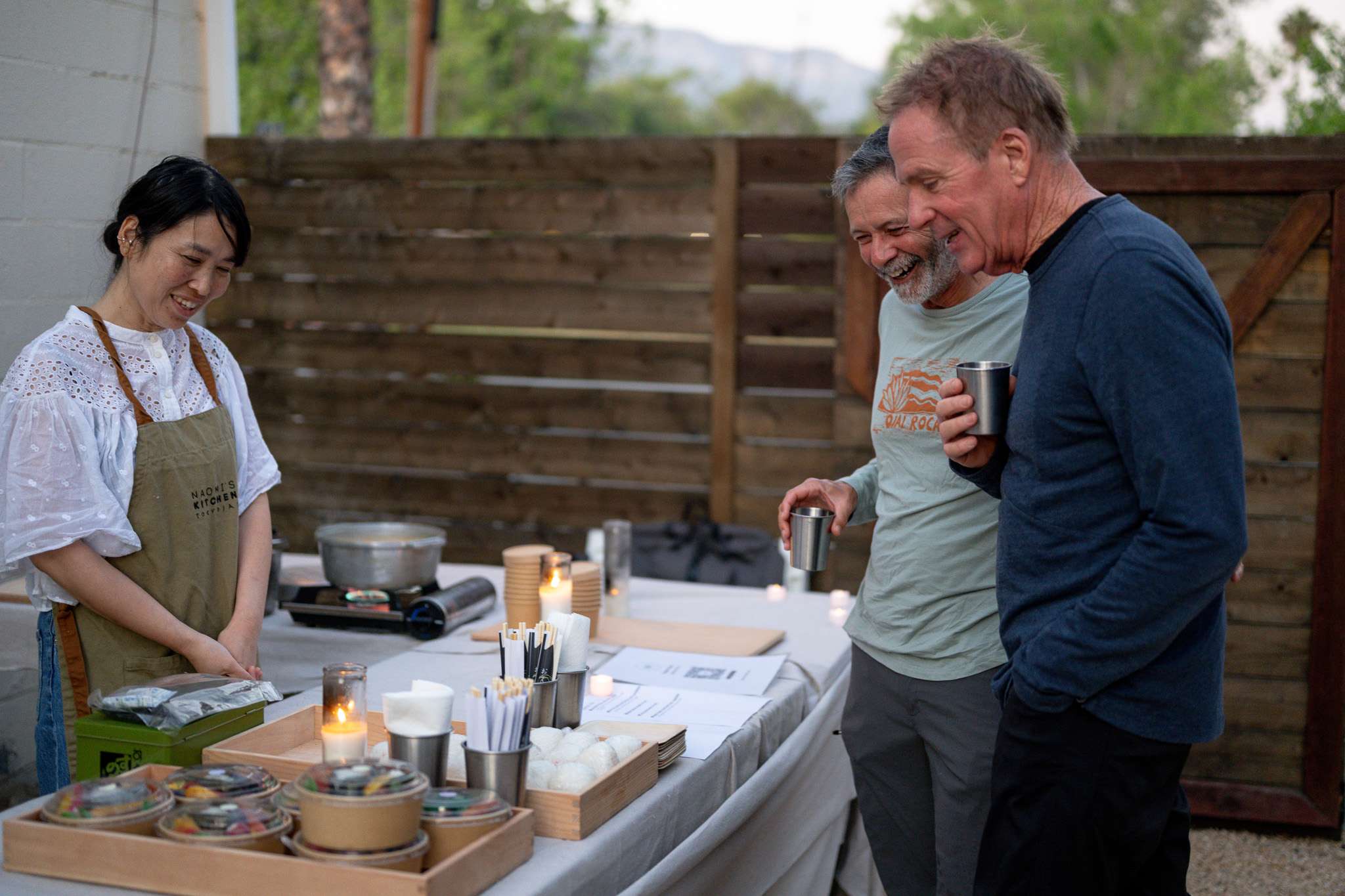
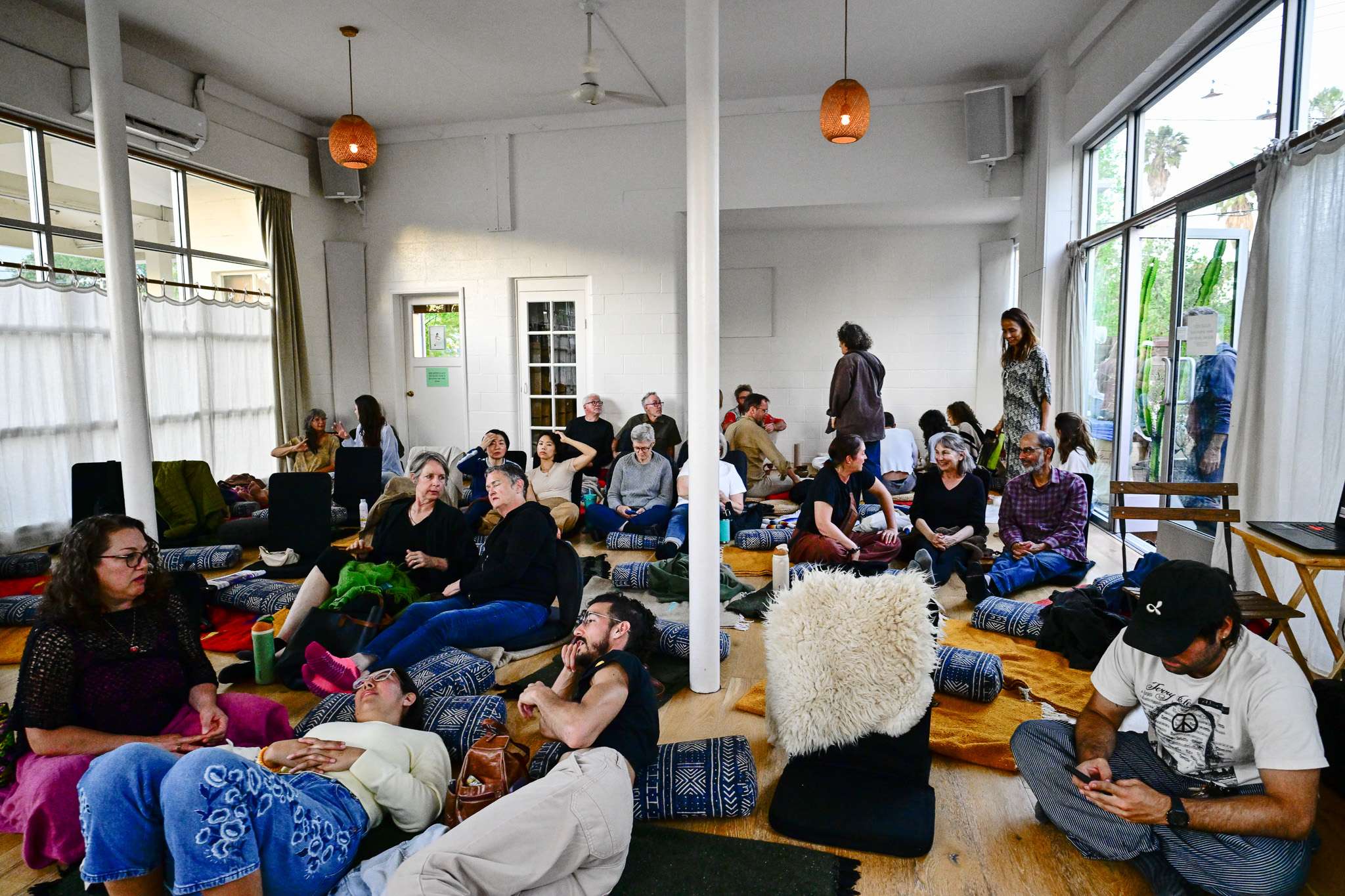
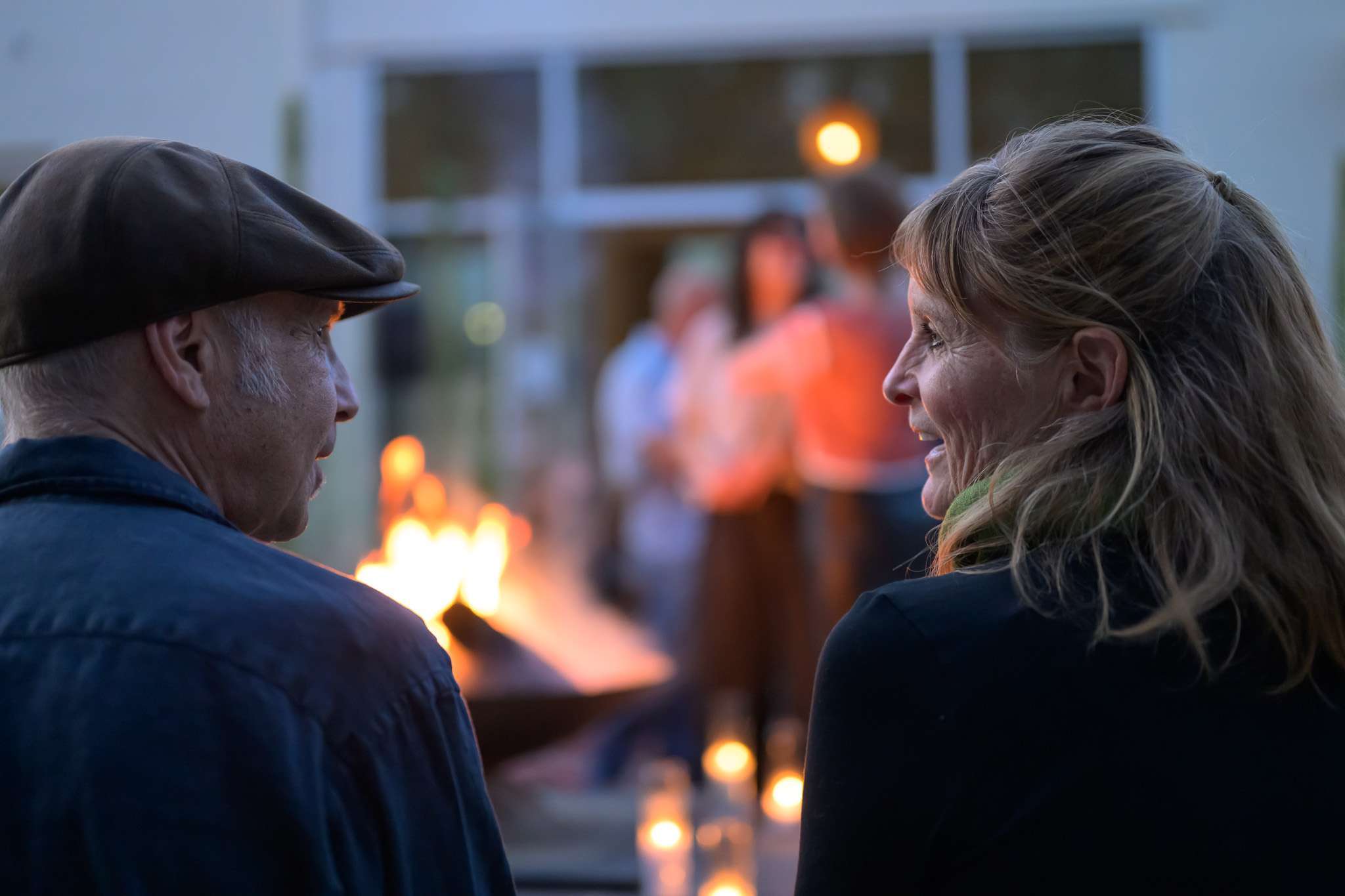
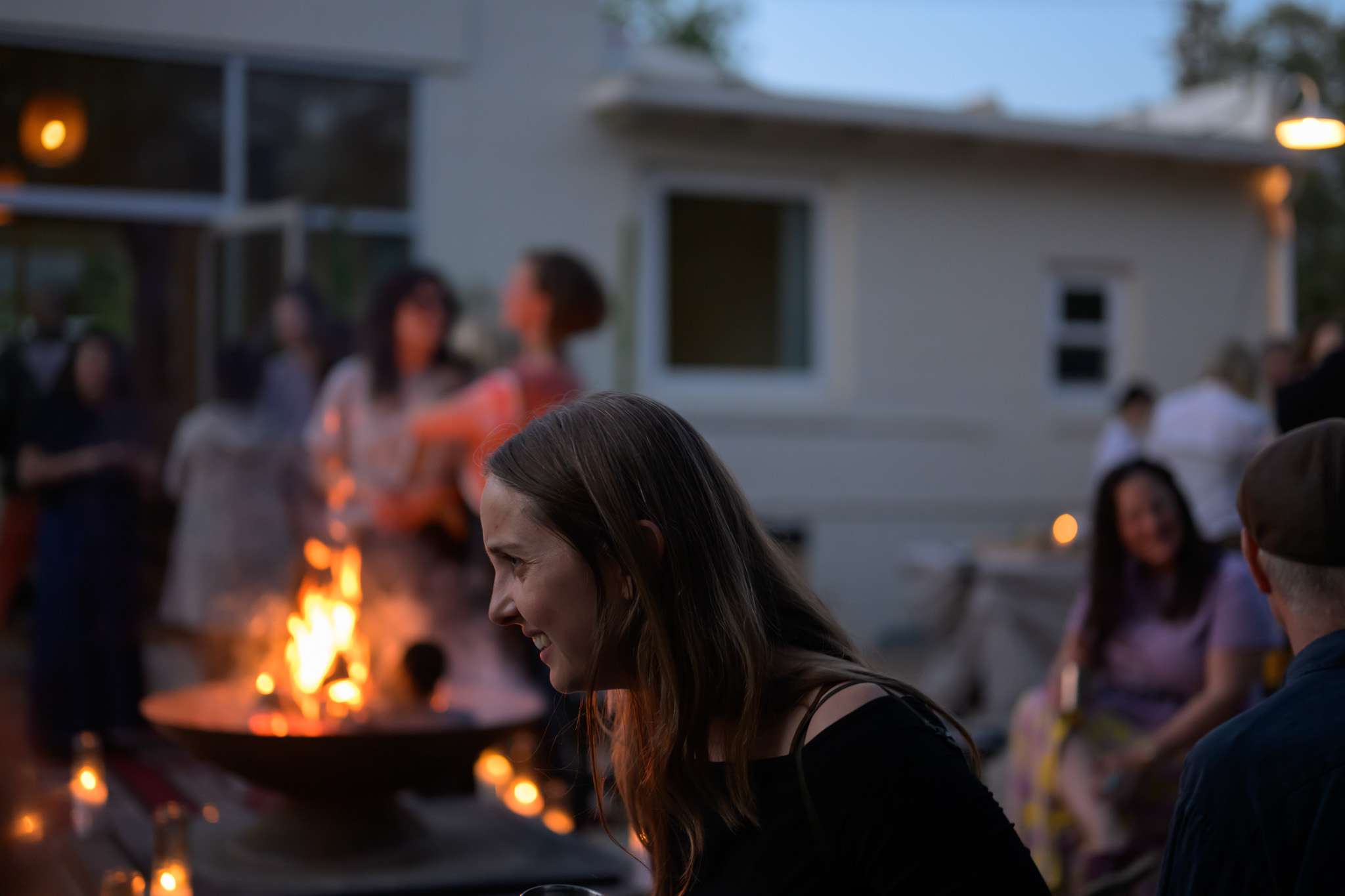
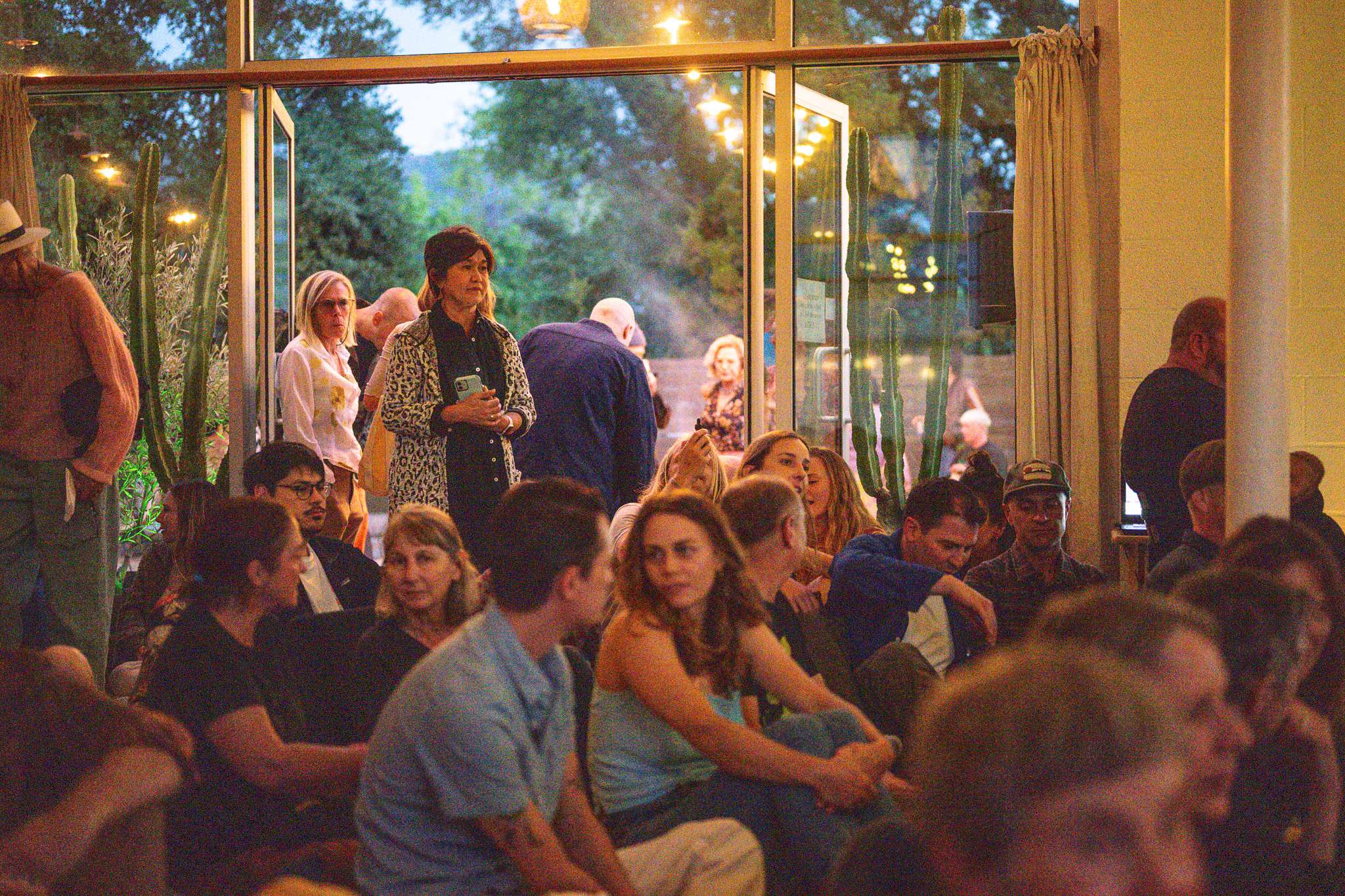
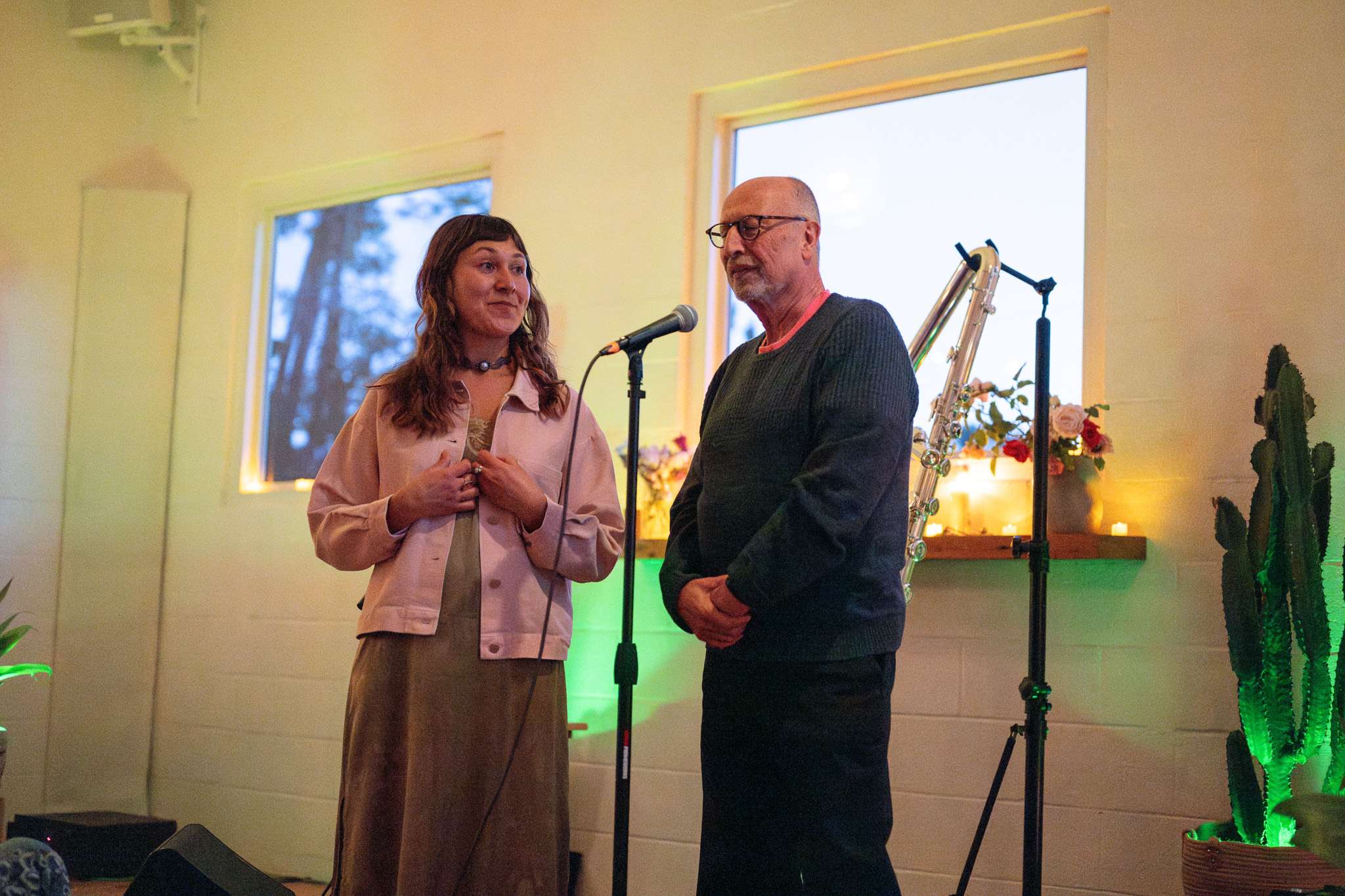
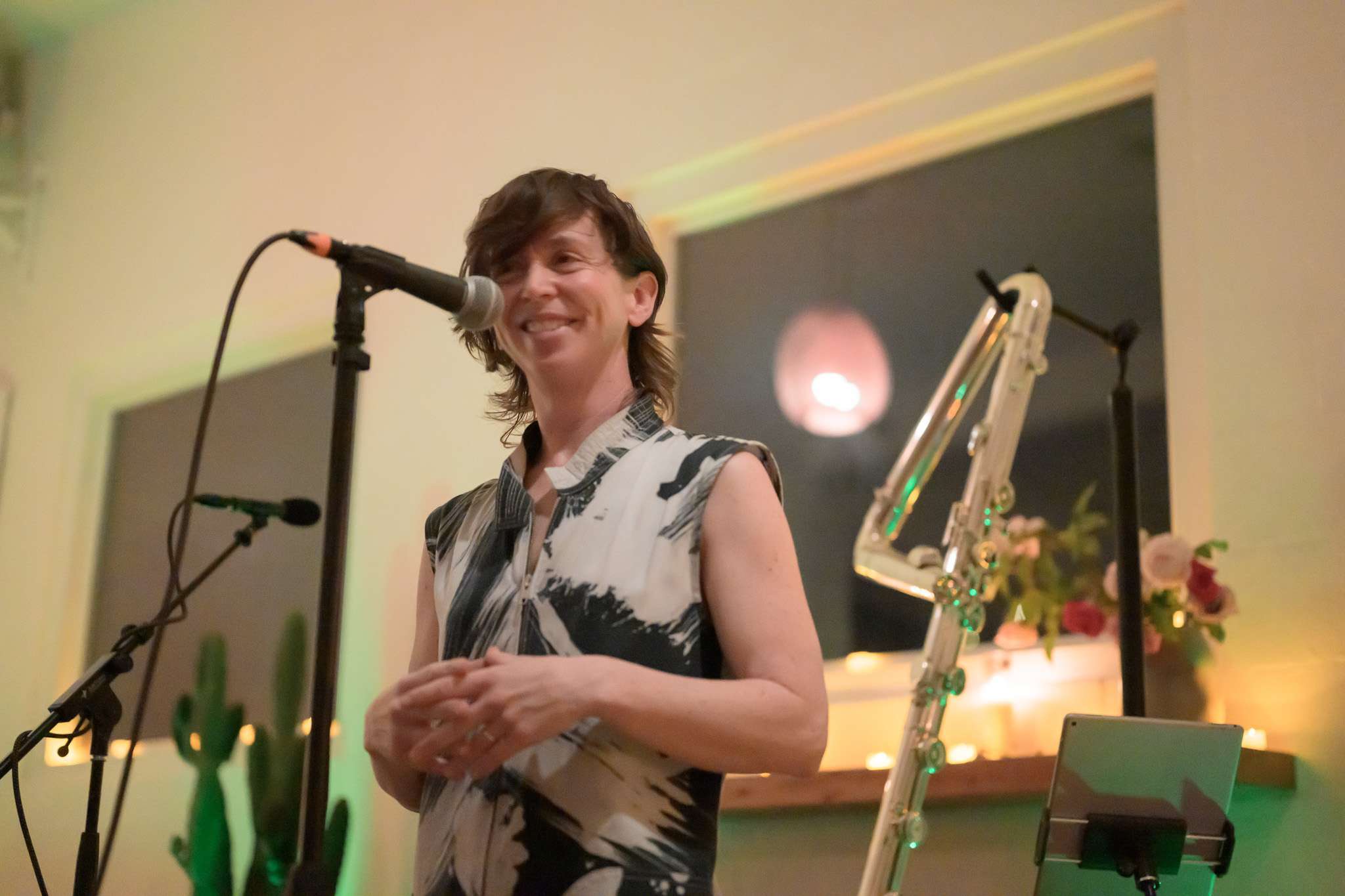
“As an intern for the Ojai Music Festival, you become a messenger for the organization’s purpose: to dare the audience to be innovative listeners of new music. The office staff and other interns become your mentors and family for the duration of your internship experience. Working with like-minded people creates the perfect atmosphere for discussion and pushes you to be your best creative self.”
Emily Persinko, San Diego State University, Ojai Alum 2016-2018
“I had an incredible experience as an intern and got a first-hand look at what life as a stage manager and concert producer is like, and knew exactly what I wanted to do as a career! Shortly after the internship, using the skills I gained and my experience working with high-level artists, I secured several professional stage managing and artist liaison gigs in Santa Barbara. After graduating, I secured a position at Pacific Symphony in Irvine, CA, working as a production manager in their Youth Ensembles program. I am also grateful to have returned to Ojai every year since as a permanent member of the production team! The skills I picked up from my time at Ojai have been a huge influence on my professional career and I am forever grateful for that opportunity!”
Jonathan Bergeron, University of California Santa Barbara, Production Fellow 2021
“If you want to grow your interpersonal skills, understand the music industry, and learn more about contemporary music, this is a really great experience.”
“Traveling from the other side of the country, I had no idea what to expect when I arrived in Ojai. My expectations were far exceeded as I was welcomed by the kindest and most embracing community, one that puts music and the arts at the very center of their lives. In just two short weeks, I made friendships that I know will last a lifetime, all while growing my skills in ways that will stay with me as I begin my career. Beyond the festival, Ojai taught me so much about connection, community, and myself, and I look forward to the day I can come back.“
Christian Galoppe, Kennesaw State University, Intern Alum, 2025
“It is exciting to see modern music and a large audience interested in new things. I enjoyed hearing such versatile musicians. Nice balance of density of events. I learned so much!”
“The Ojai Music Festival was an amazing experience. I met great people, listened to fabulous music, and learned about the ins and outs of putting on a music festival. Having a team of interns to hang out with throughout the days was a bonus highlight of my experience. All of the people working with OMF were kindhearted and nice. This experience was extremely rewarding. I learned a lot while I interned at the Ojai Music Festival and can’t wait for next year!!”
Lizzy Tepaske, University of California Santa Barbara, Ojai Alum 2021
Begin your Ojai Music Festival experience with the following helpful links. If you have any questions, please contact us at [email protected]. And make sure you sign up for timely newsletters to get the most updated news on programs, events, and more.
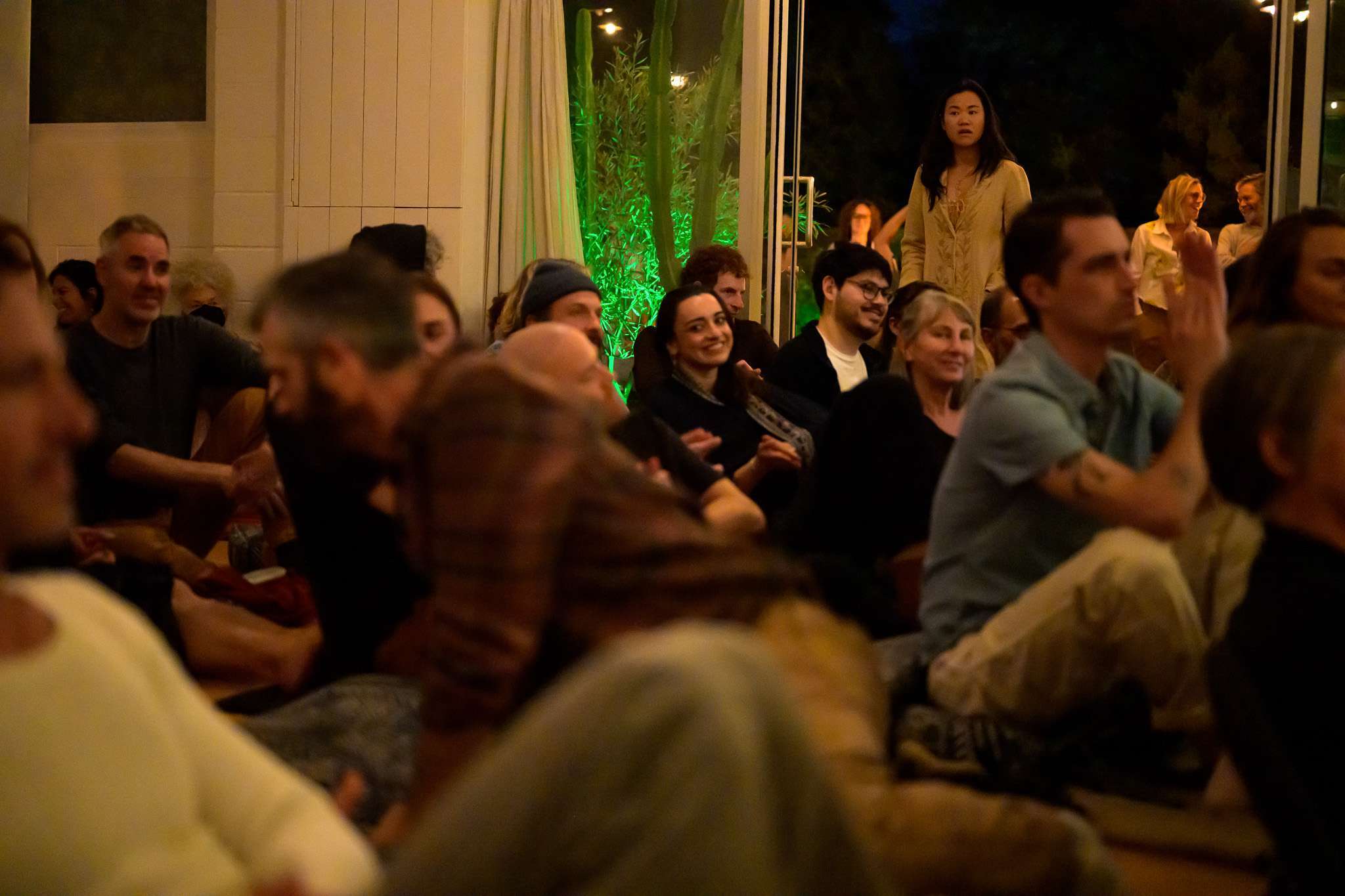
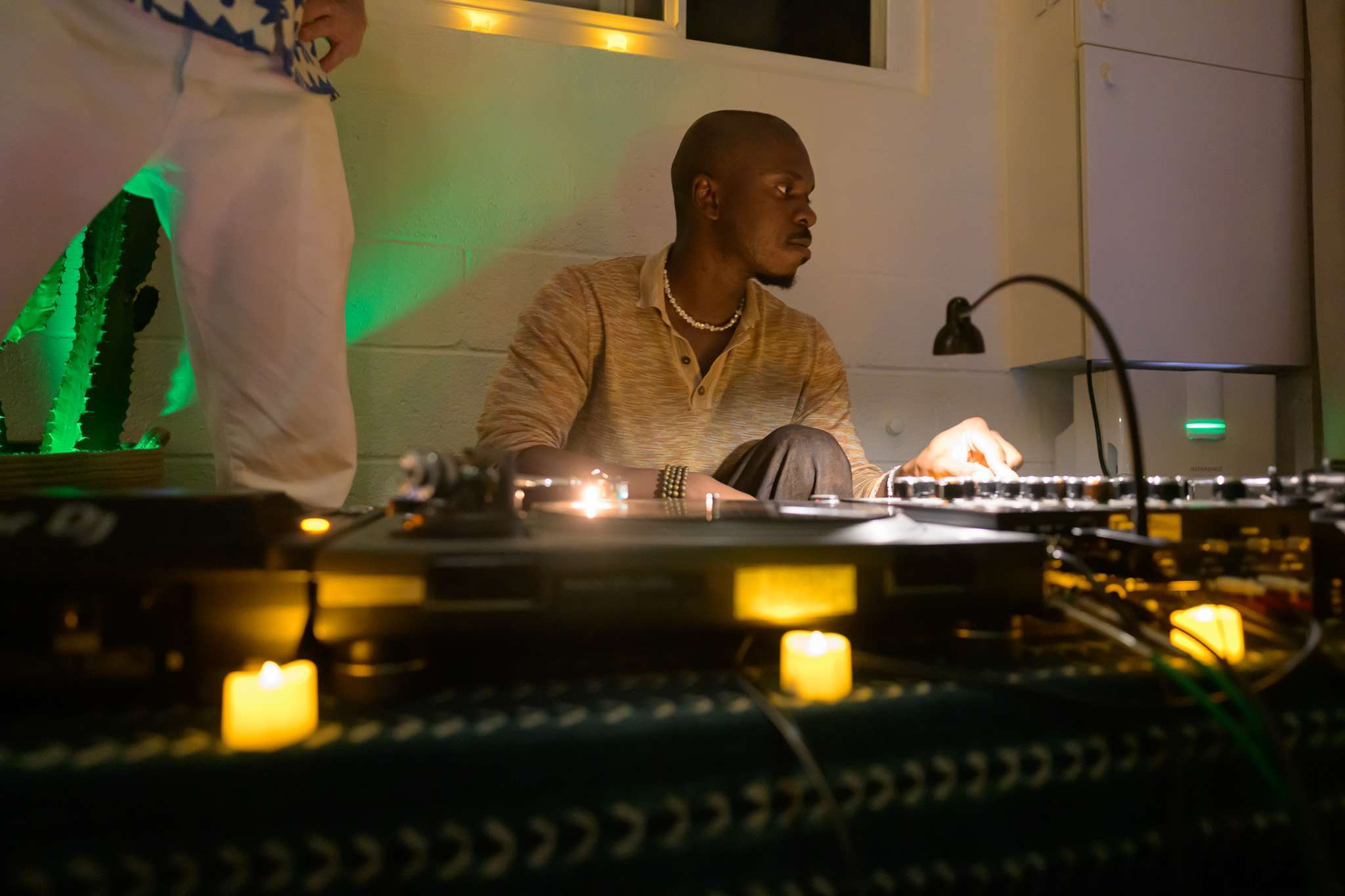
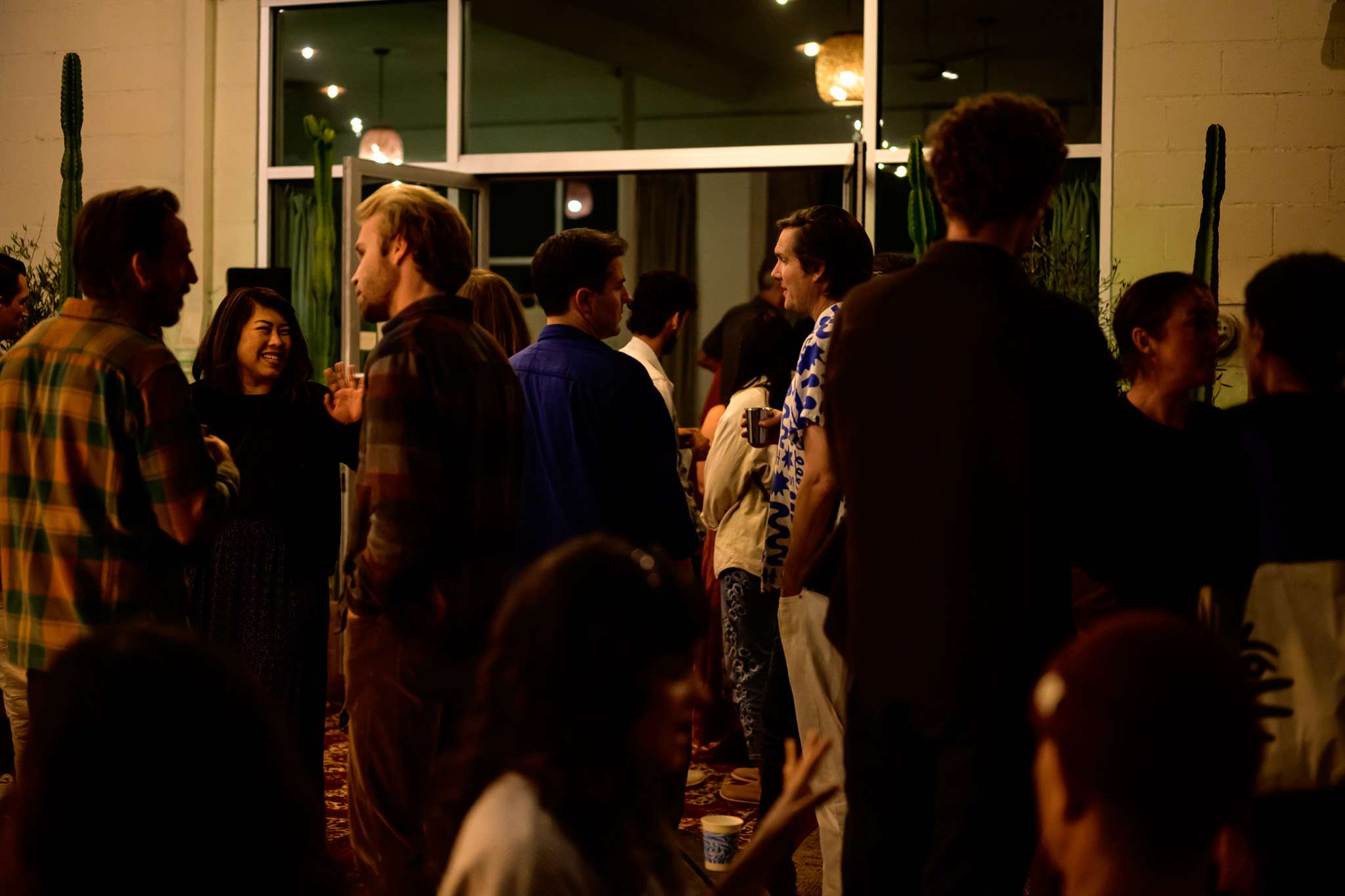
Ojai Music Festival and Black Barn Sessions present Sound Unseen, a unique musical experience where the visual element of the performance is removed, and the audience is enveloped in sound as the music fills the space and surrounds the listeners. Featuring a new work by Mattie Barbier, created expressly for this event and played by members of the stellar new music collective Wild Up. Creative concept by Chris Hacker and Will Thomas of Black Barn Sessions.
Sound Unseen is part of the Ojai Music Festival’s Creative Lab series. Special thanks to the City of Ojai and Arts Commission for helping fund this initiative.
Swing into love this February with the Ojai Music Festival Friends and a live big band! Join us for dancing, gourmet bites, and more at this fundraiser for the Ojai Music Festival and its BRAVO education and community outreach programs. The event will be held at the Mariposa Ballroom at the beautifully restored historical setting of Hotel El Roblar.
The Festival will present the Ojai debut of Tesserae Baroque with Meera Kahe, a new work by Reena Esmail setting the Hindi texts of 16th-century saint-poet Mirabai. The ensemble—baroque violin, flute, cello, harpsichord—joins Hindustani vocalist Saili Oak and tabla player Rohit Panchakshari.
The program also features works from the French Baroque as well as a Hindustani vocal set by Saili Oak with tabla accompaniment, all in the magical setting of the Krotona Institute’s hilltop retreat.
Tickets available soon.
Hike & Hear
SUN 03.29.26 | 3PM Location TBA
It’s 5th Annual Hike and Hear, a beloved event held in partnership with the Ojai Valley Land Conservancy—more details to come this spring.
Thursday, February 12, 2026 | 7:30–10:00 PM El Roblar, Mariposa Ballroom
Join Ojai Music Festival Friends and Hotel El Roblar for a high-spirited night of live swing-era music, dancing, and celebration, all in honor of the Festival’s eight decades of music in our community.
A joyful fundraiser in support of the Ojai Music Festival and its BRAVO music education and community outreach programs.
Friends Member Ticket: A discounted rate for members of Ojai Music Festival Friends. Not a member? Become one here!
$175 – General Ticket
Includes entry and one drink ticket per person.
$200 – VIP Ticket
VIP Ticket Includes a 30-minute swing dance lesson with Cassidy Linder, plus special extras. More details to come.
Ticket prices are per individual
About the Band
With The Walt Johnson Sinatra Tribute Band, the golden age of swing comes alive in unforgettable performances. Led by the renowned trumpeter Walt Johnson—who played with Frank Sinatra himself—this tribute is more than a concert: it’s a step back in time.
VIP ticketholders are invited to enjoy an exclusive 30-minute swing dance tutorial with Cassidy Linder, co-owner and founder of the Ojai Underground. Cassidy is a highly skilled instructor and accomplished dancer, specializing in jazz improv tap. Arrive early and get your feet moving to the beat before the evening begins—more details coming soon!
35+ hours of music in four days 14 premieres, including World and West Coast premieres 10 free community offerings 7 composers-in-residence
Our BRAVO Music Education and Community Programs stayed present in the schools and community!
560 hours in 57 classrooms by professional musicians/educators 3,500 public school children served 1,207 workshops in the public schools 30 different types of instruments presented to students with Music Van 140 kids and teens participated in Summer Camps, with 16% of them attending on scholarship
Play Forward 2026
6 months to go in the countdown to the 80th Festival with Esa-Pekka Salonen 4 days of performances, add-ons, films, and free community offerings 80 musicians animating 20 concerts in Libbey Bowl and beyond
Each June, the Ojai Music Festival transforms the verdant Ojai Valley into a world-renowned gathering for boundary-pushing music, visionary artists, and open-eared listeners. Each year, we welcome bold creators like 2025 Music Director Claire Chase and 2026’s Esa-Pekka Salonen, who challenge convention and reimagine what a festival can be.
This all happens because of you.
As an audience-supported nonprofit, 25% of our annual costs are covered by ticket sales. Your donation makes everything possible, from exhilarating performances in Libbey Bowl to free community events around Ojai, free educational outreach for students and seniors, and global access through streamed concerts and year-round content. Every gift sustains this extraordinary tradition.
As you are considering making your year-end gift, we hope you will help shape the next unforgettable chapter of the Ojai Music Festival.
When: WED 01.21.26 | 7PM Where: Zipper Hall, Colburn School | 200 South Grand Ave, Los Angeles
Free, tickets required
On the occasion of the Ojai Music Festival’s 80th Festival in June, join us for an exclusive conversation with 2026 Music Director Esa-Pekka Salonen and longtime Los Angeles Times critic Mark Swed, moderated by Ojai’s Artistic and Executive Director Ara Guzelimian. Together, they will reflect on the unique history of the Ojai Festival and preview the upcoming 2026 Festival, which will also showcase the Ojai debut of the Colburn Orchestra.
When: SAT 01.31.26 | 6PM to 9PM Where: Red Canteen, 703 El Paseo Road
Ojai Music Festival and Black Barn Sessions present Sound Unseen, a unique musical experience where the visual element of the performance is removed, and the audience is enveloped in sound as the music fills the space and surrounds the listeners. Featuring a new work by Mattie Barbier, created expressly for this event and played by members of the stellar new music collective Wild Up. Creative concept by Will Thomas and Chris Hacker.
How it will work: There will be four sessions starting at 6PM for attendees to select from, each being a total of 45 minutes in length. GA seating. Additional details when you purchase your tickets.
Sound Unseen is part of the Ojai Music Festival’s Creative Lab series. Special thanks to the City of Ojai and Arts Commission for funding this initiative.
Called “a raucous, grungy, irresistibly exuberant…fun-loving, exceptionally virtuosic family” (The New York Times), Wild Up has been lauded as one of new music’s most exciting groups by virtually every significant institution and critic within earshot. Artistic Director Christopher Rountree started the orchestral collective in 2010 to eschew outdated concert traditions by experimenting with different methodologies, approaches, and contexts.
After a decade and a half of rampant creativity and curiosity Wild Up is an ambassador of West Coast music. The group has collaborated with a wide range of composers, performers, and cultural institutions, premiering and creating hundreds of new works. They accompanied Björk at Goldenvoice’s FYF Fest, sung into a Picasso with Pamela Z at LACMA, and created Democracy Sessions—playing against growing autocracy with Raven Chacon, Ted Hearne, Chana Porter, Ursula K. LeGuin, Harmony Holiday, Saul Williams, and Karlheinz Stockhausen at MOCA. They premiered David Lang and Mark Dion’s anatomy theater at LA Opera, often collaborated with the Martha Graham Dance Company, and performed scores for Under the Skin by Mica Levi and Punch-Drunk Love by Jon Brion at the Regent Theater and Ace Hotel. They were booed out of Toronto for playing a piece too quietly. Wild Up premiered a new opera by Julia Holter at National Sawdust, debuted an avant-pop work by Scott Walker at Walt Disney Concert Hall, sustained 12 hours of Ragnar Kjartansson’s Bliss at REDCAT, and championed Julius Eastman’s music worldwide. They blared a noise concert as a fanfare for the groundbreaking of Frank Gehry’s building on Grand Avenue and First Street. The group has been lavished with praise by The New York Times, The Wall Street Journal, The Los Angeles Times, The New Yorker, The Washington Post, NPR, Pitchfork, and many more publications and critics.
Their decade-long, critically acclaimed, multi-Grammy nominated Julius Eastman Anthology has been celebrated as “a masterpiece” (The New York Times), “instantly recognizable” (Vogue), and “singularly jubilant…a bit in your face, sometimes capricious, and always surprising” by NPR, which named the anthology’s first installment, Julius Eastman Vol. 1: Femenine, among its top 10 records of 2021 in all genres.
Mattie Barbier is a LA-based musician and sonic researcher focused on experimental intonation, latent acoustic worlds, and the physical processes of their instrument. Their playing has been described by the LA Times as being “of intense, brilliant, virtuosic growling that gave the striking impression that Barbier was dismantling the instrument while playing it,” by the Wire as “exploring the nooks of instrumental tone far beyond the reach of most mortals,” and by the New Yorker as being a “diabolically inventive trombonist-composer.”Mattie engages in collaborative relationships with a range of musicians including Weston Olencki, Ellen Arkbro, Clara Iannotta, Sarah Davachi, Michelle Lou, Wolfgang von Schweinitz, Jacob Kirkegaard, and Katherine Young. As an interpreter they have given premieres by and collaborated with a broad spectrum of sonic practitioners including George Lewis, Catherine Lamb, Liza Lim, Lester St. Louis, Kevin Drumm, Kaori Suzuki, Raven Chacon, Chaya Czernowin, Nate Wooley, and British pop maverick, Scott Walker. Additionally, they have performed as an orchestral soloist with the Helsinki Philharmonic, SWR Symphonieorchester, and Wild Up.Mattie is a member of RAGE Thormbones, wildUp, echoi, Diapason, and is an active soloist and improviser on low brass instruments and bagpipes. They teach at CalArts.Mattie has presented and created work with and for the Museum of Jurassic Technology, Getty Center and Villa, Monday Evening Concerts, Lampo, San Francisco Exploratorium, Indexical, Los Angeles Philharmonic’s Green Umbrella Series, Bemis Center’s LOW END, Roulette Intermedium, NyMusikk, RedCat, Mahler Chamber Orchestra, Ensemble Apparat, Factory Seconds Brass Trio, and Issue Project Room as well as in collaboration with holographer Tristan Duke. They have made a wide array festival appearances including: Borealis (NO), IMD Darmstadt (DE), Donaueschinger (DE), Musica Nova Helsinki (FI), Maerzmusik (DE), Bludenz Tage zeitgemäßer (AT), Spor (DK), Chicago’s Frequency Festival, Dartington International Summer School (UK), Kalv Festival (SE), JAMA (SK), Minu (DK), and the 2025 Ojai Music Festival. Mattie has held guest residencies at a broad spectrum of institutions, including Harvard, Princeton, Stanford, Columbia, NYU, UCSD, and the University of Chicago. Various recording projects as a soloist and ensemble member have been released on Sofa Music, Dinzu Artifacts, Carrier, Tripticks, Populist, Mode, Hat Hut, Innova, Late Music, Faux Amis, Ideologic Organ, New Focus, Domino, New Amsterdam, and Kairos Records.
I’m writing at the beginning of Thanksgiving week on a brisk and brilliant autumn morning, full of anticipation for the coming days. This might be my favorite holiday, a collective pause specifically to express thanks.
The epic rains of the past week in Southern California have brought much-needed replenishment to the dry landscape, so that there is uncharacteristic November green all around us. A treasured Ojai friend wrote this morning that “maybe I should stop complaining about the rain” and enclosed a photo of an exquisite double rainbow out her window. What a reminder to cherish the world around us!
I am so enormously grateful for our extended Festival community – artists, audience members, donors, board members, volunteers, staff, and neighbors. In the face of a complex and too often a deeply troubled world, it’s the simple acts of kindness, generosity, and quiet grace that linger and enrich our lives. I’m constantly reminded of the part that each of us plays in sustaining the resources and organizations that enhance the quality of life for our communities.
And, of course, there is the company we keep. In our personal lives, we embrace the expanded circles of family, friends, co-workers, neighbors, and sometimes random strangers who make the everyday better.
Since we last met at Libbey Park, these past few months have been full of intertwined planning conversations with the artists and collaborating organizations for the June 2026 Festival. I’ve had the pleasure of meeting up with Esa-Pekka Salonen for extended conversations as we dream up programs and possibilities for Ojai. In case you missed it, here is a preview of what’s to come.
Esa-Pekka has been central to the musical life of California for more than 30 years, a beacon for boundless creativity and innovation in all he touches. It is so deeply rewarding to be reunited with him and so meaningful to see what Ojai represents for him – a place where an artist can dream. One of the hallmarks of our coming festival is to provide a concentrated exploration of Esa-Pekka’s own music from recent years, with premieres of two new works as well as performances of his rich output from the past few seasons.
Esa-Pekka joins a long line of great composer/conductors who have been integral to the Festival’s eight decades – Igor Stravinsky, Aaron Copland, Lukas Foss, Pierre Boulez, John Adams, George Benjamin, and Thomas Adès, among others. So, it’s particularly fitting in this anniversary year to have a focus on his own music. A few years ago, Esa-Pekka spent a year as composer-in-residence at the Berlin Philharmonic. During that time, he recorded an extended interview about his life as a composer, a conversation that is quite personal and illuminating:
The coming Festival will celebrate another facet of Esa-Pekka’s work, his role as a mentor for the next generation, particularly as a faculty member at the Colburn School – he will lead two concerts with the Colburn Orchestra. I absolutely love marking a big anniversary year at Ojai with the exuberant talents and spirits of the next generation of musicians!
In the coming months, I will write much more about all of the glorious artists who will animate the 2026 Festival – as I said, we are very lucky in the company we keep. In the meantime, here is a playlist anticipating several of the Festival artists to come – Esa-Pekka, Leila Josefowicz, Anthony McGill, the Attacca Quartet, with a tip of the hat also to John Adams – chosen to keep you company in the coming days, whether in the bustle of travel, preparations, and meals, or even in the quiet private moment of respite.
Click on any of the links below to view our newsletter in your browser. To receive these in your inbox, sign up as a member here! If you are a member but are not receiving these, please contact [email protected].
Grab your friends and hit the dance floor! Join Ojai Music Festival Friends and Hotel El Roblar for a high-spirited night of live swing-era music, dancing, and celebration, all in honor of the Festival’s eight decades of music in our community. A joyful fundraiser in support of the Ojai Music Festival and its BRAVO music education and community outreach programs.
Designed by Lila Glasoe Francese of Ohi Home and Carolyn Bennett of CDB Design
Home and garden designers and longtime friends, Carolyn Bennett and Lila Francese are local Ojai creatives, culture seekers, and devoted mahjong players.
Carolyn, a passionate gardener, is a frequent lecturer for garden clubs, plant enthusiasts, and arts organizations across the country. Lila has led her interior design firm, OHI HOME, with her husband, Dines Francese, since 2009. She also serves as President of Ojai’s public art charity, CGBF. Lila is the interior designer of Casa del Sol and has managed its renovations since 2022.
Carolyn and Lila share a deep connection to the Ojai Music Festival and a common vision for the Holiday Home Tour – crafting a design that honors the home’s authenticity while adding fresh inspiration to this year’s Thanksgiving holiday.
Kathy Smith and Sunday Hendrickson have been fast friends since Sunday arrived in Ojai, landing in a cottage just across the street from Kathy’s home. They instantly realized they shared many of the same loves-family, adorable pets, a sense of humor and, drum roll…interior design!
Kathy and her husband, Jim, have created a home where each room is filled with the quiet stories of those who came before them, strategically placing photos and family heirlooms throughout. Kathy loves to canvas yard sales and flea markets to add vintage finds to her home, complimenting the eclectic mix. She found a soulmate in her creative friend, Sunday. As a magazine art director and photo stylist, Sunday is known for her magical transformations of interiors and gardens for well-known designers, architects and their clients, including Coastal Living, Country Home, House Beautiful, and others.
It’s easy to imagine how excited they are to decorate this home together blending Kathy’s treasure trove with Sunday’s artistic vision –creating a magical Christmas Home!
Designed by Nereyda Seymore of Grit & Grace and Stefanie Coeler
Nereyda and Stefanie, both lifelong equestrians, met some 20 years ago when Stefanie became a customer at Nereyda’s Ventura Hay business, and have been friends since. They both share a passion for bringing cowgirl grit and grace to their homes, businesses and home decor.
Nereyda, with her husband, owns three thriving local stores – Ventura Hay, Pets and More, and Grit & Grace, a western apparel and home décor shop. One of her favorite pastimes is going all in decorating her stores for the holidays. Stefanie is a local artist and floral designer who finds joy in creativity and the natural world. She has volunteered as a design assistant for the Holiday Home Tour for years and is excited to step into the role of home designer this year. She also serves on the board of the Ojai Valley Land Conservancy.
With its rustic, natural finishes, furnishings, and décor, this home provided the perfect setting for Stefanie and Nereyda to design a Cowgirl Christmas with a touch of Farmhouse charm.
Kris, co-homeowner, and Lynn, local floral designer and artistic liaison for the Holiday Home Tour, recently met and instantly bonded as friends and co-designers for this year’s tour. “When I saw their home, I knew instantly—this wasn’t just a house, it’s a canvas, and the owners are the artists,” Lynn said. She was excited to weave some holiday magic into their unique palette.
Kris and her husband, Chris, love to curate local artworks during their global travels, with a focus on African art from Chris’s homeland which shapes the aesthetic for their home. Both avid gardeners, they can often be found tending to and arranging florals from their beautiful gardens. Kris is also a board member of the Ojai Valley Garden Club. Blending the homeowners’ global eye for art with Lynn’s timeless holiday sensibilities. The designers have crafted a Christmas that dances between cultures—where the warmth of African artistry meets the charm of traditional holiday fare, creating a home that feels both worldly and wonderfully festive
Casa del Sol is a stunning example of Marc Whitman’s classic architectural design, featuring hand-cut beams, hardwood floors, and distinctive Southwest-inspired details. The thoughtful remodeled interiors seamlessly blend new elements with the home’s original character, which also boasts a curated collection of artwork. The estate spans four acres offering a private vineyard, guest house, and beautiful gardens.
Design Team: Lila Glasoe Francese of Ohi Home and Carolyn Bennett of CDB Design
Heritage Home
Travel back in time in this lovingly restored Craftsman that captures the spirit of vintage Ojai. Curated furnishings, repurposed pieces, and nostalgic touches—from a classic car to a landmark train set—tell rich stories of the past, blending history, creativity, and charm into every corner of this timeless home.
Design Team: Sunday Hendrickson and Kathy Smith
Holiday Hearth
This inviting Craftsman-style home blends warmth and connection. Personal touches and lush landscaping create a relaxed vibe, while the outdoor kitchen and manicured yard extend living space. Inside, cozy family-focused décor and guest-friendly rooms make it perfect for gathering, entertaining, and feeling instantly at home.
Design Team: Nereyda Seymore of Grit & Grace and Stefanie Coeler
Wanderer’s Retreat
This enchanting residence begins with a vibrant wild garden and a living gallery of native plants. Inside, sunlight fills soaring spaces adorned with personal family and South African art. A wrought-iron staircase leads to welcoming bedrooms with boldly wallpapered bathrooms. Outside, a chef-worthy kitchen invites daily culinary adventures in a space made for living.
TEDDY ABRAMS NAMED ARTISTIC AND EXECUTIVE DIRECTOR OF THE OJAI MUSIC FESTIVALEFFECTIVE SEPTEMBER 1, 2026
ARA GUZELIMIAN CONTINUES AS ARTISTIC AND EXECUTIVE DIRECTOR THROUGH THE 2026 FESTIVAL WITH MUSIC DIRECTOR ESA-PEKKA SALONEN
(Ojai, CA – September 10, 2025) – Ojai Music Festival Board Chairman Jerry Eberhardt announced today the appointment of conductor/composer/pianist Teddy Abrams as Ojai’s next Artistic and Executive Director effective September 1, 2026, with his first Festival being the 81st Festival in June 2027. He will join the ranks of such distinguished predecessors as Ara Guzelimian, who concludes his tenure with the 2026 Festival, Thomas W. Morris, Ernest Fleischmann, and Lawrence Morton. Mr. Abrams’ collaboration with the Ojai Music Festival will be concurrent with his post as Music Director of the Louisville Orchestra.
“Teddy Abrams is one of today’s most striking ambassadors for the impact the arts can have on building community. His artistic sensibilities, collegial spirit, and boundless energy position him as the ideal leader for the Ojai Music Festival as it enters its eighth decade,” said Mr. Eberhardt. “My Board colleagues and I have complete confidence that Teddy will build on the Festival’s momentum and will continue to meet the expectations of our celebrated, supremely adventurous audiences and to provide the platform for our growing family of the world’s most inventive artists to experiment and grow. With the resounding success of Teddy’s work to increase access and build community through music, we know he will help advance the Festival’s commitment to reach across generations and to engage with the very heart of the Ojai community and throughout the region. As we anticipate the 80th anniversary of this glorious Festival, we feel boundless gratitude for Ara Guzelimian’s generous, steady leadership, and we welcome Teddy as we look toward the future.”
Teddy Abrams said, “The Ojai Music Festival is one of the brightest lights in the music world today. The Festival has always seemed like a magical and mythical beacon for me – this was where my mentor, Michael Tilson Thomas conducted in his early career (in addition to his own mentor, Ingolf Dahl); it is where Copland and Stravinsky shared their work, and it is the place that has brought to life the dreams of many of the greatest musicians of the past 80 years. The Ojai Music Festival represents creativity, adventure, and daring, all of which are the hardwired values of the Festival and its exceptionally loyal audiences; these are my deepest values too.”
“It is an overwhelming honor to join the Ojai family as Artistic and Executive Director. I believe the Festival has consistently offered the world a glimpse into the future of music, and the Festival’s programming provides music lovers an opportunity to experience what is possible when creative inspiration is met with an affirmation. So much of this is due to the brilliance of Ojai’s many extraordinary leaders, including this most recent period of growth and success with Ara at the helm. I can’t wait to continue Ojai’s legacy of dreaming big, challenging the music world to think differently, and presenting art that brings the world to Ojai and Ojai to the world,” continued Mr. Abrams.
Ara Guzelimian commented, “This was a deeply considered decision by Ojai’s wonderful Board, led by a most experienced and knowledgeable succession committee. I greatly admire what Teddy has achieved at the Louisville Orchestra and look forward to seeing and to hearing all that he will bring to this new role. I will do all I can to assure a seamless transition and wish Teddy and this singular Festival every success in the years to come.”
Now in his twelfth season as Music Director of the Louisville Orchestra, Teddy Abrams has been the galvanizing force behind the ensemble’s extraordinary artistic renewal and innovative social impact. Among his manifold achievements with the Orchestra are the Creators Corps, a trailblazing initiative that provides a fully funded residency for three composers who receive local housing, a salary, health benefits, and dedicated workspaces, the In Harmony tour, a multi-season, grand-scale community-building project funded by the Commonwealth of Kentucky that takes the Louisville Orchestra to urban and rural areas across the state, and recordings including a Grammy-Award winning album for Deutsche Grammophon featuring his own piano concerto written for Yuja Wang, one of nine works he has written for the orchestra. He was chosen as Musical America’s 2022 Conductor of the Year, and his work has been profiled by CBS Sunday Morning, PBSNewsHour, NPR, The New Yorker, The Wall Street Journal, and TheNew York Times,which hails him as a “maestro of the people” who “has embedded himself in his community, breaking the mold of modern conductors.”
Mr. Abrams is a passionate advocate for the music of today, having commissioned and/or premiered works by over 40 composers including, Caroline Shaw, Gabriel Kahane, Mason Bates, Christopher Cerrone, Andrew Norman, Angélica Negrón, Timo Andres, Julia Wolfe, Valerie Coleman, Michael Gordon, Lera Auerbach, Chris Thile, Tyshawn Sorey, and Joel Thompson. A cornerstone of his work in Kentucky is the Louisville Orchestra’s Creators Corps, which has welcomed 11 composers into the program thus far, resulting in more than 30 new works by composers Alex Berko, Lisa Bielawa, TJ Cole, Baldwin Giang, Anthony R. Green, Brittany Green, Oswald Huỳnh, Chelsea Komschlies, Kiru Okoye, Tanner Porter, and Tyler Taylor. Recognized for his commitment to making music accessible and to deepening community connections, he currently serves as the Aspen Institute Arts Program’s Harman/Eisner Artist in Residence, a platform which invites Mr. Abrams to lend his perspective in addressing major social and civic issues.
In May 2025, Mr. Guzelimian announced his intention to step away from Ojai, which allowed for an extensive national search for his successor. Prior to this most recent six-year collaboration with the Festival (2020 – 2026), with Music Directors John Adams, AMOC (American Modern Opera Company), Rhiannon Giddens, Mitsuko Uchida, Claire Chase, and Esa-Pekka Salonen, he was Ojai’s Artistic Director from 1992 to 1997, working closely with Music Directors Pierre Boulez, John Adams, Kent Nagano, Michael Tilson Thomas, and Emanuel Ax. All told, Mr. Guzelimian will have shaped Ojai’s artistic direction for 12 years when he concludes his tenure from the Festival following the 80th Festival in June 2026.
The Ojai Music Festival and Ara Guzelimian will share details for the upcoming 2026 Festival (June 11-14, 2026) with Music Director Esa-Pekka Salonen in the fall of 2025. Teddy Abrams The winner of a Grammy Award and Musical America’s 2022 Conductor of the Year, Teddy Abrams has been the galvanizing force behind the Louisville Orchestra’s extraordinary artistic renewal and innovative social impact since his appointment as Music Director in September 2014. His Kentucky achievements include acclaimed programs such as the Louisville Orchestra Creators Corps and the In Harmony Tour, and adventurous collaborations with artists including Jim James, Jack Harlow, Storm Large, and Jecorey “1200” Arthur, with whom Mr. Abrams founded the Louisville Orchestra Rap School. He collaborates regularly in Louisville and elsewhere with the leading artists of our time including Yo-Yo Ma, Yuja Wang, and Chris Thile.
Mr. Abrams’ guest conducting activities take him across the country, with regular appearances with the Boston, Chicago, San Francisco, Cincinnati, National, Houston, Indianapolis, Milwaukee Symphonies, the Buffalo and Los Angeles Philharmonics; the Minnesota Orchestra; and at the Ravinia and Aspen Music Festivals. He was Music Director and Conductor of the Britt Festival Orchestra from 2013 to 2023. In Europe, he has conducted the Helsinki and Luxembourg Philharmonics and the Royal Scottish National Orchestra. He makes debuts with the Atlanta Symphony, Nashville Symphony, Ottawa’s National Arts Centre Orchestra, and London’s BBC Symphony Orchestra in the 2025-26 season.
Teddy Abrams is an award-winning composer, whose recent compositions for the Louisville Orchestra include a piano concerto for Yuja Wang, which they recorded for Deutsche Grammophon’s The American Project, winning the pianist and himself a Grammy Award; Mammoth, premiered with Yo-Yo Ma and Davóne Tines at Kentucky’s Mammoth Cave National Park; and his rap opera, The Greatest: Muhammad Ali. His recording of his piano collection Preludes was released on New Amsterdam Records in 2025. He is now at work on a Broadway musical, ALI, and an orchestral history of the state of Kentucky. For additional bio information, visit OjaiFestival.org/Teddy-Abrams-Bio.
Ojai Music Festival The Ojai Music Festival represents an ideal of adventurous, open-minded, and openhearted programming in the most beautiful and welcoming settings, with audiences and artists to match its aspirations. Now in its 80th year, the Festival remains a creative laboratory for thought-provoking musical experiences, bringing together innovative artists and curious audiences in an intimate, idyllic outdoor setting. Each Festival’s narrative is guided by a different Music Director, whose distinctive perspectives shape programming — ensuring energized festivals year after year.
Throughout each year, the Ojai Music Festival contributes to Southern California’s cultural landscape with in-person and online programming as well as robust educational offerings that serve thousands of public-school students and seniors. The organization’s apex is the world-renowned Festival, which takes place over four days in Ojai, a breathtaking valley 75 miles from Los Angeles, which is a perennial platform for the fresh and unexpected. During the immersive experience, a mingling of the most curious take part in concerts, symposia, free community events, and social gatherings. The intimate Festival weekend, considered a highlight of the international summer music season, welcomes up to 5,000 patrons and reaches exponentially more audiences worldwide through streaming and broadcasts of concerts and discussions throughout the year.
Since its founding in 1947, the Ojai Music Festival has presented expansive programming in unusual ways with an eclectic mix of new and rarely performed music, as well as refreshing juxtapositions of musical styles. Through its signature structure of the Artistic Director appointing a different Music Director each year, Ojai has presented a “who’s who” of music including Mitsuko Uchida, Rhiannon Giddens, AMOC (American Modern Opera Company), Vijay Iyer, Patricia Kopatchinskaja, and Barbara Hannigan in recent years; throughout its history, featured artists have included Aaron Copland, Igor Stravinsky, Michael Tilson Thomas, Kent Nagano, Pierre Boulez, John Adams, Esa-Pekka Salonen, Robert Spano, Pierre-Laurent Aimard, David Robertson, Eighth Blackbird, George Benjamin, Dawn Upshaw, Leif Ove Andsnes, Mark Morris, Jeremy Denk, Steven Schick, Matthias Pintscher, and Peter Sellars.
80th Festival: June 11 – 14, 2026 Composer/Conductor Esa-Pekka Salonen returns to the Ojai Music Festival to serve as Music Director for the 80th Festival, June 11 to 14, 2026. Joining him as featured artists will be clarinetist Anthony McGill, Attacca Quartet, the Colburn Orchestra, and LA Phil New Music Group. Esa-Pekka Salonen is one of the most inventive, adventurous thinkers of 21st-century musical life. The unique format of the Ojai Music Festival will give him an unusually free creative hand as both composer and conductor.
Grammy Award-winning conductor-composer Teddy Abrams is set to embark on his twelfth season as Music Director of the Louisville Orchestra (LO), where he has been the galvanizing force behind the ensemble’s extraordinary artistic renewal and innovative social impact. He was chosen as Musical America’s 2022 Conductor of the Year, and his work has been profiled by CBS Sunday Morning, PBS NewsHour, NPR, The New Yorker, The Wall Street Journal, and The New York Times, which hails him as a “maestro of the people” who “has embedded himself in his community, breaking the mold of modern conductors.”
Beyond Louisville, Abrams has conducted the Boston, Chicago, San Francisco, Cincinnati, Houston, Indianapolis, Milwaukee, Vancouver, and Phoenix Symphonies; the Saint Paul Chamber Orchestra; the Buffalo and Los Angeles Philharmonics; Carnegie Hall’s NYO2; and the Minnesota, Florida, and Sarasota Orchestras, all in North America, as well as the Helsinki and Luxembourg Philharmonics and the Royal Scottish National Orchestra in Europe. He returns to the Minnesota Orchestra and makes debuts with the Atlanta Symphony, Nashville Symphony, Ottawa’s National Arts Centre Orchestra, and London’s BBC Symphony Orchestra in the 2025-26 season.
As Musical America observes, “Abrams has put Louisville firmly on the musical map.” Among his manifold achievements in Kentucky are the Louisville Orchestra Creators Corps, a trailblazing initiative that provides a fully funded residency for three composers who receive local housing, a salary, health benefits, and dedicated workspaces, and the In Harmony Tour, a multi-season, grand-scale community-building project funded by the Commonwealth of Kentucky. Taking the orchestra to all corners of the state for concerts and special community events, this statewide tour has featured performances with Grammy winners Michael Cleveland & Flamekeeper, violinist Tessa Lark, and mandolin virtuoso Chris Thile. Highlights of the coming season include the world premiere of Lisa Bielawa’s Violin Concerto, a new LO commission; an all-Hungarian program showcasing Yuja Wangin Ligeti’s Concerto for Piano and Orchestra; a gala concert featuring Itzhak Perlman; new music from the Creators Corps’ fourth season; the continuation of the In Harmony Tour; and performances of Mahler’s epic Ninth Symphony.
Abrams is a prolific and award-winning composer, whose music embraces influences from across the stylistic spectrum. He has written numerous works for the Louisville Orchestra, including Mammoth, premiered with Yo-Yo Ma and Davóne Tines at Kentucky’s Mammoth Cave National Park; Unified Field, a ballet presented with the Louisville Ballet; a fanfare for the then-Prince Charles, to commemorate the future king’s visit to Louisville; and a piano concerto for Yuja Wang, which they recorded for The American Project, the Deutsche Grammophon album that won the pianist and himself a Grammy Award. Other recordings of Abrams’s music include his own interpretation of Preludes, his piano collection inspired by Bartók’s Mikrokosmos, which was released by New Amsterdam Records in 2025. Abrams is currently working on an orchestral representation of Kentucky’s history and culture as part of his Emerson Collective Fellowship, which recognizes his contributions to building local community through music. Intended for performance by the LO, the new work draws on the community sessions he holds across the state, for music-making, storytelling, and sharing local history with fellow Kentuckians. He is also at work on ALI, a new Broadway musical about boxing legend and activist Muhammad Ali. Abrams first began exploring Ali’s life and legacy in 2016, and the LO premiered his rap opera, The Greatest: Muhammad Ali, the following year. The all-star cast featured Rhiannon Giddens, Jubilant Sykes, and activist-musician Jecorey “1200” Arthur, now one of Louisville’s Metro councilmen, with whom Abrams went on to found the Louisville Orchestra Rap School.
The rap opera is just one of the adventurous collaborations Abrams has initiated with prominent Louisville locals. He and the LO recently joined Jack Harlow for back-to-back performances of the Billboard Music Award-winning rapper’s greatest hits. With Jim James, the vocalist and guitarist for My Morning Jacket, Abrams composed the song cycle The Order of Nature, which they premiered with the LO, reprised with the National Symphony Orchestra at Washington D.C.’s Kennedy Center, and recorded for Decca Gold. Similarly, with singer-songwriter Storm Large, Abrams and the LO recorded All In, a celebration of American music by Cole Porter, Aaron Copland, and Abrams and Large themselves, also for release on Decca Gold.
In a new, season-long role as the Aspen Institute Arts Program’s 2025-26 Harman/Eisner Artist-in-Residence, Abrams will offer his artistic vision to policy programs, events, leadership activities, and more in Aspen, New York, Washington D.C., and elsewhere. In summer 2023, he concluded his decade-long tenure as Music Director and Conductor of Oregon’s Britt Festival Orchestra. As well as helming its annual three-week festival of concerts, he led the orchestra on tour in the Pacific Northwest with new works including Pulitzer Prize-winner Caroline Shaw’s experiential Brush, written for their summer 2021 performances on the Jacksonville Woodlands Trail system; and Michael Gordon’s Natural History. Their world premiere performance of Gordon’s work, presented in partnership with the National Park Service at the edge of Crater Lake National Park, was the subject of the PBS documentary Symphony for Nature. Abrams previously served as Assistant Conductor of the Detroit Symphony (2012–14), as Resident Conductor of Hungary’s MAV Symphony Orchestra (2011–12), and as Conducting Fellow and Assistant Conductor of Miami’s New World Symphony (2008–11).
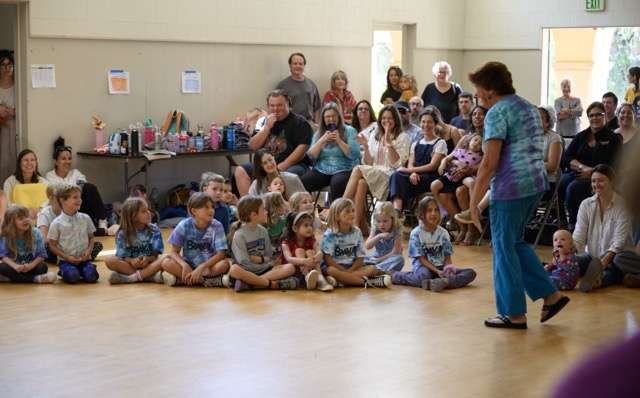
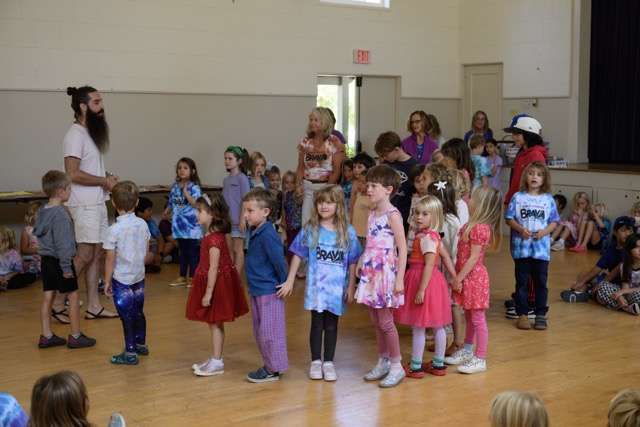
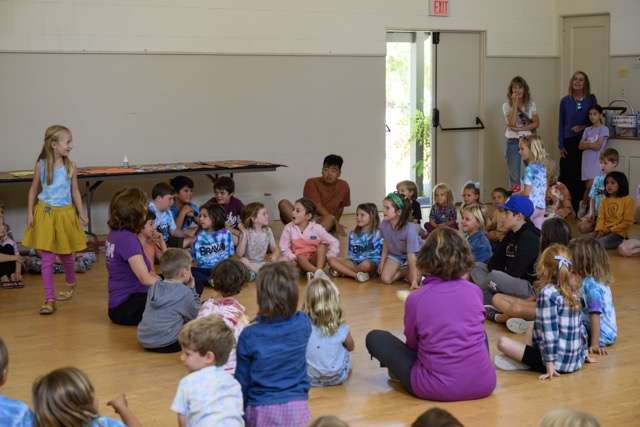
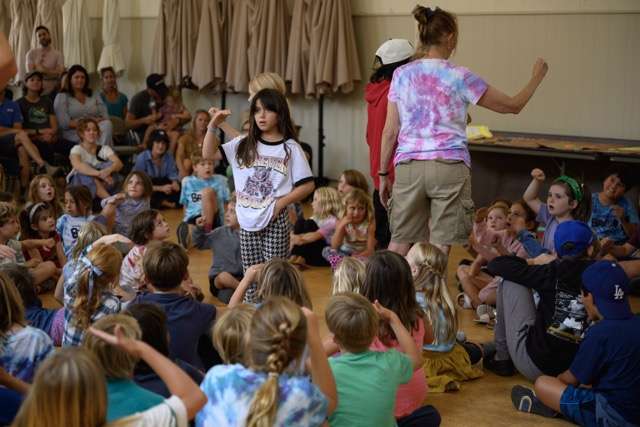
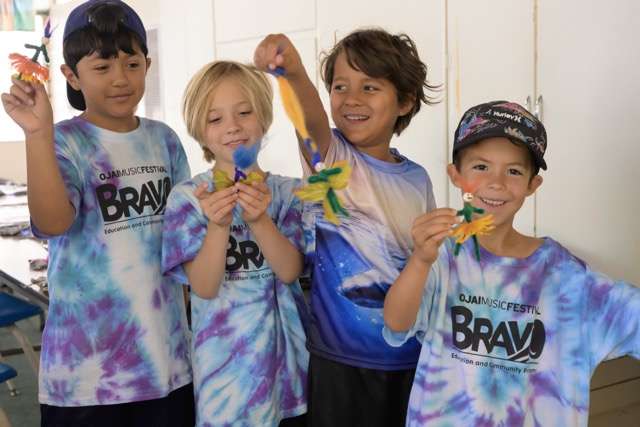
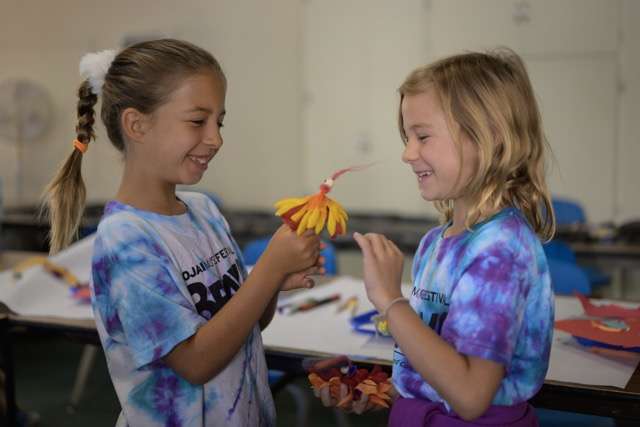
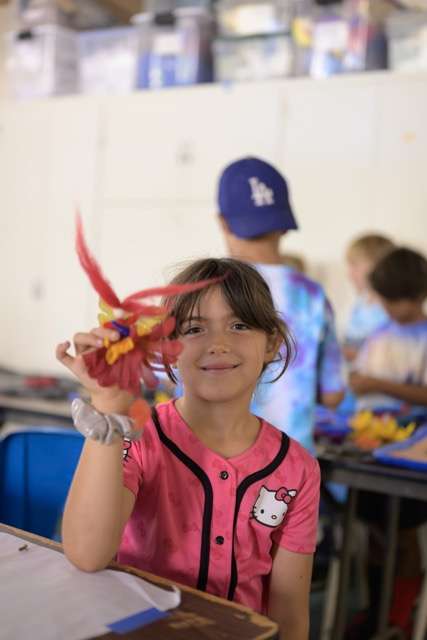
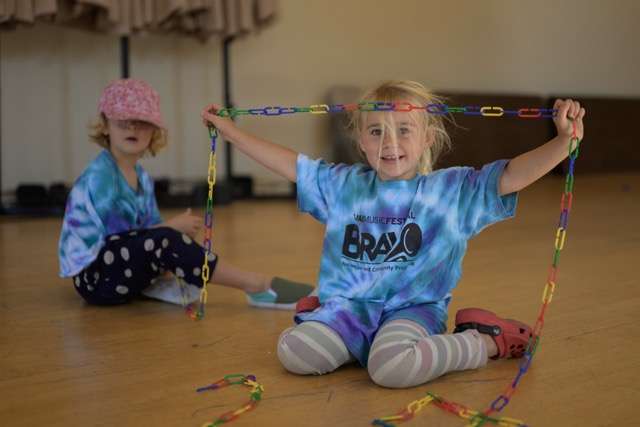
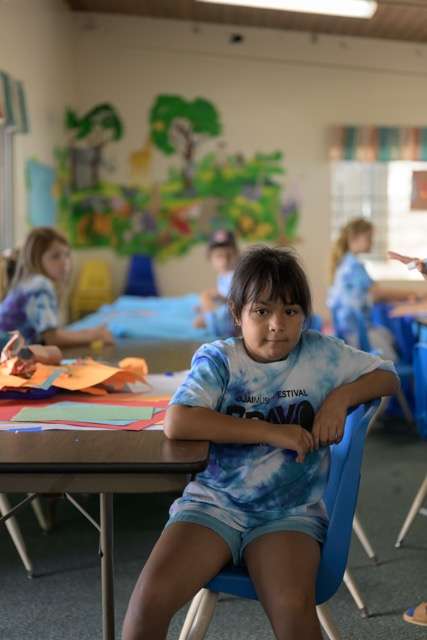
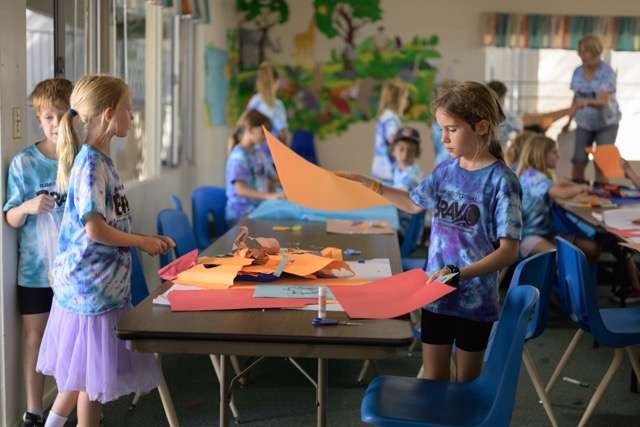
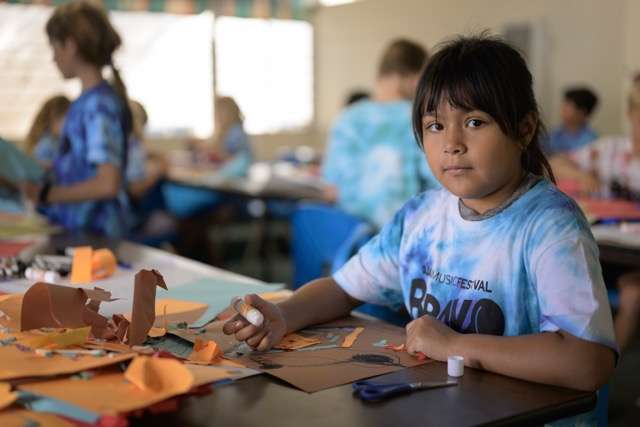
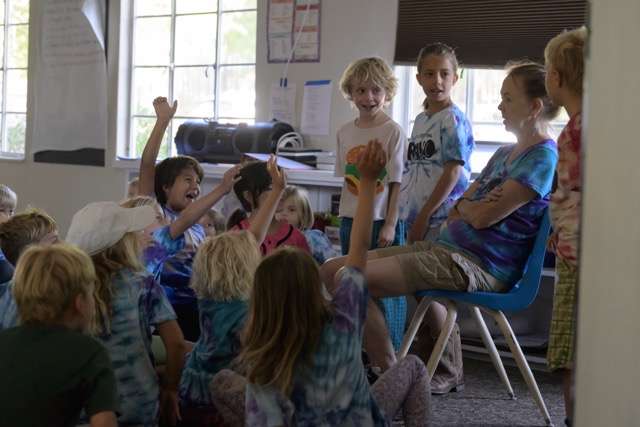
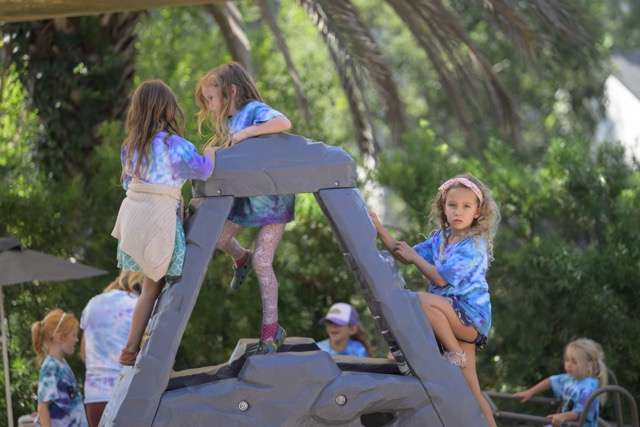
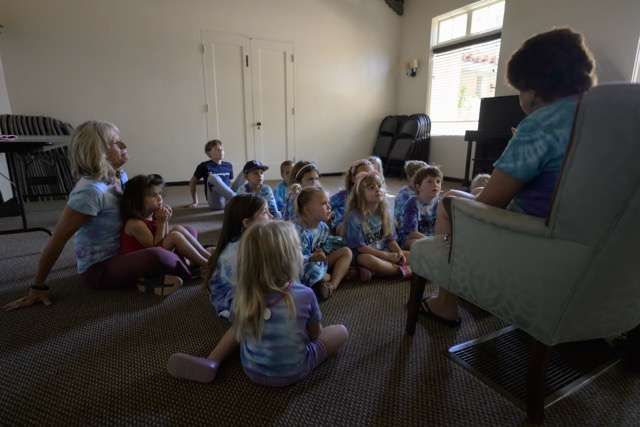
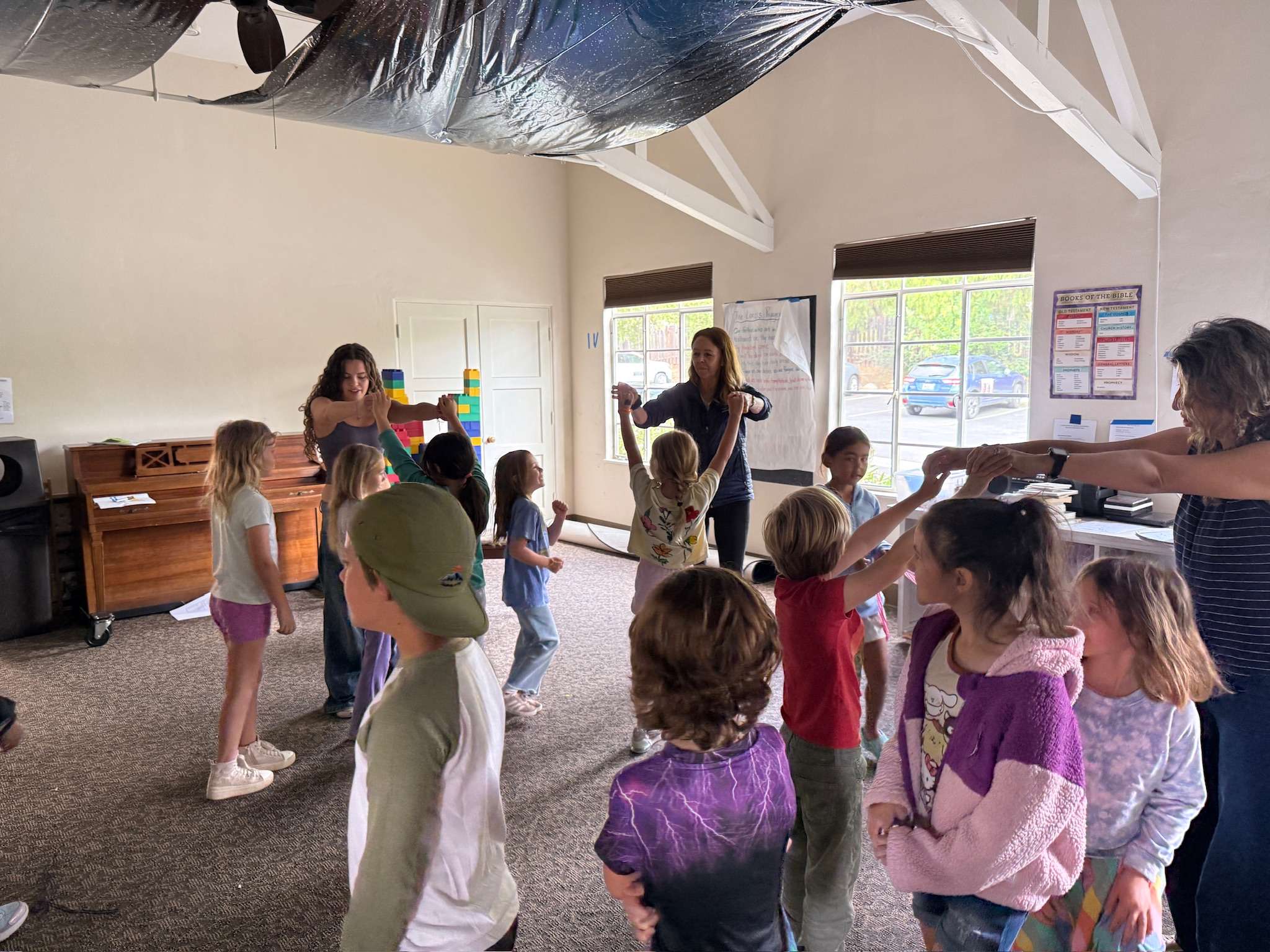
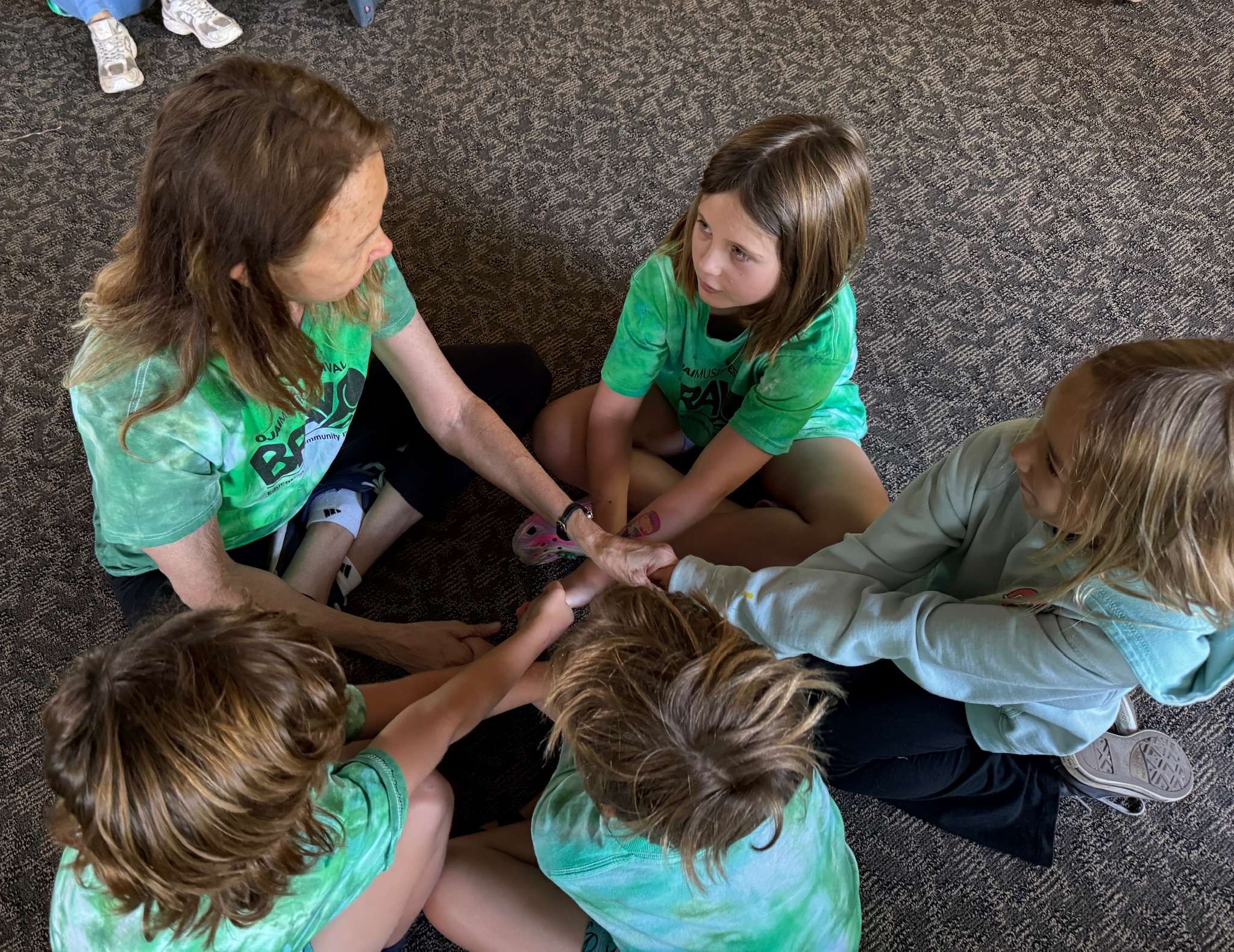
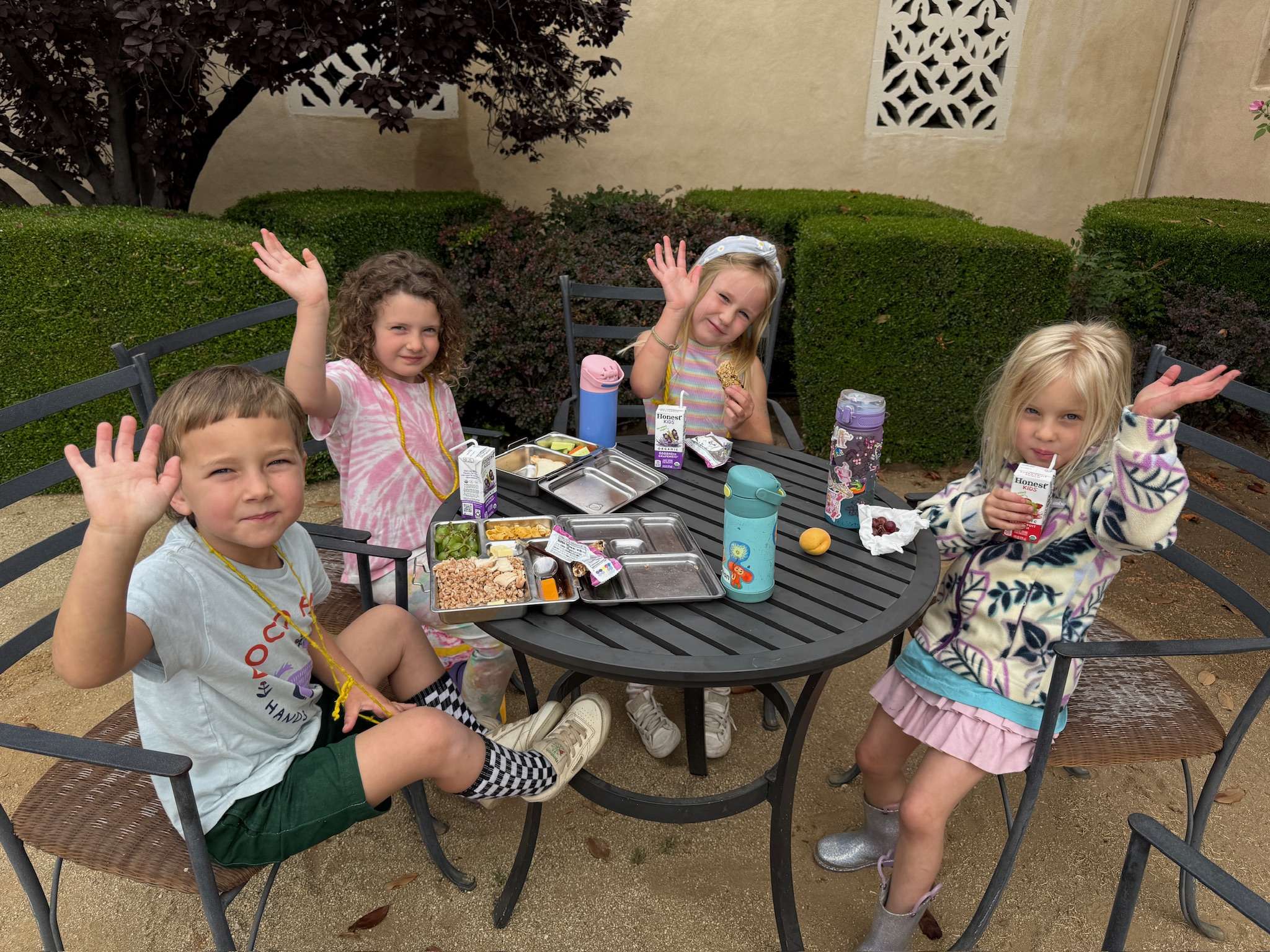
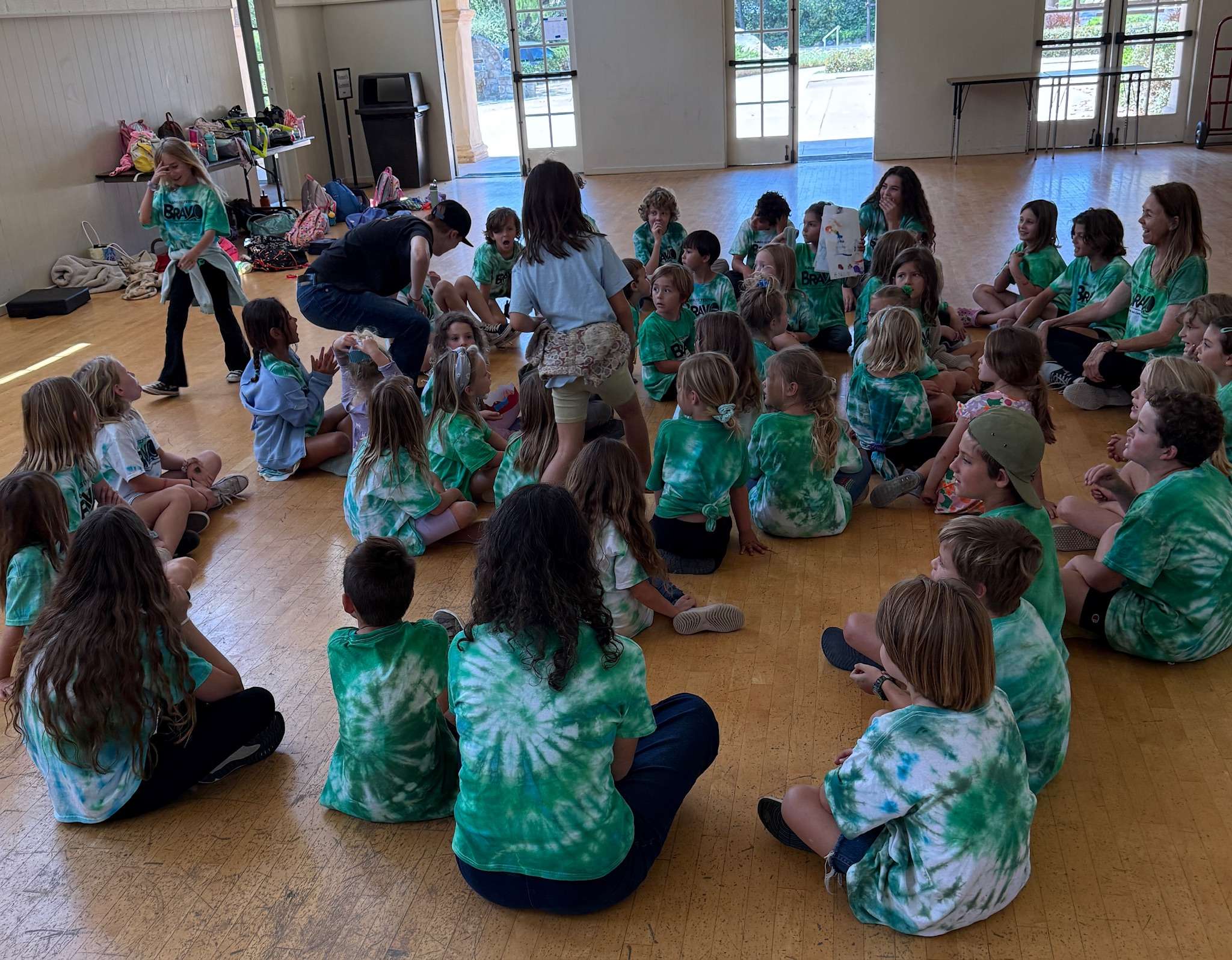
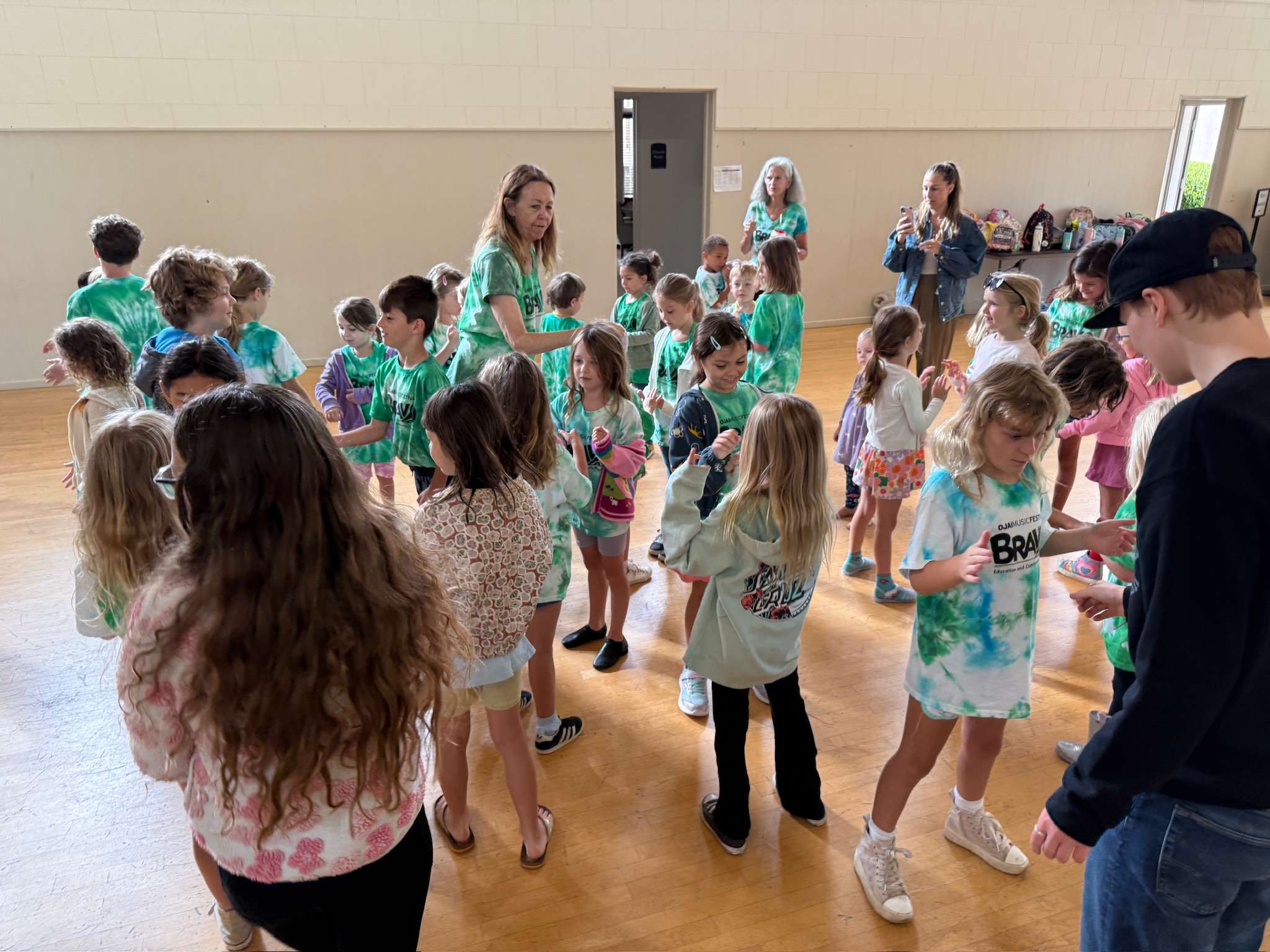
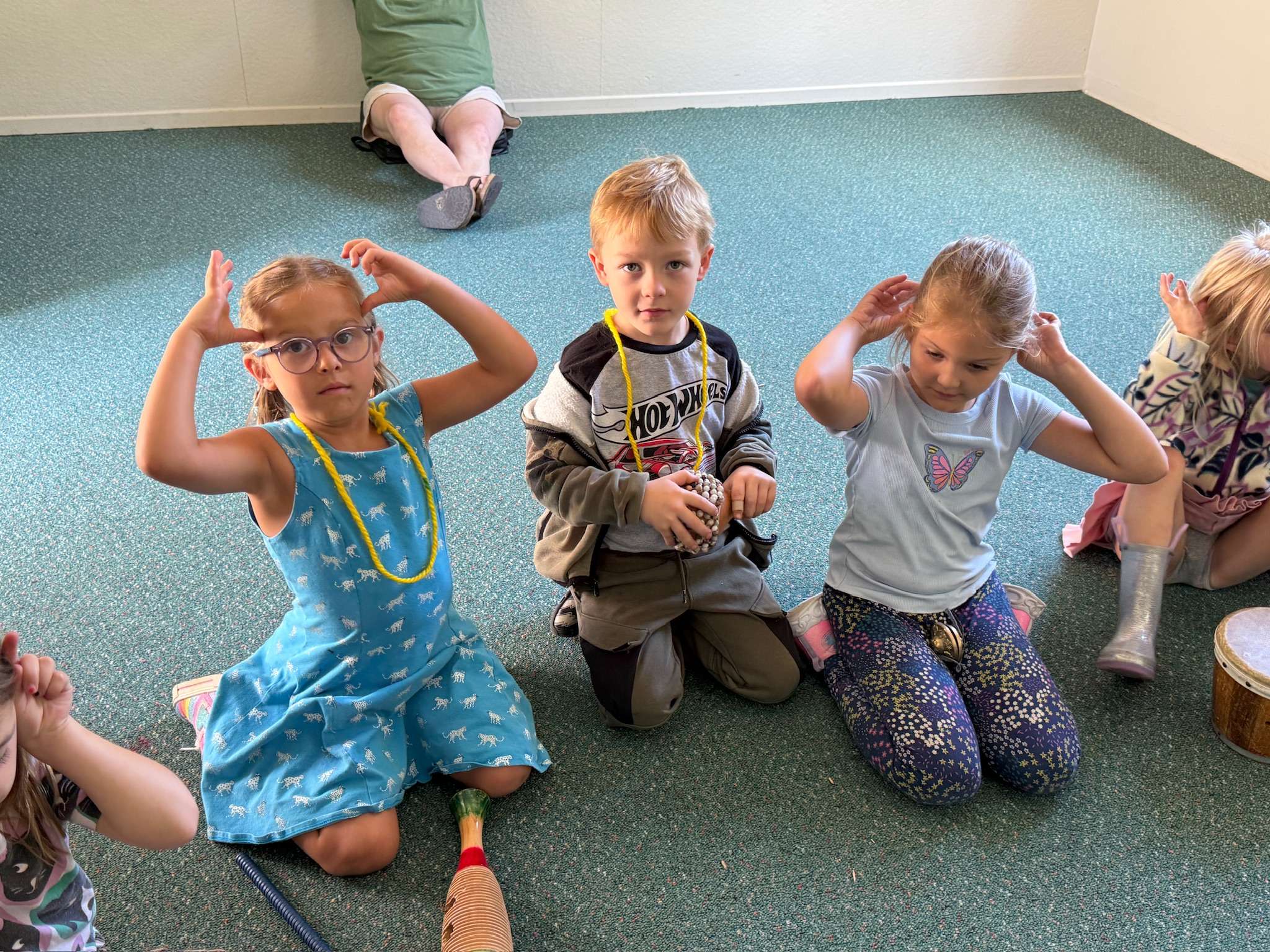
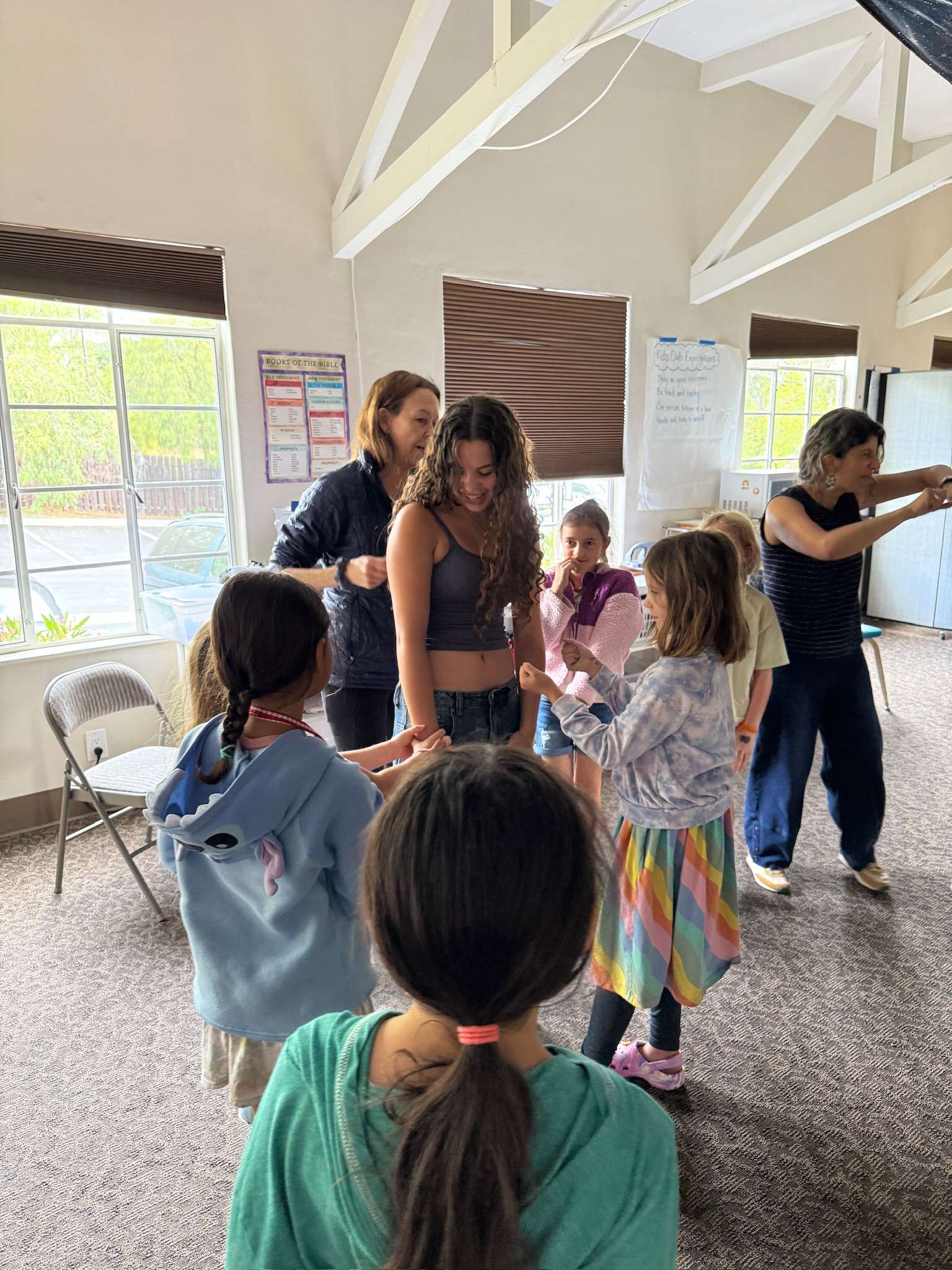
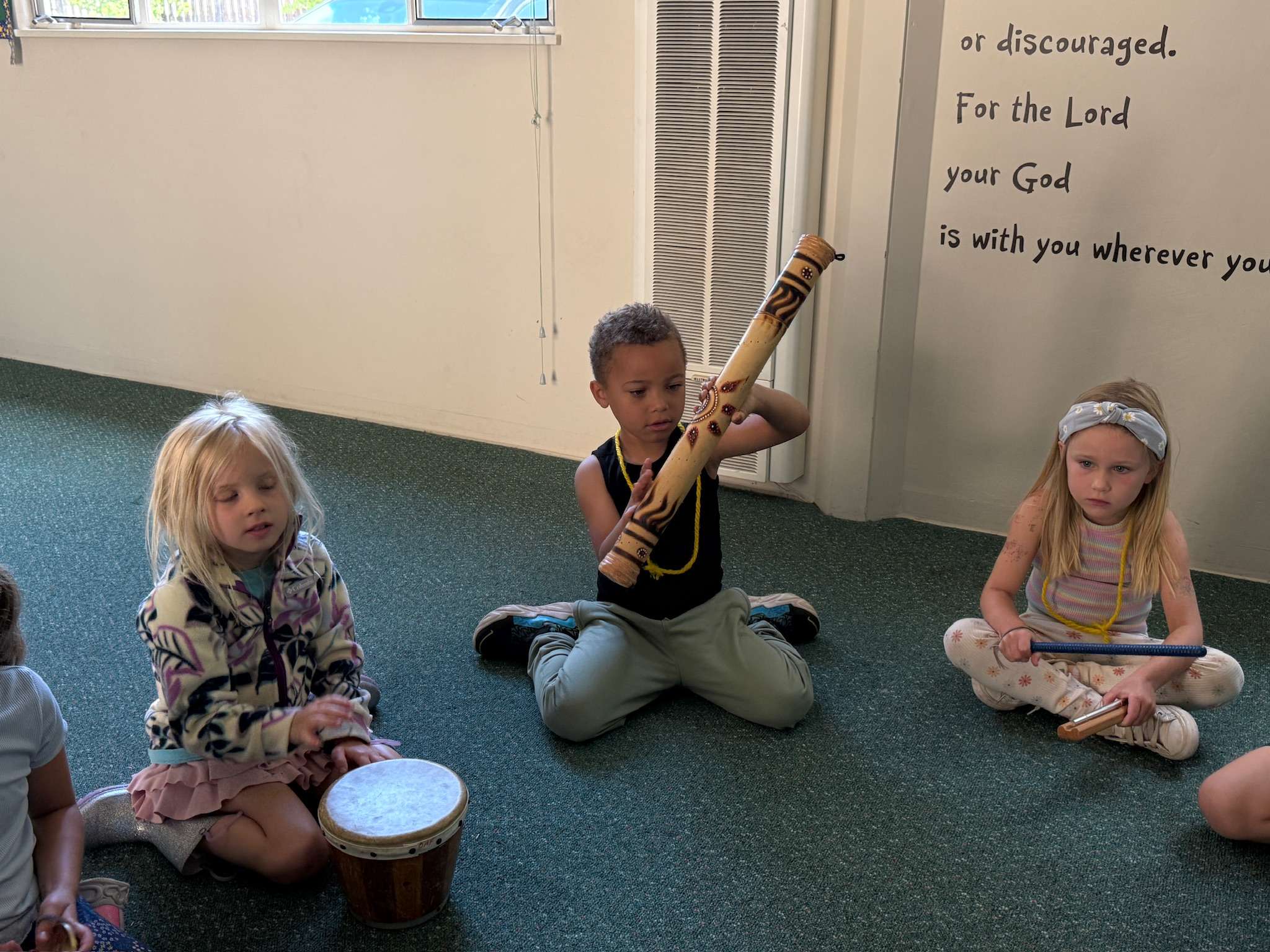
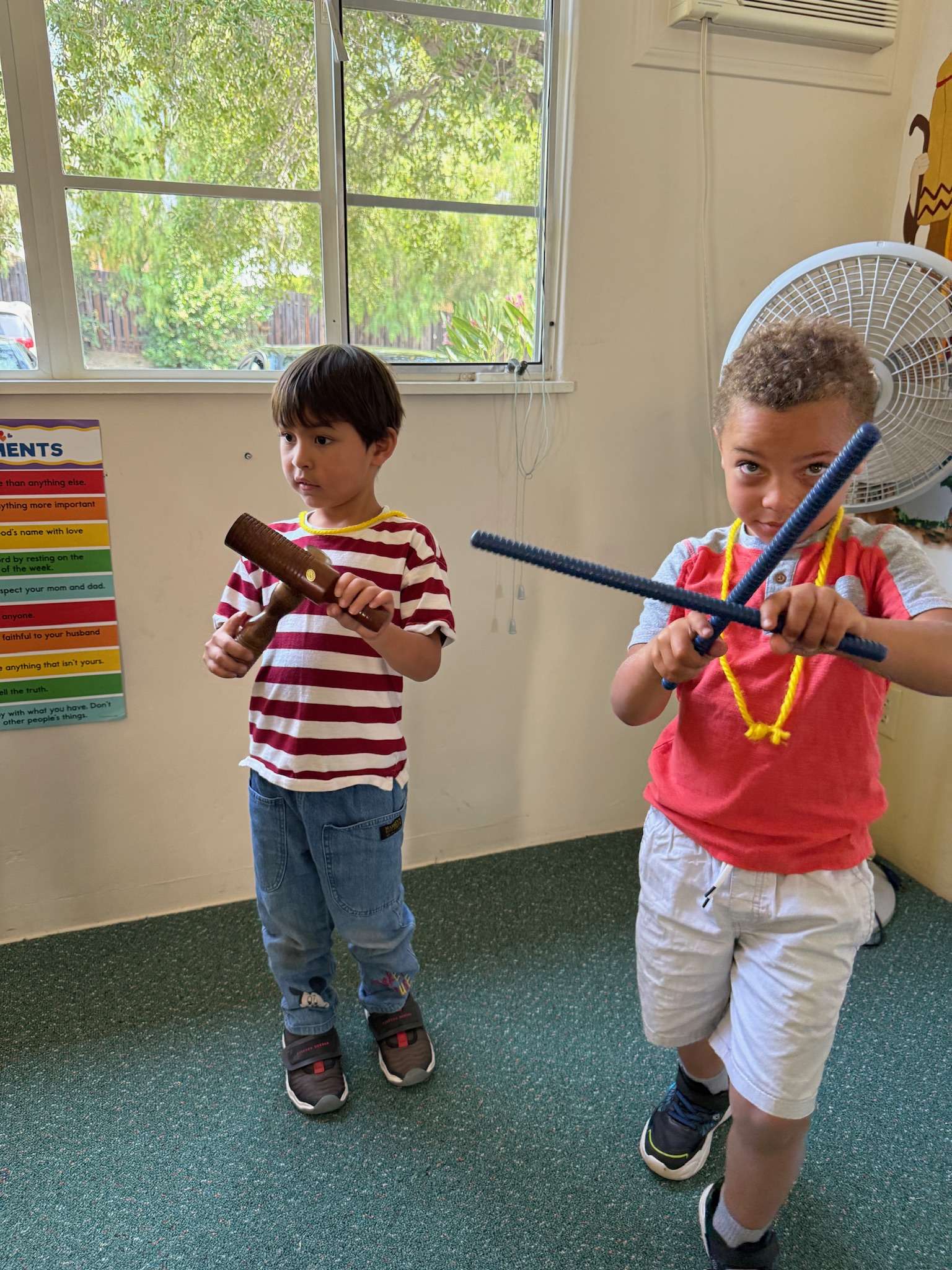
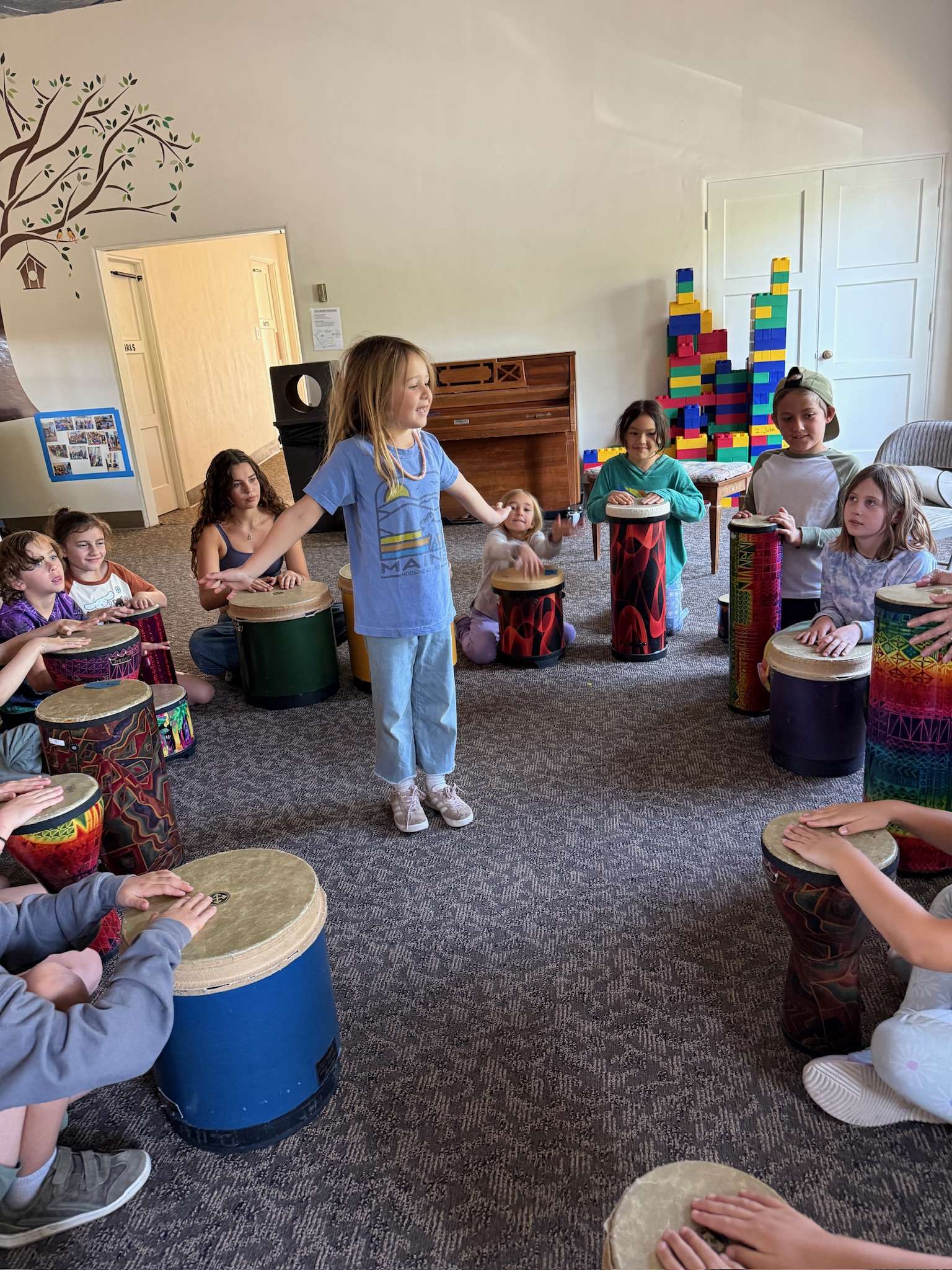
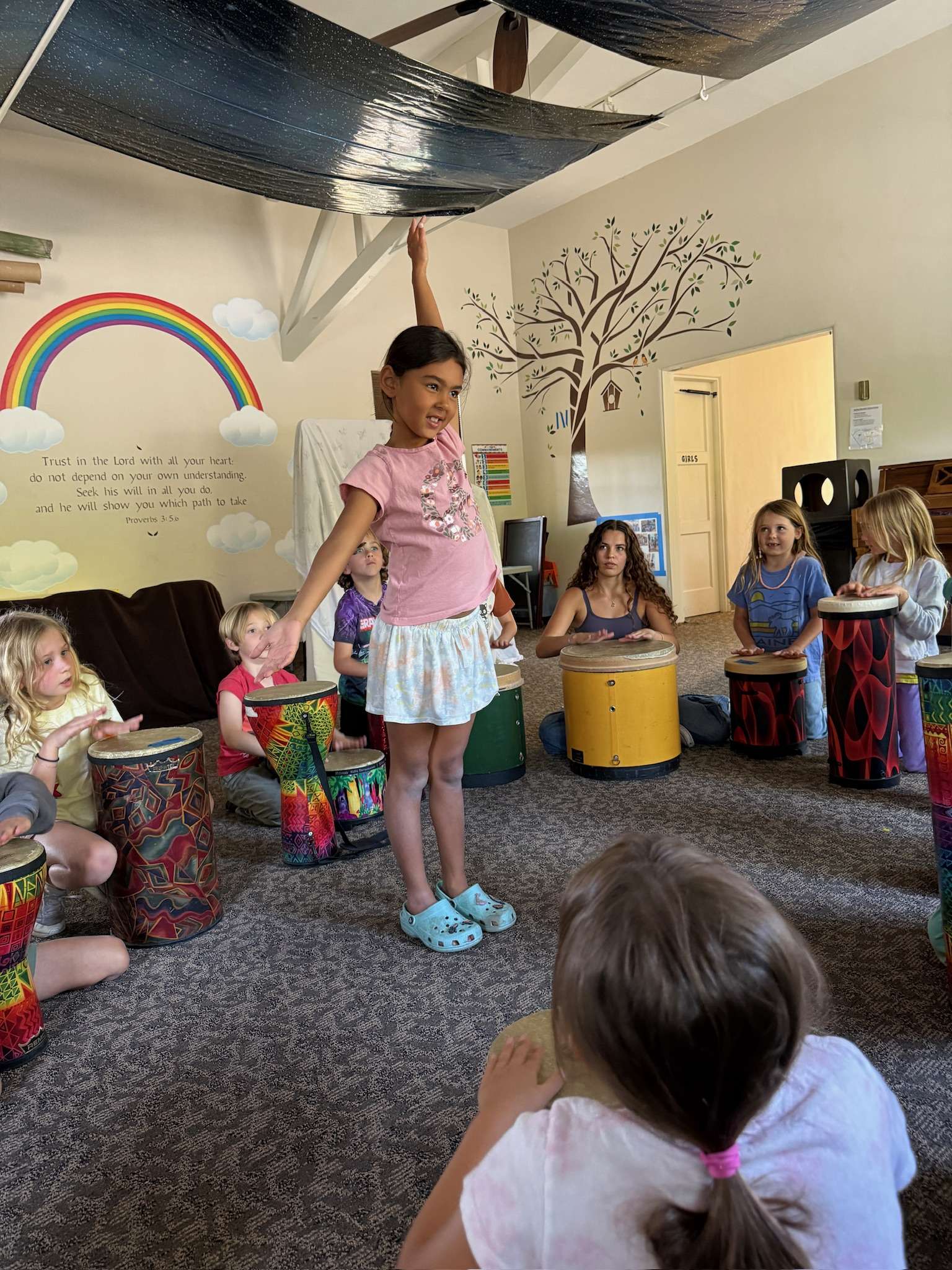
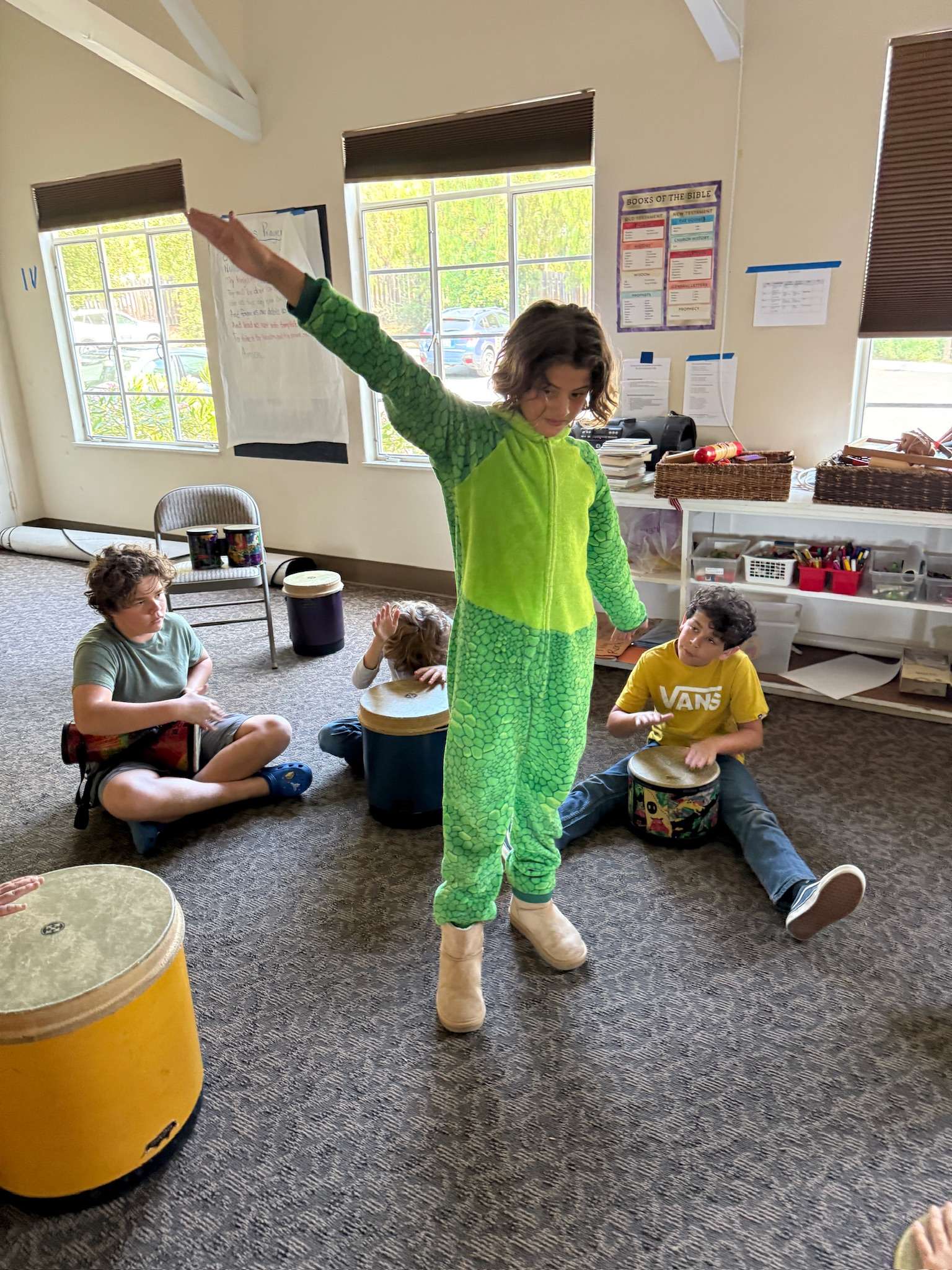
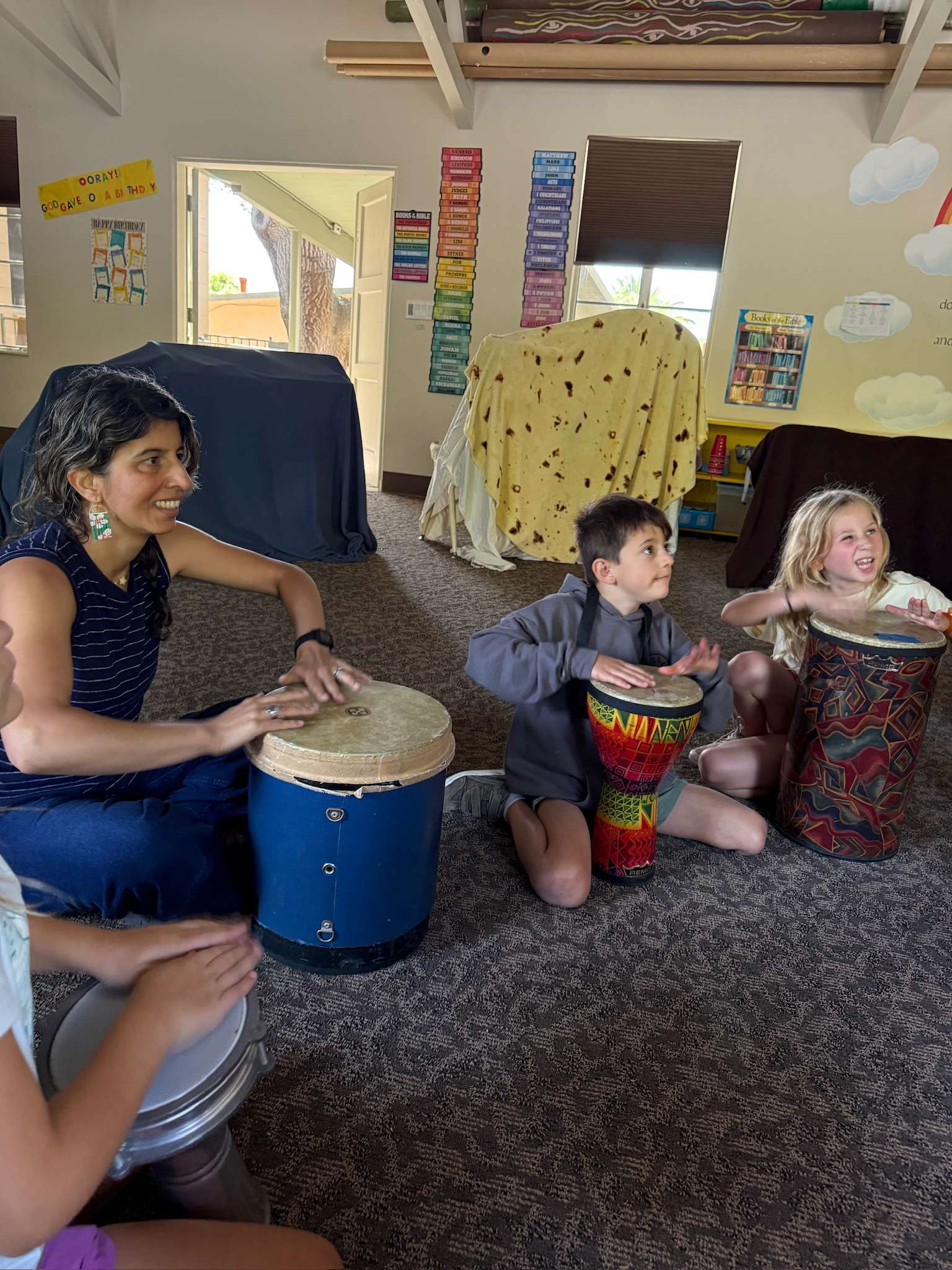
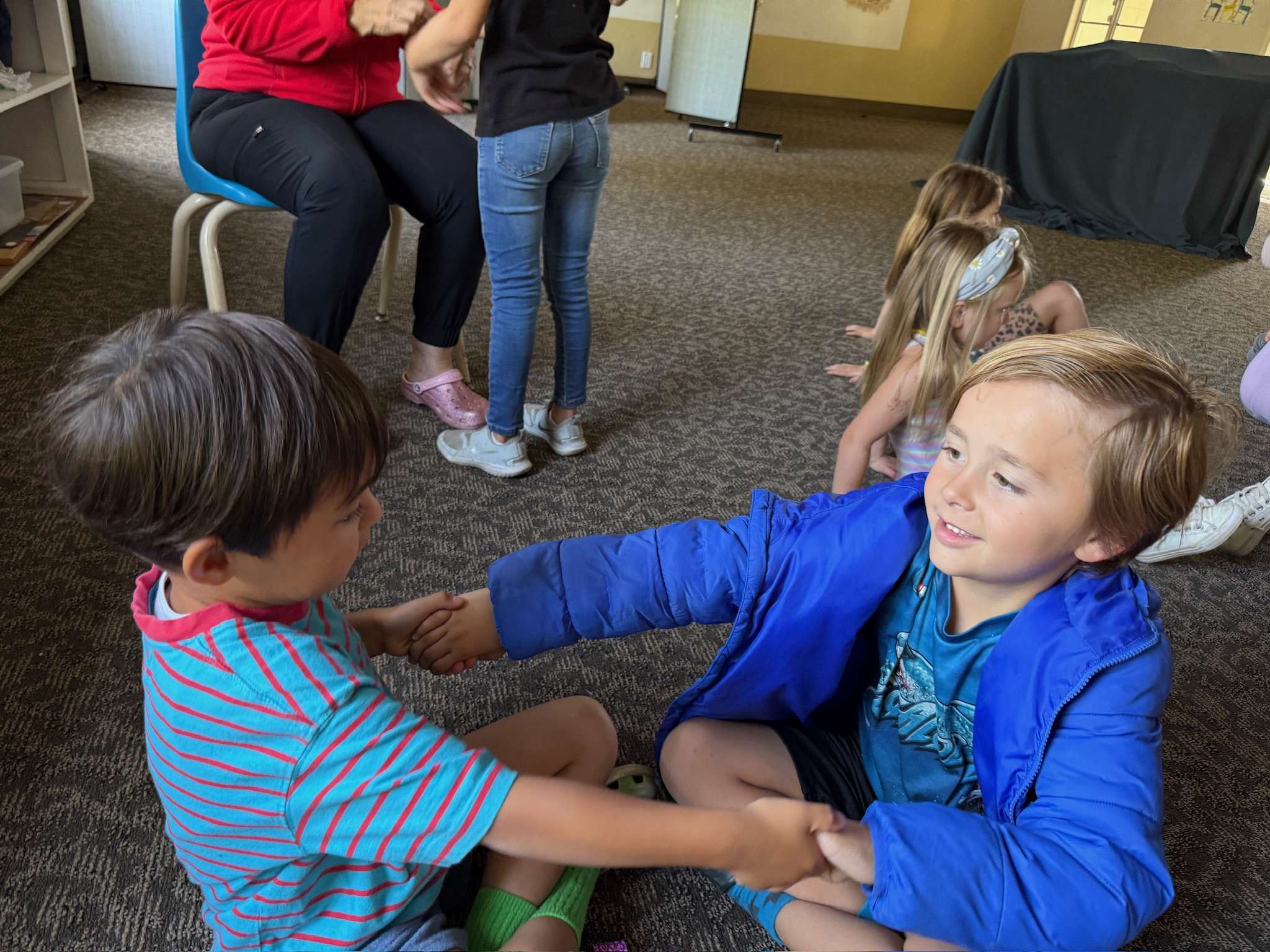
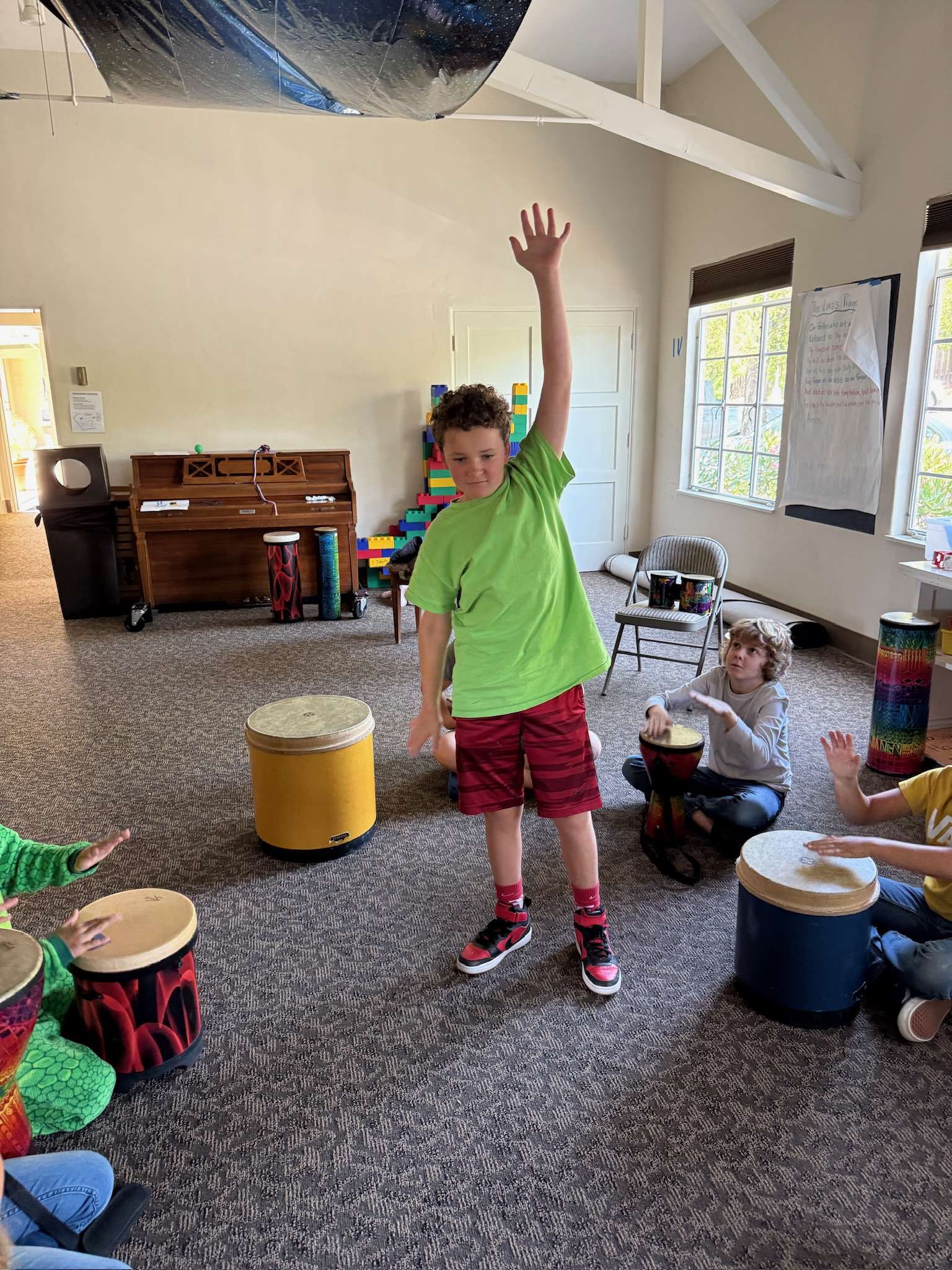
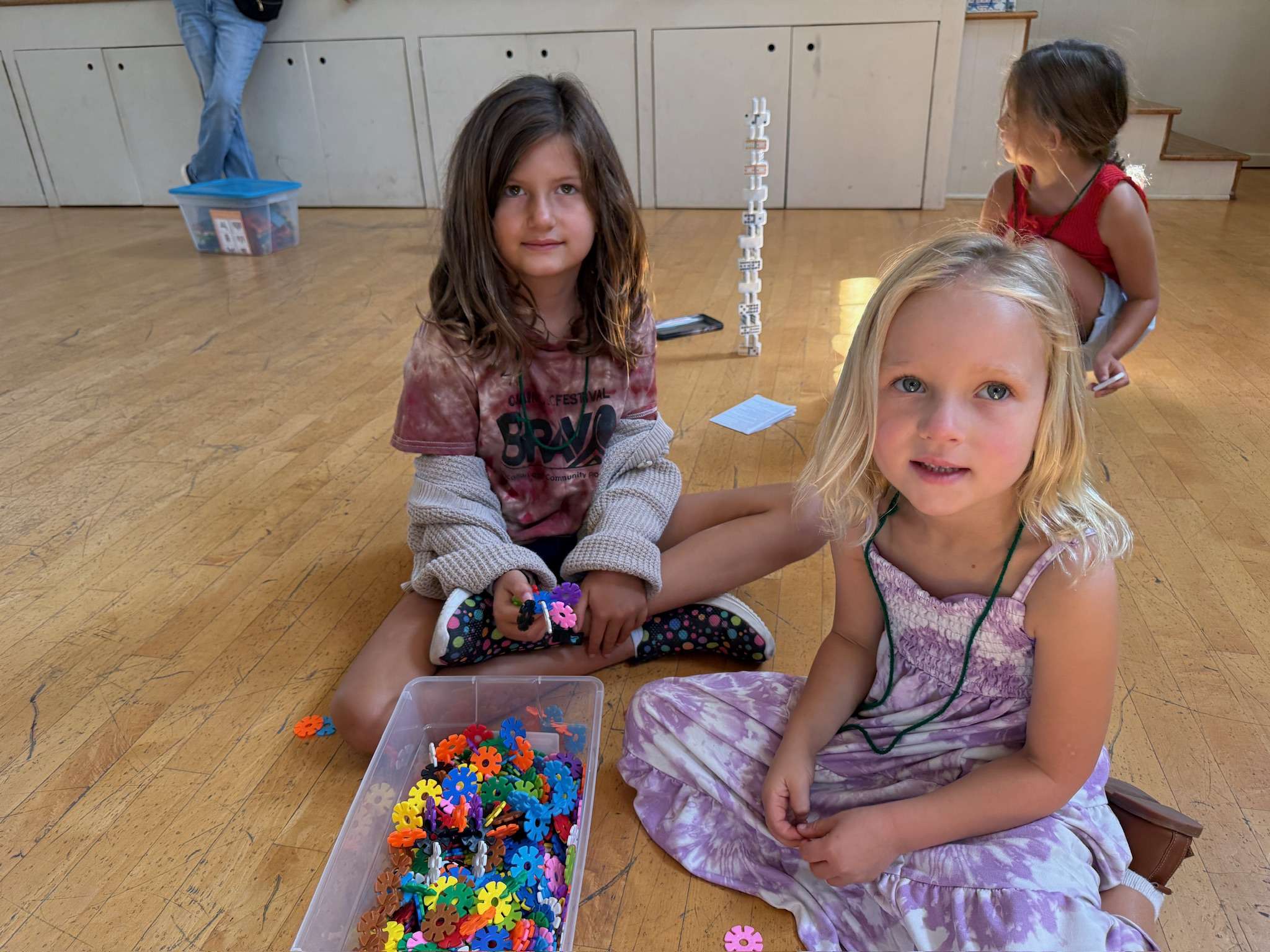
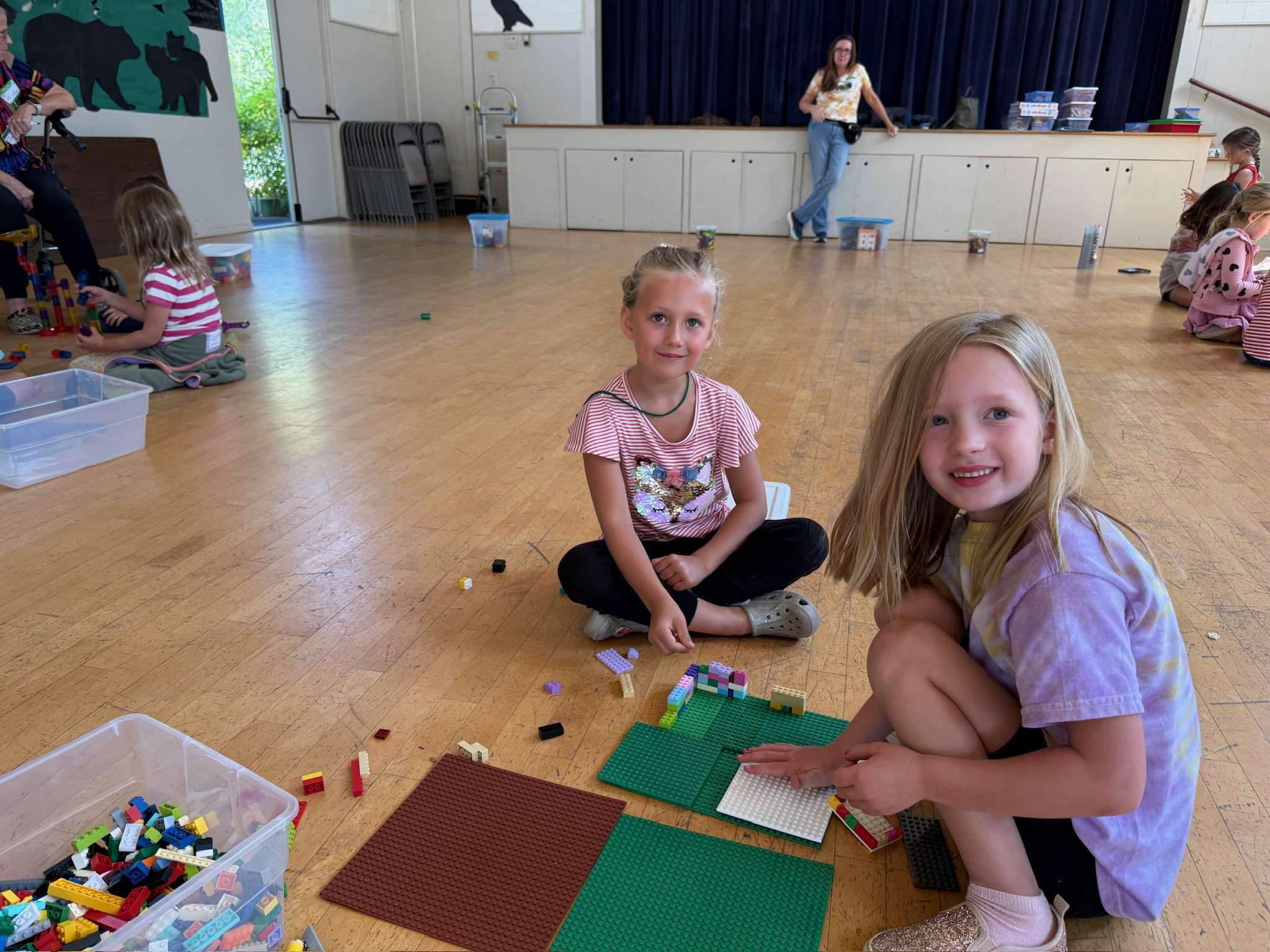
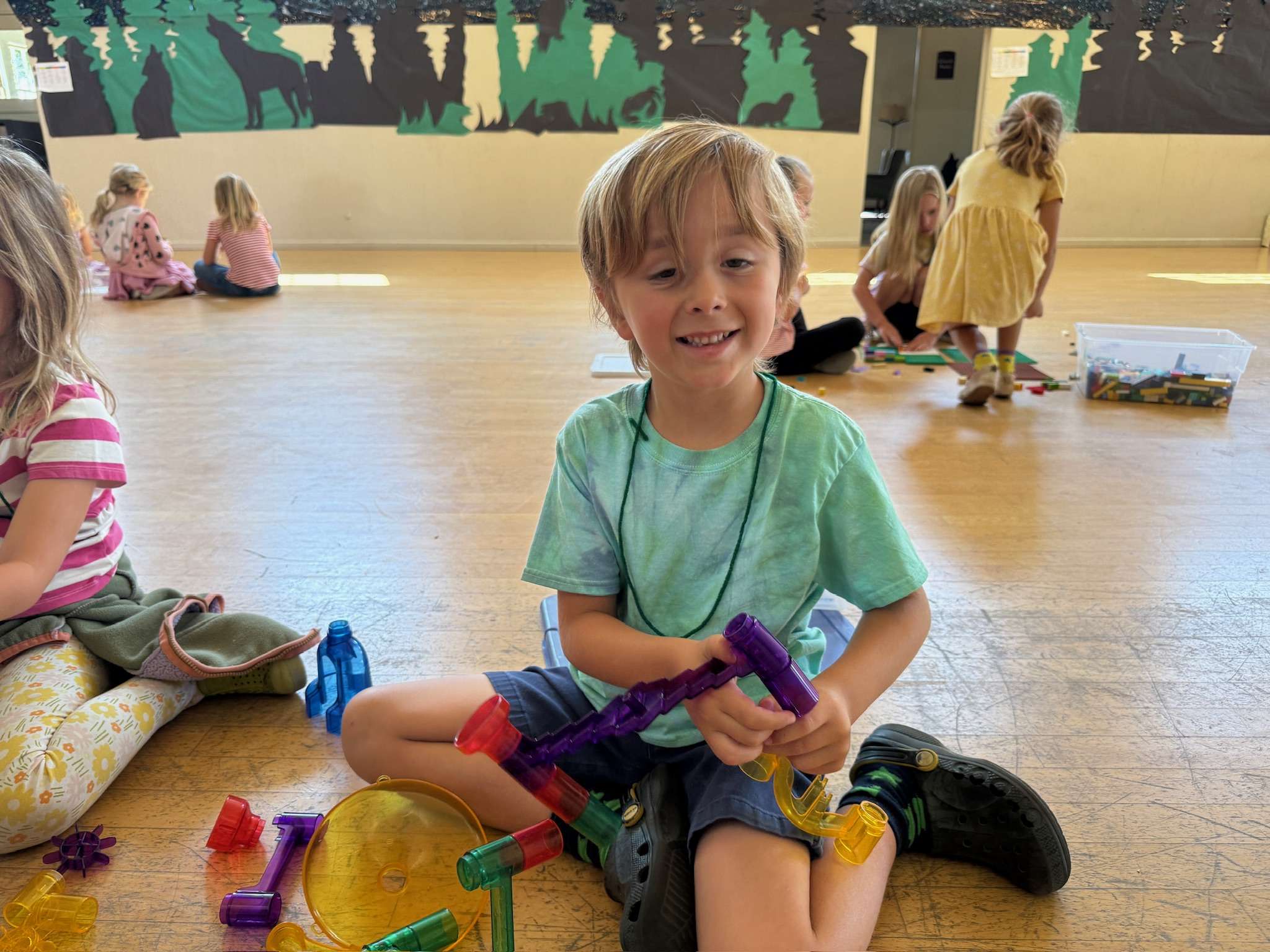
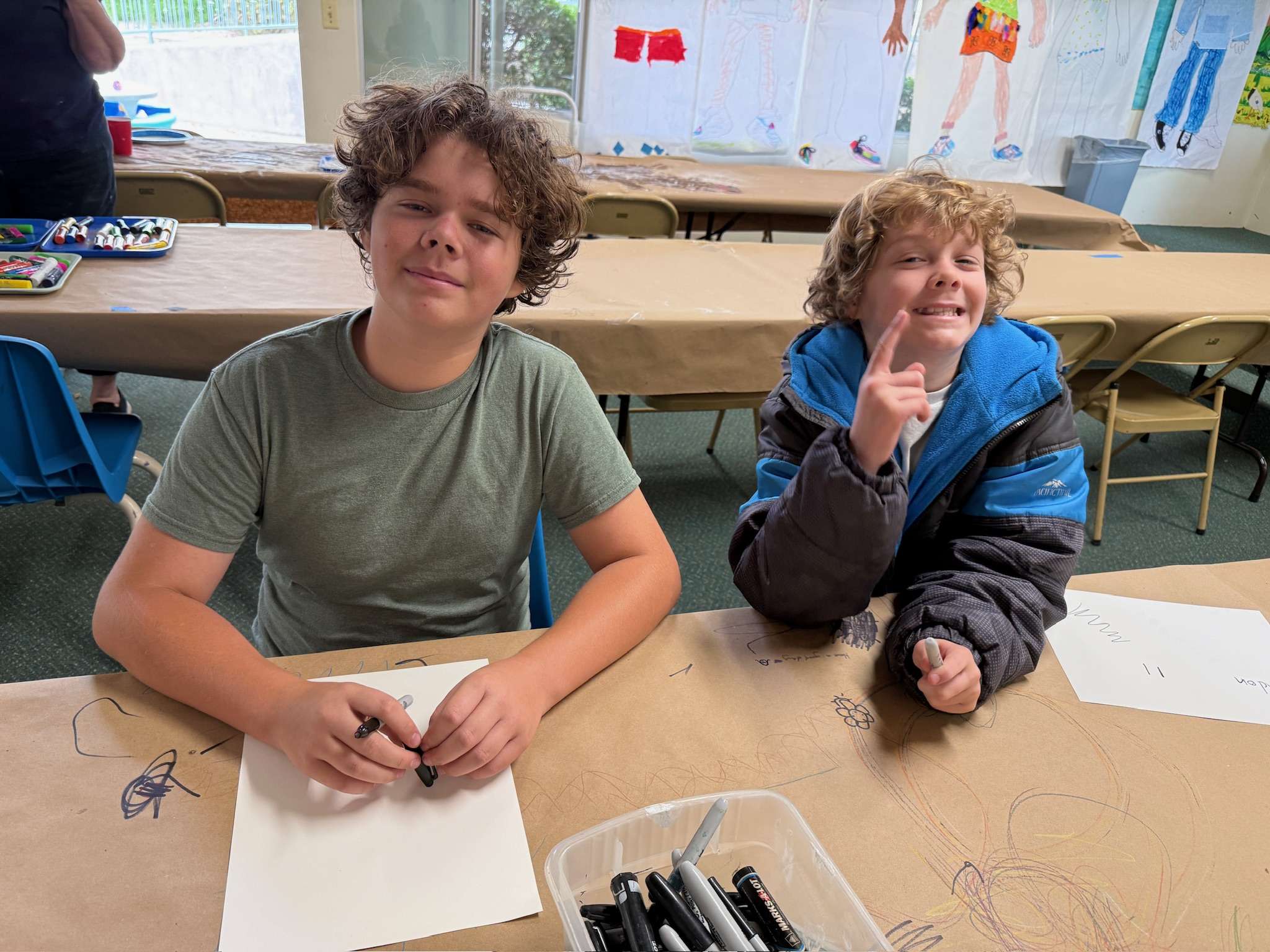
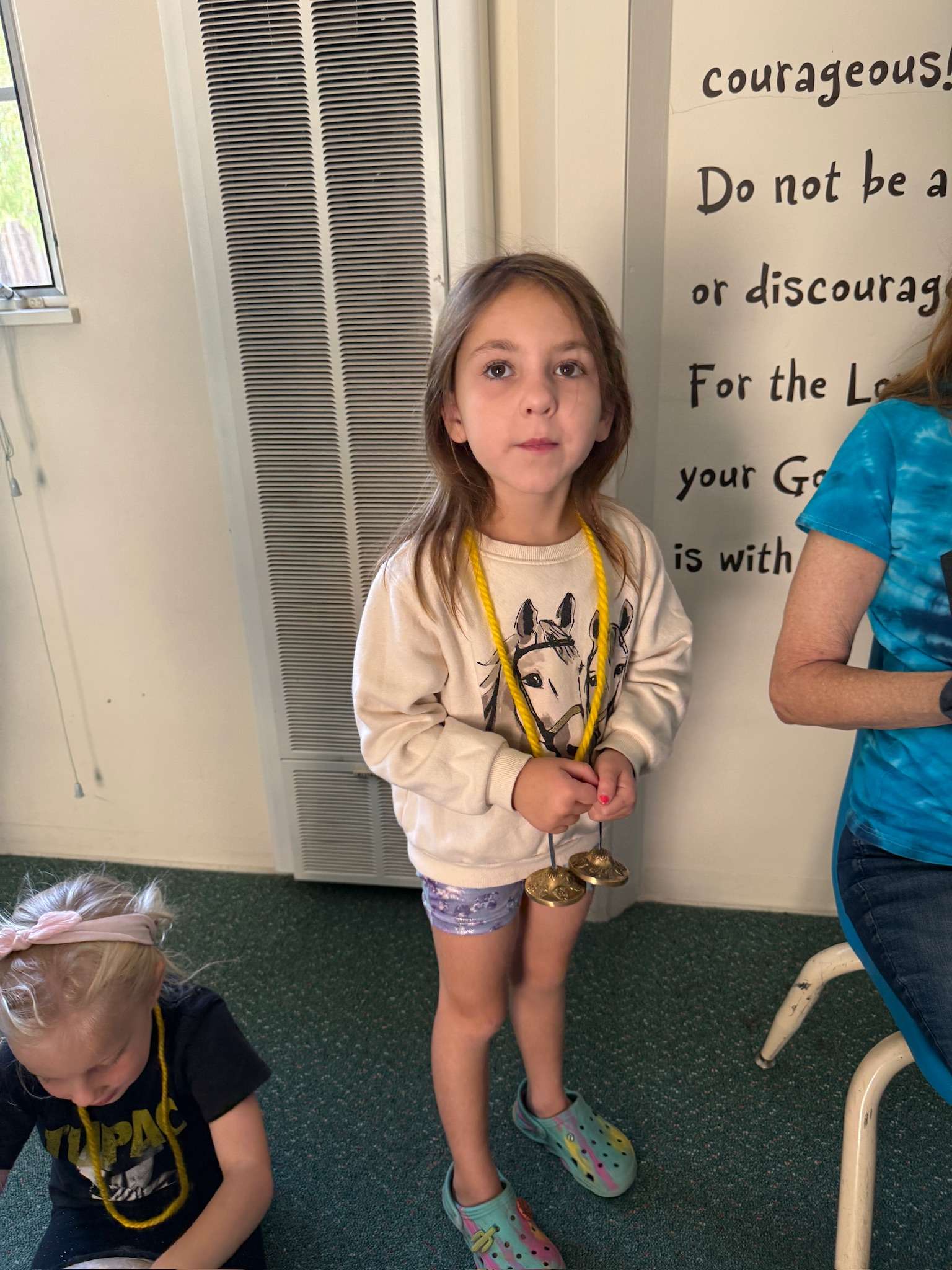
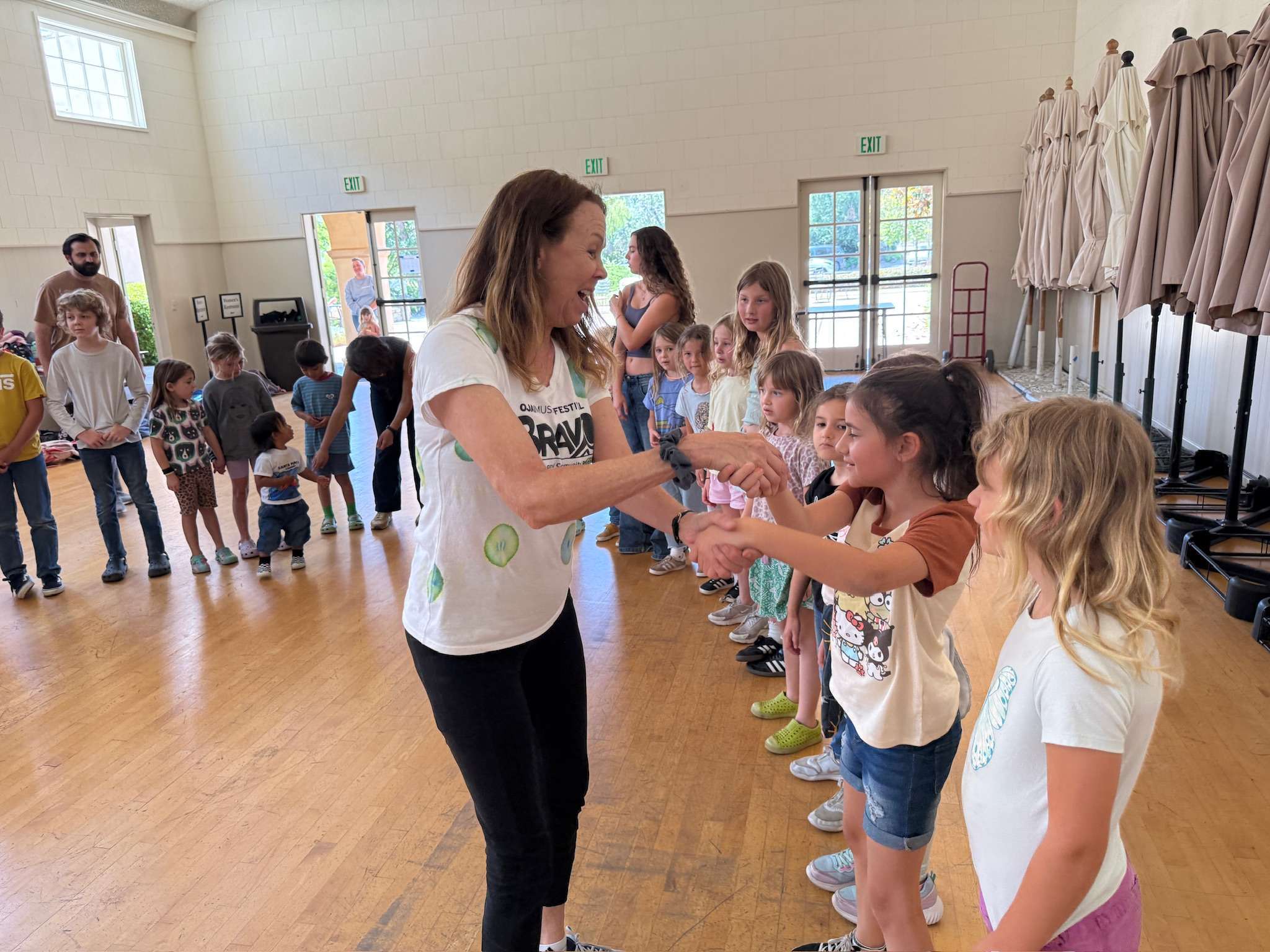
Enjoy this gallery from both weeks of the 2025 BRAVO Art & Music Camp, just one of the many BRAVO Education & Community Programs that serve children and adults throughout the Ojai Valley.
Photos by Eric Andersenfrom the August session of Camp
Photos by Rosanne Forgettefrom the July session of Camp
Jamie Bennett at last year’s 2024 Festival. Photo credit: Timothy Teague
Dear Ojai Festival friends,
We began the summer with the sad news of the passing of Jamie Bennett, a key figure in the Festival’s recent history as both a Board member and, for five years, our President and CEO. Jamie was a treasured friend to many in our extended Festival community in both Los Angeles and Ojai, bringing the same immediacy and warmth to all, whether they were of long-standing history or recent acquaintance.
Jamie brought a wealth of professional expertise from his many years in media and non-profit management, working for organizations such as the Southern California Institute of Architecture (SCI-Arc), Disney, and CBS where his time included a term as General Manager of KCBS-TV. Jamie came to the Festival first as a Board member and then took a staff leadership role as President and CEO from 2015 until 2020, helping to navigate the complicated early days of the pandemic and that year’s online Festival. Happily, for all of us, he returned to the Board after his work as CEO and remained deeply engaged in all dimensions of the Festival’s progress. He remained active until his last days, making calls, and sending helpful notes to the end.
I first met Jamie at the beginning of my return as Artistic and Executive Director in 2020. He was extremely helpful in providing grounding and much information to get me started. He was also an extraordinary ambassador to the Festival with his natural knack for putting people together. I have numerous rewarding recent friendships that began with Jamie saying, “You should meet this person, I think you would like them.” He was right in each case. His devotion to community in both his home cities of Los Angeles and Ojai led to his generous involvement in many worthy civic organizations and causes. We will miss him.
Claire Chase and Pan participants at the opening night concert. Photo Credit: Timothy Teague 2025
Savoring the Festival
I have been traveling extensively for both professional and personal reasons in the weeks following the Festival, which has given me the time, distance, and perspective to reflect on our wonderful time together in June. There are so many memories and experiences that remain in such sharp focus. We can relive the Libbey Bowl concerts by way of our treasure-trove archive of livestreams on demand:
Patrons walking in the Ojai Meadows Preserve. Photo Credit: Timothy Teague 2025
One of my favorite newer Festival traditions is that of our free Morning Meditations, which this year took place in the atmospheric Chaparral Auditorium as well as most memorably at the Ojai Meadows Preserve in an extremely happy and fruitful collaboration with the Ojai Valley Land Conservancy. My OVLC colleagues and I watched with delight as several hundred people streamed into the grove of trees with mountain panoramas as backdrop.
Joshua Rubin playing with composer Tania León listening behind him. Photo Credit: Timothy Teague 2025
The morning began with Susie Ibarra’s Sunbird, originally a multi-tracked solo flute piece for Claire Chase, here specially arranged for the occasion for four players – Claire, Joshua Rubin, Michael Matsuno, and M.A. Tiesenga.
Although the complex logistics prevent livestreams of these early morning concerts, we can find some of the works on recordings by the same artists. Here is the original flute version of Sunbird for us to savor:
The next day, the Sunday morning meditation at Chaparral ended in a mesmerizing way with Anna Thorvaldsdottir’s Sola, played by violist Leilehua Lanzilotti. Happily, Leilehua’s studio recording of the work allows all of us to hear it.
We will continue to revisit some special moments of this past June throughout the summer even as we focus work on planning the 2026 Festival with Esa-Pekka Salonen, which will be our 80th Anniversary. Because of the June timing of the Festival, our fiscal year ends on August 31. Like so many of our colleagues in arts organizations, we are facing significant financial challenges with reductions or even elimination of arts funding in our ever-changing national landscape. We hugely thank our devoted supporters and ask those have not yet done so to consider making a gift prior to August 31 to help us close out what has been a most rewarding year artistically. We need all of you!
HHTM is sold out for 2025. Thank you for the support, and we look forward to seeing you next year!
The Ojai Holiday Home Tour & Market (HHTM) is a beloved seasonal celebration that blends festive charm with local creativity. Tour four beautifully decorated Ojai homes, each offering a unique take on holiday style, then head to Libbey Park** for the open-air Holiday Market—featuring handmade goods, artisan gifts, and treats from local makers, just in time for the holidays. Going on its 30th year, the HHTM serves as the Ojai Festival Women’s Committee‘s greatest annual fundraiser, which benefits the Ojai Music Festival and its BRAVO Education and Community Programs.
**WEATHER UPDATE**
Unfortunately, due to the extreme weather conditions in Ojai and the surrounding areas, we have decided to cance l Saturday’s Holiday Home Tour. We are still planning to be open on Sunday.Sadly, the Holiday Market is also canceled. We share in your disappointment. In the interest of preventing damage to the homes and keeping all guests on the tours safe, the HHTM committee and Festival staff have decided that a cancellation is what is best.
As we continue to monitor the rain and road conditions closely, it looks like tomorrow’s conditions will be an improvement, and we are full steam ahead. In the interest of giving you the most tour time possible, we have decided to add an extra hour to Sunday’s tours, now running from 10AM-5PM.
WILL CALL will consequently now be from 10AM-4PM Sunday, as well as today until 4PM. Find us at the Ojai Festival Office, located at 201 S Signal St, Ojai, CA 93023. Look for red “Will Call” signs, and enter through the door on Topa Topa Street. Street parking will be available.
Holiday Home Tour & Market is a major fundraiser for the Ojai Music Festival and its free BRAVO Education and Community Programs in local public schools, and we thank you for your support!
As per our ticket policy, in the event of cancellation, your ticket will be converted to a tax-deductible donation. Tickets to the Holiday Home Tour are not refundable. If you are unable to attend due to Saturday’s cancellation, please call our ticket return hotline at (805) 646–2192 to receive a tax letter.
Running concurrently with the Market, the Home Tour invites guests to visit four stunning homes that showcase the beauty of the Ojai Valley with a unique approach to celebrating the Holidays. Local musicians will be found performing at each home to add to the ambiance and charm.
Hours 10AM – 4PM
Location Exact locations, directions, and shuttle information (if applicable) will be shared with ticket buyers prior to the tour.
Tickets Advance tickets are $45, and go on sale in the fall of 2025. Tours are for ages 12 and up.
This open-air market features a curated selection of local artisans, makers, and small businesses offering handmade goods, specialty foods, art, gifts, and more. Moments of live music punctuate the day. Stop by between house tours and get your gift shopping done early!
Hours 10AM – 4:30PM
Location The new cozy indoor location is to be announced! Check back on this page to learn where to find us this weekend.
Tickets There are no tickets or reservations required for the Holiday Market! All ages are welcome. Open to the public.
The Ojai Festival Women’s Committee (OFWC) invites you to keep the Holiday Home Tour & Market a part of your annual holiday tradition by becoming a sponsor or a volunteer.
As one of the largest financial supporters of the Ojai Music Festival and its BRAVO Education and Community Programs, the OFWC is proud of its essential role in our community’s future through this annual staple.
Thank you for joining us at our 79th Festival, June 5-8, 2025, with Music Director Claire Chase. It was a glorious time to be in our communal festival experience to share music, conversation, and listening.
Take a look at excerpts from the press.
Like many of the pieces at Ojai this year, “Sky Islands” was an unpredictable, amorphous, kaleidoscopic soundscape, its structure intentionally loose and good-natured
You can’t escape nature in Ojai. That meant that flutist Claire Chase, this year’s Ojai Music Festival music director who is often called a force of nature, fit right in.
Presented by the Ojai Music FestivalWomen’s Committee November 15 & 16, 2025 | Libbey Park, Downtown Ojai
About the Event:
Join us for a festive weekend of art, music, and community at the annual Ojai Holiday Market! Held in Libbey Park, this open-air event features a curated selection of local artisans, makers, and small businesses offering handmade goods, specialty foods, gifts, and more — just in time for the holiday season.
The Holiday Market is the companion event to the Ojai Holiday Home Tour. Running concurrently with the Market, the Home Tour invites guests to visit four stunning homes that showcase the beauty of the Ojai Valley with a unique approach to celebrating the Holidays.
Whether you’re a returning vendor or new to our market, we’d love to have you be part of this festive weekend that brings together shoppers and supports a great cause!
Shoppers at the 2023 Holiday Marketplace
Vendor Details:
Dates: Saturday & Sunday, November 15–16, 2025
Location: Libbey Park, Ojai, CA
Hours: 10:00am – 5:00pm daily
Booth Fees: Range from $275–$450 for the full two-day event
Why Participate? Proceeds from the Market support the Ojai Music Festival’s BRAVO education and community programs, which provide free music education to students across the Ojai Valley, as well as other free programs that serve our broader community throughout the year.
Sign up now:
We are delighted to announce that we have filled every spot in the park for this year’s Market. There’s always a chance more spots will become available, so join the waitlist at the link below!
Annea LOCKWOOD bayou-borne Joshua Rubin clarinet Steven Schick, Ross Karre, Susie Ibarra, and Wesley Sumpter percussion Wu Wei sheng Dan Rosenboom trumpet Mattie Barbier trombone M.A. Tiesenga electronic hurdy-gurdy
INTERMISSION
Marcos BALTER Pan
I. Death of Pan II. Lament for Pan’s Death III. Pan’s Flute IV. Music of the Spheres V. Echo VI. Serenade to Selene VII. Dance of the Nymphs VIII. Fray – The Unravelling IX. Soliloquy
Claire Chase flute Ojai Pan Community Ensemble Ben Richter Ensemble Director
Lighting and production design by Nicholas Houfek Video by Adam Larsen Projection design by Ross Karre Original direction by Douglas Fitch Original sound design and electronics by Levy Lorenzo Commissioned and developed by Project& and Jane M. Saks as part of Density 2036 part vii (2020)
Marcos BALTER (b. 1974) Alone (2013)
Annea LOCKWOOD (b. 1939) bayou-borne (2016)
Marcos BALTER (b. 1974) Pan (2017; rev. 2023)
Bathed in the afterglow of Ojai’s evening sky, as nighttime ushers in new mysteries, Libbey Bowl becomes a place of transformation befitting the enigmatic Pan. The ancient Greeks imagined this demigod as an embodiment of contradictory forces — simultaneously beastly and divine, playful and fearsome, herald of ecstasy and terror. His name gave rise to the English word panic, a reflection of the outburst of irrational fear his sudden appearance could ignite. But in Greek, pan also means “all” or “everything” — a root found in words like panorama and pandemic — suggesting his ability to blur boundaries and connect the seen and unseen, the earthly and the cosmic.
Pan is also a bringer of music. As the inventor of the panpipes, he might be considered an ancestral god of the flute — the instrument that serves as the artistic alter ego of this summer’s Ojai Festival Music Director, Claire Chase. In Marcos Balter’s boldly imaginative reinterpretation of the legends associated with the demigod, Pan becomes the great connector between the multiple — and contradictory — facets of our own humanity. He thus emerges as an especially compelling protagonist for the opening night of the 2025 Festival. As Chase notes, her hope is to “open the whole space to demonstrate what it is to be in community,” inviting the audience into a dynamic ecosystem of sound, collaboration, and renewal.
First, though, Libbey Bowl awakens with the delicate twilight shimmer of ambient triangles, mingling with aleatory birdsong to begin this evening’s adventure with another piece by Balter. Alone is an excerpt from Poe, another large-scale musical drama by the Brazilian-born composer.
When Balter first met Chase more than two decades ago — while he was a doctoral student in Chicago — he recalls sensing instantly that they were “twin souls.” Like Pan, Poe is a product of their deep and enduring artistic collaboration. Balter created Poe during a summer residency in 2013 at Mount Tremper Arts in the Catskills, which he shared with Chase and percussionist Svet Stoyanov. For this creative retreat, Balter arrived without sketches or a predetermined plan — just a single text to which he had long felt a special connection: “Alone,” a poem written in 1829 by a 20-year-old Edgar Allan Poe.
Poe is a half-hour, multi-movement work that meditates on the artist’s paradoxical sense of isolation and connection with the natural world. Two movements — Pessoa and Alone — have taken on lives of their own through Chase’s ongoing advocacy. She often programs Alone, a duet for flute and tuned glasses, as a freestanding piece and invites audience members to join her by playing the glasses. For tonight’s performance, two festival family members share the stage with Chase.
The principle of collaboration extends — quite literally — to nature itself in Annea Lockwood’s mesmerizing bayou-borne, created to mark the 85th birthday of her close friend and fellow maverick Pauline Oliveros, who passed away in November 2016 — just six months shy of that milestone. Acclaimed for her compositions and installations that foster mindfulness about the environment, Lockwood designed a sonic realization of a map of the bayou flowing through Houston, where Oliveros was born and grew up. “I always imagined Pauline splashing around one of the bayous nearby and coming back into the house, her feet all muddy and full of what she discovered as a little kid.”
An important part of Lockwood’s artistic practice centers on her exploration of the infinite variety of “life spans” of the sounds that unfold within natural environments. The New Zealand–born composer, who has been based in the U.S. since the 1970s, also pays tribute to Oliveros’s reputation as a great improviser. bayou-borne creates a framework in which each performer is required to improvise by interpreting a map of the slow-moving main tributaries feeding into the marshy Buffalo Bayou that flows through Houston. Lockwood translates these map lines into parts, leaving it to the performers to make decisions about such factors as tempo or density of the musical texture according to where the lines thicken or curve.
The choice of instrumentation is left to the players, who begin spatially separated and individualized, entering the space from different angles. For this performance, some parts will be played by pairs of musicians. Gradually, they converge and blend until they form what Lockwood describes as “a massive sound block.”
Attentive to nature’s ever-changing contours, bayou-borne’s climax incorporates a reference to Hurricane Harvey, which struck Houston just weeks before the piece was premiered in 2017. Lockwood asks the players to darken their tone color as they recall the hurricane, realizing in sound “how the bayous change under storm conditions — from languorous, slow-flowing rivers into overwhelmingly powerful, stormy waterways.”
With Marcos Balter’s genre-defying Pan, we move from environmental memory to another kind of transformation — one rooted in myth and its truth-telling about the human condition. While Ojai audiences witnessed a shorter preliminary version of the work in 2017, tonight’s performance is of the fully realized and staged Pan, the fifth part of Claire Chase’s epic — and ongoing — Density 2036 project.
Balter suggests thinking of Pan as “a musical gathering based on storytelling.” He designed the narrative by juxtaposing various legends associated with the demigod, casting a musical drama in nine short tableaux. Instead of English, Balter opted to tell the story using the lingua ingnota (“unknown language”) invented by the medieval mystic Hildegard von Bingen — “a celestial language she used to communicate with the angels when she was writing her prophecy.”
The first tableau shows Pan’s agonizing death as he is tortured, having dared to challenge Apollo to engage in a musical competition. Inwardly, he mourns what has been lost and, as if in a series of nonlinear flashbacks, relives his story. Pan’s discovery of music reflects his connection with nature, but it also stems from his unwanted advances on the nymph Syrinx, who flees and is metamorphosed into a cluster of reeds — through which Pan breathes to create the first panpipes.
Pan’s music confers power because it allows him to enchant a band of followers. Manifesting the complex protagonist, Chase plays a wide array of electronically processed flutes, underscoring Pan’s central theme of transformation. But as his followers come to understand how Pan’s acts of violence have wronged his lovers — Echo, Selene, and Syrinx — his power begins to unravel.
Condemnation by the community triggers “the moment when Pan becomes human,” according to the Irish musician and philosopher Jenny Judge, who has written extensively on Density 2036. In the final tableau, he seeks forgiveness. “But it is too late,” Judge observes. “Pan has spent his entire existence as an outcast, shunned by the worlds of god, man, and beast alike. At the very end, he proves that he belongs in the human world. But the very moment at which he does so is the moment of his final, and irrevocable, banishment.”
For Balter, the myth of Pan involves not only art and music but “the abuse of power, greed, oppression, violence, tendencies toward tyranny.” Crucial to his presentation is the part played by the community — the followers shown to interact with Pan as well as the audience, who, in lieu of a Greek chorus, are called to go “beyond the act of witnessing and be part of the action itself.”
OJAI DAWNS
Friday, June 6, 2025 | 8:00am Zalk Theater, Besant Hill School
JACK Quartet: Christopher Otto and Austin Wulliman violin John Pickford Richards viola Jay Campbell cello
Eduardo AGUILAR HYPER (West Coast premiere)
Liza LIM Cardamom (U.S. premiere) Christopher Otto violin
Vicente ATRIA Roundabout (West Coast premiere) About the Round At midnight the dance Yet again
Last night’s opening concert posed open-ended questions about what it means to make music in community, culminating in the expansive ritual of Pan. This morning, we begin anew — with the intimacy of chamber music at dawn.
Written on a commission from the JACK Quartet, the New York–based Mexican composer Eduardo Aguilar’s HYPER explores the intricate relationships among physical motion, sonic energy, and perception. He points to the title’s connotations as a prefix suggesting “excess; over; beyond; above” — an apt description indeed for music that pushes the players to extremes not only of sound but of physical gesture.
Aguilar even goes beyond conventional notation to convey his ideas, employing a system of detailed spatial-temporal grids that resemble seismic charts, which he calls topochronography — a method of mapping movement and sound in precise coordinates across time and space. The result is music that is enacted through physical gesture as much as it is played, a kind of kinetic sculpture shaped in real time. Zooming in on the micro-movements of quartet playing, Aguilar’s highly original score becomes “a complete deconstruction of what a string quartet is,” according to JACK violinist Austin Wulliman.
More than just music, HYPER, in the composer’s words, is “a continuous flow of energy” that is “driven by an ethereal force, like the iridescent reflection on a CD; it spreads out radiant in a space-time continuum, like the laser beam; it fragments explosively, like chemical reactions inside a pyrotechnic device; it is structured in memory, like the architecture of a firework, like the tension in a dense knot of hair; it perpetuates itself into nothingness, like intangible particles, like air, like space impossible to reach.”
Cardamom (2024) is a short piece for solo violin that its composer Liza Lim describes as “an unfolding of an attunement — a sort of offering through resonance.” Its material is modest, presenting a figure that “floats into the air, tracing and retracing a rising scale and elaborating it.” Like the slow blooming of scent from its namesake spice,” Cardamom takes shape, says Lim, “the way that a lot of raags unfold,” offering a meditative, spacious beginning to the day.
The sound of a solo instrument is expanded and multiplied in Tania León’s 2007 piece for violin and interactive electronics. Abanico takes its name from the Spanish word for “fan” — a reference both to the decorative folding fans found throughout Spanish and Cuban culture and to the swirling motion at the heart of the piece. “An abanico is a handheld Spanish/Chinese fan, a semicircular ‘instrument’ that opens and closes like the tail of a peacock,” writes the composer. “The Spanish abanico is sometimes decorated with paintings and laces.”
That sense of motion and elegance informs the music, which León describes as “a bouncing scherzo of images, using sound as a mirror of physical motion. It is built of emerging lines that sometimes mutate into rhythmical pulses. Juxtapositions of bouncing textures become echo effects; memories, associations, and images of abanico dancing in mid-air.” With a nod to her Cuban roots, León incorporates a brief quotation from a 1920s song by Eusebio Delfín.
Certain violin pitches and dynamics trigger pre-recorded material processed electronically, blurring the boundaries between memory and enactment. As Claire Chase observes, Abanico is “a tour de force for the sound engineer and the violin,” with virtuosic writing that calls on the full expressive range of the instrument.
A Chilean composer and drummer currently based in Santiago, Vicente Atria explores hybrid musical vernaculars and microtonality in his artistic practice. Roundabout was commissioned by JACK as part of their Modern Medieval program and is loosely inspired by the ars subtilior — which Atria defines as “a late medieval tradition of rhythmic and notational complexity.” Most significantly, from Atria’s contemporary perspective, these techniques entail “a deep sensibility for and appreciation of play and humor.”
This is immediately apparent in the layered wordplay and personal associations behind the title. “Rounds are simple musical canons, whose more academic cousins (prolation canons) feature prominently in the piece,” Atria explains. “Rounds are also a kind of dance (which inspires the urban version of a roundabout). If read all at once, the titles of the three movements — ‘About the round, at midnight the dance, yet again’ — are a kind of psychedelic, self-referential short verse about dance, rounds, and their repetitive nature.”
Opening with highly contrapuntal textures, Atria bases the rhythmically propelled second movement on the technique known in medieval music as hocketing — distributing the line so that it alternates rapidly among different voices. A spiral canon (where the melody repeats at different pitches with each entrance to create a “spiral” effect) forms a chorale in the last movement that “drifts ever so slowly downwards with each repetition.”
Alongside medieval counterpoint, Roundabout draws on influences as diverse as bagpipe ornamentation and Chilean organ-grinders and contains two hidden “Easter eggs”: extensive quotation from Thelonious Monk’s ’Round Midnight at the end of the first movement and the sensibility of the progressive rock anthem Roundabout by Yes — “whose spirit infuses a lot of my music,” Atria says, including his earlier JACK-commissioned piece Seasons Will Pass You By.
—THOMAS MAY
PULSING LIFTERS
Friday, June 6, 2025 | 10:30am Libbey Bowl
Alex Peh harpsichord and keyboard | Cory Smythe and Craig Taborn piano
Terry RILEY (arr. Alex PEH) Pulsing Lifters (World premiere of trio arrangement) Alex Peh, Cory Smythe, and Craig Taborn keyboards
Anna THORVALDSDOTTIR Impressions Alex Peh prepared harpsichord
John COLTRANE/Cory SMYTHE Countdowns Cory Smythe piano
Craig TABORN and Cory SMYTHE Duo Improvisation for Ojai Craig Taborn and Cory Smythe piano
Making music often involves an act of reimagining — taking a source that inspired the performer/composer and transforming it into something newly alive. The source might live in a piece of music that already exists, or even the concept of an earlier music separated by a gulf from the present world; it might be a memory, a dream, a fragmentary found sound from the natural world. The works on this morning’s program reflect that impulse to reimagine and rearrange. The three keyboard artists who perform this morning — Cory Smythe, Craig Taborn, and Alex Peh — have each collaborated closely with Claire Chase, whose own work exemplifies the same spirit of boundlessly curious transformation.
Terry Riley, one of the “elders” being honored in this edition of the Festival, is currently immersed in an expansive new project he calls The Holy Liftoff (see the program note for this evening on page 51 for more background). Open-ended by design, The Holy Liftoff unfolds across a series of modular scores that invite myriad realizations and improvisational approaches. Pulsing Lifters is one such section — a page from the larger work that has previously been arranged for multiple flutes and string quartet. Alex Peh introduces a new version he has created for a trio of keyboards of unspecified variety, reimagining Riley’s material in collaboration with his fellow performers.
Anna Thorvaldsdottir’s Impressions, written in 2015 for fellow Icelandic artist Guðrún Óskarsdóttir — a frequent artistic partner — opens a very different window into transformation. Thorvaldsdottir, best known for her vast orchestral landscapes, here turns to one of Western music’s oldest keyboard instruments, reimagining the harpsichord from the inside out. The title hints at fleeting perceptions, but also at the physical act of imprinting sound on silence. The performer is required to generate these impressions both from the side of the instrument and from the conventional position at the keyboard.
Thorvaldsdottir develops a novel timbral vocabulary using six small superballs, a superball mallet, a small metal object for sliding along the strings, and two electronic bows (E-bows), which produce continuous, bowed-like tones without percussive attack. Comprising three brief movements that flow together without interruption, Impressions incorporates chance elements arising from the specific properties of these materials, and features passages without fixed pitch. In the third movement, the performer attempts to keep all six superballs moving over the strings for the duration — an act that is both physical and ephemeral.
The bizarre and unexpected sounds produced through these preparations blend and interact with the “period” timbre we associate with the harpsichord, creating a flexible sonic sculpture that feels simultaneously ancestral and experimental, familiar and strange, as Thorvaldsdottir presses against the fragile boundaries of sound itself.
Cory Smythe describes his practice as an improvising pianist as involving “growing and mutating identities” as he seeks to invent “a personal and compelling approach to the piano’s peculiar sonic constraints.” His reimagining of John Coltrane’s “Countdown” is part of an ongoing effort “to make music in meaningful conversation with that of my heroes … and, like them, to make possible a flowering of unique, powerful, thick, collective experiences of sound and substance in the world.”
“Countdown,” a composition from Coltrane’s landmark 1960 album Giant Steps, is itself a reimagining of “Tune Up,” a jazz standard from the early 1950s traditionally credited to Miles Davis. Coltrane’s hard-bop classic is celebrated for its rapid-fire harmonic changes — so-called “Coltrane changes” — and tightly coiled form.
To transform the piece, Smythe augments the acoustic piano with a microtonal detuning mechanism to create what he calls “a kind of fantasized piano.” To his left, a small table holds two MIDI keyboards resting on felt pads, allowing him to simultaneously control a virtual piano tuned a quarter-tone sharp from the real one. Its tones radiate from three transducer speakers — two attached to the soundboard and one to the lowest strings — each vibrating a small disc fitted with a protective silicon pad. These transmit sound directly into the body of the instrument, blurring the line between “real” and “fictional” piano tones.
The result is a piano recast as a site of layered inquiry — both homage and reinvention — filtered through Smythe’s kaleidoscopically surreal lens. He has described his recent projects as involving “an element of (auto)fiction,” through which he aims “to conjure speculative musical cultures, each with sonic affinities, texts, and subtexts that defamiliarize American musical idioms.”
Smythe then joins with the like-minded experimental improviser Craig Taborn to perform a brand-new duo improvisation created especially for Ojai. This morning’s offering continues an evolving series of exploratory performances the pair have undertaken in recent years. Taborn describes their approach as an “information-rich, improvisational process” shaped by structural elements proposed in advance. Their music emerges through an unpredictable interplay of preparation and freedom — an ever-shifting dialogue that reimagines the possibilities of real time.
—THOMAS MAY
OJAI AFTERNOONS
Friday, June 6, 2025 | 3:30pm Greenberg Center, Ojai Valley School
Claire Chase flute | Levy Lorenzo sound design and electronics | Nicholas Houfek lighting design
Liza LIM Sex Magic (West Coast premiere) Pythoness Oracle i: Salutations to the cowrie shells Oracle ii: Womb-bell Oracle iii: Vermillion: On Rage Oracle iv: Throat Song Oracle v: On the Sacred Erotic Oracle vi: Telepathy Skin-Changing The Slow Moon Climbs
Claire Chase contrabass flute, kinetic percussion, alto ocarina, Aztec death-whistle Levy Lorenzo sound design and electronics
“Ritual appears everywhere in human life,” observes Liza Lim. “It’s one way of holding states of attention and ways of knowing the world that are part of the way in which we as humans process things that we don’t know and that we can’t understand immediately. We need rituals to hold the known and the unknown in some kind of balance.”
For her contribution to Claire Chase’s Density 2036 — Part VII of the ongoing project, which premiered in 2020 — Lim imagined a 45-minute ritual exploring various traditions of the sacred in women’s spiritual lineages. She describes Sex Magic as “a work about the sacred erotic in women’s history … an alternative cultural logic of women’s power as connected to cycles of the womb — the life-making powers of childbirth, the ‘skin-changing,’ world-synchronizing temporalities of the body, and the womb center as a site of divinatory wisdom.”
A key source of inspiration was the totemic aspect of musical instruments as generators of whole environments — specifically, the magnificent contrabass flute that holds pride of place in Chase’s collection, and that her mentor Pauline Oliveros affectionately dubbed “Bertha.” Lim points out that Chase relates to Bertha “not just as an instrument, but as a living being, a partner to music making.” In addition to reflecting on — and perhaps activating a sense of — ritual, Sex Magic opens a space in which this living relationship between performer and instrument becomes an act of communion, transformation, and sound-making as embodied knowing.
A similar treatment is accorded the other instruments and sound-producing objects with which Chase interacts, including an ocarina and an Aztec “death whistle.” Just as Bertha conjures ancestral memories of giant bass wind instruments from Indigenous cultures — such as the didgeridoo from Lim’s Australian homeland — the alto ocarina that Chase plays and sings into during one of the central “oracles” evokes the clay flutes found in both Mesoamerican and ancient Chinese traditions. Visually, the contrast between the contrabass flute and the tiny, handheld ocarina is particularly striking.
Sex Magic additionally calls for an installation of “kinetic rotary percussion instruments” that are positioned on two vibrating “altars.” Custom electronics designed by Levy Lorenzo using multiple transducer speakers on membranes transform the live sounds of flute keys and breathing, providing a rhythmic pulse and a feedback system. In collaboration with Chase and Lorenzo, Lim developed performance techniques to enhance these interactions, such that “the whole environment becomes an instrument.”
Structurally, Sex Magic unfolds in nine short movements, with lighting design by Nicholas Houfek to articulate a journey that begins by invoking the ancient figure of the Pythoness through gestures of awakening. Lim refers to the Greek priestess of Apollo at the Oracle of Delphi, who would fall into a trance as she channeled the divinity’s voice through her ambiguous prophecy.
“The flute and flutist become channels for oracular utterance,” writes Lim and “flute becomes drum” through the elaborate feedback system. Six oracles ensue, ranging widely in expressive vocabulary and dimension. Lim weaves in allusions to diverse cultural legacies — such as cowrie shells symbolizing fertility and wealth in Arabic and African traditions; an “intense red” associated in Chinese cosmology with “blood, life force, and eternity”; and menstrual cycles interpreted by matriarchal societies as a “skin-changing” that confers a kind of semi-immortality. Sex Magic also summons the “pure primal power” of Kali the Destroyer Goddess.
The final and longest movement, “The Slow Moon Climbs,” quotes a line from Tennyson’s poem Ulysses that also serves as the title of a book about the cultural significance of menopause that explores “the importance of post-reproductive women and female wisdom to human evolution.” Through this vast range of such references, Sex Magic pays homage to female spiritual power.
—THOMAS MAY
THE HOLY LIFTOFF
Friday, June 6, 2025 | 8:00pm Libbey Bowl
Claire Chase flute | JACK Quartet: Christopher Otto and Austin Wulliman violin, John Pickford Richards viola, Jay Campbell cello | Leilehua Lanzilotti viola Jay Campbell, Katinka Kleijn, Seth Parker Woods cello | USC Cello Ensemble Steven Schick conductor
Sofia GUBAIDULINA Mirage: The Dancing Sun Seth Parker Woods cellos USC Cello Ensemble: Ernie Carbajal, Isabelle Fromme, Joe Kim, Peter Ko (guest artist), Samuel “Cole” Leonard, Kaya Ralls, Elaina Spiro Steven Schick conductor
Julius EASTMAN The Holy Presence of Joan d’Arc Jay Campbell, Katinka Kleijn, Seth Parker Woods cellos USC Cello Ensemble: Ernie Carbajal, Isabelle Fromme, Joe Kim, Peter Ko (guest artist), Samuel “Cole” Leonard, Kaya Ralls, Elaina Spiro Steven Schick conductor
INTERMISSION
Terry RILEY from The Holy Liftoff A selection of movements adapted for this performance Realization by Samuel Clay Birmaher for Density 2036 part xi (2024) Claire Chase flute JACK Quartet
A Kanaka Maoli composer, violist, interdisciplinary artist, and music writer based in Hawaii, Leilehua Lanzilotti creates open spaces for deep listening and connection — with the natural environment, language, and community. Her music often emerges from a broader practice of storytelling and stewardship, centering Indigenous values to repair erasure and reimagine the concert experience. She has frequently collaborated with the Noguchi Museum in Long Island City, for example, performing ko‘u inoa amid a group of Isamu Noguchi sculptures.
In the Hawaiian language, ko‘u inoa translates as “my name” or “is my name,” according to the composer — a simple phrase that carries the weight of identity, ancestry, and presence. Lanzilotti’s own first name, Leilehua, signifies “a garland of lehua blossoms” — “the first plant to grow back after the volcano destroys all vegetation,” she explains. “Looking beyond the direct translation, it means ‘creating beauty out of destruction.’”
Lanzilotti calls this piece, which is of flexible duration, “a homesick bariolage” — referring to the rapid alternation between strings to produce a shimmering effect – based on Hawai‘i Aloha. With lyrics written in the 19th century by Makua Laiana, the anthem is “usually sung at the end of large concerts or gatherings, with everyone joining hands and swaying side to side as they sing,” but here, as Lanzilotti notes, it serves to invite introductions. “Hawai‘i Aloha evokes not only a homesickness for place and sound, but this action of coming together — a homesickness that we’re all feeling right now, where music and human interaction are home.”
From a ceremonial, communal greeting rooted in Indigenous practice and intimate sound, we proceed to a pair of works that come from vastly different worlds yet form a striking diptych for cello choir. The late Sofia Gubaidulina’s Mirage: The Dancing Sun, scored for eight cellos, treats sound as spiritual metaphor, evoking the interplay of light and shadow, faith and uncertainty — an expression of her preoccupation with the sacred and the unseen.
Intersecting cello lines form metaphoric crosses, pitting phrases low in the register that allude to the apocalyptic Last Judgment chant, the Dies irae, against the ethereal sound of natural harmonics — tones produced by lightly touching a vibrating string at precise points — to suggest “the shape of a dancing sun.” The first two-thirds of the piece prepare for the radiance of the culminating section, which Gubaidulina likens to “a sun disc spinning very rapidly around its own stationary center, throwing ‘flaming arrows’ in different directions.” For Music Director Claire Chase, the cello choir evokes “a suspended heart throb” as it moves toward the ineffable, just around sunset in this evening’s performance.
Chase adds that Gubaidulina’s music “sets us up for the longing and release” that follow in Julius Eastman’s The Holy Presence of Joan d’Arc. Trained through church singing in his youth and formal studies at the Curtis Institute, Eastman emerged in the 1970s as a celebrated composer and performer, collaborating with Meredith Monk and even singing under Pierre Boulez. But during the 1980s, amid personal struggles, Eastman became unhoused and died in 1990 at the age of 49. A long period of neglect of his music followed.
The resurgence of interest in Eastman’s legacy in recent years has helped restore a singular and incendiary creative voice — one that complicates prevailing narratives of American Minimalism and experimentalism. A gay Black composer who both embraced and redefined Minimalist aesthetics, Eastman confronted racism and homophobia in life and through his music. His compositions are urgent, militant, and spiritual, demanding total engagement from performers and listeners alike.
The Holy Presence of Joan d’Arc pulses with the fierce, uncompromising vitality that marks Eastman’s final creative period. The energy and rhythmic thrust of the 10-cello ensemble encompasses moments of pain and ecstasy that soar like sirens, evoking the martyr-saint’s aura as a metaphor for personal liberation. As composer Mary Jane Leach notes, the program for the premiere at The Kitchen in downtown New York opened with this credo from Eastman: “Find presented a work of art, in your name, full of honor, integrity, and boundless courage.”
We end with an immersion in the boundless creative spirit of Terry Riley, the great American musical visionary now based in Japan, as he approaches his 90th birthday later this month. The Holy Liftoff, the latest in Claire Chase’s annual Density 2036 commissions (for 2024), is an evolving folio of full-color, cartoon-like drawings — some whimsical, some mysterious. One image features a cigar-smoking, bearded angel (or possibly a merman) soaring over a modular musical idea. Other pages include through-composed passages that interleave with freely interpreted material.
This hybrid visual-musical creation abounds in open-ended invitations: Performers are free to re-sequence sections, choose their instrumentation, and interpret Riley’s gestures ad lib. The Holy Liftoff Chorale that opens this realization offers a perfect example: a radiant, hymn-like ascent for four flutes. Chase began the collaboration by sending Riley multi-tracked recordings of her flute playing, sparking further musical responses. To develop the material into an expanded performance version, she enlisted New York composer Samuel Clay Birmaher, who orchestrated the score for a larger flute chorus and string quartet. What we hear on this program is actually just one manifestation of Riley’s cornucopia.
Groovy, buoyantly irreverent, and transcendent, The Holy Liftoff reflects what Chase calls “a multi-modal way of making music,” echoing the communal, DIY spirit of Riley’s In C (1964). Instead of existing as a fixed score, the piece functions as a generative kit — an open system designed for collaboration and evolution.
In an interview with the Density 2036 commentator Jenny Judge, Riley described the animating impulse behind The Holy Liftoff: “Everything is going up, it doesn’t matter what it is. It’s kind of like gravity has suddenly released everything. And that’s what I want the piece to eventually leave people with: a lightness. It’s all just floating up into the air. I’m going to lift off too, in the not-too-distant future. I’m looking forward to that!”
—THOMAS MAY
MORNING MEDITATION
Saturday, June 7, 2025 | 8:00am Ojai Meadows Preserve
Claire Chase and Michael Matsuno flute | Joshua Rubin clarinet M.A. Tiesenga saxophone | Susie Ibarra percussion
MORNING MEDITATION
Susie IBARRA Sunbird (West Coast premiere) (arr. Aleks PILMANIS) Claire Chase and Michael Matsuno flute Joshua Rubin clarinet M.A. Tiesenga saxophone
Kolubrí Susie Ibarra percussion
Pauline OLIVEROS Horse Sings from Cloud Claire Chase and Michael Matsuno flute Joshua Rubin clarinet M.A. Tiesenga saxophone Susie Ibarra percussion
The recently rewilded landscape of Ojai Meadows Preserve invites quiet reflection: walking paths wind through native plants, a small pond glints in the morning light, and a natural clearing opens like a miniature concert hall. What better setting could there be for this morning meditation program?
The music, you will have noticed, has already begun. “Birds are some of our oldest drummers on the planet. I think we’ve been singing and playing their songs and their rhythms for a long time,” says the remarkable Filipinx composer, percussionist, and sound artist Susie Ibarra. Her work emerges from a practice informed by wide-ranging research — whether into environmental soundscapes in the Philippine rainforests, Himalayan glaciers, or the polyphonic dusk of nightingale season in Berlin, where she is currently based.
“The purple Philippine sunbird,” writes Ibarra, “often has an olive back and underneath is bright yellow, sometimes with metallic green or blue.” Celebrated for its strikingly beautiful songs, she adds, the sunbird is often found “in tropical rainforests and also in open woodlands.” Ibarra originally composed Sunbird for Claire Chase and her many-voiced flute persona, creating a solo that overlays solo piccolo, flute, and bass flute, with moments of percussive breath and vocalization folded into the texture. We hear the piece in a brand-new arrangement for a quartet of two flutes, clarinet, and saxophone — with ad libitum accompaniment by the birds of Ojai, who transform the ensemble into a kind of open aviary.
Kolubrí — a solo percussion piece that Chase singles out on her desert-island list of solo performances — was inspired by one of the smallest of songbirds, the hummingbird, an avian marvel that hums not only with its wings, but with song. “They are one of three bird orders to have evolved their song and vocal learning,” Ibarra notes. She translates their delicate vibrations into lower frequencies, using the language of drums and cymbals.
Ibarra’s compositions share a spirit of radical attentiveness that resonates with the practice pioneered by Pauline Oliveros in works like Horse Sings from Cloud. Instead of reproducing a fixed set of notes, performers realize a text score built around this deceptively simple, open-ended instruction: “Hold a tone until you no longer desire to change it. When you no longer desire to change the tone then change it.”
“This is a sounding in which control is relinquished, in which ‘the composer’ bestows the music not only into the hands of the performer, but into the force of the non-desire, the will of the non-will,” muses the sound artist and poet Sharon Stewart. “At that moment, when one note is held, one can become lost in the endless variety, the subtle variations of dynamics and tone color, the intricate ways in which that single pitch colors each moment that it passes, intersects with each breath, each twitch of a muscle, each sound that merges with it from the surrounding environment.”
Ever since Oliveros introduced the profoundly meditative, dream-inspired Horse Sings from Cloud nearly half a century ago, it has taken countless forms — from her own renditions with accordion and voice to mixed ensembles and electronics, even an iPhone app (as longtime Ojai audiences might recall). Claire Chase, who was mentored by Oliveros and is one of her most passionate advocates, has performed the work in many contexts and credits it with transforming how she listens, collaborates, and thinks about musical time.
For this morning’s manifestation, the ensemble will begin the piece with four wind players and percussion, then invite the audience to join in — handing out instruments before gently leading everyone back down the trail. Another first for Ojai.
—THOMAS MAY
CHAMBERS
Saturday, June , 7, 2025 10:30am Libbey Bowl
Claire Chase flute | JACK Quartet: Christopher Otto and Austin Wulliman violin, John Pickford Richards viola, Jay Campbell cello | Katinka Kleijn, Seth Parker Woods cello Cory Smythe piano | Levy Lorenzo electronics
Marcos BALTER Chambers JACK Quartet
Leilehua LANZILOTTI ahupua‘a JACK Quartet
Anna THORVALDSDOTTIR Ubique (West Coast premiere) As part of Density 2036 part x (2023) Claire Chase flute Cory Smythe piano Katinka Kleijn and Seth Parker Woods cello Levy Lorenzo electronics
All three composers sharing the bill on this morning’s program have a close creative affinity with Claire Chase. Both Marcos Balter and Anna Thorvaldsdottir create abstract sonic spaces in their respective works — from intimate chambers to awe-inspiring expanses that transform perception — while Leilehua Lanzilotti’s music celebrates her Hawaiian heritage by delineating the interconnectedness of a particular ecosystem.
Each of the three short movements comprising Chambers, Balter’s only foray into the string quartet to date, constructs a sonic environment that might indeed be likened to a chamber with its own architectural and atmospheric properties. The focus of the first movement, according to Balter, is on “attentive listening,” inviting the listener to become immersed in “seemingly static textures that in return gradually unveil their many complexities and hidden hyperactivity, primarily through timbre.” The delicate textures of the opening — including instructions for the players to almost imperceptibly whistle their own lines in the viola-cello register — contrast strikingly with the rapid-fire, scherzo-like interchanges of the second movement, where Balter plays high and low registers off each other. Dancing pizzicato rhythms and flickers of melody drive the intricately crafted dialogue of the third movement.
Kanaka Maoli (Indigenous Hawaiian) composer and sound artist Leilehua Lanzilotti wrote her string quartet ahupua‘a as part of a larger educational project designed to teach children about the water cycle. The traditional Hawaiian ahupua‘a system refers to land divisions that extend from mountain to sea, designed so a single community could sustain itself through shared care of ecosystems. “Within any community, you had people that were farming taro in the middle of the ahupua‘a, or fishing in the ocean and creating freshwater ponds,” according to Lanzilotti. “Through these community connections, you had everything that you needed within one community.”
Lanzilotti’s piece adapts the ahupua‘a concept into sonic metaphors for the water cycle that unites these ecosystems, each of its three movements representing a different stage. The first movement evokes the “air sound” of wind in the mountains, where water builds up and the wind at times resembles “the ocean rumbling,” while the clouds then give way to stars. The playful second movement conveys the sounds of the community and its activity at daytime, with children running about and “people pounding poi,” the traditional Hawaiian paste made from taro. The final movement takes us into the sea level stage, depicting the ocean and how these varied elements “drift in and out of each other.”
ahupua‘a was created in collaboration with the self-taught fashion designer Manaola Yap, whose vibrantly multilayered designs are based on traditional bamboo cutting patterns used for tapa cloth. For Lanzilotti, this partnership centers Indigenous ways of knowing.
Anna Thorvaldsdottir’s endlessly spacious compositions resonate with a gorgeous austerity that tempts listeners to anchor them in the natural beauty and powerful forces of her Icelandic homeland. But a profoundly introspective quality also comes to the fore in Ubique, her large-scale contribution to Claire Chase’s Density 2036 project. The title — a Latin adverb meaning “everywhere” — directs our attention toward the infinite, the omnipresent. But ubiquity extends inward as well as outward, encompassing infinity in both directions: “Throughout the piece,” notes the composer, “sounds are reduced to their smallest particles” while “their atmospheric presence [is] expanded towards the infinite.”
Thorvaldsdottir was inspired by “the notion of being everywhere at the same time, an enveloping omnipresence, while simultaneously focusing on details within the density of each particle.” Fragments and interruptions commingle with aspects of a sonority that are sustained “beyond their natural resonance.”
Ubique unfolds in 11 seamlessly connected parts and is scored for an unusual quartet consisting of solo flutes (one performer), piano, and two cellos (Thorvaldsdottir’s own instrument), together with electronics. Incorporating some surprising contrasts in material — particularly in the second, lengthiest part — the work is anchored by deep, persistent drones. A descending motif — almost suggesting a lamentation — proceeds by steps against shifting background gradations of darkness and light. The piece “lives on the border between enigmatic lyricism and atmospheric distortion,” says Thorvaldsdottir.
An unmistakably “organic” sensibility emerges from the impression she creates, on a vast scale, of inhalation and exhalation — the gesture of blowing into a flute that generates tremulous music as the material is presented in and out of focus. According to Thorvaldsdottir, “the flow of the music is primarily guided by continuous expansion and contraction — of various kinds and durations — as it streams with subtle interruptions and frictions but ever moving forward in the overall structure.” Through this evolving ecology of sound — porous, breathing, expansive — she attunes us to both the infinite and the infinitesimal.
—THOMAS MAY
OJAI AFTERNOONS
Saturday, June 7, 2025 | 3:30pm & Sunday, June 8, 2025 | 2:30pm Greenberg Center, Ojai Valley School
Claire Chase flute | Joshua Rubin clarinet | Susie Ibarra percussion Craig Taborn piano, keyboard, and electronics | Nicholas Houfek lighting and production design
Craig TABORN Busy Griefs and Endangered Charms (West Coast premiere) As part of Density 2036 part ix (2022) Claire Chase flute Joshua Rubin clarinet Susie Ibarra percussion Craig Taborn piano, keyboard, and electronics
As an outside-the-box composer-performer and musical thinker, Craig Taborn was bound to come up on Claire Chase’s radar. Always on the lookout for visionary collaborators for her ongoing new-music initiative Density 2036, Chase found in Taborn an ideal partner for its ninth annual commission. Busy Griefs and Endangered Charms celebrates the boundary-defying imagination and spirit of improvisational co-creation that align perfectly with the ethos of the Density project.
The Minneapolis-born, Brooklyn-based Taborn moves fluently across jazz, electronic, experimental, and art-pop contexts. Acclaimed for both his solo and ensemble work, he is equally at home as a pianist and as an electronic musician — he plays both roles in Busy Griefs — crafting immersive soundscapes and expanding the dimensions of improvisation across formats.
The imaginative seed for Busy Griefs and Endangered Charms was planted by a dream. “I was inspired by a weird, fantastical dream of Claire moving through some kind of garden,” recalls Taborn. “Just as she approached each of the plants and flowers it contained, they opened up, and there was a sense of a conversation happening.” That vision evolved into a performance concept in which Chase, playing a family of flutes (from piccolo to her contrabass flute, nicknamed “Bertha”), initiating musical dialogues as she physically and sonically engages with each of the three other performers stationed around her. Upon her prompting, “the flower opens up.”
Conceived as “a flute protagonist piece,” Busy Griefs takes shape as a series of through-composed solos and duos that are radically different in mood and material. The duet with Susie Ibarra’s array of percussion, for example, develops into a microcosm of its own. The interactions expand to include several ensemble pieces as well. Bridging these sections are improvised extrapolations on the pre-composed material, for which the musicians draw from a palette of improvisational gestures that serve as a kind of “kit” to build the piece.
The musical architecture — or narrative — is similarly aleatory and modular rather than predetermined. Each of Chase’s interactions is triggered by how she responds to the continually changing sonic environment. Another layer of interaction is the one between acoustic and electronic sounds, including live processing of the former, which Taborn performs from his position at the keyboard. This further intensifies the sense of aural proximity and interaction that is central to the piece.
Alongside his image of a musical kit, Taborn likens the structure to the unpredictable interactions of a game: the path traced by Busy Griefs differs with each iteration. “I’m an improviser at heart and don’t cling to the authorial position too tightly,” he says. (Ojai audiences have an opportunity to compare and contrast the experience, with performances on both Saturday and Sunday afternoon.)
While Taborn had no specific narrative in mind, he points out that the poetic title reflects the emotional undercurrents at play. The dream that initially prompted the work — a source of inspiration he says is not usually part of his process – was unusually vivid and involved “some sense of grief work. When each flower was approached and opened, there was an element of healing and love. It’s not a piece about grief but a piece about surmounting grief.”
More than a fixed composition, Busy Griefs and Endangered Charms is a living framework that invites transformation, presence, and unpredictability. “There is no ultimate, final realized version… it’s supposed to be performed and continually worked with,” says Taborn. The musical process of improvisation, movement, and interaction becomes a metaphor for this process of healing. “The openness of encountering an experience musically always feels that way for me,” he adds. “Each performance is a working through of something towards some kind of healing, in more abstract ways.”
—THOMAS MAY
HOW FORESTS THINK
Saturday, June 7, 2025 | 8:00pm Libbey Bowl
Wu Wei sheng | JACK Quartet: Christopher Otto and Austin Wulliman violin, John Pickford Richards viola, Jay Campbell cello | Festival Artists | Steven Schick conductor
J.S. BACH Vor deinen Thron, BWV 668 (arr. Samuel Clay BIRMAHER) Wu Wei sheng | Christopher Otto violin | John Pickford Richards viola Jay Campbell cello
Sofia GUBAIDULINA Meditation on the Bach chorale Vor deinen Thron, BWV 668 Alex Peh harpsichord | JACK Quartet | Kathryn Schulmeister double bass Steven Schick conductor
Tania LEÓN Hechizos Michael Matsuno flute | Claire Brazeau oboe | Joshua Rubin clarinet M.A. Tiesenga saxophone | Danielle Ondarza horn Dan Rosenboom trumpet | Mattie Barbier trombone | Ross Karre and Wesley Sumpter percussion | Cory Smythe piano/celesta/harpsichord Colin McAllister guitar | Christopher Otto violin | John Pickford Richards viola Seth Parker Woods cello | Kathryn Schulmeister double bass Steven Schick conductor
INTERMISSION
Liza LIM How Forests Think
Tendril & Rainfall Mycelia Pollen The Trees
Wu Wei sheng | Michael Matsuno flute | Breana Gilcher oboe Joshua Rubin clarinet | M.A. Tiesenga alto saxophone Dan Rosenboom trumpet | Mattie Barbier trombone | Katinka Kleijn cello Ross Karre percussion | Kathryn Schulmeister double bass Steven Schick conductor
Ever since music co-evolved with humanity, it has forged paths to transcend the limits of human perception — whether through prayers or spells — and connect us to forces beyond our everyday confines.
Though it was programmed before Sofia Gubaidulina’s death in March 2025 at the age of 93, her Meditation on J.S. Bach’s so-called “deathbed chorale” now takes on the character of a final benediction, befitting a composer whose entire body of work was shaped by spiritual quest.
In 1993, soon after resettling in Germany following the breakup of the Soviet Union, Gubaidulina received a commission from the Bach Society in Bremen. It offered her a platform to express her lifelong “deep reverence” for that composer in the form of a musical meditation on the chorale prelude for organ Vor deinen Thron tret ich hiermit (“Before Your Throne I Now Appear”).
We hear the source work at the outset in a special arrangement Claire Chase commissioned from Samuel Clay Birmaher, who parses the chorale’s four parts into an ensemble of violin, viola, cello, and sheng — an instrument featured in Liza Lim’s work on the second half that can evoke the sonority of an organ.
Much lore surrounds the manuscript of BWV 668. Bach’s heirs popularized the story that the blind, dying composer had dictated this version of a chorale prelude reworked from his early Weimar years as a final testament. It was even printed (with a different title) as the capstone to the unfinished Art of the Fugue and thus has a special status as the “closing chorale” of Bach’s life and career. The 18th-century German theologian Johann Michael Schmidt wrote that “everything the advocates of materialism might come up with collapses in the face of this one example.”
Gubaidulina scored her reflections on the chorale for string quintet (with double bass) and harpsichord. Fragments of the chorale tune are interspersed among increasingly dissonant clusters and clouds. She explained that her highly rational system of numbers and proportions to organize musical events within the score’s 189 measures is modeled after Bach’s own “virtuoso use” of number sequences encoding his name as well as theological concepts. “The four development sections, each concluding with a line from the chorale, are steps in the direction the music must go before the chorale can finally be heard in its entirely,” Gubaidulina writes. The process at the same time traces “the ascent of Bach’s soul” toward the divine throne “like the visible and invisible parts of a soul awaiting an encounter with God.” For all the meticulous abstraction of her design, a sense of personal fantasy and emotional connection emerges from the live sounds of Gubaidulina’s music.
In the wake of the Russian composer’s solemn colors and prayerful contemplation of last things, Tania León’s Hechizos bursts forth with exuberant vitality. Composed in 1994 for Ensemble Modern in Frankfurt, Hechizos represents one of her most Modernist scores in its harmonic language, textural experimentation, and rhythmic complexity. It offers a glimpse into León’s eclectic fusion of styles from the period when she was rapidly gaining recognition in Europe.
The title, Spanish for “spells” or “enchantments,” may hint at an otherworldly subtext; however, the true magic of Hechizos lies in its spellbinding and continual metamorphosis of musical elements — gestures, timbres, fleeting instrumental licks, and shifting meters evolving with the speed of thought. Léon, who dedicated the piece to her mother, characterizes it as “something that transforms constantly.”
León instructs the ensemble to play the first 50 measures three times, but with a difference: first with percussion and keyboards alone, then with brass added on, and, for the third round — following these two “prologues,” as Léon calls them — with the entire ensemble joining. Hechizos then proceeds as an ever-evolving landscape of high-contrast episodes, propelled by a restless momentum and a kaleidoscopic energy that vividly attests to León’s unbounded and distinctive musical imagination.
In his 2013 book How Forests Think: Toward an Anthropology Beyond the Human, anthropologist Eduardo Kohn challenges the anthropocentric Western assumption that humans are the sole possessors of thought, sentience, and agency. Liza Lim drew on her own experiences of the presence of nearby rainforests in Borneo, where she was raised, to give musical voice and form to the “living matrix” of forest ecosystems Kohn explores — a network of interconnected communities extending from invisible roots through lofty canopies. Lim’s work traces a sonic journey that seeks to alter our understanding of the relationship between humans and the natural world, emphasizing its interdependence and interconnectedness. “The way in which the musicians offer energies to each other and interact — and how that flows out into the audience — is the basic premise,” she says, How Forests Think is scored for a diverse ensemble that allows for individual instrumental personalities as well as unusual timbral combinations to emerge from this immersive, symbiotic tapestry. Lim also expands the vocabulary of sounds with special instructions: dried peas are dropped onto a variety of surfaces, and the cello and bass use specially prepared bows — with the hair wound around the wood — to create what Lim describes as an “uneven, serrated, gnarly playing surface.”
Wu Wei not only plays his sheng (an ancient Chinese mouth organ that doubles as a symbol of the phoenix rising from its ashes) but performs low Tibetan throat singing and recites a poetic fragment in ancient Chinese. The other musicians are also asked to sing and vocalize; at the end of the second movement, a love story is whispered into the flute and saxophone. Lim imagines the ensemble as an organism, Wu Wei’s sheng serving as its “lungs.”
With the expansive dimensions of a symphony, Lim’s dynamic canvas unfolds in four movements. She likens the tiny “grains of sound” in “Tendril & Rainfall” to “proto-words” for a grammar that is developed in this first and longest movement. “These single drops, which start off like raindrops, become an overwhelming, metallic tsunami of sound” in the second movement. Titled “Mycelia,” this movement evolves “a more singing texture woven into more continuous phrases” in a process Lim imagines as “tree roots and fungal mycelia intertwining and exchanging — a language of enzymes, and an exchange of minerals.”
The “very bright, potent, high-keyed, and rhythmic” third movement (“Pollen”) presents a striking contrast: “like particles flying in the air.” Lim employs a technique of irregular repetition, “where you pass through the same points in slightly different ways each time” to convey how we experience time “not as a smooth, linear unfolding, but as something much more glitchy and textured — a much more unpredictable flow of time.”
In the meditative conclusion of the final movement (“The Trees”), as the score becomes more open, the conductor joins the other musicians as they softly sing and whistle, becoming mindful of their own breathing. “By the end,” says Lim, the music is “listening to itself” and the experience of time is transformed from a transient phenomenon into “something that is breathing and emergent, present and growing.”
—THOMAS MAY
MORNING MEDITATION
Sunday, June 8, 2025 | 8:00am Chaparral Auditorium
Leilehua LANZILOTTI the embryology of the heart i resources for healing the voice ii there are only so many breaths iii if this should be Seth Parker Woods cello and reciter brooke smiley reciter (section i)
Bahar ROYAEE A Grain of Sand Walked Across a Face, on the Skin of a Washed Picture (World premiere) Ross Karre percussion
Anna THORVALDSDOTTIR Sola Leilehua Lanzilotti viola
This final day of the 2025 Festival begins with a trio of works that invite the audience into the intimate, often interior world of the solo instrument. Leilehua Lanzilotti developed the embryology of the heart — in which the cellist not only plays the instrument but has a substantial speaking role — during a residency at the Tusen Takk Foundation, an idyllic retreat on an isolated peninsula in Northwest Michigan. She composed it for Andrew Yee, the cellist and composer known for their work with the Attacca Quartet. This morning’s performance by Seth Parker Woods marks the first public presentation of the piece by another cellist.
Comprising three brief sections, the embryology of the heart sets texts by three Americans – two of them contemporary, the third a classic Modernist – to what Lanzilotti describes as “timbral commentary” by a solo cellist. The first section draws on a 2021 talk given by Ojai-based poet, movement artist, and activist brooke smiley, titled “Learning to Speak: Resources for Healing the Voice From Embodied Social Justice Summit.” An Indigenous dance and somatic movement practitioner, smiley described her session as “centering an Indigenous perspective” to explore “what embodied resources support one’s personal relationship to speaking with the possibility to invite new choices,” and how we might “look to the elements of the earth, ourselves, and one another to inspire a relationship of harmony, interconnectedness, and homeostasis.” The second section turns to the poem “feelings are biological facts” from the pandemic-era collection Your Wound/My Garden by the non-binary poet, comedian, public speaker, and actor Alok Vaid-Menon. In the third section, Lanzilotti sets a line from e.e. cummings’s “it may not always be so; and I say,” which originally appeared in the section titled “Sonnets – Unrealities” in his first book of verse, Tulips and Chimneys, published in 1923.
Commissioned by Claire Chase for Ojai Music Festival 2025, percussionist and instrument builder Ross Karre worked in close collaboration with Royaee, providing her with “sound objects — some broken, some fully embodied” to explore “the tension between determined and indeterminate sonic patterns,” in the composer’s description. “Each object contributes to a kind of memory-in-the-making: a desired recollection for a future not yet lived.”
The program closes with Sola, a work for solo viola and pre-recorded electronics by Icelandic composer Anna Thorvaldsdottir that presents Lanzilotti in her guise as a performer. The piece was “inspired by abstract structural elements of solitariness in the midst of turmoil — by the desire for calm and focus in chaos,” Thorvaldsdottir explains. She complicates the gesture of “solo-ing” by entangling viola and electronics as “different sides of the same being,” with the viola serving as a constant while the electronics slip in and out of focus, shadowing the solo line.
The musical materials expand and contract across the span of the piece, juxtaposing unity with fragmentation, stillness with unease. “As with my music generally,” Thorvaldsdottir writes, “the inspiration behind Sola is not something I am trying to describe through the piece … The qualities I tend to be inspired by are often structural, like proportion and flow, as well as relationships of balance between details within a larger structure, and how to move in perspective between the two — the details and the unity of the whole.”
—THOMAS MAY
RITUALS
Sunday, June 8, 2025 | 10:30am Libbey Bowl
Claire Chase flute | Susie Ibarra and Levy Lorenzo percussion | Wu Wei sheng | Alex Peh piano JACK Quartet: Christopher Otto and Austin Wulliman violin, John Pickford Richards viola, Jay Campbell cello
Christopher OTTO Angelorum Psalat, after Rodericus JACK Quartet
Austin WULLIMAN Dave’s Hocket: For Guillaume and Arvo JACK Quartet
Susie IBARRA Nest Box (World premiere) Commissioned by Ojai Music Festival and Music Director Claire Chase in honor of Steven Schick’s 70th birthday Wu Wei sheng Susie Ibarra percussion
Tania LEÓN Rituál
Susie IBARRA Sky Islands (West Coast premiere) Claire Chase flute Susie Ibarra and Levy Lorenzo percussion Alex Peh piano JACK Quartet
The JACK Quartet’s “Modern Medieval” programming concept forges new connections with the “neglected, though not forgotten, musical rites of the Medieval arts” by considering some of the most intriguing figures of early music through a contemporary lens. The examples we hear are by two of JACK’s own members. Christopher Otto offers a reworking of music by a late-14th-century French composer about whom little is known. Even his name is ambiguous. The ballad Angelorum psalat (“The Angels Are Singing”) is the sole extant work attributed to Rodericus, who is credited in the manuscript by his anadrome (“S. Uciredor”). It is often cited as an example of the ars subtilior (“subtler art”), a style involving greater rhythmic complexity that developed around Paris and other centers.
In Dave’s Hocket, Austin Wulliman turns to Guillaume de Machaut, a pivotal 14th-century composer in the period leading up to the emergence of the ars subtilior. Wulliman uses as his point of departure Machaut’s instrumental piece Hoquetus David, which illustrates the technique of “hocketing” — a kind of hiccup effect created by divvying a melody among multiple voices. “The tiling of notes over the cantus firmus made me think of light coming through the individual glass panes of a church window,” he says. “Light and darkness and the ecstatic religious vision made me reread Umberto Eco’s astounding scene at the church door from The Name of the Rose, and then suddenly my brain was mashing up the sound of Machaut with Arvo Pärt’s Fratres.”
While JACK bridges the gap from medieval to present, Susie Ibarra homes in on the timeless music of birds in Nest Box. The Filipinx American composer, percussionist, and sound artist dedicates her Ojai Music Festival–commissioned piece to fellow percussionist Steven Schick — with whom Ibarra performed for the first time during the opening concert — and salutes the impact of his “generous and inspiring artistry” on the community.
Following her two pieces on Saturday’s morning meditation program inspired by birds from the Philippines, Ibarra continues the avian thread with a playful homage to birds in Ojai Meadows Preserve as well as in Berlin, where she is currently based. Among the specific bird calls she cites are Cassie’s Kingbird, California Towhee, House Finch, House Wren, and Bewick’s Wren. Ibarra additionally wanted to highlight the extraordinary musicianship of Wu Wei and his 37-reed sheng by shaping Nest Box as a duo for sheng and percussion.
“Much like a nest box which nurtures and protects birds, the piece is a home for these musical motifs,” explains Ibarra. “While acting as a launching point, performers also venture out. It also is a play between different birds who live in it, want to move in and out, or cannot move in and out of the box.” The score embeds passages open to improvisation on given motifs and rhythmic patterns. As the duo performs, their rhythm and pacing at times depart from the established tempo, instead being guided by their own natural breath cycles, Ibarra remarks — much like the irregular rhythms of birds themselves.
On one level, Tania León’s widely performed Rituál from 1987 is a vibrant homage to the creative spirit itself. She dedicated the score to Arthur Mitchell and Karel Shook, who together founded the Dance Theatre of Harlem at the height of the civil rights movement. They encouraged León, who became the company’s first music director, to find her path as a composer and conductor. Rituál, she has said, “is about the fire in the spirit of people who encourage other people, because they see something that the person doesn’t see themselves. It’s the fire that initiates something.”
An image that inspired León, she recalls, was “seeing the embers jumping” while watching the fireplace one evening. Another was the powerful physicality of conga drummers in performance: “the way they sometimes have to move their torsos and spread their arms to reach the drums.” Compact but teeming with events, Rituál begins in a mood of slow, ruminative fantasy and proceeds to accelerate with a gradual but relentless drive. The performer must steer a long-range sense of “constant propulsion” while navigating the keyboard’s span with wide leaps and displaced rhythmic accents. The frenzy turns rhapsodic, igniting a sense of ecstasy that quickly dissolves in a final moment of reflection.
The title Sky Islands refers to the isolated high-altitude rainforests found in Luzon, Philippines. These are biodiversity hot spots abounding in rare species — and their associated musics — where evolution itself becomes accelerated. Susie Ibarra’s expansive composition, premiered last summer in New York by the Asia Society, celebrates this stunningly varied — yet fragile and endangered — ecosystem with a musical variety that mirrors its rich textures and complex interconnections. When Sky Islands was awarded the 2025 Pulitzer Prize in Music last month, the jury praised how Ibarra “challenges the notion of the compositional voice by interweaving the profound musicianship and improvisatory skills of a soloist as a creative tool.”
To undertake the project, Ibarra expanded her Talking Gong Trio (with Claire Chase and Alex Peh) into an ensemble of eight musicians by adding another percussionist and string quartet. The percussion duo presides over a vast array of instruments, forming what Ibarra dubs a “floating garden” of sonic marvels.
Along with traditional instruments of the Philippines and neighboring regions, such as kulintang and sarunay (related instruments consisting of a horizontal row of tuned, knobbed metal gongs — kulintang also referred to the percussion ensemble itself), as well as agong (large, vertically suspended gongs), this garden incorporates bells, large pans, sheet metal, and even live plants that are wired for sound and a water bucket supplied with hydrophones and koi. The collection of percussion also includes bespoke metal sound sculptures that come alive to the touch.
Sky Islands opens with a ritual dance as both percussionists, positioned at opposite ends of the stage, play traditional Luzon rhythms with long bamboo sticks. The score instructs them to “introduce the sounds of the bamboo to the audience” and slowly converge at the center, settling into interlocking rhythms that prepare for our journey into the heart of the sky islands.
Throughout the performance, Ibarra incorporates pockets of improvisation, highlighting the unique coloristic possibilities of her ensemble. Extended duos for kulintang and sarunay and for drum set and agong, respectively, showcase the virtuosity of imagination inherent in her musical conception of this unique setting.
In another passage, the members of the JACK Quartet improvise around the contours of Claire Chase’s embellished flute line, with the piano then adding “small sounds within strings and flute.” In the final section, Chase performs an improvisation on bass flute and is then joined by bells and “small forest sounds.” In the closing moments, Ibarra instructs the entire ensemble to form a line, one by one, each musician picking up a small percussion instrument to play. They proceed in a ritualistic procession through the space, underscoring that the aesthetic experience is at the same time a communal rejoicing and a call to action.
—THOMAS MAY
PULSEFIELD
Sunday, June 8, 2025 | 5:30pm Libbey Bowl
Claire Chase flute | Festival Artists | Steven Schick conductor
Leilehua LANZILOTTI ko‘u inoa JACK Quartet: Christopher Otto and Austin Wulliman violin, John Pickford Richards viola, Jay Campbell cello | Leilehua Lanzilotti viola Katinka Kleijn and Seth Parker Woods cello | Kathryn Schulmeister double bass
The Witness Claire Chase flute | Joshua Rubin clarinet | Wu Wei sheng | M.A. Tiesenga saxophone Dan Rosenboom trumpet | Mattie Barbier trombone | Susie Ibarra, Ross Karre, Steven Schick, and Wesley Sumpter percussion | Alex Peh and Cory Smythe piano
INTERMISSION
Tania LEÓN Singsong (World premiere of new version for solo flute) (arr. for solo flute by Singsong (solo bass flute) Claire CHASE) The Spring Cricket Considers the Question of Negritude (solo alto flute) Scarf (solo flute) The Spring Cricket Repudiates His Parable of Negritude (solo flute) Claire Chase flute
Terry RILEY Pulsefield
Pulsefield 1 Pulsefield 2 Pulsefield 3 Realized by Samuel Clay Birmaher (World premieres of Pulsefield 2 and 3) Claire Chase and Michael Matsuno flute | Joshua Rubin clarinet | Wu Wei sheng Danielle Ondarza horn | M.A. Tiesenga saxophone | Dan Rosenboom trumpet Mattie Barbier trombone | Susie Ibarra, Ross Karre, Levy Lorenzo, Steven Schick, and Wesley Sumpter percussion | Alex Peh, Cory Smythe, and Craig Taborn piano JACK Quartet | Leilehua Lanzilotti viola | Katinka Kleijn and Seth Parker Woods cello Kathryn Schulmeister double bass
Previously heard in a solo version at the start of Friday evening’s The Holy Liftoff concert, Leilehua Lanzilotti’s ko‘u inoa now serves to launch the Festival’s closing performance. Her arrangement of the piece for string ensemble sets the tone for a communal celebration — and poignant farewell. The Hawaiian title, translating to “my name” or “is my name,” carries the weight of identity, ancestry, and presence and is associated with both greetings and leave-takings (see p. 53 for additional discussion).
From the communal embrace of Lanzilotti’s opening, we turn to a performance piece in which Pauline Oliveros’s philosophy of Deep Listening seeks to instill a state of profound mindfulness that has far-reaching implications. The legendary American composer was staunchly committed to democratizing music and dismantling barriers between professional musicians and audiences. Yet that mission did not preclude her text scores, which consist of verbal instructions rather than written notes, from varying significantly in complexity. Claire Chase, who worked closely with Oliveros, considers The Witness one of her “most demanding and sophisticated text scores” and places it at the far end of the spectrum of difficulty in comparison with a piece like the dream-inspired Horse Sings from Cloud (experienced by those present for yesterday’s site-specific morning meditation program at Ojai Meadows Preserve).
The Witness is open to performance not only as music, movement, or drama — or any combination of these media — and in a limitless range of spaces or environments. The text score prescribes three “strategies” of focus: (1) “attention to oneself,” which, Chase notes, “can feel anti-musical, because you are not allowed in this strategy to respond to anybody and try purposely not to have a relationship between what you and other people are doing”; (2) “attention to other” by reacting not to what is heard in the present but “according to the past or future of a partner’s playing”; and (3) “attention all over,” which Oliveros clarifies as trying to perform “inside of the time, exactly with the time, or outside the time of a partner’s performance sound.” Chase recalls once asking with puzzlement how this is possible, to which Oliveros responded — “dead serious, but with a smile” — “You just need to be telepathic.”
It was while collaborating on a project related to The Witness during the pandemic that Chase struck up a friendship with Eduardo Kohn, an influential anthropologist who researches Ecuador’s Upper Amazon. Kohn has developed a particular fascination with The Witness and compares the piece to “Amazonian strategies of using dreams and visions as a form of deep listening. Like these, it is a psyche-delic, literally mind-manifesting practice.” Bearing witness in this way becomes “both an ecological and ethical practice” that can encourage attunement to “the fragile ecology that holds and sustains us.” For Chase, the goal is to become “maximally attuned to each other and to our environments — which is what we want to happen throughout Ojai Music Festival.”
Tania León first collaborated with Rita Dove to create the song cycle Singin’ Sepia in 1995, when Dove was completing her term as U.S. Poet Laureate. León again turned to the Pulitzer Prize–winning poet for Reflections (2006) and, more recently, for Singsong, a cycle for choir and solo flute; the complete Singsong will receive its world premiere at Carnegie Hall next spring. Chase has created an arrangement of four of its movements for solo flute (alternating among bass, alto, and C flutes).
León sets five poems by Dove in Singsong. Four of these were published in the 2021 collection Playlist for the Apocalypse, which contemplates the role that art should play in these chaotic times. “Like music itself,” writes fellow poet and critic Brian Brodeur, Dove “provides readers with a salve for traumas both historical and contemporary.” She adopts the voice of a spring cricket in several of these poems to offer ironic reflections on marginalized voices and the Black American experience. Commenting on the significance of the blues, Dove’s cricket announces in one of the poems that “all wisdom/is afterthought, a sort of helpless relief.”
While León composed her settings of these poems to be sung by the chamber choir The Crossing in the original version of Singsong, Chase introduces bits of the text during the improvised cadenzas that feature prominently in the score. Occasionally, this involves simultaneously playing and singing excerpts from an entire sentence, such as “It’s just what we do. No one bothered to analyze our blues” (from “The Spring Cricket Repudiates His Parable of Negritude”). For the most part, she plays with words, vowels, and fragments of phrases, such as the vowel sounds in the sensual “Scarf” (“the music silk makes settling across a bared neck”).
Just weeks shy of his 90th birthday, Terry Riley has gifted Ojai audiences with the most recent addition to The Holy Liftoff, his ongoing epic contribution to Chase’s Density 2036 project. Continuing the modular graphic scores of the larger project (see p. 51 for a description), Pulsefield 3 features musical fragments embedded within vividly colorful drawings — in this case, invigorating flames illuminating recumbent, baseball-capped figures, with rays emanating from a central eye.
The musical material primarily outlines rhythmic patterns and a fundamental harmonic progression, leaving instrumentation and organization open to interpretation. “The piece is in so many ways an invitation to listen unconditionally to one another, in delighted deference to the surprises and unexpected outcomes that such listening conjures,” Chase says. “At the end of Pulsefield 3, the newest of the scores, Terry asks the players to return to the oldest and most urgent mode of music-making known to humankind: song. We’re not singers, but we’re going to sing for you!”
Thank you to all who attended Deep Listening with 2025 Music Director and flutist Claire Chase on May 15, 2025, presented by The Listening Garden x Ojai Music Festival at Light & Space Yoga.
It was an unforgettable night, where our two vibrant communities came together. We loved connecting through music and mindfulness, listening and conversation, in such a beautiful way. We certainly hope to see the guests again, whether that’s around town, at The Listening Garden, or at the Ojai Music Festival, June 5 to 8.
A special thank you to Naomi’s Kitchen, whose bento-style food was delightful. Enjoy this gallery of photos by Eric Andersen, who captured this special evening beautifully.