1947 May 4 – First concert features French baritone Martial Singher with Paul Ulanowsky in a recital covering repertoire from Rameau to Ravel at Ojai’s Nordhoff Auditorium.
1948 Lawrence Morton becomes first program annotator and begins his association with the Festival; Igor Stravinky’s Histoire du soldat (A Solider’s Tale) is billed as the premiere of the final version of his work.
1949 Ojai Festivals, Ltd. is officially launched as a non-profit organization.
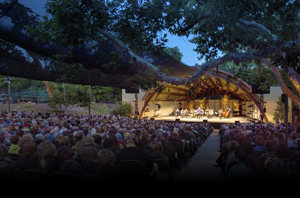
1952 The Festival holds first outdoor concert at the Libbey Bowl.
1953 Lukas Foss makes his first Ojai appearance as conductor.
1954 Lawrence Morton becomes first Artistic Director.
1955 Igor Stravinsky conducts his own works at the Festival.
1956 Stravinsky conducts his own Les Noces for Ojai audiences; permanent benches are added to the Libbey Bowl doubling the seating capacity to 750.
1957 Aaron Copland makes Ojai debut.
1960 For the first time, all Festival concerts are held at the Libbey Bowl.
1962 Jazz flutist Eric Dolphy performs Density 21.5 for solo flute by Edgard Varèse; the Festival includes a four-day prelude of discussions lectures/concerts with Luciano Berio, Milton Babbitt, Gunther Schuller, and Lukas Foss.
1963 Foss experiments with music from Don Giovanni using three orchestras to create a kind of stereophonic surround sound at the Bowl; Mauricio Kagel is guest composer/conductor.
1964 Ingolf Dahl (USC faculty composer) is Music Director and Ojai becomes a northern “outpost” for the USC music department.
1965 19-year-old pianist Michael Tilson Thomas is featured in concert; Harold Shapero’s Serenade in D for String Orchestra and Ramiro Cortes’ Concerto for Violin and Strings are premiered.
1966 Ojai celebrates its 20th anniversary; David Raskin, film composer and friend of Lawrence Morton, writes five special fanfares for the Festival.
1967 Lawrence Morton returns as Artistic Director; Pierre Boulez makes his Ojai debut in his fifth American appearance; Boulez delays the start time of a performance to allow the Santa Paula Railroad “Orange” train to pass.
1968 Pianist James Levine makes a guest appearance; Ingolf Dahl is Music Director once again and the Debut Orchestra of the Young Musicians Foundation is in residence.
1969 The trio of Michael Tilson Thomas, Michael Zearott, and Stefan Minde lead the Festival as co-Music Directors.
1970 Boulez returns for his second visit to Ojai and includes the first American performance of his Domaines; the Los Angeles Philharmonic makes its Ojai debut.
1971 Ojai celebrates its 25th anniversary; Gerhard Samuel makes first appearance as conductor and Artistic Director; Lou Harrison’s Chinese Classical Music Ensemble presents a morning concert of Chinese music.
1972 Ethnic music is highlighted under the baton of Michael Zearott including Mariachi music from Jalisco, Mexico, drum music from West Africa, and the Balinese group, Gamelan Angklung.
1973 Michael Tilson Thomas is Music Director for the next three seasons; Tilson Thomas brings minimalism to Ojai with Steve Reich’s Four Organs with Percussion plus John Cage’s Three Dances for Two Amplified Prepared Pianos, both in their West Coast premieres; annual jazz concerts begin in Ojai.
1975 Charles Wuorinen’s A Reliquary for Igor Stravinsky, a joint Ojai Festival/Buffalo Philharmonic commission, is given its world premiere.
1976 Copland returns to Ojai as does Lawrence Morton as Artistic Director.
1978 Young African-American conductor Calvin Simmons (assistant conductor of the Los Angeles Philharmonic) takes the baton as Music Director; Stravinsky’s Oedipus Rex is performed.
1980 Sequoia Quartet, UC San Diego-based SONOR and the Los Angeles Ballet perform.
1981 USC Symphony’s director Daniel Lewis is the Festival Music Director; the program includes the West Coast premiere of Benjamin Britten’s Our Hunting Fathers with tenor Jonathan Mack and the U.S. premiere of Clementi’s Symphony No. 4.
1982 The Festival presents a Stravinsky Centennial with Robert Craft as Music Director featuring all or part of nearly 40 compositions by the master in his honor.
1983 The Kronos Quartet and The Musicians of Swanne Alley make their Ojai debuts; Ravi Shankar returns.
1985 Under the recommendation of Pierre Boulez, young conductor Kent Nagano makes his first Ojai appearance as Music Director; The music of Olivier Messiaen is highlighted and attends his first Ojai Festival; Messiaen’s wife Yvonne Loriod performs in a piano recital.
1986 Due to the success of his first Ojai Festival, Nagano is invited to return as Music Director; Composer-conductor-percussionist Stephen “Lucky” Mosko conducts Saturday evening’s concert, which includes the West Coast premiere of John Adams’ The Chairman Dances.
1987 Lukas Foss comes back to Ojai; the Festival is dedicated to Lawrence Morton who passes away earlier in the year.
1988 Peter Maxwell-Davies is composer-in-residence; Nicholas McGegan is Music Director along with his Philharmonia Baroque Orchestra, which was also in residence this season.
1989 The Festival highlights the work of composer György Ligeti; Boulez is Music Director.
1990 Stephen “Lucky” Mosko returns but this time as Music Director and Elliott Carter is the composer-in-residence; for the first time in Festival history there is no music from the past or music by any European composers.
1992 Boulez as Music Director brings famed director Peter Sellars to Ojai; Sellars stages Stravinsky’s Histoire du soldat in its fifth incarnation in Ojai; however, he re-stages the work using inner-city actors in the cast and the back of a flatbed pick-up truck as part of the setting; Ara Guzelimian is named Artistic Director.
1993 John Adams makes his first Ojai appearance as Music Director highlighting the work of Cage, Reich and Gorecki.
1994 For his seventh Festival, Michael Tilson Thomas journeys back to Ojai as Music Director along with his New World Symphony.
1996 The 50th Anniversary of the Ojai Music Festival is led by Pierre Boulez; pianist Mitsuko Uchida makes her first appearance at the Festival.
1997 Pianist Emanuel Ax is Music Director; Daniel Harding is principal conductor; Artistic Director Ara Guzelimian bids farewell to Festival.
1998 Ernest Fleischmann begins his tenure as the Festival’s third Artistic Director; Mitsuko Uchida is Music Director; David Zinman is principal conductor.
1999 Esa-Pekka Salonen makes his Ojai debut and creates a program dedicated to Finnish music. Composer-in-residence is Magnus Lindberg.
2000 Sir Simon Rattle makes his Ojai debut as Music Director; the Festival features the U.S. premiere of Mark-Anthony Turnage’s Kai and the West Coast premiere of Thomas Adès’ Asyla.
2002 Marking the first time for a group, the Emerson String Quartet is Music Director. 2003 Pierre Boulez returns as Music Director with the Los Angeles Philharmonic.
2004 Kent Nagano returns, this time with his Los Angeles Opera Orchestra, which makes its Ojai debut; Thomas W. Morris begins his tenure as the Festival’s fourth Artistic Director; the Festival presents the world premiere of Korean composer Unsuk Chin’s SNAGS & SNARLS.
2005 British composer/conductor Oliver Knussen is Music Director; The Cleveland Orchestra with Music Director Franz Welser-Most; British composer Jonathan Cole’s Testament is given its world premiere and is a joint commission by the Sue Knussen Commissioning Fund, London Sinfonietta and the Festival.
2006 The 60th anniversary of the Ojai Music Festival is led by Robert Spano as Music Director and featured composer is Osvaldo Golijov; Golijov’s revised concert version of Ainadamar is given its West Coast premiere
2007 French pianist, Pierre Laurent Aimard, makes his Festival debut as Music Director along with Hungarian composer/conductor Peter Eötvös. The program includes two US premieres by Eötvös– Sonata per Sei and Chinese Opera.
2008 Conductor David Robertson marks his first Festival as music director. Composer Steve Reich returns after a 35-year absence with his music at the centerpiece of the Festival. Dawn Upshaw returns for her third visit to Ojai. French composer Francois Narboni enjoys the U.S. premiere of his work El Gran Masturbador and Michael Jarrell’s Cassandre makes its West Coast premiere.
2009 Chamber ensemble eighth blackbird debuts as the Festival’s second ensemble to be Music Director. The program includes the co-commissioned premiere of Slide composed by Rinde Eckert and Steven Mackey.
2010 British composer and Messiaen student, George Benjamin, makes his Festival debut. Program includes works of Benjamin, including the West Coast premiere of Into the Little Hill. Also featured is the music of Frank Zappa, the German orchestra Ensemble Modern, and a selection of Indian Ragas
2011 Dawn Upshaw returns for her fourth appearance, this time as music director celebrating the opening of the new Libbey Bowl. World premieres include the staged production of George Crumb’s The Winds of Destiny directed by Peter Sellars and composer Maria Schneider’s Winter Morning Walks performed by Upshaw. The Festival launches Ojai At Berkeley, which brings three Ojai concerts to Cal Performances at UC Berkeley.
2012 The Festival presented the West Coast premiere of John Luther Adams’ Inuksuit at Libbey Park performed by 48 musicians and the American premiere of Bent Sørensen’s Piano Concerto No. 2, “La Mattina,” performed by Music Director Leif Ove Andsnes
2013 Mark Morris, the first dancer/choreographer to serve as Music Director presents a program celebrating on iconic American composers Lou Harrison, Henry Cowell and John Cage
2014 MacArthur Fellow and pianist Jeremy Denk takes on the helm as Music Director. The Festival features the world premiere of the comic opera, The Classical Style: An Opera (of sorts) with music by Pulitzer-Prize winning composer Steven Stucky and a libretto by Jeremy Denk.
2015 The Festival celebrates the 90th birthday of Pierre Boulez with the West Coast premiere of A Pierre Dream; Steven Schick is music director, the first time a percussionist is named in this role; Ojai presents two west coast premieres by Pulitzer Prize winner John Luther Adams: Sila: The Breath of the World and Become River.
2016 Celebrated theatre/opera director Peter Sellars returns as music director and leads the Festival in its milestone 70th year with the US premiere of Kaija Saariaho’s Passion de Simone (chamber version), world premiere of Caroline Shaw’s This might also be a form of dreaming and the world premiere of Josephine Baker: A Portrait featuring Julia Bullock and Tyshawn Sorey.
2017 MacArthur prize winner/Downbeat Magazine musician of the year Vijay Iyer makes his Festival debut and brings a diverse community of new artists to Ojai; George Lewis’s Afterword, an opera – a celebration of the Association for the Advancement of Creative Musicians (AACM).
2018 Violinist Patricia Kopatchinskaja leads Ojai as Music Director featuring premieres and news works, including her own stage conceptualizations of Bye Bye Beethoven and Dies Irae.
2019 Soprano, conductor, teacher Barbara Hannigan introduces Ojai audiences to the LUDWIG orchestra and her mentoring program Equilibrium Young Artists; presented the staged version of Stravinsky’s The Rake’s Progress; the Festival recognizes Artistic Director Thomas W. Morris’ final year after a 16-year artistic legacy.

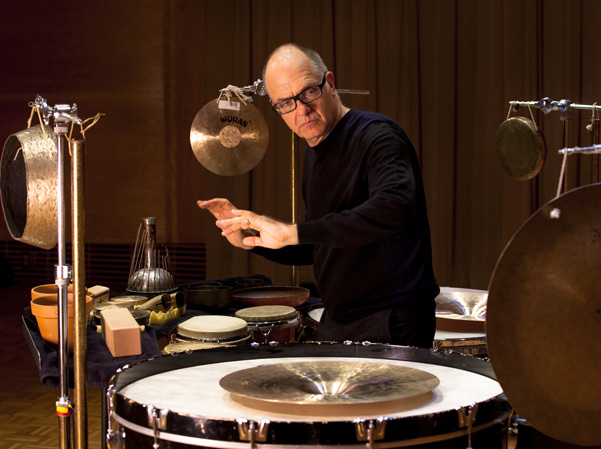 Percussionists are different. Their musical world has no fixed boundaries; there is no limit to the instruments they play and the sounds they make. There are no pretentious barriers between nature and artifice, no strictures on performing indoors or out. Their precursors reach back to the dawn of time and members of their guild are found in every culture. Hand a percussionist a random rock or the most exquisitely forged gong and he or she will make it speak, sometimes with breathtaking virtuosity born of the simplest gestures by which we interact, though touch, with our material world. So what does it mean that Ojai’s 2015 music director is a percussionist? Quite a lot if that percussionist is Steven Schick.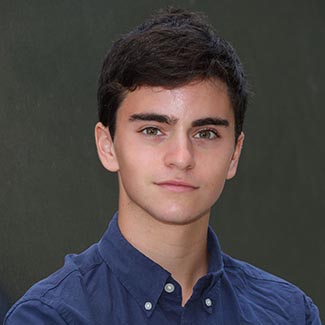
 Ethan Treiman (17) is a junior at Crossroads School for the Arts and Sciences in Santa Monica, California. He is looking forward to beginning his two year fellowship with the Los Angeles Philharmonic Composer Fellowship Program in fall, 2015. At Crossroads, he has taken courses in music theory taught by Mary Ann Cummins and Richard Grayson. Ethan is interested in musical theater and drama and has acted in several theater shows at Crossroads. He has performed with Crossroads’ 21st Street Singers Choir. Ethan draws inspiration from the music of George Gershwin, Claude Debussy, and Alberto Ginastera, along with John Williams and Stephen Sondheim. Ethan enjoys running Cross Country and Track, and hopes to one day compose music for stage and film.
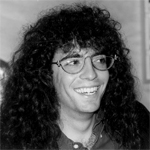 Mark Applebaum (b. 1967, Chicago) is Associate Professor of Composition and Theory at Stanford University where he served as John Philip Coghlan Fellow and received the 2003 Walter J. Gores Award for excellence in teaching. He received his Ph.D. in composition from the University of California at San Diego where he studied principally with Brian Ferneyhough. His solo, chamber, choral, orchestral, operatic, and electroacoustic work has been performed throughout the United States, Europe, Africa, and Asia.
 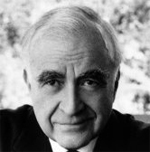 Born 13 June 1899 in Mexico City, Carlos Chávez was a renowned composer, conductor, and educator whose distinctive, often highly percussive music synthesized elements of Mexican, Indian, and Spanish-Mexican influence. A prolific writer of music and music criticism, Chávez’s oeuvre includes five ballets, seven symphonies, four concertos, a cantata and opera, and innumerable pieces for voice, piano, and chamber ensemble; he wrote two books (of which Toward A New Music: Music and Electricity became a major contribution and fundamental document of new musical thought) and more than 200 articles on music.
 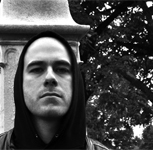 Mario Diaz de Leon has written a body of modern classical works focused on acoustic / electronic hybrids, often expressed as hypnotic walls and gestures of shimmering sound. His influences include the composers Scelsi, Ligeti, Dumitrescu, and Xenakis, free improvisation, underground metal, a wide range of electronic music, and noise / industrial music.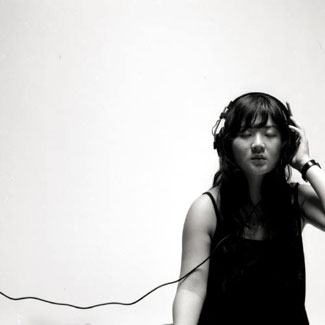
 Born and raised in Shanghai, China, currently based in NYC, Du Yun is a composer, multi-instrumentalist and performance artist. Her music exists at an artistic crossroads of orchestral, chamber music, theatre, opera, orchestral, cabaret, storytelling, pop music, visual arts and noise.
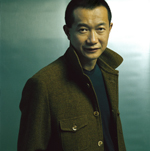 The conceptual and multifaceted composer/conductor Tan Dun has made an indelible mark on the world’s music scene with a creative repertoire that spans the boundaries of classical music, multimedia performance, and Eastern and Western traditions. A winner of today’s most prestigious honors including the Grammy Award, Oscar/Academy Award, Grawemeyer Award for classical composition and Musical America’s Composer of The Year, Bach Prize of the City of Hamburg and Moscow’s Shostakovich Award, Tan Dun’s music has been played throughout the world by leading orchestras, opera houses, international festivals, and on the radio and television.
 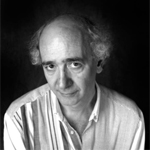 Born in Mexico City in 1943, Julio Estrada’s family was exiled from Spain in 1941. A composer, theoretician, historian, pedagogue, and interpreter, he began his musical studies in Mexico (1953-65), where he studied composition with Julián Orbón. In Paris (1965-69) he studied with Nadia Boulanger, Messiaen and attended courses and lectures of Xenakis. In Germany he studied with Stockhausen (1968) and with Ligeti (1972). He earned a Ph. D. in Musicology at Strasbourg University (1990- 1994).
 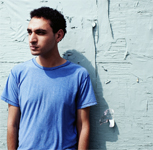 Mohammed Fairouz, born in 1985, is one of the most frequently performed, commissioned, and recorded composers of his generation. Hailed by The New York Times as “an important new artistic voice” and by BBC World News as “one of the most talented composers of his generation,” Fairouz integrates Middle-Eastern modes into Western structures, to deeply expressive effect. His large-scale works, including four symphonies and an opera, engage major geopolitical and philosophical themes with persuasive craft and a marked seriousness of purpose.
 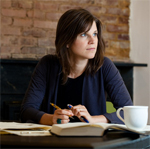 Suzanne Farrin’s music explores the interior worlds of instruments and the visceral potentialities of sound. Her music has been performed by some of the great musicians of today on stages across Europe and North and South America. Tim Page, the former classical music critic of the Washington Post wrote: “If you can imagine the dense, perfumed chords of Messiaen’s piano music combined with the clangorous, insistent, near-pictorial tone-clusters of Frederic Rzewski’s Winnsboro Cotton Mill Blues, you will have some idea of what Farrin’s work sounds like. Yet it transcends its derivations to leave the distinct impression of its own.”
 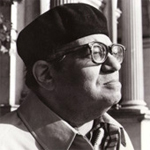 Morton Feldman was born in New York in 1926 and died there in 1987. Just like Cage, a close friend, he was an American composer – an American artist – an American in the true sense of the word.
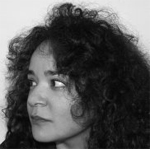 Identity has always been at the center of Gabriela Lena Frank’s music. Born in Berkeley, California, to a mother of mixed Peruvian/Chinese ancestry and a father of Lithuanian/Jewish descent, Frank explores her multicultural heritage most ardently through her compositions. Inspired by the works of Bela Bartók and Alberto Ginastera, Frank is something of a musical anthropologist. She has traveled extensively throughout South America and her pieces reflect and refract her studies of Latin American folklore, incorporating poetry, mythology, and native musical styles into a western classical framework that is uniquely her own.
 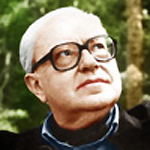 Alberto Ginastera was the leading Argentinian composer of the twentieth century, as important in giving the Argentinian folk heritage a voice in art music as Bartók was in Hungary. Ginastera was born in Buenos Aires on 11 April 1916. He studied musical privately as a child, later enrolling at the National Conservatoire of Music in his home city. His first compositions date from his early youth; he was 22 when his Piezas infantiles for piano won first prize in a competition.
 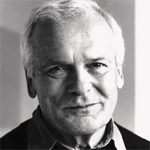 From 13 to 21 years of age Vinko Globokar lived in Ljubljana (Slovenia), where he made his debut as a jazz musician. He subsequently studied trombone at the National Conservatory in Paris (diploma in trombone and chamber music). He studied composition and conducting with René Leibowitz, counterpoint with André Hodeir, and continued his studies with Luciano Berio.
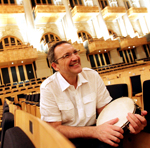 Osvaldo Golijov grew up in an Eastern European Jewish household in La Plata, Argentina. Born to a piano teacher mother and physician father, Golijov was raised surrounded by classical chamber music, Jewish liturgical and klezmer music, and the new tango of Astor Piazzolla. After studying piano at the local conservatory and composition with Gerardo Gandini he moved to Israel in 1983, where he studied with Mark Kopytman at the Jerusalem Rubin Academy and immersed himself in the colliding musical traditions of that city.
 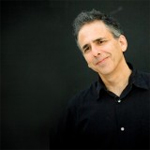 Michael Gordon’s music merges subtle rhythmic invention with incredible power embodying, in the words of The New Yorker‘s Alex Ross, “the fury of punk rock, the nervous brilliance of free jazz and the intransigence of classical modernism.”
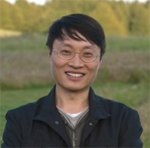 Heralded as “one of the most exciting voices in New Music” (The Wire), Lei Liang (梁雷) is a Chinese-born American composer whose works have been described as “hauntingly beautiful and sonically colorful” by The New York Times.
 Born in 1908 in Avignon into a literary family (his father, Pierre Messiaen, was a translator and his mother, Cécile Sauvage, a poet), Olivier Messiaen was marked by the idea of language. He first devised his own language (his book Technique of My Musical Language was completed in 1943) and based it on the modality that, as a child, he had discovered in Debussy, and that he later developed at the Paris Conservatory with Paul Dukas (composition), Maurice Emmanuel (history of music) and Marcel Dupré (organ). He then created his own poetic language, from which all his vocal works issue.