

 This year, the Ojai Music Festival will present 37 events in just four days! This includes main Libbey Bowl concerts, Ojai Talks, Ojai Films, Concert Insights, and an abundance of free community events. Here are some new updates on some of these free events to help better prepare you:
|
Sat June 8: The parking lot at Besant Hill will open at 7:00am. Please bring a chair or blanket for the concert, or feel free to wander as you enjoy John Luther Adams’ Strange and Sacred Noise. We highly recommend wearing flat comfortable shoes. Besant Hill School’s address is 8585 Santa Paula Ojai Road.
Sun June 9: Due to the high volume of ticket requests for the Sunday Sunrise Concert featuring John Luther Adams’ songbirdsongs, we are providing a free bus shuttle to take ticketed patrons to Meditation Mount. The shuttle and all concert parking will be located at Boccali’s Restaurant and the first shuttle will begin loading at 7:00am. Please plan to arrive well before the concert starts to guarantee parking. Only authorized vehicles will be allowed at Meditation Mount. Boccali’s address 3277 Ojai Santa Paula Road (located at Ojai Avenue and Reeves Road).
While you wait for the concert to begin at 8:00am, you can participate in bird watching with the Ojai Valley Land Conservancy at 7:15am. Please bring your own binoculars. RSVP at info@ojaifestival.org.
Maps and directions will be available at the Festival box office. If you have any questions, please call our box office at 805 646 2053.
|
Gamelan Performances: Fri, June 7 and Sat, June 8
These two free concerts performed by the acclaimed Gamelan Sari Raras at the Libbey Park Gazebo will be special treats for the community! Limited seating will be provided; we encourage you to bring your own chairs or blankets.
Fitness Classes: Fri, June 7; Sat, June 8; Sun, June 9
Dance with MMDG: Sat, June 8
Festival patrons and the Ojai community have a rare opportunity to join dancers from the acclaimed Mark Morris Dance Group, who will help jump-start the day with basic stretching. The fitness classes will be held Friday, Saturday and Sunday morning, 9:00-10:00am, at the Libbey Park Flagpole Lawn. We recommend wearing comfortable shoes or sneakers.
And there’s more — learn dance moves from dancers of the Mark Morris Dance Group who will teach a few moves from one of the works featured at the Friday evening concert. This free event will be at the Ojai Art Center. We recommend wearing flat shoes (you will also have the option to dance barefoot).
Both events are free and open to the public.
View complete schedule here >>
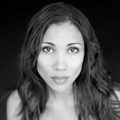 Anna Bowen is thrilled to be performing at the 69th Ojai Music Festival. Her credits include the on-Broadway production of 101 Dalmatians, as well as several off-Broadway productions, including The Music of Motown, Rom and Julz, Doubletime, and Wanda’s World. On the West Coast, she has appeared in Les Miserables, RENT, Aladdin, Aida, Evita, among others, as well as with the Transcendence Theatre Company. Also active on television, her credits include appearances on Castle, Mixology, Law and Order SVU, and As The World Turns. She can be seen around Los Angeles singing with the Overstreets New Orleans Jazz Band, The Melodies, and with eclectic singer Lawrence Rothman. Bowen’s non-fiction book of interviews, Me+You, is available now and her forthcoming work, Being Biracial, will be published next spring.
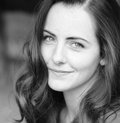 Charlotte Cannon, originally from Brighton, England, is a recent alumnus of the Chicago College of Performing Arts. Since graduating last May she has had the opportunity to collaborate on new works with the Chicago Symphony Orchestra, Lookingglass Theatre Company, Chicago Children’s Choir, Red Tape Theatre, The Inappropriate Theatre Company, and Fearless Theatre. She is represented by Stewart Talent.
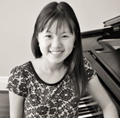 Hailing from San Francisco, Josephine Chan (11) started piano lessons at the age of six. She is currently a scholarship student in the Pre-College Division at the San Francisco Conservatory of Music, where she studies piano performance with Corey McVicar. She was awarded top prize at the 2012 San Francisco Chopin Competition, and has enjoyed success at several competitions including the 2015 Marilyn Mindell Piano Competition, the 2011 and 2013 Junior Bach Festivals, and the 2013 American Protégé International Piano Competition. Performance highlights include: Carnegie Hall’s Weill Recital Hall, the San Francisco Conservatory Fanfare Luncheon, San Francisco Conservatory Showcase Concert, and Lang Lang’s 101 Pianists Workshop.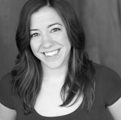
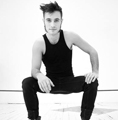 A professional actor since the age of seven, performance flows naturally from this one-man circus. Colin Creveling discovered ensemble-based circus while pursuing his passion for theatre at the Chicago Conservatory for Performing arts. Inspired by the instruction of Keland Scher, David Kersnar, and Douglas Grew, he began working with Lookingglass Theatre Company in collaboration with the Chicago Symphony Orchestra. This union of theatre and circus was the catalyst for the creation of the Inappropriate Theatre Company, an ensemble of physical actors and circus performers who develop large-scale spectacle performances and character-driven circus acts for shows and events within the city. Having spent the last 3 years on and off the road, from 150 shows at the largest beach resort in India to the country’s foremost traveling youth circus, Smirkus, Colin is elated to be working with his CCPA family and the monumentally talented artists and staff of the Ojai Music Festival and UC Berkeley.
 615 W. Ojai Ave.
 Joseph is an actor, circus performer, performance artist, and rapper residing in Chicago. Since his graduation in 2011 he has had the pleasure of working with numerous theatrical venues including: Lookingglass Theatre Company, Next Theatre Company, Black Ensemble Theater, Actor’s Gymnasium, Chicago Children’s Choir, Fox Valley Repertory, and several shows with the Chicago Symphony Orchestra including A Pierre Dream. He is delighted to be a part of such a marvelous production with his friends, and thrilled to be sharing Pierre’s story with the world.
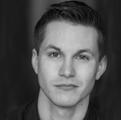 Derek Herman is a native of Portland who has since moved to the windy city of Chicago. While in Portland, Herman was in the West Coast premiere of Speech & Debate with Artists Repertory Theatre. His other appearances in the Pacific Northwest include with the Profile Theatre and Oregon Children’s Theatre. Since moving to Chicago, Herman has performed with the Chicago Shakespeare Theatre in Since I Suppose, as well as with The Artistic Home, Teatro Vista, and The Raven Theatre. Derek is founder and Artistic Director of Fearless Theatre. He holds a BFA from the Chicago College of Performing Arts at Roosevelt University. Learn more at derekherman.weebly.com.
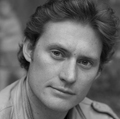 Growing up in the Southwestern mountains of Colorado, Nyle Kenning has had the opportunity to experience nature in her infinite forms. He has been fortunate to have perceptive, challenging, and loving teachers for all of his life. Kenning currently lives in Chicago as an actor and theatre artist where he pursues a greater understanding of Shakespeare, music, and the circus arts. He feels blessed to be a part of this great piece again.


 905 Country Club Rd