

Click images to expand.
If you have any questions on seating, please reach out to us!
Box Office Hours
Mon-Fri: 10am to 5pm
805 646 2053
boxoffice@ojaifestival.org
For other helpful information on your Festival experience, visit our FAQ page

Click images to expand.
If you have any questions on seating, please reach out to us!
Box Office Hours
Mon-Fri: 10am to 5pm
805 646 2053
boxoffice@ojaifestival.org
For other helpful information on your Festival experience, visit our FAQ page


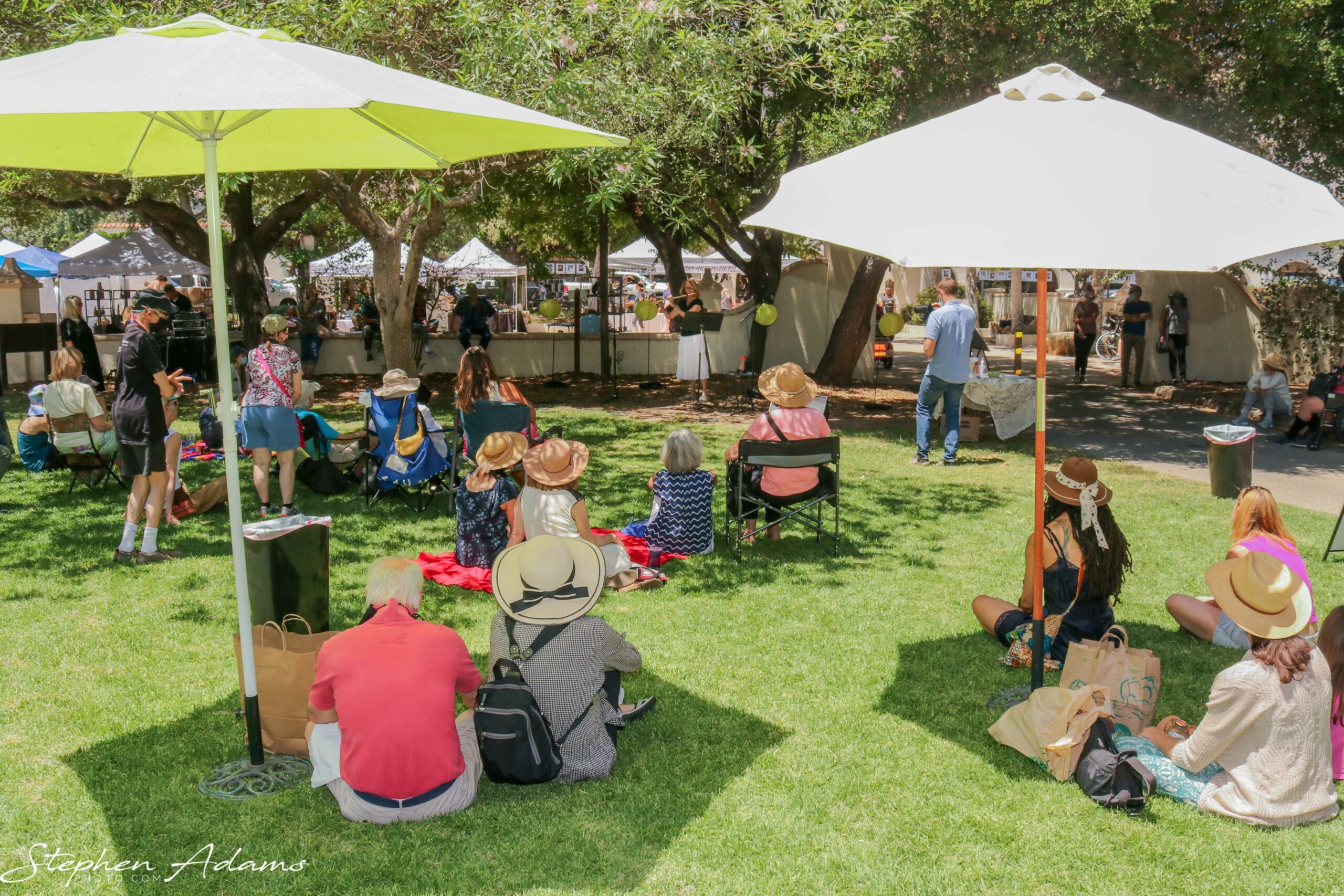
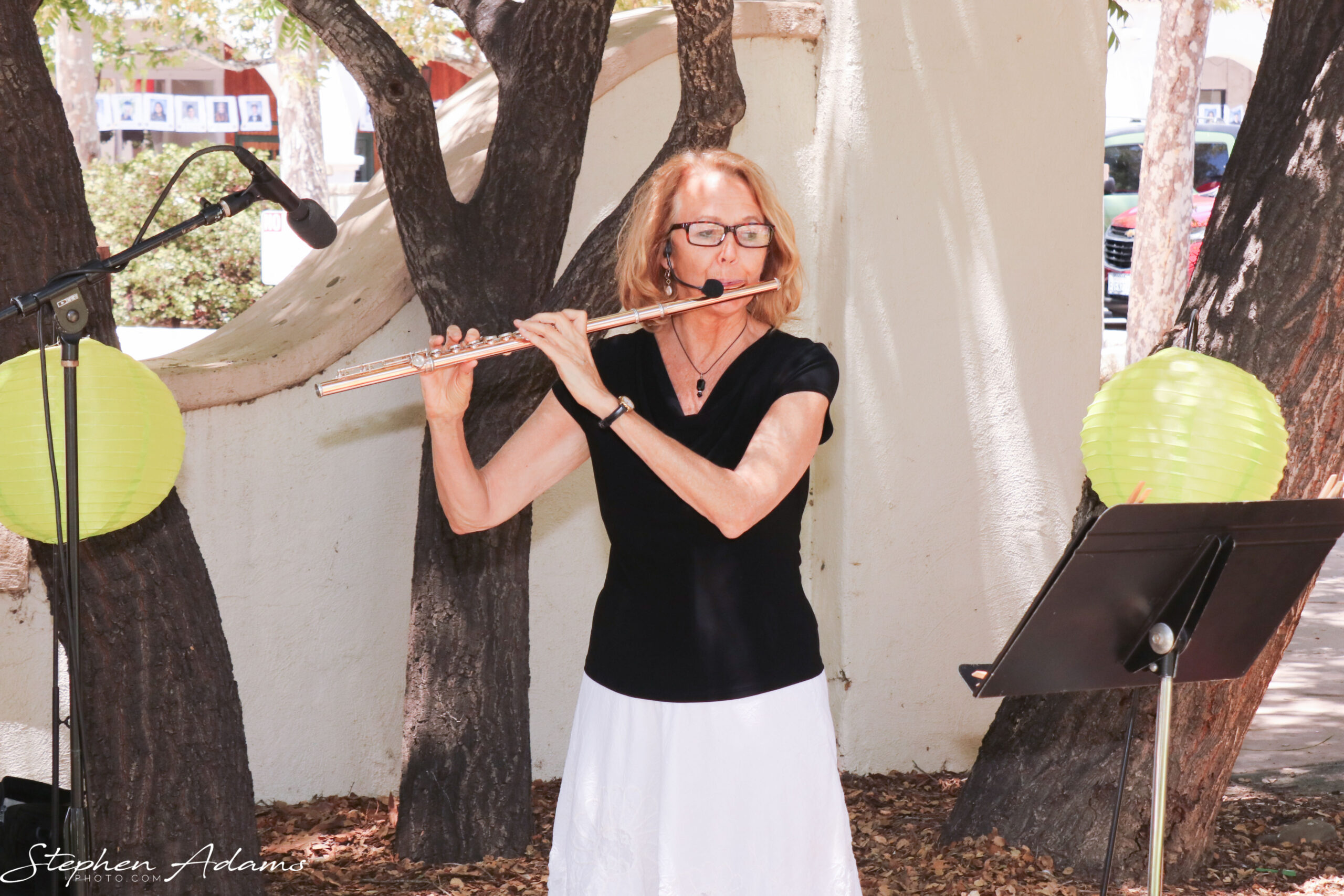
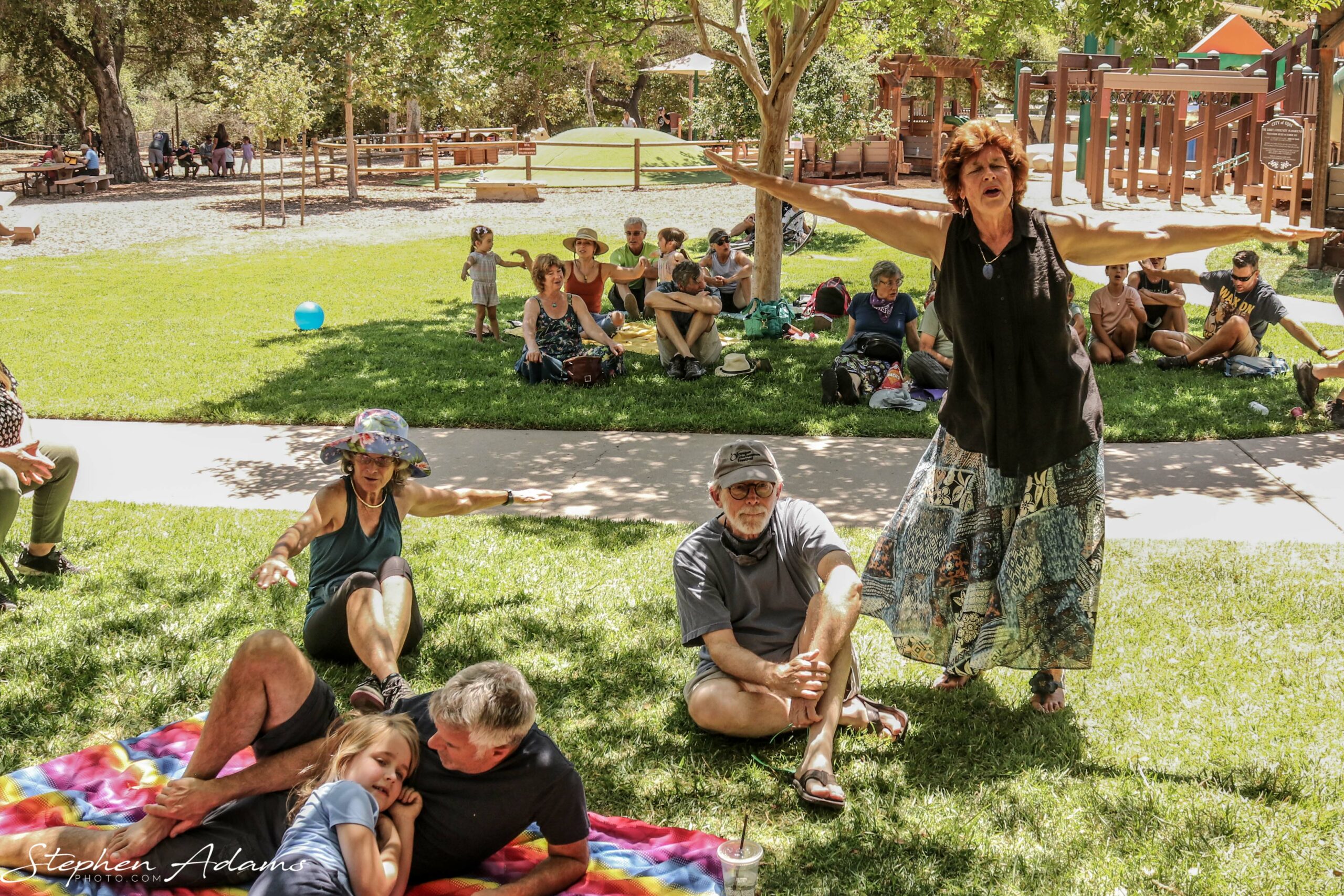
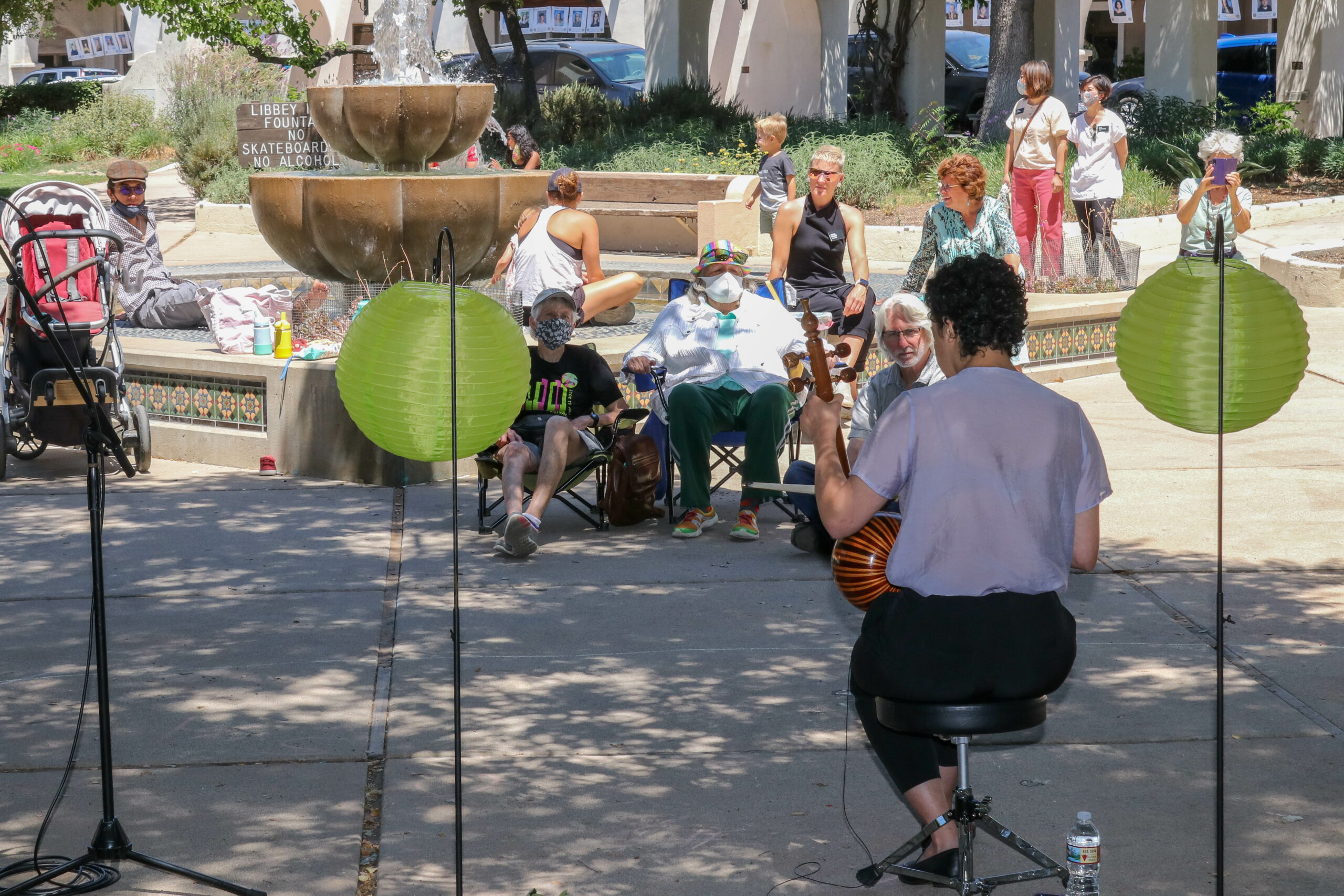
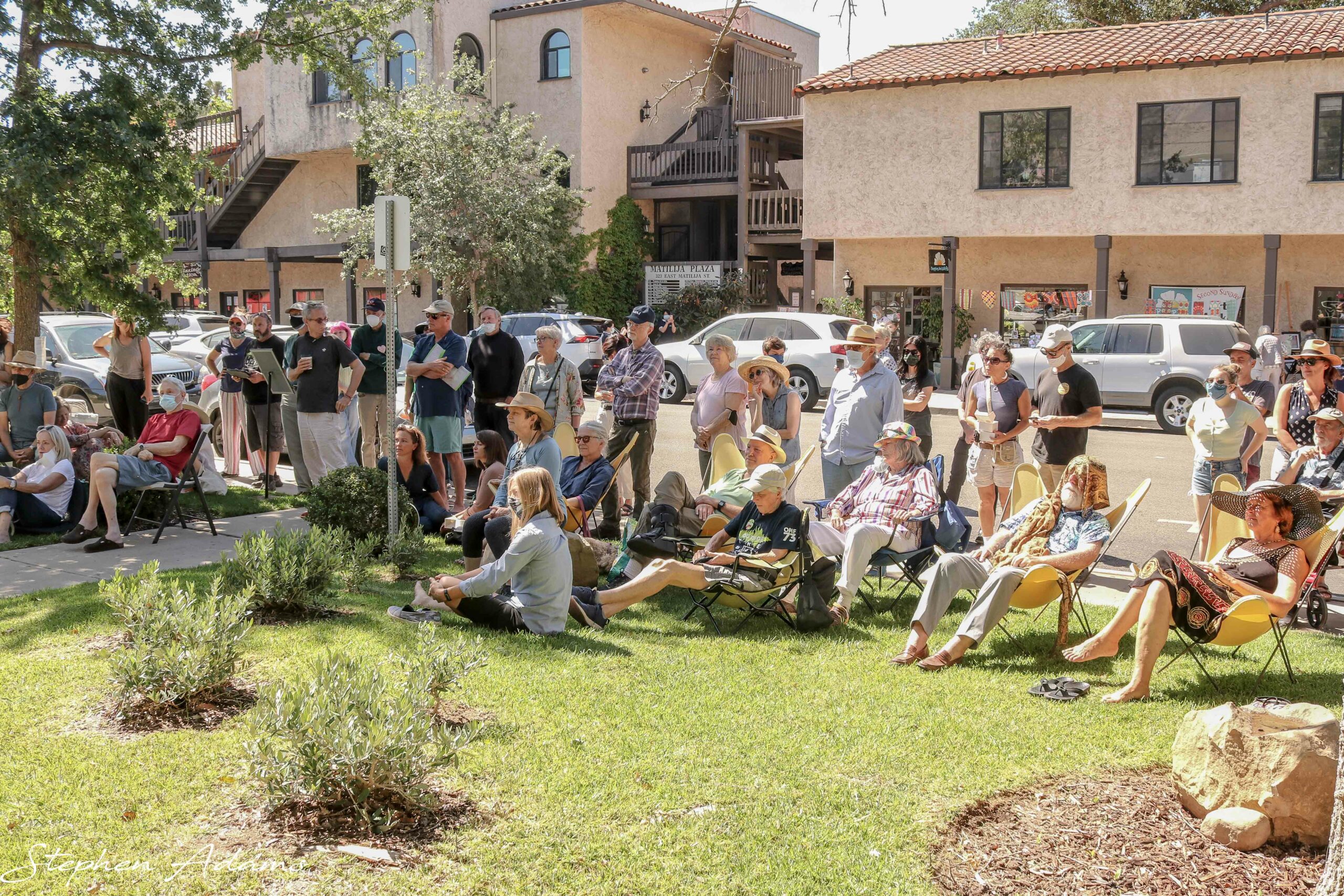
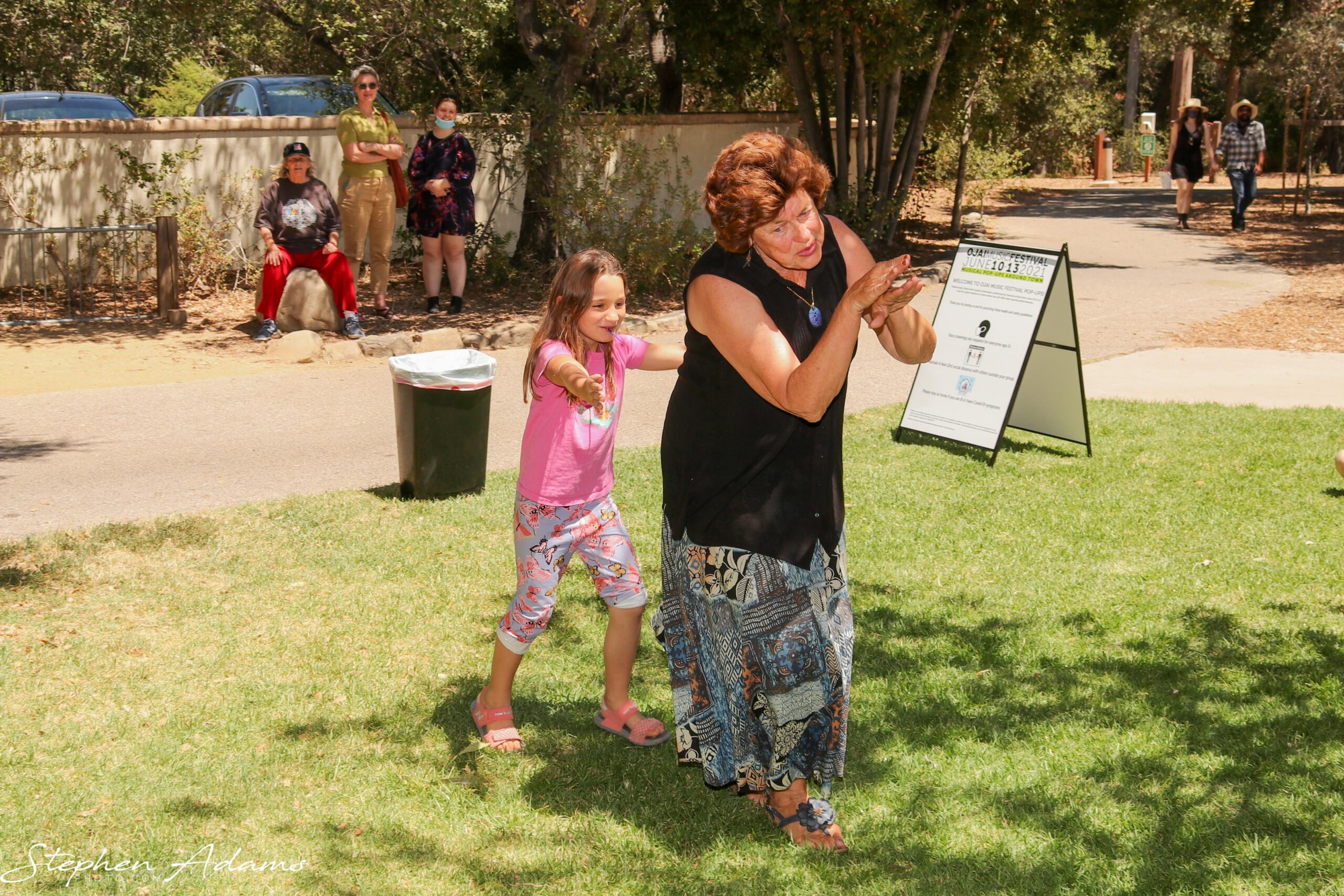
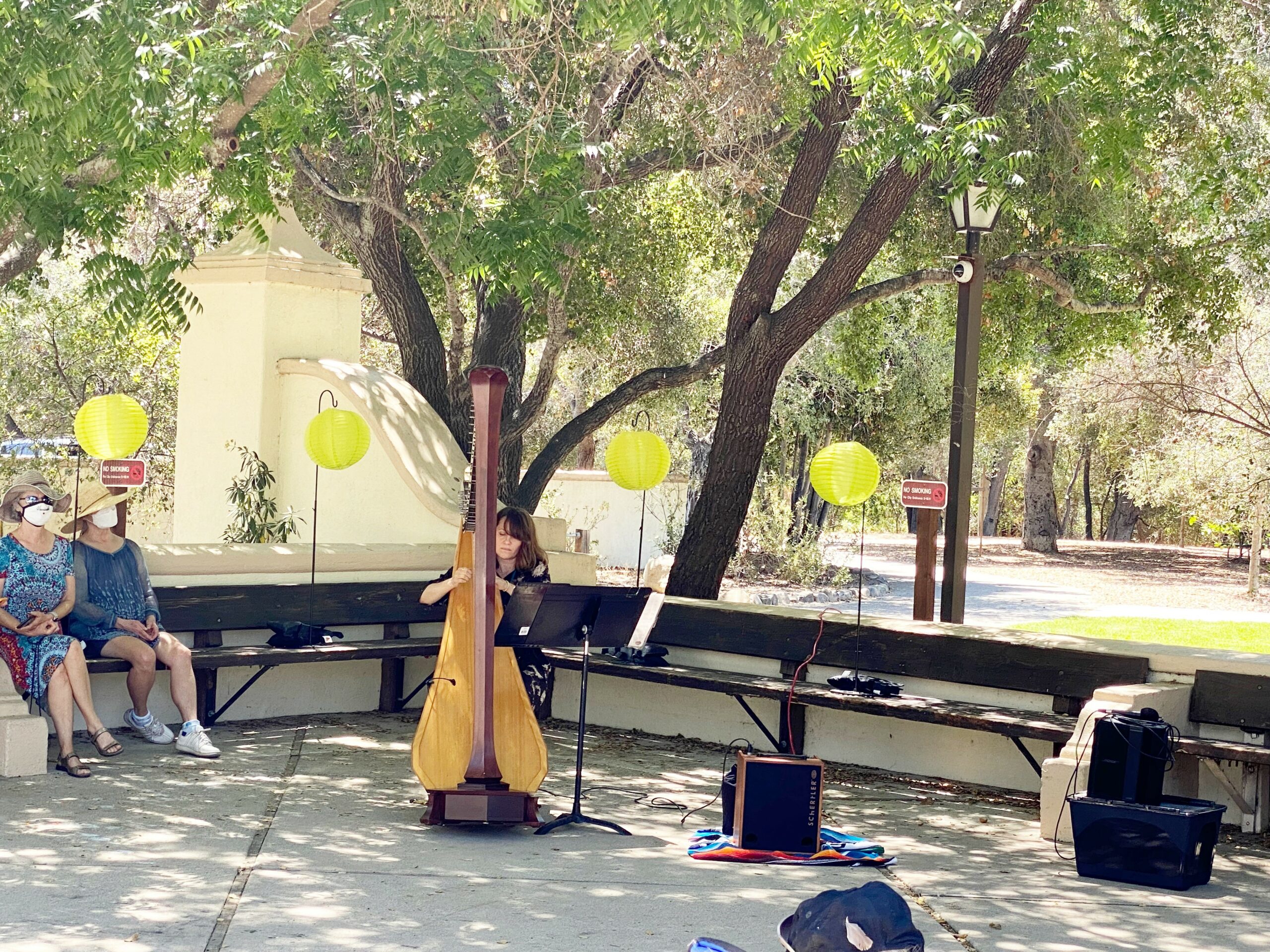
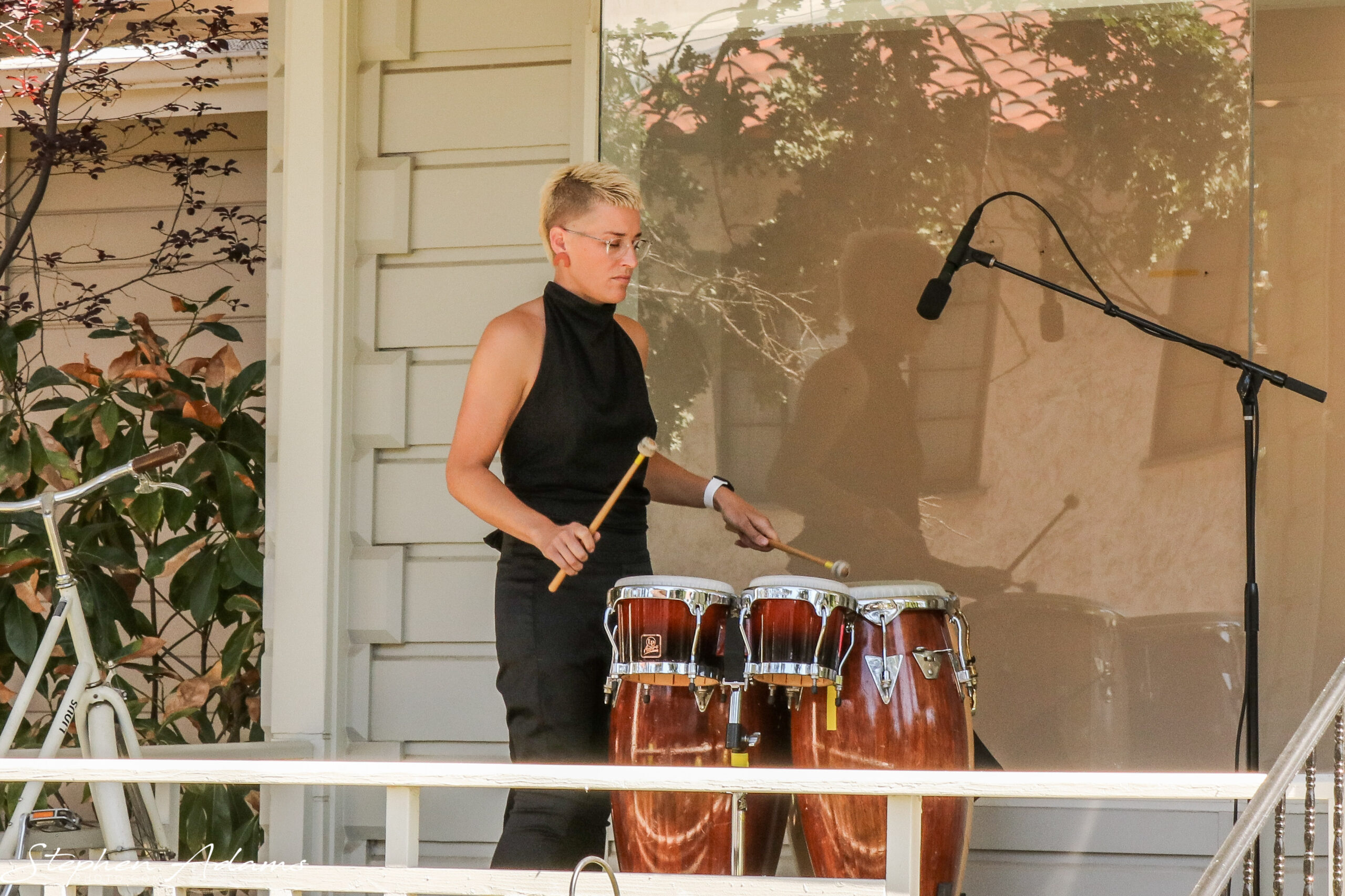
Thursday, June 10
Niloufar Shiri, kamâncheh (bowed fiddle of the Middle East and Central Asia)
11:30am at the Fountain area at Libbey Park
5:00pm at the “Pocket Park” at the Arcade Plaza
Friday, June 11
Shelley Burgon, harp
11:30am at the Fountain area at Libbey Park
5:00pm at the “Pocket Park” at the Arcade Plaza
Saturday, June 12
Helen Kim, violin
10:00am at Love Social Cafe (205 No. Signal St)
BRAVO event with Laura Walter, flute
2:00pm at Libbey Park near the Fountain
Sunday, June 13
Fiona Digney, percussion
10:00am at Porch Gallery Ojai (310 E Matilija Street)
11:30am at Libbey Park Gazebo
The health and safety of our patrons is paramount to the Festival. We will be following current state and local health protocols during our events.
Dear Ojai Festival friends,
I write this on the first day of summer at a welcome time of our world opening up. There is a warmth in the air and the promise of gathering with friends and family.
Music ultimately thrives in the moment of its sounding. When John Adams and I began talking about the 2021 Ojai Festival as long ago as fall 2019, we never imagined the resonance that our incipient plans would have nearly two years later. Neither of us wanted the 75th anniversary to be a retrospective of the Festival’s golden past and John specifically wanted to provide a forum for a new generation of composers that he admired. Coming out of a pandemic, this focus on younger composer now reads like a much-needed statement of faith in the present, and the promise of the future.
John has been one of the most generous of composers throughout his career. As a conductor, he has led something in the vicinity of 100 premieres of new works with orchestras and ensembles across the world. His friendships and collaboration with such artists as Peter Sellars, Dawn Upshaw, Leila Josefowicz, Julia Bullock, Lorraine Hunt-Lieberson, and Sanford Sylvan have been among the defining milestones of their careers. John and I met at a Cal Arts Festival in the 1980s, when his Grand Pianola Music was creating a stir for its unabashed exuberance and immediacy. His works then and in the intervening decades have helped create a unique American voice for our time – he seamlessly folds in multiple influences and experiences, from the Duke Ellington band playing on a summer platform at Lake Winnipesaukee in his New Hampshire childhood, to New England Transcendentalism, to the Schoenberg Chamber Symphony, to the California sensibilities of the Beat Generation, to defining political events of our time as the material of opera, to the symphonies of Sibelius and much more.
John recently made a visit to Ojai during the mid-June week which had been the period of the original scheduled Festival. We shared a series of free pop-up mini-concerts in outdoor settings throughout Ojai, as a gift to the community and in anticipation of the Festival to come in September. It was such a joy to hear music again in the summer air of Ojai, with those magical Topa Topa mountains framing the scene.
Here is a small gift to you with our heartfelt thanks for all that you do and for your belief in the future of the Ojai Music Festival. While in Ojai earlier this month, we were graced by the company of Niloufar Shiri, a composer, improviser, and kamancheh player, who is currently working on her doctorate in composition at UC Irvine. The musical heritage of the kamancheh, a bowed lap fiddle, ranges from the Iran and the Middle East to Central Asia. Niloufar recorded this brief work in the magical setting of the Ojai Meadows Preserve, one of the numerous glorious natural areas preserved for all by the Ojai Valley Land Conservancy.
We bring this to you in celebration of music made in Ojai and with deep gratitude for your continued support. Thank you and see you at Libbey Bowl in September!
With thanks and warm regards from all of us at the Ojai Festival,

Ara Guzelimian
Artistic & Executive Director
ABOUT Niloufar Shiri, Kamancheh
Niloufar Shiri is a kamancheh player and composer from Tehran, Iran, trained in Iranian classical music. Niloufar is a graduate in kamâncheh performance of the Tehran Music Conservatory and received her bachelor degree with honors in composition from UC San Diego.
She is an imaginative interpreter of Iranian music and uses story-telling and poetry as a source of inspiration for her deeply textural and often ghostly music. Her compositions use aspects of contemporary Iranian poetry to incorporate the enigmatic complexity of Iranian literature and culture.
As a kamancheh player and composer, she has received commissions and collaborated with numerous ensembles and festivals inside and outside of the United States including the International Contemporary Ensemble, Long Beach Opera, Mostly Mozart, Tehran Contemporary Music Festival, Atlas Ensemble among others. In conjunction with her studies at UC San Diego, she has also been directly studying and researching Iranian classical music with the research team of maestro Hossein Omoumi at UC Irvine and in 2012, the research received a grant from the National Endowment for the Arts.
She is currently pursuing her Ph.D. in Integrated Composition, Improvisation, and Technology at UC Irvine.

The Ojai Valley Land Conservancy is a community supported nonprofit that protects and restores the open space, wildlife habitat, watersheds, and views of the Ojai Valley for current and future generations. In the Ojai Valley, the OVLC manages roughly 2,300 acres of open space. On these lands the OVLC maintains 27 miles of trail, guides hundreds of visitors, and hosts tens of thousands of school children, hikers, equestrians, and others each year. For more information visit their website here.
Video production by Two Fish Digital.


Thursday, June 10
Niloufar Shiri, kamâncheh (bowed fiddle of the Middle East and Central Asia)
11:30am at the Fountain area at Libbey Park
REPERTOIRE
Avaz-e Dashti
Abolhassan Sabā Zard-e Malijeh
5:00pm at the “Pocket Park” at the Arcade Plaza
REPERTOIRE
Abolhassan Sabā Kārehvān
Avaz-e Dashti
ABOUT THE ARTIST
Niloufar Shiri is a kamancheh player and composer from Tehran, Iran, trained in Iranian classical music. Niloufar is a graduate in kamâncheh performance of the Tehran Music Conservatory and received her bachelor degree with honors in composition from UC San Diego.
She is an imaginative interpreter of Iranian music and uses story-telling and poetry as a source of inspiration for her deeply textural and often ghostly music. Her compositions use aspects of contemporary Iranian poetry to incorporate the enigmatic complexity of Iranian literature and culture.
As a kamancheh player and composer, she has received commissions and collaborated with numerous ensembles and festivals inside and outside of the United States including the International Contemporary Ensemble, Long Beach Opera, Mostly Mozart, Tehran Contemporary Music Festival, Atlas Ensemble among others. In conjunction with her studies at UC San Diego, she has also been directly studying and researching Iranian classical music with the research team of maestro Hossein Omoumi at UC Irvine and in 2012, the research received a grant from the National Endowment for the Arts.
She is currently pursuing her Ph.D. in Integrated Composition, Improvisation, and Technology at UC Irvine.
QUICK LINKS
2021 Festival Schedule >
Purchase Festival Passes >
The health and safety of our patrons is paramount to the Festival. We will be following current state and local health protocols during our events.
Friday, June 11
Shelley Burgon, harp
11:30am at the Fountain area at Libbey Park
5:00pm at the “Pocket Park” at the Arcade Plaza
REPERTOIRE
CAGE In a Landscape
Colorado
SHELLEY BURGON Prospect
ABOUT THE ARTIST
Shelley Burgon is a harpist, composer and sound artist who writes and performs ambient
songs for harp, voice and electronics. She has an extensive history as an improvisor and
interpreter of classical new music; performing the works of composers such as Pauline
Oliveros, John Cage, Yoko Ono, James Tenney, Berio and Earle Brown. After many years
of living in NYC where she had the pleasure to perform at renowned institutions such as the
Whitney Museum, MoMA and Issue Project Room Shelley now resides in Ojai, CA. Shelley
has recorded harp for, Bjork, Anthony Braxton, William Tyler, Roberto Lange, Miho Hatori
and for her former band Stars Like Fleas.
Her music has been commissioned by The Merce Cunningham Dance Company for the
Hudson Valley Project at the Dia Museum, Ne(x)tworks, and multimedia artist Katherine
Behar. Film credits include harpist on First Cow, Mission Blue and We Steal Secrets. She will
be releasing her first full length record this year on Thin Wrist Recordings and is working on a
harp meditation series. Visit her website at www.shelleyburgon.com
QUICK LINKS
2021 Festival Schedule >
Purchase Festival Passes >
The health and safety of our patrons is paramount to the Festival. We will be following current state and local health protocols during our events.
Saturday, June 12
Laura Walter, BRAVO education coordinator
2:00pm at Libbey Park
REPERTOIRE
DEBUSSY Syrinx
HU JIEXU Here Comes the Cuckoo
MESSIAEN Blackbird
ABOUT THE ARTIST
 Laura Walter received a Master of Music degree in Flute Performance from the University of Kentucky. She studied flute with various members of the Cincinnati Symphony, New York Philharmonic and the London Symphony. She serves on the faculty of Westmont College and also performs with the Santa Barbara Symphony, Opera Santa Barbara, as well as local choral societies. Laura has performed with several orchestras across the country, is active as a clinician and competition adjudicator, and has established and conducted flute choirs at colleges and festivals across the country.
In her work with students and teachers she uses the experience of interactive play to develop motivation and promote community building and conflict resolution skills. This method, called “Education Through Music”, or ETM, builds the acquisition of language and movement to enhance the imagination and stabilization of the child.
Children in ETM classes create beauty, which leads to empathy and hope, embracing the important contribution of arts education. Teachers often say, “ETM has taught these children to be kind and respectful by creating beautiful music with each other.”
Learn more about the Festival’s BRAVO program >
QUICK LINKS
2021 Festival Schedule >
Purchase Festival Passes >
The health and safety of our patrons is paramount to the Festival. We will be following current state and local health protocols during our events.
Sunday, June 13
Fiona Digney, percussion
10am at Porch Gallery Ojai
11:30am at the Gazebo in Libbey Park
REPERTOIRE
CAGE I Ching
Michael GORDON XY
ABOUT THE ARTIST
Fiona Digney in an Australian-born percussionist, educator, and producer based in San Diego. Fiona has spent the last decade in the United States, The Netherlands, and London, becoming an internationally recognized percussionist with highly-profiled accomplishments across a wide range of percussive styles from experimental, improvisatory, and world music styles to orchestra, chamber, and theatrical contexts, Fiona’s thrilling performances have been described as “compelling and authoritative” by Christian Hertzog (San Diego Union-Tribune) and garnered praise from the premier music critic of the United States, Alex Ross (The New Yorker, 28th June 2018). Having recently received her doctorate in percussion performance at UCSD, exploring the decolonization of a personal performance praxis, Fiona now enjoys a wide-ranging freelance career in Southern California, where she engages in various percussive styles from experimental, improvisatory, and world music styles to orchestra, chamber, and theatrical contexts. In addition to her performance career, Fiona champions her fellow musicians through her artistic administrative roles as managing director & production manager of Art of Elan, and as producer & artistic administrator of the Ojai Music Festival.
QUICK LINKS
2021 Festival Schedule >
Purchase Festival Passes >
The health and safety of our patrons is paramount to the Festival. We will be following current state and local health protocols during our events.
Saturday, June 12
Helen Kim, violin
10am at Love Social Cafe (205 North Signal Street)
Repertoire
Carlos SIMON Between Two Worlds
G.P. TELEMANN Fantasia No. 10
PIAZZOLLA Tango Etude No. 3
ABOUT THE ARTIST
Violinist Helen Kim joined the San Francisco Symphony as Associate Principal Second Violin in 2016. A member of the Saint Louis Symphony from 2011 to 2016, she made solo appearances with that orchestra in both the 2013 and 2014 seasons. She has spent her summers teaching and performing at festivals including Aspen, Yellow Barn, Luzerne, and the Innsbrook Institute. Ms. Kim received a bachelor’s degree from the University of Southern California, where she was Presidential Scholar, and a master’s degree from the Yale School of Music.
QUICK LINKS
2021 Festival Schedule >
Purchase Festival Passes >
The health and safety of our patrons is paramount to the Festival. We will be following current state and local health protocols during our events.
Thursday, June 10
Niloufar Shiri, kamâncheh (bowed fiddle of the Middle East and Central Asia)
11:30am at the Fountain area at Libbey Park
5:00pm at the “Pocket Park” at the Arcade Plaza
REPERTOIRE
Abolhassan Sabā Zard-e Malijeh
Avaz-e Dashti
ABOUT THE ARTIST
Niloufar Shiri is a kamancheh player and composer from Tehran, Iran, trained in Iranian classical music. Niloufar is a graduate in kamâncheh performance of the Tehran Music Conservatory and received her bachelor degree with honors in composition from UC San Diego.
She is an imaginative interpreter of Iranian music and uses story-telling and poetry as a source of inspiration for her deeply textural and often ghostly music. Her compositions use aspects of contemporary Iranian poetry to incorporate the enigmatic complexity of Iranian literature and culture.
As a kamancheh player and composer, she has received commissions and collaborated with numerous ensembles and festivals inside and outside of the United States including the International Contemporary Ensemble, Long Beach Opera, Mostly Mozart, Tehran Contemporary Music Festival, Atlas Ensemble among others. In conjunction with her studies at UC San Diego, she has also been directly studying and researching Iranian classical music with the research team of maestro Hossein Omoumi at UC Irvine and in 2012, the research received a grant from the National Endowment for the Arts.
She is currently pursuing her Ph.D. in Integrated Composition, Improvisation, and Technology at UC Irvine.
QUICK LINKS
2021 Festival Schedule >
Purchase Festival Passes >
The health and safety of our patrons is paramount to the Festival. We will be following current state and local health protocols during our events.
Thursday, June 10
Niloufar Shiri, kamâncheh (bowed fiddle of the Middle East and Central Asia)
11:30am at the Fountain area at Libbey Park
5:00pm at the “Pocket Park” at the Arcade Plaza
Friday, June 11
Shelley Burgon, harp
11:30am at the Fountain area at Libbey Park
5:00pm at the “Pocket Park” at the Arcade Plaza
Saturday, June 12
Helen Kim, violin
10:00am at Love Social Cafe (205 No. Signal St)
BRAVO event with Laura Walter, flute
2:00pm at Libbey Park near the Fountain
Sunday, June 13
Fiona Digney, percussion
10:00am at Porch Gallery Ojai (310 E Matilija Street)
11:30am at Libbey Park Gazebo
The health and safety of our patrons is paramount to the Festival. We will be following current state and local health protocols during our events.
Press Play; Click Box Above to Go Full Screen [ ]
Festival composer Dylan Mattingly and harpist Emily Levin discuss Dylan’s new work Sunt Lacrimae Rerum (these are the tears of things), which will receive its world premiere with the LA Phil New Music Group in Ojai this coming September 19, 2021 as part of the 75th Ojai Music Festival.
Dylan has a unique voice that draws as much from innovative, often microtonal sonic language as it does from his deep absorption in the classics of ancient Greece and Rome. The piece takes inspiration (and its title) from Virgil’s Aeneid – Aeneas, fleeing the destruction of war, finds a vision of salvation in a work of art. We will also watch a performance of Dylan’s La Vita Nuova for guitar and harp by Festival artist Emily Levin and guitarist Colin Davin.

Dylan Mattingly’s work is fundamentally ecstatic, committed to transformative experience. His music has been described as “gorgeous” by the San Francisco Chronicle, “transcendent” and “the most poignantly entrancing passages of beautiful music in recent memory” by LA Weekly, and “in the pantheon of contemporary American composers” (Prufrock’s Dilemma) and is often informed by his scholarship on Ancient Greek music and poetry.
Dylan is the executive and co-artistic director of the NY-based new-music ensemble Contemporaneous. Among the ensembles and performers who have commissioned his music are the Los Angeles Philharmonic, the Cabrillo Festival of Contemporary Music, the Berkeley Symphony, John Adams, Marin Alsop, and many others. Mattingly’s in-development 6-hour multimedia opera, Stranger Love, has recently been presented on the PROTOTYPE Festival and the Bang on a Can Marathon. Mattingly was the Musical America “New Artist of the Month” for February 2013 and was awarded the Charles Ives Scholarship by the American Academy of Arts and Letters in 2016.
Emily Levin is the Principal Harpist with the Dallas Symphony Orchestra and Bronze Medal Winner of the 9th USA International Harp Competition. Her playing has been praised for its “communicative, emotionally intense expression” (Jerusalem Post) and the Herald Times commended her “technical wizardry and artistic intuition.” As a soloist, orchestral musician, and chamber collaborator, Levin brings the harp to the forefront of a diverse musical spectrum, using her instrument to connect with all audiences.
Now in her third season with the Dallas Symphony Orchestra, Emily has also performed as Guest Principal Harp with the Los Angeles Philharmonic and the Houston Symphony, and regularly appears with the New York Philharmonic. As a soloist, she has performed throughout North America and Europe, in venues including Carnegie Hall (New York), the Kimmel Center (Philadelphia) and Festspiele Mecklenburg-Vorpommern (Rugen, Germany). At the request of conductors Jaap van Zweden and John Adams, she appeared as soloist with the DSO in 2018 and 2019; other concerto performances include the Jerusalem, Colorado and West Virginia Symphony Orchestras, the Louisiana Philharmonic, the Lakes Area Music Festival, and the Indiana University Festival Orchestra, among others. Her debut album, Something Borrowed, explores the art of musical borrowing with works inspired by language, literature, and culture. For the album, the Classical Recording Foundation named her their 2017 Young Artist of the Year.
Emily is a top prize winner at the two most prestigious harp competitions—the 2013 USA International Harp Competition, where she won the Bronze Medal, and the 2009 International Harp Contest in Israel, where at age 18 she was a Finalist and recipient of the Renie Prize. She is a 2016 Winner of the Astral Artists national auditions.
In 2019, Emily was appointed Artistic Director of the Fine Arts Chamber Players, a concert chamber music series presented at the Dallas Museum of Art. Her artistic vision will be presented in the 2019-2020 FACP concert series, with seven chamber concerts presented free of charge to the general public. Other notable chamber music performances include the BRAVO! Vail Music Festival, the Lyric Chamber Music Society, the Colorado Chamber Players. Most recently, she recorded a live concert in New York City with her duo partner, guitarist Colin Davin, for video release in spring 2020.
A strong believer in music’s powerful impact, Levin organized a concert series in early 2017 with her fellow Dallas musicians, with all profits benefiting the International Rescue Committee and the Refugee Services of Texas. As Artistic Director of FACP, she presents chamber music concerts to the community that are free of charge and open to all. She is passionate about sharing music in schools, and is currently working with the Dallas Symphony to offer free harp lessons as part of their South Dallas Education Initiative.
Emily works extensively with established and emerging composers alike, which led to commendation from the New York Times for “singing well and playing beautifully,” She is a core member of the New York-based new music group Ensemble Échappé and is the harpist for the Dallas new music group Voices of Change. In 2012, The Indiana University Composition Department recognized her for her collaboration and performance of new music.
Emily was named Adjunct Associate Professor of Harp at Southern Methodist University in 2019, and is also on Faculty at the Young Artist’s Harp Seminar. She received her Master of Music degree in 2015 at the Juilliard School under the tutelage of Nancy Allen, where she was a teaching fellow for both the Ear Training and Educational Outreach departments. A self-described bookworm, she completed undergraduate degrees in Music and History at Indiana University with Susann McDonald. Her honors history thesis discussed the impact of war songs on the French Revolution.
La Vita Nuova (and other consequences of Spring), written for Colin Davin and Emily Levin, is music of superbloom, the wave of Spring crashing upon our lives, which does not differentiate the flowering of the Marin headlands from falling in love. The piece is in three paradises, with a reprise of the first at the end — each a part of my imagination of Spring the ideal, a moment of first warmth, first love, first life. Each of these instants is spread out to become an entire world removed from time, into which one might walk, explore, listen for the strange details of a particular gravity.
The title is taken from Dante’s La Vita Nuova, which I found and read one morning midway on my journey through a used-bookstore. For many years, La Vita Nuova had seemed peripherally a part of my future, due perhaps to the thousands of times I’d heard it referenced in Bob Dylan’s Tangled Up in Blue (“then she opened up a book of poems / and handed it to me / written by an Italian poet from the thirteenth century. / And every one of them words rang true / and glowed like burnin’ coal / pouring’ off of every page / like it was written in my soul from me to you…”). And so I found myself particularly receptive to its strange beauty and delightful earnestness, which both emphasize and evaporate the vast space and time between Dante’s life and the one we’re in.
The piece is an imagination of ourselves not separate from the world, its seasons, the gravitational pull of time, entropy, and generation, but as individual strands of an endless superabundance of its consequences. These are the sounds of my Spring, the collapse of memory and experience at winter’s thawing, the feeling of grass on bare feet — made to be seen in as vivid a color as I could write, so that we might surround ourselves as much as possible with the force which Spring enacts upon us.

Dear Ojai Festival friends,
We are absolutely delighted to let you know that this year’s Ojai Music Festival will take place in person on September 16 – 19, 2021. We shall once again gather together in the magical setting of Libbey Bowl and the Ojai Valley to create a festival community joined in the spirit of musical discovery and celebration. In addition, we are planning a summer-long celebration of the Ojai Festival in June with events throughout Southern California as well as newly produced online programs, all culminating with the September Festival in Ojai.
This, of course, is a change from our long-held tradition of a June festival but we felt strongly that we wanted to hold the Ojai Festival at a time when we could do so under the best possible conditions of health and safety for all. The Board of Directors and staff came to this decision after extensive consultation with public health professionals and government agencies, determining best practices in conversations with fellow arts organizations nationwide, and importantly, in discussions with the artists themselves. Remarkably, every single artist originally engaged for the June period has been able to make themselves available for the September dates!
There is such joy in the prospect of being together again and anticipating the rewards of what will be a milestone 75th Festival! And we have such a rich company assembled by our Music Director John Adams, bringing together an array of wondrous artists and composers who embody the true Ojai spirit:
All series passes for the June dates will be honored in September. Series passes are now on sale and we encourage you to purchase now as we anticipate that demand will be high as we approach September.
I am writing this just on the cusp of the first day of spring and the air is full of hope. We all hugely look forward to seeing you in Ojai, throughout Southern California, and online in the coming months. And best of all, at Libbey Bowl in September!
With thanks and good wishes,
Artistic & Executive Director
[maxbutton id=”22″ ]
[maxbutton id=”21″ ]
[maxbutton id=”23″ ]
Press Play; Click Box Above to Go Full Screen [ ]
San Francisco Symphony hosted the online premiere of Playing Changes, a new collective project by violinist Helen Kim, choreographer Robert Dekkers, the movement artists of Post:Ballet, and Yak Films photographer Benjamin Tarquin. Playing Changes is an exploration of collaborative art during a time of isolation and confinement features music by Samuel Adams, Philip Glass, Daniel Bernard Roumain, LJ White, as well as newly commissioned works by Ambrose Akinmusire, Mary Kouyoumdjian, and Elizabeth Ogonek.
Enjoy our conversation with Helen Kim and 2021 Ojai Festival composer Samuel Adams, as they introduce the project and Sam’s recent violin work, titled Playing Changes from his Violin Diptych, as featured in the collaborative project.
Watch the complete project: Playing Changes – SFSymphony+ (sfsymphonyplus.org)
Recently named a Guggenheim Fellow, Samuel Adams (b. 1985, San Francisco, CA) is a composer of acoustic and electroacoustic music. His work has been hailed as “mesmerizing” and “music of a composer with a personal voice and keen imagination” by The New York Times, “canny and assured” by The Chicago Tribune and “wondrously alluring” by The San Francisco Chronicle.
Highlights of the 2019/20 season include a new work for the Australian Chamber Orchestra, which will be toured in both Australia and the United States, and the premiere performances of his Second String Quartet for Chicago-based Spektral Quartet in New York, Seattle, and Berkeley. Adams is also building an evening-length work for dance entitled Lyra, which will premiere this coming July in San Francisco.
Last season, Adams’s Movements (for us and them) was toured both in Australia and the US to critical acclaim. The Sydney Morning Herald called the work music of “subtle emotional power” that “stole the show.” Adams’s orchestral work many words of love was toured nationally by the Chicago Symphony Orchestra under the baton of Riccardo Muti and received another performance by New World Symphony in Miami. In May 2018, Adams’s new Chamber Concerto was premiered by violinist Karen Gomyo with the Chicago Symphony Orchestra and Esa-Pekka Salonen to mark the 20th anniversary of the CSO’s contemporary series MusicNOW. The piece was hailed as “hypnotic, endlessly varied and natural” by Classical Voice America and music of “allusive subtlety and ingenuity” by the Chicago Tribune. The work will receive additional performances in 2019 and 2020 and will be recorded in 2021.
Adams served as the curator for the Chicago Symphony Orchestra’s MusicNOW series from 2015-2018, a period that saw the commissioning of nine new works, including Amy Beth Kirsten’s SAVIOR and a new work by Manual Cinema, as well as the development of an audiovisual collaboration with the Art Institute of Chicago. He has also curated for the San Francisco Symphony as part of their experimental SoundBox series.
Adams has held residencies at Civitella Ranieri (Umbria, IT), Visby International Centre for Composers (Visby, SE), Avaloch Farm (Boscawen, NH), Ucross (Ucross, WY), and Djerassi Resident Artists Program (La Honda, CA).
A committed educator, Adams frequently engages in projects with young musicians. In 2015, he worked with the Negaunee Institute of Music to establish the Civic Orchestra New Music Workshop, a program for emerging composers. In 2014, he was in residence with The National Youth Orchestra of the United States of America, for which he composed a work that was premiered under the baton of David Robertson. Adams also regularly works with the students of The Crowden Music Center (Berkeley, CA) and maintains a private teaching studio.
Adams grew up in the San Francisco Bay Area where he attended Berkeley’s Crowden School. He went on to study at Stanford University, where he earned a bachelor’s degree with honors in composition and electroacoustic music while also working as a bassist in the San Francisco improvised music community. He received a master’s degree in composition from The Yale School of Music.
 Violinist Helen Kim joined the San Francisco Symphony as Associate Principal Second Violin in 2016. A member of the Saint Louis Symphony from 2011 to 2016, she made solo appearances with that orchestra in both the 2013 and 2014 seasons. She has spent her summers teaching and performing at festivals including Aspen, Yellow Barn, Luzerne, and the Innsbrook Institute. Ms. Kim received a bachelor’s degree from the University of Southern California, where she was Presidential Scholar, and a master’s degree from the Yale School of Music.

As an intern for the Ojai Music Festival, you become a messenger for the organization’s purpose: to dare the audience to be innovative listeners of new music. – Emily Persinko, intern alum
The Ojai Music Festival’s arts management internship program is now accepting applications for the Ojai Music Festival slated for September 16 to 19, 2021 with composer and conductor John Adams as music director.
The Festival’s sought-after program provides hands-on experiences to college students as they are immersed in areas of production, administration, operations, special events, merchandising, live streaming, marketing, public relations, and patron services.
Students from varying fields and walks of life enjoy access to different opportunities which give them new skill sets and experiences that they take with them throughout their careers. The internship program also provides them to interact with leaders in the music industry and create lasting friendships with other students.
Applicants must be 18 or over and enrolled in a two or four year accredited college. The Festival provides housing for the duration of the internship as well as a stipend. Applications are due by June 1, 2021. The 75th Ojai Music Festival, September 16 to 19, will be led by composer/conductor John Adams as Music Director with a program that will honor the Festival’s role as a champion of a new generation of composers and artists. Joining John Adams will be Attacca Quartet, singer Rhiannon Giddens and Francesco Turrisi, pianist Víkingur Ólafsson, violinist Miranda Cuckson, and recorder player Anna Margules, pianist/composer Timo Andres, and members of the LA Phil New Music Group. 2021 Festival composers include Samuel Adams, Timo Andres, Dylan Mattingly, Gabriela Ortiz, Rhiannon Giddens, Carlos Simon, and Gabriella Smith
For more information regarding the internship program for the Ojai Music Festival, please call the main office at 805 646 2094 or email info@ojaifestival.org.
Dear Ojai Festival friends,
We are absolutely delighted to let you know that this year’s Ojai Music Festival will take place in person on September 16 – 19, 2021. We shall once again gather together in the magical setting of Libbey Bowl and the Ojai Valley to create a festival community joined in the spirit of musical discovery and celebration. In addition, we are planning a summer-long celebration of the Ojai Festival in June with events throughout Southern California as well as newly produced online programs, all culminating with the September Festival in Ojai.
This, of course, is a change from our long-held tradition of a June festival but we felt strongly that we wanted to hold the Ojai Festival at a time when we could do so under the best possible conditions of health and safety for all. The Board of Directors and staff came to this decision after extensive consultation with public health professionals and government agencies, determining best practices in conversations with fellow arts organizations nationwide, and importantly, in discussions with the artists themselves. Remarkably, every single artist originally engaged for the June period has been able to make themselves available for the September dates!
There is such joy in the prospect of being together again and anticipating the rewards of what will be a milestone 75th Festival! And we have such a rich company assembled by our Music Director John Adams, bringing together an array of wondrous artists and composers who embody the true Ojai spirit:
All series passes for the June dates will be honored in September. Series passes are now on sale and we encourage you to purchase now as we anticipate that demand will be high as we approach September.
I am writing this just on the cusp of the first day of spring and the air is full of hope. We all hugely look forward to seeing you in Ojai, throughout Southern California, and online in the coming months. And best of all, at Libbey Bowl in September!
With thanks and good wishes,
Artistic & Executive Director
[maxbutton id=”22″ ]
[maxbutton id=”21″ ]
[maxbutton id=”23″ ]
The Festival ticket policy has been that all sales are final for tickets and special events with no refunds or exchanges. However, due to these still unprecedented circumstances, the following options are available for those who have 2021 series passes.
Your 2021 series tickets will be transferred to the Festival in September. No further action is necessary. You will receive a confirmation email, and seating will occur during early summer when we begin seating assignments. We are looking forward to being with you in person at Libbey Bowl!
Choose to contribute your tickets back as a charitable gift (and receive a tax deduction for the total ticket value). Your generous support is vital in helping the Ojai Music Festival to sustain the organization during challenging moments such as this one. We couldn’t do what we do without you. Your donation is fully tax deductible. Or, apply your ticket donations to our Ticket Fund for Essential Workers. To donate, please email Joy Kimura or Anna Wagner.
Place the value of your tickets on your account, to be used toward your 2022 Festival ticket purchases. If you would like to roll-forward your 2021 passes to 2022, please let us know by April 12, 2021. If we have not heard from you, we will send you a tax-deductible receipt for your donation. The 2022 Festival is slated for June 9 to 12 2022, with AMOC.
You may request a refund. Please email Bryan Lane at boxoffice@ojaifestival.org by April 12, 2021. Please note that ticket refunds may take up to 60 days to fulfill.
For personalized service, contact Bryan Lane at 805 646 2053 or Anna Wagner at 805 646 3178, Monday through Friday, 10am-5pm. We expect a high volume of calls, and we thank you for your patience. Our team continues to telework and will do our best to respond quickly to your calls.
******
Support Your Ojai Music Festival
To help with the serious financial impact on the Ojai Music Festival, donors can choose to contribute their series tickets back as a charitable gift (and receive a tax deduction for the total ticket value). Your tax-deductible donation today ensures that the Festival will continue to move forward into the future as we look forward to celebrating our 75th Festival in September 2021.
To enlarge to full screen, click the [ ]
 Julie Tumamait has traced her family’s Chumash ancestry as far back as the mid-18th Century. She is currently the Tribal Chair of the Barbareño/Ventureño Band of Mission Indians (Chumash). Julie is well known throughout Ventura County for her Chumash cultural education programs and also performs ceremonies and songs.
This Imagine performance includes a series of creation myths and Chumash songs, in the native language, using various hand-held percussion instruments for accompaniment. The red kelp bulb rattle has bear fur around the bottom. The clapper is made from elderberry wood. She holds a feathered ceremonial fan. Her skirt is decorated with many shells and her bracelet, earrings, and necklace are all made from shells. She also wears a coyote fur.
Her combination of storytelling and music focus on tales such as the Rainbow Bridge, a myth that explains how the Chumash people reached the California mainland from the Channel Islands by crossing a rainbow, and how those who looked down fell into the ocean and were turned into dolphins.

Other stories and intriguing ideas:
How did woodpecker get his bright red head? 
What does the word Ojai mean?
There was a Princess ruler!
How did coyote get the colors in his fur coat?
What does the word Chumash mean?
How did coyote learn to howl?

We also hear a song performed by Juana Maria, the Native American woman who lived alone for 18 years on San Nicolas Island during the 19th century before coming to the California mainland, where she died. Juana Maria’s story inspired the novel Island of the Blue Dolphins, which is read by our 4th graders (and most 4th graders) as part of the early California curriculum in that grade.
Here are some Chumash words that we are honored to learn. Learning another people’s language is a way to respect them.
hello is haku
thank you is wəyə
goodbye for now is kiwanan
These early-morning songs, performed beneath the canopy of oaks of the outdoor amphitheater at the Ojai Valley School’s Upper Campus, introduce students to the history of the Chumash people. Stories and songs help us to know that we must care for our world, and every living being. Music and storytelling continue to play a role in the culture and traditions of the native people who were the first to call the Ojai Valley their home.
Learn more about Chumash history at www.ojaivalleymuseum.org
This performance is made possible by the Ojai Valley School –Barbara Barnard Smith Fund, a Designated Endowment Fund of the Ventura County Community Foundation. Thanks to Professor Smith, these funds annually open the doors to an engaging multicultural experience for students, teachers, parents and the community, truly a world view of music. Ojai Valley School is indebted to Professor Smith for her foresight and generosity.
Music Van is one of our most favorite activities that encourages students to try out musical instruments. This year, Music Van will go virtual, thanks to our collaboration with the Santa Barbara Symphony.
Ojai school children will be introduced to the instrument family in a new digital way. To supplement this virtual version, our very own BRAVO Committee has put together short videos to show just how much fun it can be to play an instrument. Special thanks to several local students who helped demonstrate!
Special thanks to our community partners for supporting our BRAVO programs!
Ojai Women’s Fund
Alice C. Tyler Perpetual Trust
John and Beverly Stauffer Foundation
City of Ojai
Montecito Bank and Trust
A musical gift from the Ojai Music Festival: harpist and 2021 Festival artist Julie Smith Phillips performs a movement from Tree Suite for solo harp by Hannah Lash. Enjoy!
Violinist Jennifer Koh reflects on her 2017 Festival debut, performing Vijay Iyer’s world premiere of Trouble and its significance even today; she also reminisces on her “Bach & Beyond” concert in 2017 and her current projects including working with 2017 composer Courtney Bryan!
2017 Music Director Vijay Iyer talks about his Festival debut as both musician and composer that also brought his collaborators to create a thought-provoking, community-making immersive experience. He shares his memories of the music-packed Thursday night concert that gave us both two premieres and a performance with the great Wadada Leo Smith.
As he taped this video at his home in New York for us, he also gave us an update on upcoming projects:
“The biggest news is that I have a new album titled UnEasy,in a trio format with Tyshawn Sorey (drums) and Linda May Han Oh (contrabass), due out April 9 on ECM Records. We intend to play some trio concerts as soon as possible! My piece “Bruits” (2014) for piano and wind quintet is featured on a new album of the same name by Imani Winds, with Cory Smythe on piano, due out February 5 on Bright Shiny Things. I just wrote a new solo piece for Matt Haimovitz titled “Equal Night,” which he recorded for his Primavera project, due out this spring on Oxingale Records. I also recently composed “The Window,” a duo for cellist Inbal Segev and myself; “Crown Thy Good,” a solo variation of a certain American anthem for pianist Min Kwon; “Plinth for Kwame Ture,” a solo piano piece for Shai Wosner; and “For Violin Alone,” a very short piece for Jennifer Koh; all of these will be recorded soon. In the longer term, I’m also working on a cello concerto for Inbal, and a large-ensemble project with Wadada Leo Smith and Peter Sellars, and I’m contributing to a new project for Boston Lyric Opera. Details to follow!”
Relive the Thursday June 8, 2017 concerts
Vijay Iyer: Emergence
Vijay Iyer: Trouble
Vijay Iyer/Wadada Leo Smith: A Cosmic Rhythm with Each Stroke
2017 Program book notes by Christopher Hailey
Not so long ago Vijay Iyer said that “to succeed in America is, somehow, to be complicit with the idea of America— which means that at some level you’ve made peace with its rather ugly past.” Iyer went on to urge his audience not to allow this ugly past to determine our future. “What I humbly ask of you, and of myself,” he concluded, “is that we constantly interrogate our own complicity with excess, that we always remain vigilant to notions of community that might—perhaps against our best intentions, sometimes—embrace a system of domination at the expense of others.” This concert explores three contexts for this kind of balanced creative interaction: between differently constituted ensembles; between a soloist and an orchestra; and between two artists across generations.
Iyer has written of Emergence: “Emergence is a composition for my group, the Vijay Iyer Trio, plus chamber orchestra. This piece situates our trio’s collaborative improvisational language in the context of a classical ensemble. In juxtaposing the respective powers of these very different ensembles, and featuring them separately and together, we explore how these two contrasting perspectives on music might coexist. The trio’s specialized skills of internal rhythmic synchronization and organic creative embellishment exist in relief against the orchestra’s interpretive powers, range of colors, and sheer physical spread of sound. In this piece, the trio should not be featured up front in a typical “concerto” formation, but rather in the rear of the orchestra, driving the energy from within the ensemble. At times this “rhythm section” function may challenge the role of the conductor, since the sense of pulse is often guided sonically by the trio. In addition, at certain moments, the orchestral players are asked to make choices in real time, sometimes by listening and responding to each other, which challenges the centrality of the score and the composer. These reconsiderations of authority and agency are key questions for me as a composer and improviser.”
Here, as in all of Iyer’s writing, terms like “authority” and “agency,” “community,” and “collaboration” point to his understanding that music can serve as an analogue and laboratory for social formation and action. We see it in the abstract in Emergence; in Trouble it is explicit: “Good trouble,” “necessary trouble”— these are favorite phrases of U.S. Representative John Lewis, referring to the strategies and tactics of the Civil Rights movement and the ongoing struggles for equality and justice in the last six decades. When meeting with Jennifer Koh over the past year to discuss the details of this piece, I often found it difficult to focus; typically we found ourselves instead recoiling in horror at the events of any given day. This pattern has only intensified since January 20th, as we find our communities, our country, and our planet in greater peril with each passing hour. In creating the piece I found myself both channeling and pushing against the sensation of extreme precarity that pervades our moment.”
Here, too, is a work that explores the relationship between musical forces, though Iyer sought to avoid the clichés of the virtuoso concerto: “I didn’t want to rehash the typical narrative positioning a heroic individual over or against a multitude. Ms. Koh told me that the soloist could instead be viewed as someone willing to be vulnerable, to publicly venture where most people won’t, to accept a role that no one else will accept, to bear the unbearable. In other words, the soloist can embody the relationship of an artist to her community: not so much a “leader” or “hero,” but something more like a shaman, a conduit for the forces in motion around us.”
Although Trouble is not a programmatic work it is informed by the experience of its time. “The short second movement,” Iyer writes, “is dedicated to Vincent Chin, whose murder in the early ’80s signaled an ongoing pattern of violent hate crimes against people of color. His death became a watershed moment for antiracist activism, which is as urgently needed today as it has ever been.”
**
“If you look at my collaborations,” Iyer has said, “it is very much in line with all these others in the sense that it is a building of community, particularly among artists of color. This is what I learned from the example of elder African-American artists, which is where it is all coming from; to refuse to be silenced.”
Wadada Leo Smith has not been silent. He came of age during the 1950s and was a witness of the civil rights battles of the 1960s. His Ten Freedom Summers
was a finalist for the 2013 Pulitzer Prize in Music, described by the jury as “an expansive jazz work that memorialized 10 key moments in the history of civil rights in America, fusing composed and improvised passages into powerful, eloquent music.” The power and eloquence of Smith’s voice is felt across a range of activities, including composing, performing, improvising, teaching, and writing. For Vijay Iyer he is “a hero, friend, and teacher” of the past two decades, in particular through his own participation in Smith’s Golden Quartet:
“The group’s broad palette included ‘pure’ tones and distorted sound, motion and stillness, melody and noise. In quartet performances, Wadada and I often became a unit-within-the-unit, generating spontaneous duo episodes as formal links. In the process, a space of possibility emerged that introduced me to other systems of musicmaking.”
Their special chemistry bore fruit in a joint album, A Cosmic Rhythm with Each Stroke (2016), which has been lauded by critics for its “charismatic delicacy and subtle force” and an “awareness and acuity between the players that overlaps and breaks away on razor-thin margins.”
Like Iyer, Smith believes that music is a reflection of and means for engaging with social and political experience. Music, he has said, “allows the person a moment to reflect minus the distraction of living and being involved in living. And that reflection allows them that little moment with themselves so that they can figure out the best way to maneuver through this maze of a society.” People’s problems may still be there, he concedes, “but they have experienced a few moments of liberation to give them enough energy to carry on until the next challenge comes.”
“You run through your life,” he concludes, “and you hope that you can show something that enlightens somebody at some point in time. And if that happens, then that is really leading to a better humanity, a better society.”
72nd Ojai Music Festival
Across Time, Part 1
William Byrd – Fantasy in C Major
Henry Purcell – Fairest Isle from King Arthur (arr. Anthony Romaniuk)
Johann Sebastian Bach – Chromatic Fantasy and Fugue in D minor
Carl Philipp Emanuel Bach – Fantasy in F#
Dmitri Shostakovich – Prelude in A minor
Dmitri Shostakovich – Fugue in C Major
Bela Bartok – First Dance in Bulgarian Rhythm from Mikrokosmos, Book VI
George Crumb – Twin Suns from Makrokosmos, Book II
Gyorgy Ligeti – White on White from Etudes, Book III
Henry Purcell – Fantasia No. 10 in C minor
Anthony Romaniuk, piano and harpsichord
Patricia Kopatchinskaja, violin | JACK Quartet
Program Notes
by Christopher Hailey
We improvise with what is in our grasp, by shaping that which is; we mourn with empty hands, reaching out for that which was. This concert in two parts explores presence and absence, the self-sufficient ‘kingdom of the mind’ and the exile of grief.
The fantasy, prelude, fugue, and etude all have roots in improvisation, the capacity to elaborate, ex tempore, on an idea, a theme or motif. William Byrd created the template for the keyboard fantasy in late Renaissance England, a form described by Thomas Morley as a piece in which “a musician taketh a point at his pleasure, and wresteth and turneth it as he list, making either much or little of it according as shall seeme best in his own conceit.” Henry Purcell, without a doubt the finest English composer of his era, influenced Benjamin Britten, among others, with his operas, including King Arthur; his fantasias for viol consort, on the other hand, look back to Byrd and Morley and were among the last of their kind. Less than half a century later J. S. Bach’s Chromatic Fantasy and Fugue represents a significant expansion upon Byrd’s and Purcell’s model, combining elements of both toccata and recitative in the fantasy and improvisatory freedom in a three-voice fugue on an extended and highly chromatic subject.
The emotional intensity of the Chromatic Fantasy and Fugue is unusual for Bach, but wholly characteristic of his son, Carl Philipp Emanuel, who, like his father, was renowned for his keyboard improvisations. Charles Burney, after a visit with the younger Bach, described an impromptu after-dinner concert during which Bach “grew so animated and possessed, that he not only played, but looked like one inspired. His eyes were fixed, his under lip fell, and drops of effervescence distilled from his countenance.” The Fantasy in F minor is a late work, whose remarkable expressive range inspired tonight’s free adaption for keyboard and violin.
Dimitri Shostakovich’s 24 Preludes and Fugues pay homage to the 48 of Bach’s Well-Tempered Clavier through numerous direct and indirect allusions.
In the etudes that follow, the instrument at hand is both subject and medium, the musical idea cloaked as a technical challenge. Béla Bartók’s six books of Mikrokosmos, composed between 1926 and 1939, are pedagogical in intent. The first number of book VI, “Free Variations,” features mixed meter rhythms derived from Bulgarian folk music. “Two Suns,” from the second book of George Crumb’s Makrokosmos (another act of homage), explores piano resonance through direct manipulation of its strings. In György Ligeti’s White on White, from his unfinished third book of etudes, a tranquil opening canon is followed by a frenzy of polyrhythms; only at the end do black keys intrude upon the white-key expanses.
70th Ojai Music Festival
KAIJA SAARIAHO’S La Passion De Simone
Julia Bullock, soprano
Joana Carneiro, conductor
Peter Sellars, director
ICE (International Contemporary Ensemble)
Roomful of Teeth
Program Notes
by Christopher Hailey
That may depend on which Simone. Simone Weil was many things: a brilliant philosopher, a wayward Marxist theoretician (and sparring partner with Trotsky), trade union activist and factory worker, dedicated teacher, linguist, controversial cultural historian, Jewish anti-Semite, pacifist, altruist, anarchist, front-line soldier for the Spanish Republic, ascetic Catholic mystic, member of the French Resistance … “I envied her,” wrote Simone de Beauvoir, “for having a heart which could beat right across the world,” adding elsewhere:
Her intelligence, her asceticism, her total commitment, and her sheer courage – all these filled me with admiration; though I knew that, had she met me, she would have been very far from reciprocating my attitude. I could not absorb her into my universe, and this seemed to constitute a vague threat to me.
The threat is real because Simone Weil was a woman of radical consequence. Throughout her short life every cause, every revelation entailed a course of action; her intellectual, emotional, and spiritual convictions were inscribed in the fiber of her physical being, leading, in the end, to the extinction of that very self.
Simone Weil (1909–43), born in Paris into a loving, well-to-do agnostic Jewish family, had all the benefits of culture and education. She was a brilliant student of philosophy and embarked on a teaching career, which she interrupted to spend a year working in a factory to experience firsthand the workers’ plight. With the rise of Hitler she engaged more directly in contemporary politics, writing essays, leading demonstrations, and joining a fighting brigade against fascism in Spain. While recuperating from a serious accident, a mystical experience led her to embrace Catholicism (without, however, joining the church), after which issues of moral and ethical philosophy began to dominate her thinking. With France, and in particular its Jewish citizens, under threat she accompanied her parents to safety in America, before returning to Britain to serve the French government in exile. Already weakened by tuberculosis, she died, it is said, from self-starvation born of her deep empathy for the suffering of the French people under German occupation. Amin Maalouf has written:
At the age of 34, between the ages of Jesus and Mozart, a young woman decided to leave this world. The time was August 1943, and humanity had just reached a summit of barbarity. Simone Weil passed away without a sound, as if by silent protest, in the anonymity of a small English hospital. Her choice to die speaks to us of her rejection of any form of submission – to violence and hate, to Nazism and Stalinism, but also to a dehumanising industrial society that deprives individuals of their substance and leads them into nothingness. Simone’s writings, most of which were published after her death, are an attempt to find a way out of this nothingness. Her passion is a discreet but powerful signpost in our misguided world.
La Passion de Simone is the result of a collaborative interchange between Maalouf, Kaija Saariaho, and Peter Sellars, who first suggested Weil as a subject for what would become a “Musical Journey in Fifteen Stations.” These collaborators each brought to the project his or her Simone Weil. Saariaho recalls:
… together we chose the different parts of Weil’s work and life for the libretto before I began composing. Whereas I have always been fascinated by Simone’s striving for abstract (mathematical) and spiritual-intellectual goals, Peter is interested in her social awareness and political activities. Amin brought out the gaping discrepancy between her philosophy and her life, showing the fate of the frail human being amongst great ideas. In addition to Simone Weil’s life and ideas, many general questions of human existence are presented in Amin’s text.
Each of the text’s fifteen stations – a structure that recalls the Stations of the Cross of the medieval passion play – presents an aspect of Weil’s life and thinking, though largely seen from the perspective of a narrator, a soprano who represents an imaginary sister – older? younger? we are never sure. In any event this narrator is rooted in a sensibility closer to our own, as she considers Weil from perspectives that are now critical, now puzzled, here accusatory, there awed.
The original version of La Passion de Simone, premiered in Vienna in 2006, is scored for full chorus and orchestra with electronics. In the chamber version, created in 2013 and heard here in its US premiere, the orchestra is reduced to 19 players without electronics and the chorus has become four solo voices. This reduction of forces serves to accentuate the exquisite delicacy of Saariaho’s score, while at the same time introducing an element of astringency to its rich colors and textures. The effect is of a slowly turning cushion of sound that supports both the sinuous line of the narrator’s voice, as well as the dry precision of Weil’s own words, which are interspersed as spoken text.
La Passion de Simone is a work that both lures and cautions. Saariaho’s score is sensuous and enticing – a striking contrast to the prickly sensibility of a woman known for her limitless capacity for compassion, but notoriously averse to physical contact. Maalouf’s narrator invites us to engage with the life of this remarkable woman, but makes clear that she is ultimately unknowable. We approach the unapproachable through a music of crystalline beauty, a text of hesitant astonishment. Simone Weil rushed into possession only to relinquish her hold; we can only follow at a distance.
72nd Ojai Music Festival
Friday Late Night
JOHN LUTHER ADAMS Everything That Rises
JACK Quartet
Program Notes
by Christopher Hailey
Rise Above
John Luther Adams has a special relationship with Ojai. Since 2009 eight of his works have been performed here, including three West Coast premieres (Inuksuit in 2012, and Sila: The Breath of the World and Become River in 2015). Ojai is a natural fit for a composer so sensitive to pulse of nature. From the icy expanses of the Alaskan tundra to the naked clarity of the Sonoran Desert, Adams has set out to find “a new music drawn from the light, the air, the landscapes, and the weather” of the environments in which he has lived. These environments in turn have shaped the language and syntax of the music he makes.
Adams is perhaps best known for works written for orchestra or larger ensembles that are characterized by prismatic colors and complex, interlacing lines. “I never imagined I would write a string quartet. Then I heard the JACK Quartet, and I understood how I might be able to make the medium my own.” His first two string quartets, The Wind in High Places (2011) and untouched (2015) featured natural harmonics and open strings. In the third, Canticles of the Sky (2015), adapted from the choir work Canticles of the Holy Wind, “the musicians finally touch the fingerboards of their instruments.” These three works, roughly twenty minutes each, were followed by Everything That Rises, of which Adams writes:
This fourth quartet is more expansive, both in time and in space. It grows out of Sila: The Breath of the World − a performance-length choral/orchestral work composed on a rising series of sixteen harmonic clouds.
Over the course of an hour, the lines spin out − always rising − in acoustically perfect intervals that grow progressively smaller as they spiral upward . . . until the music dissolves into the soft noise of the bows, sighing.
The quartet consists of two principal elements, a fundamental tone in the cello and, in the upper strings, arrayed across the overtone spectrum, gently ascending gestures inflected by trills. Over the course of the piece these elements gradually rise from the deepest to the highest registers, each instrument seemingly independent, the intervals, drawn from ever higher partials of that fundamental tone, becoming ever smaller, a rainbow unfolding, growing ever brighter in tranquil, invisible radiance.
Adams shares with Morton Feldman, Pauline Oliveros, Horaţiu Rădulescu, and Georg Friedrich Haas a fascination with the natural harmonic series, both for its inherent beauty and as a way out of the constrictions of languages—whether tonal or serial—based on twelve-note equal-temperament. Theirs is music as a natural phenomenon in which dissonance and consonance, tension and release, departure and arrival are redefined or even abandoned to move beyond polar dichotomies, away from linear narrative toward a new kind of motion, a different sense of time, space, and scale. In Everything That Rises John Luther Adams brings that new sensibility to Ojai at a time of healing and reflection.
73rd Ojai Music Festival
Friday Night, Part II
CLAUDE VIVIER Lonely Child
Aphrodite Patoulidou soprano | LUDWIG | Barbara Hannigan conductor
Program notes excerpt
By Christopher Hailey
There can be no question that much of Claude Vivier’s music is intensely autobiographical and that is especially true of Lonely Child. Vivier was adopted from an orphanage and never learned the identity of his birth parents or the circumstances of his own conception and birth. He grew up in a working-class neighborhood of Montreal and was sent as a teenager to Catholic boarding schools to prepare him for the priesthood, though he was eventually told that he was temperamentally unsuited to religious orders. It may have been his homosexuality, which he never sought to hide, or his all-consuming passion for music that would lead into composition. The two were thereafter intertwined in a life that was lived recklessly, dangerously, fully. He was murdered at 44 by a young man he had picked up at a Paris bar.
At the time of his death Vivier, whose Ritual Opera Kopernikus was performed at the 2016 Ojai Festival, had already created a body of work that assured his legacy as one of the most distinctive voices of the 20th century. Although that legacy has been slow to reach a wider audience, several works, including Lonely Child, have now earned a firm place in performance and recording. Vivier’s formative influences included the European avant garde of the 1960s, studies with Stockhausen (“the true beginning of my life as a composer”), travel to the Near and Far East (Iran, Japan, Thailand, Bali), and friendship with the pioneers of French spectralism, Gérard Grisey and Tristan Murail. His music often has a ritualistic quality and centers on universal themes of death and transcendence. Vivier has described Lonely Child as “a long song of solitude” composed “without using chords, harmony, or counterpoint,” a homophonic texture that becomes one single, “intervalized” melody:
Thus, there are no longer any chords, and the entire orchestra is then transformed into a timbre. The roughness and the intensity of this timbre depends on the base interval. Musically speaking, there was only one thing I needed to control, which automatically, somehow, would create the rest of the music, that is great beams of color!
The work begins softly, the texture spare, gradually adding layer upon layer before returning to the peace of the opening. The French text, a soothing lullaby, speaks of maternal love, guardian fairies, magic, visions of paradise, and eternal peace in the afterlife. There are also lines in Vivier’s own invented language – phonetic sounds he developed from various real and imagined sources – that can be traced back to the unanswered questions of his birth: “Not knowing my parents enabled me to create a magnificent dream world,” Vivier said shortly before his death. “I shaped my origins exactly as I wished.”
73rd Ojai Music Festival
SCHOENBERG String Quartet No. 2 in F# minor, op. 10 (1908)
Mässig
Sehr rasch
“Litanei” langsam
“Entrückung” sehr langsam
Barbara Hannigan soprano | JACK Quartet
The Schoenberg String Quartet was the last part of the Friday, June 7 concert that paired the work with Debussy, Debussy, and Ravel.
The latter two movements of the Second String Quartet are set to poems from Stefan George‘s collection Der siebente Ring (The Seventh Ring), which was published in 1907. The translated poems can be viewed here.
PROGRAM NOTES
By Christopher Hailey
Poetic imagery, painting, and nature served to stimulate Debussy’s imagination, as did his encounter with non-Western music. In Et la lune descend sur le temple qui fut (And the moon descends on the temple that was), a title suggested by the sinologist Louis Laloy, one hears in its suspended stillness elements of the music of Bali, which Debussy first heard in the 1889 Paris Exhibition Universelle. Ravel’s Une barque sur l’océan (A boat on the ocean), the third of his five-movement Miroirs, is a study of motion, captured in surging arpeggiated currents. Un reflet dans le vent (A reflection in the wind) is the last of Messiaen’s eight Préludes, a set written while he was still a student of Paul Dukas. Their descriptive titles may suggest Debussy, their crisp textures Ravel, but these preludes already bear the hallmarks of Messiaen’s distinctive harmonic and rhythmic language.
It was the pestilence of 1579 that got dear old Augustin. Or so it seemed. Actually, Vienna’s beloved ballad singer was stone drunk when he was mistaken for a plague victim and tossed into an open pit. When he awoke the next morning, he had a song to sing: “Augustin, Augustin, lie down in your grave! O, you dear Augustin, it’s all over!” It’s a catchy tune and when it popped up uninvited in the second movement of Schoenberg’s Second String Quartet the audience took note. The uproar – it was December 21, 1908 – seemed to confirm Augustin’s dire prognostication: Alles ist hin, this really is the end.
At a century’s remove it may be difficult to understand the fuss. The quartet is relatively short, its textures and formal layout clear and transparent. The impassioned first movement is an abbreviated sonata form; the second, a fidgety scherzo, interrupted, of course, by the sudden appearance of the sweet triviality of Augustin’s refrain. But the third movement delivers an unprecedented shock: a soprano voice. This setting of Stefan George’s “Litanei” (Litany) does double duty as a series of variations that act as a kind of delayed development section for the truncated opening movement. It has the feel of a single arching line reaching its gripping climax with the words “Kill the longing, close the wound! Take my love away, take from me love” – here the soloist takes a dramatic downward leap – followed by this hushed appeal: “and give me your joy!”
Release comes in “Entrückung” (Rapture), which begins “I feel air from another planet.” Schoenberg’s ethereal introduction is so exquisitely inviting that even today many are unaware that this movement marks Schoenberg’s own radical leap into atonality – the original velvet revolution. It is doubtful that the first audience had any clue one way or the other because by this point in the evening the music was being drowned out by a phalanx of vociferous rowdies convinced that they were witnessing a catastrophe only slightly less calamitous than that long-ago plague. Most critics were ready to toss the work into a mass grave for failed experiments, but the quartet, like Augustin, proved remarkably resilient and soon found more congenial company in the standard repertory.
The myth of Syrinx is the story of a chaste nymph transformed into river reeds to escape Pan’s pursuit. Pan, in turn, creates from these reeds the pipes with which he laments his loss. Debussy’s piece for solo flute, scarcely three minutes long, serves as the prelude to another work of transformation: Schoenberg’s Verklärte Nacht (Transfigured Night).
73rd Ojai Music Festival
Terry Riley IN C
LUDWIG | Steven Schick, Percussion
PROGRAM NOTES
By Christopher Hailey
There you have it, In C, the first minimalist piece. Its gradually shifting repetitive patterns influenced generations of minimalist and process composers, including Steve Reich, Philip Glass, and John Adams. In fact, Reich (along with Pauline Oliveros and Morton Subotnick) was among the performers at the work’s premiere at the San Francisco Tape Music Center (it was Reich that had suggested the steady pulse of C’s). Riley never thought of this music as “minimalist”; to him it was psychedelic (this was San Francisco after all), not repetition and process, but mind expansion. Oliveras has described the experience as “a cloud of birds tacking the sky with unplanned unanimity” and Michael Tilson Thomas, who did it a few years later at Tanglewood, said it was like being “inside some kind of big improvisation”. The loose, improvisational feel of In C comes from jazz, a major influence on Riley’s music, and, as in jazz, freedom and improvisation are based on listening, on fitting your piece into the larger puzzle. Performing In C requires what Riley called “developing a group dynamic.”
Back in 1964, Riley originally called In C “The Global Villages for Symphonic Pieces.” Not a great title, you’ll admit, but the “global” and “village” bits suggest why this piece has had such wide resonance. Riley has recalled that the first performances of In C were “big communal events where a lot of people would come out and sometimes listen or dance to the music because the music would get quite ecstatic with all these repeated patterns.” This is what John Adams was getting at when he said that with In C “the pleasure principle had been invited back into the listening experience.”
Each performance of In C creates its own blissful global village. It’s a festive ritual, a celebratory group experience. This was perhaps the newest, most radical aspect of Riley’s piece, not its repetitions or its “in C-ness,” which many read as a slap in face of all doctrinaire serialists. Tonality forever! In fact, the piece isn’t really in C at all, since its open-ended modal patterns hint at E and G, as well. But that tonal transparency, those interlocking patterns, were something identifiable, something we could follow, and something that re-imagined both composition and the concert experience. Riley, incidentally, also upset all notions of creative ownership when he published the In C score and its instructions on the first LP recording. So much for copyright. But why not? It’s perfectly in keeping with what Riley calls the “community idea” of music.
We continue our learning even in the virtual world! Working with the Ojai Unified School District, the Ojai Music Festival’s BRAVO education & community program offers online classes with Ms. Laura.
Special thanks to the Ojai Festival Women’s Committee for their ongoing support for BRAVO, and to the Ojai Women’s Fund for their generous donation during the FY2022-2023 school year!
Click the tabs below to watch our Song & Play lessons.
HERE WE ARE TOGETHER
Our first day back, and it’s so glorious to be together, even though it can only be virtually for now! We are going to set ourselves up to be the most successful we can be, through singing and playing, and starting to learn each other’s names. How important is a name? It is how we are known. It is an avenue for attachment. It leads us into community.
HOT CROSS BUNS, THE STORY
This song is often the first experience children have playing on an instrument. We approach this folk song through a story. Why did people not make signs to advertise what they were selling? How did people sweeten their food 1,000 years ago? What was the importance of singing in the streets? We also add the hand signs for the music notes.
CLICKETY CLACK
Movement causes our attention systems to click on. Adding movements helps lower distractibility. When we create a train somewhere and move to it, our brain kicks into participation. Participating physically in a basic way is a direct route to play. When we couple the movements with the words (notice the syllables in the fingers), we move the student into stabilization, and the emergence of intelligence.
This week’s play involves the balance between repetition and variation.
TIDEO
The brain loves repetition. Up to a point. It looks for patterns. Then it delights when there is novelty, something different. Balancing these two helps to stabilize a child’s emotional state. The song stays the same. It is predictable. The fingers popping up are a surprise. Looking for a Hot Cross Buns pattern is always fun!
Taking a look at proprioception, puzzling, and the playfulness of Mozart.
WHEN I WAS ONE
One thing that children need is tons of proprioceptive input. This is how they orient themselves to the world—jumping, skipping, stomping, spinning. They develop their spatial awareness, both of themselves and their environment. This song is a great way to play with rhyming words, and get the body up and moving.
SOMEONE’S WEARING
Here’s a fun way to connect visual art and music. When we are together we sing about someone’s clothing. Sometimes the clue is very hard to spot, but an amazing thing happens; the children become focused on each other in a positive way, hoping they can find who is wearing, for instance—”unicorns”, or “something delicious”. This positive social regard for other is important for gathering in community and building the tools of empathy.
MOZART CUCKOO CANON
Have you ever wondered where Mozart got his sense of playfulness? Here is the first stage of learning his “Cuckoo Canon”. When we sing it in a round, using the hand signs, there is a wonderful symbiosis of challenge, skill and the delight in doing it. And we can hear the cuckoo bird. Genuine play has a characteristic of being autotelic—doing it for its own sake. It is so joyful to feel this!
FARMER IN THE DELL – TRACKS FOR READING
Using a secret song triggers the brain’s memory and recall. The brain looks for an auditory match. It searches previous experiences and pictures it has made, based on our play of this game. We represent the song by acting it out in the classroom. Here is an extension of that—new verses to explore rhyming and phrasing patterns. The prosody of our language is reflected in our songs, and this assists with the development of language and listening skills.
SEE SAW
This folk song has a rich history, being used by lumberjacks who were using a saw together. They would sing the song to keep their sawing movements in sync. It is about an apprenticeship relationship, when there were master electricians and plumbers, etc. that would take on a young person to learn the trade. I think poor Jack liked to goof off, to which we can all relate! True to its nature, this song sung by a room of children and adults cause the group to sync together, matching awareness, skills, and action.
COME GOOD RAIN
We are learning to use the sign language symbols for this song. Children share why the rain is good. Being interested in nature, and the cycles of rain, growth, and plants is good for all of us to remember. Later on in school, this is a beautiful song to sing in canon, and as a partner song that goes with other songs. But first, we explore its meaning.
HOP OLD SQUIRREL
This week we explore the importance of the proprioceptive system, and listening for accents and syllables. The most distinguishing characteristic of a piece of music is its rhythm, so we play with that.
RIG A JIG
This old jig from the British Isles enacts the joy of a chance meeting with a friend. Going for a walk and seeing someone you know can be an experience of amazement for a child. Especially when they see others from school out in the community. This song works to preserve that delight.
OH I KNOW SOMEONE
Learning to hear the accented and unaccented parts of speech and music are key to comprehension. Children love exploring syllables, both in their own names, and those of their friends. Sometimes they love when we make it harder just to see if we can get the flow of the number of syllables, the correct accents, and all at the normal speed of speech. It’s a fun challenge.
NOTE OF THE DAY
We spend most of our time singing songs, acting out the words, and exploring the sounds auditorily. This is referred to as procedural learning. The declarative process of learning note names can be done very quickly and is an addendum to our weekly lessons focused on play.
Exploring sounds and symbols leads to increased literacy. And we have a science experiment with song!
WINDY WEATHER
We are excited about science, and pairing science with music. Sound vibrations are fun to study from a science perspective also. Watching how different leaves blow in the wind is curiously relaxing. It’s fun to make predictions.
LETTER POEMS
Children delight in challenges of object permanence, as well as searching for objects. This satisfies the brain’s natural tendency to look for patterns in nature (is that a saber-tooth tiger hiding in those bushes?). When we play this in class, one person drops the letter behind someone while we sing with our eyes closed. We love watching the face of the person who finds the letter, and gets to chase the other person. So joyful! Poems by Shel Silverstein.
ROW, ROW
Someday soon we will be singing this favorite in a round. At summer camp, we have groups of children acting out their own boats together, and see how they move across the floor. Then we have them come up with their own words to extend the drama. Imagination builds intelligence!
SECRET SONG
Once we have played a song many times, we can start to look at the rhythm. Rather than explaining right off the bat, we explore. How do these symbols function? These lines are just arbitrary signs that have developed into symbols in music for the speed of notes. Interpreting written symbols by having a sound for them is what reading is all about. Since the children know the song, they can search their memories for an auditory match. Doing is stronger than telling. By singing the solfège, we start to understand the relationships between notes.
A symbol is a symbol only if it makes present again that for which it stands. We are playing with sound experiences.
Sally Go Round
When objects can stand for other objects, we are engaging the imagination. Eventually, abstract symbols, such as letters, which make up words, can stand for objects. While playing with these ideas, the children are learning a lot of folk songs that accurately carry the prosody of the English language.
Note of the Day—F
In class the children take turns whispering their guess to me. The room gets very quiet, except that we all start laughing about how quiet we just got!
Roly Poly Tracks
Rhyming helps our auditory system develop, and the auditory system is of primary importance for reading, either music, or language. In this way, studying and singing music helps the brain develop structures for greater academic success.
Penny solfege
Another symbol used in representing sound is solfege. This is the do, re, mi, fa, so, la, and ti of the scale. In our classes, we sing the solfege, explore the difference in sounds, and read the solfege after we have already experienced it. The song and sound need to be represented in our bodies and physically experienced, before seeing the symbols. This leads to a robust learning experience.
Repetition and variation are the two spices of music mastery. We set up an environment where the students ask if we can do it again. This is internal motivation at its finest!
Fly Away
I had some birds outside my window, so I sang for them. The melody of this song goes up, and then it goes down. And our bird follows the melody by going up, and then coming back down to the nest. It’s so important to have a comfortable nest.
Here We Are Together
We not only talk about community; we sing about it. Our actions with our students and families show it. These pro-social skills help to build a safe environment of inclusion and acceptance. Our hands are singing the “do” and “so” of the song, too!
Clickety Clack
Children love the predictability of making different movements that correspond to distinct sounds. This helps us practice, by repeating the experience to achieve mastery. Changing the motions provides the variation that the brain needs to stay engaged. The brain is always looking for patterns, and novelty.
Play is one the greatest equalizers we have in society. When we play together, we are equal participants; no child or adult has any advantage over any other. People who have play experiences together are much less likely to lash out at their peer, but rather work to come to a resolution. Our games feature many opportunities for partnership and collaboration, as we get to practice listening to all ideas and negotiating solutions.
Bombalalom
This song comes from the deep south of Brazil and means “our place of peace”. Sharing our peaceful place builds attachment to our community, because it is something very personal about us, and we want to be known. The beauty of this song when sung in a round, or with other partner songs, or with its descant, helps us to appreciate each other.
Ginger Snap
Eventually, we have a room full of people with wings extended, trying to fly around the room. We bow to our partner, modeling respect. When we “take them by the shoulders”, all the children quickly organize themselves into a line (all by themselves!) to fly together. We have our own flock then!
Sally Go Round, rhythm, solfa
When puzzling over a secret song, the brain is looking through its memory banks for an auditory match. Sometimes a part of the rhythmic sound sparks a word, or a movement that we have previously done. The cross lateral indexing of the modalities of learning is one thing that gets dendrites branching. Building the experience to singing only one of solfa syllables out loud engages the skill of picking out the figure from the auditory ground, a skill so necessary in reading and paying attention.
Today we have some experiences of kindness, acceptance, and integrity through music.
Note of the Day—A
Music is such an abstract language, but isn’t all written language? Once we make sense of it, we are all set. Once we sing it, it becomes concrete. Children love to explore the relationships between notes: in how they sound, in what they look like, and with the hand signs. That is why we sing a lot before we read music, just as we speak before we read. Emerging intelligence needs to hear it first, then see it.
Mulberry Bush
The integration of learning modalities happens when our actions line up with our words. Here I suggest actions that the children will know about, but maybe haven’t had direct experience of, such as throwing a snowball (coastal California!), or petting an iguana. Setting down this template in the brain, of matching language with movement, lays the foundation for integrity. We are doing what we say.
Love Canon, 4 parts
One of the great joys of singing together is singing in canon. Once the children know the song automatically, without needing to use up a lot of attention and focus to enjoy it, they are ready for singing in a canon. The harmonies in this song are wonderfully pleasing. The children are so happy to create such a thing of beauty. Harmony is naturally produced through the melody. They can own it, because they produced it themselves.
Make New Friends in Different Languages
Singing together helps us understand who and what we are. We are in a season of hope (at least, we hope we are!), embracing our common humanity. People from around the world are looking forward to coming together to greet old friends and to meet new friends. We embrace people and extend the hand of welcome. We can’t wait to get to know you better.
Play is to intelligence as breath is to life. If we make our interactions with children joyful and filled with beauty, they will want to come back and do it again.
Row Row
Penny Song
Windy Weather Rhythm
Tallis Canon
Press Play; Click Box Above to Go Full Screen [ ]
The Festival is honored to have 2021 Festival Resident Composer Gabriela Ortiz join Festival Producer Fiona Digney for our October session. Click on the tabs below to learn more about Gabriela.
Latin Grammy-nominated Gabriela Ortiz is one of the foremost composers in Mexico today and one of the most vibrant musicians emerging on the international scene. Her musical language achieves an extraordinary and expressive synthesis of tradition and the avant-garde by combining high art, folk music and jazz in novel, frequently refined and always personal ways. Her compositions are credited for being both entertaining and immediate as well as profound and sophisticated; she achieves a balance between highly organized structure and improvisatory spontaneity.
Gustavo Dudamel, the conductor of the Los Angeles Philharmonic, called her recent work Téenek “one of the most brilliant I have ever directed. Its color, its texture, the harmony and the rhythm that it contains are all something unique. Gabriela possesses a particular capacity to showcase our Latin identity.”
Ortiz has written music for dance, theater and cinema, and has actively collaborated with poets, playwrights, and historians. Indeed, her creative process focuses on the connections between gender issues, social justice, environmental concerns and the burden of racism, as well as the phenomenon of multiculturality caused by globalization, technological development, and mass migrations. She has composed three operas, in all of which interdisciplinary collaboration has been a vital experience. Notably, these operas are framed by political contexts of great complexity, such as the drug war in Only the Truth, illegal migration between Mexico and the United States in Ana and her Shadow, and the violation of university autonomy during the student movement of 1968 in Firefly.
Based in Mexico, Ortiz’s music has been commissioned and performed all over the world by prestigious ensembles, soloists and orchestras, such as: the Los Angeles Philharmonic Orchestra, Gustavo Dudamel and Esa Pekka Salonen, Zoltan Kocsis, Carlos Miguel Prieto, the Kroumata and Amadinda Percussion Ensembles, the Kronos Quartet, Dawn Upshaw, Sarah Leonard, the Cuarteto Latinoamericano, Pierre Amoyal, Southwest Chamber Music, the Tambuco Percussion Quartet, the Hungarian Philharmonic Orchestra, the Malmo Symphony Orchestra, the Orquestra Simón Bolivar, the Royal Scottish National Orchestra, the BBC Scottish Symphony Orchestra, and the Royal Liverpool Philharmonic Orchestra, among others. Recent premieres include: Yanga and Téenek, both pieces commissioned by the Los Angeles Philharmonic and Gustavo Dudamel, Luciérnaga (Firefly, her third opera) commissioned and produced by the Universidad Nacional Autónoma de México, Únicamente la Verdad (Only the Truth, her first opera) with Long Beach Opera and Opera de Bellas Artes in Mexico.
Ortiz has been honored with the National Prize for Arts and Literature, the most prestigious award for writers and artists granted by the government of Mexico, and has been inducted into the Mexican Academy of the Arts. Other honors include: the Bellagio Center Residency Program, Civitella Ranieri Artistic Residency; a John Simon Guggenheim Memorial Foundation Fellowship; a Fulbright Fellowship; first prize in the Silvestre Revueltas National Chamber Music Competition; first prize in the Alicia Urreta Composition Competition; a Banff Center for the Arts Residency; the Inroads Commission (a program of Arts International with funds from the Ford Foundation); a grant from the Rockefeller Foundation; and the Mozart Medal Award.
Born in Mexico City, her parents were musicians in the renowned folk music ensemble Los Folkloristas, founded in 1966 to preserve and record the traditional music of Mexico and Latin America. She trained with the eminent composer Mario Lavista at the Conservatorio Nacional de Música and Federico Ibarra at the Universidad Nacional Autónoma de México. In 1990 she was awarded the British Council Fellowship to study in London with Robert Saxton at The Guildhall School of Music and Drama. In 1992 she received a scholarship from the UNAM to complete her Ph.D. studies in electroacoustic music composition with Simon Emmerson at The City University in London.
Ortiz currently teaches composition at the Universidad Nacional Autónoma de México in Mexico City and as a Visiting Professor at Indiana University. Her music is currently published by Schott, Ediciones Mexicanas de Música, Saxiana Presto, and Tre Fontane.
Gabriela Ortiz’s Liquid Borders | Steven Schick, conductor with Red Fish Blue Fish
Gabriela Ortiz’s discussion on Yanga with the LA Philharmonic
Excerpts from Gabriela Ortiz’s opera Camelia le tejana
Estudios entre preludios: Preludio No. 1
An enjoyable and always surprising time during our Festival is when audience members run into Festival artists in Libbey Park, at a coffee shop, or the Festival Lounge. Those cherished moments are a chance to see artists in a different light. Here, we try to replicate those intimate conversations with “Behind the Curtain.”
Gabriela Ortiz on five fun factoids:
What are your favorite homecooked meal(s)?
Spanish Gazpacho, Mexican Ceviche, and Key Lime Pie
Your go-to composer or piece of music when you need to relax?
Anything Debussy
What’s on your bookshelf or nightstand that you’d recommend reading? And maybe even something we can find at Bart’s Books!
Lost Children Archive by Valeria Luiselli
When you were a student, how would your teachers describe you?
Extroverted
If you could collaborate with any musician or composer who would that be?
LA Philharmonic
In our current time of endless Zoom meetings or even when watching the news, we have taken notice and peeked curiously at other people’s backdrops. Inevitably, a bookshelf seems to be a frequent ‘prop’ — always lined with what looks like interesting books…and so we all wonder, what’s on their bookshelf? What is there that might interest me, inspire or entertain me during these times? What might I learn about the person on screen that I didn’t know? For this, we turned to our Festival family – Barbara Hannigan, George Lewis, Thomas W. Morris, and Miranda Cuckson – to share with us their own inspirations. What we come out with to share with you is a multitude of fascinating reading and music resources. Enjoy!
BARBARA HANNIGAN
Books:
Nuria Schoenberg-Nono – Arnold Schoenberg: Playing Cards
Arnold Schoenberg – Theory of Harmony
Carl Schorske – Fin-de-Siecle Vienna: Politics and Culture
Music:
Alban Berg – Lulu
George Gershwin – Girl Crazy Suite
GEORGE LEWIS
Books:
Naomi André – Black Opera: History, Power, Engagement
W.E.B. Du Bois – The Comet
Luc Boltanski & Eve Chiapello – The New Spirit of Capitalism
Uwe Johnson – Anniversaries: From a Year in the Life of Gesine Cresspahl
Kim Stanley Robinson – The Ministry for the Future
Music:
Wagner – Lohengrin
Wagner – Parsifal
Composers he is following: Andile Khumalo, Hannah Kendall, Courtney Bryan, Leila Adu-Gilmore, Jessie Cox, Jason Yarde, Daniel Kidane, Tania León, Alvin Singleton
Thomas W. MORRIS
Books, etc:
Joshua Wolf Shenk – Powers of Two: How Relationships Drive Creativity
Heidi Waleson – Mad Scenes and Exit Arias: The Death of the New York City Opera and the Future of Opera in America
Stave Jigsaw Puzzles, Vermont
Music:
J.S. Bach – Cantatas
Fritz Reiner – Chicago Symphony Play Works by Ravel and Debussy. RCA Red Seal, 1986, CD
Fritz Reiner & Chicago Symphony Orchestra – The Complete RCA Album Collection, CD
MIRANDA CUCKSON
Books:
Dominique Fourcade – Henri Matisse Ecrits et propos sur l’art
Charles Mackay – Extraordinary Popular Delusions and the Madness of Crowds
Joseph Szigeti – Szigeti on the Violin
Tobias Wolff – This Boys Life: A Memoir
Music:
Alban Berg – Lulu
Blue Heron (Renaissance Choir)
Christelle Bofale (Singer/songwriter)
Jon Hassell (Experimental trumpeter/composer)
Paco de Lucia (Flamenco guitarist)
Johannes Ockeghem (Renaissance composer)
ARA GUZELIMIAN
Books:
André Aciman – Out of Egypt: A Memoir
Eric Ambler – A Coffin for Dimitrios
Ishmael Beah – Radiance of Tomorrow
Tove Jansson – Travelling Light
Penelope Lively – Moon Tiger
Tayeb Salih – Season of Migration to the North
Zadie Smith – Swing Time
Lizabeth Strout – My Name is Lucy Barton
Miral Tahawi – Brooklyn Heights: An Egyptian Novel
Music
John Adams – The Wound Dresser
Smithsonian Anthology of Blues
Blind Willie Johnson – Dark Was the Night, Cold Was the Ground
Vikingur Ólafsson playing Bach – Concerto in D minor, BWV 974 – 2. Adagio
Read Ara’s “Music for our Time” blog
[ngg src=”galleries” ids=”124″ display=”basic_imagebrowser”]Entering in its 75th anniversary season, the Ojai Music Festival connects world-renowned artists and audiences in performances and conversations that push limits, risk failures, and spark surprise. The Festival nurtures musicians, composers, and artists who shape the music of our time. Ojai’s spirit of innovation and informality draws audiences who are specifically eager for experiences beyond the norm of standard classical musical performances.
Photo 1: John Luther Adams’ Strange and Sacred Noise, Besant Hill School
Photo 2: John Luther Adams’ Songbirdsongs, Meditation Mount
Photo 3: John Luther Adams’ Inuksuit, Libbey Park
Photo 4: John Luther Adams’ Sila, Libbey Park
Photo 5: Music of Lou Harrison, Libbey Park
Photo 6: Mahler Chamber Orchestra members performing a wide-range of music, Libbey Park
Photo 8: Children’s concert with Patricia Kopatchinskaja
Photo 9 and 10: Luigi Nono’s La lontananza nostalgica utopica futura, Libbey Park
Photo 11: Caroline Shaw’s Will there be any stars in my crown, Zalk Theatre
Photo 12: Kaija Saariaho’s La Passion de Simone
Photo 13: Josephine Baker: A Portrait (World Premiere)
Photo 14: Stravinsky’s The Rake’s Progress
Photo 15: Ojai Talks with members of LUDWIG
Photo 16: Libbey Bowl audience