[ngg src=”galleries” ids=”124″ display=”basic_imagebrowser”]Entering in its 75th anniversary season, the Ojai Music Festival connects world-renowned artists and audiences in performances and conversations that push limits, risk failures, and spark surprise. The Festival nurtures musicians, composers, and artists who shape the music of our time. Ojai’s spirit of innovation and informality draws audiences who are specifically eager for experiences beyond the norm of standard classical musical performances.
Photo 1: John Luther Adams’ Strange and Sacred Noise, Besant Hill School Photo 2: John Luther Adams’ Songbirdsongs, Meditation Mount Photo 3: John Luther Adams’ Inuksuit, Libbey Park Photo 4: John Luther Adams’ Sila, Libbey Park Photo 5: Music of Lou Harrison, Libbey Park Photo 6: Mahler Chamber Orchestra members performing a wide-range of music, Libbey Park Photo 8: Children’s concert with Patricia Kopatchinskaja Photo 9 and 10: Luigi Nono’s La lontananza nostalgica utopica futura, Libbey Park Photo 11: Caroline Shaw’s Will there be any stars in my crown, Zalk Theatre Photo 12: Kaija Saariaho’s La Passion de Simone Photo 13: Josephine Baker: A Portrait (World Premiere) Photo 14: Stravinsky’s The Rake’s Progress Photo 15: Ojai Talks with members of LUDWIG Photo 16: Libbey Bowl audience
A Message from Ara Guzelimian, Artistic & Executive Director
I write this on a bright November day, the air fresh with the crispness of the season. It has been a time of extraordinary events, marked a few days ago by an election of extreme division. We continue to be in the midst of an unprecedented pandemic, which has brought much loss, separation, and isolation. All of that is compounded by the racial and economic fissures made apparent by events of the past year.
How do we measure this time in our innermost thoughts? Many years ago, I first met Peter Sellars at a conference in San Diego where he was giving a talk. His remarks have stuck with me, growing in importance with the passage of time. Peter said that our response to the arts is one of the few truly private experiences we have at a time of very little privacy. We encounter a book, a play, a piece of music, a work of art, a dance; we may express a public opinion and may even try to second-guess what a “correct” and “sophisticated” opinion might be. But when all is said and done, when the lights are out and our head hits the pillow, we are left alone with our experience of the art. We love it or we don’t, it speaks to us or it doesn’t, we understand it or we are left confused. But, in the end, we feel what we feel and think what we think.
Like so many of us, I have turned to music of every variety imaginable to keep me company in this roller-coaster time. I’ve found myself returning to a Smithsonian anthology of the blues that I’ve had for years but had overlooked more recently. There is such richness in this tradition and, as B.B. King observed, “blues is a tonic for what ails you. I could play the blues and not be blue anymore.” One of the most moving discoveries among these old recordings is this one, sung and played by Blind Willie Johnson (inset photo), that summons up a well of human expression without a single word being uttered. Here is a recording made nearly 100 years ago that reaches out across time and speaks to us with amazing currency. This is the raw power of music in its ability to express deep emotion.
My other constant has been the music of Bach, especially in the hands of great pianists. Bach’s music is informed by his unshakable faith, an abiding humanity, as well as a sense of order and design. In working with John Adams to plan the 2021 Ojai Festival, I have been listening intently to the recent recordings by one of our artists, the Icelandic pianist Víkingur Ólafsson, a pianist as at home in Bach as he is in the music of Philip Glass. His recent Bach recording is one of exceptional beauty, and I have returned to it often to provide a grounding in this disrupted time. As Víkingur wrote, “everything is there in Johann Sebastian’s music: architectural perfection and profound emotion.” Here is the Adagio from Bach’s Concerto in D Minor, BWV 974:
I happily anticipate Víkingur’s participation next year and am so grateful to John Adams for suggesting him as one of the first guest artists to invite. John himself has had an uncanny ability to give voice to American experience throughout his career – he is a musical chronicler of our times. In recent days, I found myself thinking about The Wound Dresser, a 1989 setting of Walt Whitman’s poem of the same name. In it, Whitman documents his experiences tending to the Civil War wounded in makeshift field hospitals.
In listening recently to The Wound Dresser, I have been so struck by the resonances with our own moment in time – the deep divisions in the country on one hand and the boundless generosity of so many health workers and caregivers in this pandemic on the other. Whitman writes “Thus in silence in dreams’ projections, / Returning, resuming, I thread my way through the hospitals, / The hurt and the wounded I pacify with soothing hand.”
John wrote about the work, “It is a statement about human compassion that is acted out on a daily basis, quietly and unobtrusively and unselfishly and unfailingly.” Another [Whitman] poem in the same volume states its theme in other words: ‘Those who love each other shall become invincible . . . ‘”
And so, we are reminded that artists are our truth-tellers and our chroniclers, their work our necessary companions through thick and thin. I am also reminded that we turn to the arts particularly in trying times. As we approach the 75th Festival in June, it is meaningful to recall that the Festival was founded in 1947, when the world was just barely emerging from World War II. The Festival’s very existence comes from an act of hope and optimism at a time of rebuilding in the face of adversity. In that spirit, we hold the promise of the next Ojai Festival as a similar act of faith.
When we gather together to listen to music, we assert our humanity, our belief in the arts, and in community. Thanks to each of you for creating the warm and welcoming spirit of community that defines the Festival. I am so gratified to be working with the musicians who will bring to life the 75th Festival. And I relish the promise of listening to their music in your company.
Welcome to the dog days of summer. For a long time, I thought the phrase referred to the hottest days of August, when even the liveliest dog would droop to a long nap in the shade of the tree. I then learned the much more inspired origin of the phrase. August is when Sirius, the brightest star of Canis Major, the ‘dog constellation,’ appears on the southeast horizon just before sunrise. Sirius is indeed the brightest star in our skies, twice as large as the sun and 25 times its brightness.
I love the notion that the brightest star visible to us rises at the darkest hour of the waning night. There is comfort in contemplating that beauty of our natural world while we droop with the heat of the summer and the tensions of our troubled world. That bright light is there for us to see, if we know where to look.
It is with that spirit of hope and with the anticipation of better times ahead that I write today with some glimpses of the Ojai Festival to come in June 2021, when we eagerly anticipate gathering again in the beauty of Libbey Park and with the joy of each other’s company.
John Adams was foremost in my mind when I began to think about the 75th Ojai Festival. John is such a distinctly American voice in classical music, capturing the spirit of our time, much as Aaron Copland did two generations ago. He was born a New England Yankee and has cherished memories of being taken by his parents to hear Duke Ellington and his Orchestra at the dance pavilion on the shores of Lake Winnipesaukee in New Hampshire. His memoir Hallelujah Junction is one of the most engaging and evocative autobiographies to be published in recent years and shows him to be a gifted writer as well as composer – I highly recommend it as hugely rewarding reading. You can check out the book here – this is a website that benefits independent booksellers across the country!
But John long ago made that mythical cross-country trip in a beat-up car to become the quintessential California composer, having made the San Francisco Bay Area his home for nearly fifty years now. In planning our programs for 2021, he has been characteristically resistant to making the festival have a focus on his music but I have prevailed for us to have representation of his music. Here is a recent piece that will be new to most of us, a lovely, personal piano piece called I Still Play, as recorded by 2014 Ojai Festival Music Director Jeremy Denk:
John has made it very clear that he wants to feature the work of a new generation of composers and performers to make this a decidedly forward-facing festival. The composers are all young Americans, representing the diversity of voices, styles, cultures and traditions that comes naturally to a new generation. Among them, we will welcomeGabriella Smith, who was mentored by John. Her trailblazing career has led her music to be performed by the Los Angeles Philharmonic, Roomful of Teeth, Eighth Blackbird, Bang on a Can All-Stars, among others. She is a true California spirit, as passionate about the landscape and the environment as she is about her musical life. Read more about Gabriella on our website.
At the beginning of my planning conversations with John, he had just returned from an extended European tour where he had collaborated multiple times with the young Icelandic pianist Víkingur Ólafsson – he spoke about Vikingur in the most glowing terms and expressed his great wish to bring him to Ojai. I was delighted with the suggestion and we invited Vikingur, who immediately accepted. He has been widely praised for a series of imaginatively programmed recordings focusing on Philip Glass, Bach and a recent pairing of music by Debussy and Rameau, French composers 300 years apart.
By way of introduction, I’m delighted to bring to you two recent videos. The first is Debussy’s well-known Prelude titled in English, The Girl with the Flaxen Hair.
And, in a music video filmed at the Harpa concert hall in Reykjavik, music by Philip Glass.
And what about the resident orchestra, you ask? Again, the answer represents a homecoming. We are selecting a handpicked, all-star ensemble of some of the finest musicians around, who populate the new music groups and other ensembles up and down the California coast. This time of enforced isolation and suspended musical life has caused extraordinary hardship for so many artists, with freelance musicians among the most affected by the loss of work and income. We are delighted to celebrate the extraordinary talent in our midst by welcoming these brilliant independent artists to center stage. We are coming home.
In one of my meetings with the Ojai team, I was delighted to become better acquainted with Laura Walter, who guides the Festival’s superb BRAVO education program throughout the Ojai Valley. Like the Festival itself, BRAVO went virtual in the spring, providing essential music education in our area schools. I was so moved by the breadth and depth of Laura and her team’s efforts that we will also bring these elements to family programming for the community during the Festival. As I said, a homecoming, a necessary counterbalance to the isolation of this unsettling time.
So, there you have it. Music and musicians to keep us company in the dog days of summer, glimmers of light from the brightest star in the sky with the promise of good things to come. And this is just the beginning – we will tell you much more in the coming months.
Musical Segues is a recurring segment of the Ojai Music Festival’s BRAVO education & community program that introduces our amazing alumni, who either went through the BRAVO program via the Ojai Valley public schools or participated in our Festival Arts Management Internship program.
Every month we will give glimpses into their world, personal journeys, and how music made an impact on their lives.
“BRAVO programs have fostered a supportive community of musicians and a culture of concertizing that helped define Ojai’s musical ecosystem, which I definitely benefited from. I can’t stress enough how important it was to see the vocal groups Sovoso at Nordhoff, and the Yale Spizzwinks , and how excited that got me for exploring a cappella in college.”
What was your experience of music when you were young? During elementary school, I began singing with Harmonia Mundi, the youth incarnation of Madrigali (a renaissance a cappella group with which my dad, Wayne Francis, sang, which was directed by Jaye Hersh). I think my most direct participation with BRAVO was in high school through the Ojai Youth Symphony and occasional collaborations with Santa Barbara Youth Symphony. I dove into as many music ensembles as I could at Nordhoff High School, primarily under the direction/tutelage of Bill Wagner.
What are your memories of the Ojai Music Festival and Libbey Park? The Ojai Festival programmed Ligeti’s Poème symphonique at some point; I recall helping manage some of the metronomes for the performance. My parents still have the t-shirt! I also played percussion in Ojai Band, played a little piano at Holy Cross Lutheran Church and in a few of the Holiday Home Look-in fundraisers, and continued to sing with Harmonia Mundi, which collaborated with the Ojai Shakespeare Festival during the summer.
Have you continued to study music? I became deeply involved with collegiate a cappella during college at UC San Diego, joining two student groups as well as an LA-based septet and founding a professional sextet while majoring in music theory (and minoring in Japanese Studies and amassing credits in visual arts classes, both of which remain hobbies). Since then I’ve worked as a freelance vocal/choral arranger, written for or edited books relating to a cappella, caught a fun break and was able to perform an a cappella tune with Imogen Heap when she toured to San Diego in 2010, was on a reality TV show called “The Sing-Off” (Season 3 with the group Kinfolk 9), received master’s degrees in music education from the Eastman School of Music and Teachers College Columbia University, was a conducting fellow with the Young People’s Chorus of New York City, co-directed a treble barbershop chorus, the Sirens of Gotham, to a first-place finish at an international competition, and was a teaching artist and adjunct professor at Hunter College and The New School for a few years before my current position.
What are you currently up to? I am on faculty at the College of Saint Rose, as a choral director and instructor of ear training, music theory, and choral arranging. Most recently, I put together a virtual choir video (which features some Ojai singers!) when the College campus was shut down halfway through the spring semester of 2020, and a project I was involved with was featured in the New York Times (composed by Cory Smythe, who was a regular at the Ojai Music Festival the years they hosted the International Contemporary Ensemble a while ago). My hope is to finish my doctorate at some point in the not-so-distant future, emphasizing musicianship-building and generative/improvisatory practices in choral settings, which is where I hope to continue working. Visit Kari’s website here
Ryan Strand
“If you are looking for an experience the is going to challenge you, Ojai is definitely that experience…there is real family here and so much knowledge and mentoring to be gained.”
This month we highlight Ryan Strand, who was our first Steven Rothenberg Intern Fellow and continued on to become one of our cracker-jack assistant producers. Learn more about Ryan on his website here
Nordhoff High School Graduate and University of Redlands Graduate
What BRAVO programs did you participate in during K-6th grade when you attended school in Ojai? What do you most remember? I went to Summit Elementary, Matilija Middle School and Nordhoff High School. I started singing and playing piano at the age of 6. Going to the BRAVO Imagine concert and performing in High School were enjoyable highlights! I loved the Music Van experience at Ojai Day and chose to play the flute in school. I went on to earn my college degree in classical voice.
How did your early experiences influence your life now? What are you working in? To have a world-renowned Music Festival in our own tiny little town is so cool and so rewarding. Being able to volunteer there as a teenager was so important to me because it opened my eyes to what classical music could be—it wasn’t just Bach and Beethoven, it could be all these weird, contemporary works that I just loved and they were so inventive. It’s not usual for a someone to be exposed to this music, much less a teenager in a tiny little town.
How has music impacted your life? What is your involvement with music now? Do you see yourself being involved in music in your future? What are your hopes around that? Performing gives me great pride and peace at the same time. Now I teach children age 3-10 at the Ventura Music Academy. I am one of the vocal directors at Ojai Youth Entertainer Studio. Being able to help young singers find their voice is an awesome thing that I get to do. Working with kids is particularly rewarding and just nourishing for the soul. It really is like passing the baton to them. Contributing to their musical education, when I had so many contribute to mine, is so cool. And I get to pass that on and watch as they grow and their skills and talents just flourish and know that I had a part in that and that they will always remember their formative musical experiences growing up. I’m always so grateful for the opportunities that I get to work with youth.
I am also involved with Ojai’s theater community, having done several shows at the Ojai Art Center. I sing and get to help to direct Madrigali, Ojai’s local renaissance acapella vocal group.
Emily Praetorius
“It’s quite unmatched in terms of the camaraderie, the friendship and bonding that happens….You really feel like you are part of this family.”
Growing up in Ojai, Emily recalls receiving free tickets to attend a Festival concert through BRAVO and got her first musical glimpse into the world of Percy Grainger. She went off to college at University of Redlands then applied to the Festival’s Arts Management Internship program where she learned everything from working retail (fond memories of our Penguin Book Booth) to eventually becoming the esteemed Rothenberg Intern Fellow. Now finishing her doctorate in composition at Columbia University under the tutelage of 2017 resident composer George Lewis, Emily continues her love of music and applying what she learned at the Festival in her current path.
Kathryn Carlson
Arts Management Intern (2017-2019) Cal State Long Beach graduate
What interested you in applying to the Festival? My first experience with the Ojai Music Festival was as a guest. I was visiting my boyfriend in his hometown of Ojai in the summer of 2016 when he told me that a music festival was going to be happening downtown. I looked into it expecting to find a folk or pop music festival and was surprised to find that it was centered on contemporary classical music. As a trained contemporary classical cellist myself, I knew I had to attend! Peter Sellars was the Music Director in 2016, and that year I was impressed to see that there was a focus on music written by women. To this day one of my favorite memories is laying on the festival lawn absorbing the sounds of Roomful of Teeth singing Caroline Shaw’s Partita for 8 Voices.
A year later while I was studying at UCSB, our department put out a notice that the Ojai Festival was looking for interns. After what I’d experienced the year before, I had to be involved, and that’s how I ended up applying for the first time in 2017.
What was my favorite Ojai experience? This may sound odd but one of my favorite experiences was when a guest came up to the box office outraged by the music he had heard and demanded his money back because it “wasn’t music” in his opinion. I watched the Box Office Manager at that time calmly have a long, in-depth conversation with the customer about the nature of the piece, and I’ll never forget how such a meaningful conversation had been inspired by an initially negative reaction. The customer walked away with a different mindset, and even though he may not have personally enjoyed that particular performance, many other audience members after the concert came out saying how much they loved what they had just heard. I love that Ojai produces challenging experiences that we can talk about and use to learn about each other.
What was an a-ha moment working in any of the Festival departments? Honestly, an a-ha moment during my first year as an intern was realizing that the core team of the Ojai Music Festival is small. It’s extremely impressive that this small group of people completely transforms a local park into a world-class festival venue in the span of just a week. It’s inspiring that so much can happen with a small, dedicated group of people.
What are you up to now? I graduated just this spring from California State Long Beach with my Masters in Instrumental Performance. I currently have a small studio of cello students and also work part time on the side. I’ve been participating in a virtual ensemble that my housemate started at the beginning of the quarantine called the Philanthropic Philharmonic (@philanthropicphilharmonic) which puts together recordings of musicians from all over in order to raise money for charity. I’ve also been working on making arrangements for one to four cellos that I record myself and edit together. I’m hoping to release some soon once I have them all polished. Follow me @kathrynmakesmusic on Instagram if you’re interested in following my progress!
Ruben Salinas
“I find that music is an emotional outlet for me. It’s the thing that gives me the greatest passion.”
Musical Segues is our ongoing segment of the Ojai Festival’s BRAVO education & community program that introduces alumni, who either went through the BRAVO program via the Ojai Valley public schools or participated in our Festival Arts Management Internship program.
This month features Ruben Salinas who went through various music programs in the Ojai Valley including our BRAVO in the schools. Raised in Ojai and a graduate from CalState University Northridge’s music program, Ruben has been an active musician playing saxophone in recording studios and concerts for such artists as Eric Burdon, Noble Creatures, Kenny Loggins, and Jewel. In years past before the pandemic, you could also find him sharing his music at Ojai stomping grounds like the Vine.
Emily Persinko
Meet Emily Persinko, who interned with the Ojai Music Festival from 2016 to 2018. After graduating from San Diego State University, Emily has been working in various arts administrator roles for performing arts organizations, which have included the San Diego Symphony, Art of Elan, La Jolla Music Society, San Diego Youth Symphony, and San Diego State University School of Music and Dance. Emily currently leads the operation of the San Diego Symphony’s learning and community engagement programs and serves as a director on the board for the San Diego Flute Guild.
Adryon de León
Nordhoff High School Graduate Adryonmusic.com Adryon de León was born and raised in Ojai, CA. Over formative years, musical theater infused her life. She has performed background vocals for Macy Gray, Patti Austin, The Growlers, and George Clinton. In 2013, she joined the acclaimed Los Angeles-based soul & funk group Orgone. Orgone’s most recent release, Reasons, features tracks spotlighting de León in a main writing and collaborative role. She also lends her voice to commercial studio sessions worldwide, demoing tracks for production companies. In Spring 2019, Adryon appeared as “Alana” in a production of The Little Mermaid: Live-to-Film at the Hollywood Bowl, featuring Lea Michele, Harvey Fierstein , Peter Gallagher, Cheech Marin, and Leo Gallo.
What BRAVO programs did you participate in during K-6th grade when you attended school in Ojai? What do you most remember? I went on an Ojai Music Festival-sponsored field trip to the Imagine Concert at the Libbey Bowl to see LA Philharmonic perform “Peter & the Wolf” for the students! The exposure to this performance captured the attention of every single child in the audience, for the entire sitting. Sonically, the feeling of the orchestra for the first time was overwhelming. It made me want to pick up my instrument and make some noise. I played flute in concert band, grades 4-6!
How has music impacted your life? What is your involvement with music now? Do you see yourself being involved in music in your future? What are your hopes around that? Music is now my entire life. I transitioned to full time professional vocalist in 2011, touring worldwide with my band Orgone, working in Los Angeles providing vocals for film, television, demos, background vocals, and live performances. Eight years ago was cast at the Disneyland resort as a featured principal performer.
I can’t imagine myself not fully immersed in a music career in the future, whether it be as an instructor, mentor, or performer. My hope is to foster a comprehensive music career while I am able and to leave a positive legacy.
How did your early experiences influence your life now? What are you working in? Music infiltrated every aspect of my life as a child. My mom is musical, my siblings are involved in various projects, and Ojai fostered a beautiful community of artistic kids just like me. I’m currently majoring in Business Administration and working as many studio projects from home as I can. I’m also working on my solo record and collaborating with other artists.
Dominique Wright
Arts Management Intern Occidental College, Class of 2020
What interested you in applying to the Festival? I applied to the Festival the summer after my freshman year as my Chamber Music coach told me about the program. I had just gotten into social media marketing at my school (Occidental College) and we agreed this would be a great opportunity to improve those skills as well see what happens behind the scenes – there’s A LOT that goes on.
Eventually, I went on to intern at the Festival for three years: 2017, 2018 and 2019. During those formative summers, I was able to work in three different areas: marketing, retail and the box office.
Enjoying time away from the office with the 2017 Festival interns.
What was your favorite Ojai experience? I have to say my favorite Ojai experience were outings the interns did together. While we all had busy days, we always had time – at least before the Festival started – for ourselves, and most of the time we would go out for dinner, go to the beach or on a hike. These are your colleagues for the two to three weeks while we are in Ojai, so these outings felt like co-workers hanging out and just recharging for the next day.
What was an “a-ha” moment working in any of the Festival departments? Working in the box office, I was able to interact with patrons and the ticketing system which helped me see where our guests were coming from. There were people who would travel hours to come to the Festival. It was an amazing discovery because it showed the impact it had on people and how music brings people together. That’s something I aim to achieve in my career, whatever that may be!
What are you up to now? This past May, I graduated from Occidental College with a BA in Flute performance and a minor in media studies. Currently I am applying to grad programs for arts administration as well as marketing and looking for jobs to gain more experience, and honestly, keeping myself busy in quarantine. Working in the arts field was never a future I saw for myself until interning at the Festival. I’m aware that my future jobs may not be the same as a festival environment, but this internship was what I always looked forward to throughout the school year; knowing that at the end, I get to go back and be with my Ojai family.
In fact, I’m not the only one who has these career goals, some intern alumni have already started making their mark in the arts workplace, some of which you’ll be hearing from very soon. I look forward to sharing their stories these next several months!
On a characteristically hot and sunny Ojai September day, a small group of people gathered in Libbey Park to honor Joan Kemper, a true community hero. The path connecting the Ojai Art Center with Libbey Park was officially renamed Joan Kemper Way, honoring a woman who has been central to so many community organizations and so many worthy endeavors throughout Ojai. She is one of those treasures who makes the quality of life better not only for those around her but also for so many people she may never meet.
Joan was a relatively recent arrival to Ojai when she stepped in to serve as Executive Director of the Ojai Festival in the early 1990s. I had the huge pleasure of working with her for several years and marveled at her boundless gifts for making things happen. She is one of those remarkable people who has never met a problem she couldn’t solve. The Festival was floundering without leadership at the time she took it over – there was no task to large or small for Joan, who is one of the most persuasive and creative problem solvers I’ve ever met.
In one of my fondest memories, Peter Sellars was directing a fresh re-thinking of Stravinsky’s Histoire du Soldat with Music Director Pierre Boulez conducting in 1992. Peter wanted to capture Stravinsky’s original intent of a certain street-theater atmosphere, updated to the present time. And so he wanted to have a full-size pickup truck on stage at Libbey Bowl to capture that spirit. How to find a loaner pickup truck and get it up on stage? Leave it to Joan to draw upon friends across the community to help with getting the truck, creating a series of safe ramps, and getting it up on stage.
Good things happened whenever Joan is around, particularly throughout the Ojai community. She has a way of rallying people to a common cause, with music and theater being especially close to her heart. She gets you to pitch in and then she makes the whole thing such great fun that you end up thanking her. These days, Joan may slyly say, “you know, I’m basically a hundred years old” – it’s only a slight exaggeration – but her wonderful indefatigable spirit seems to me as lively and inspiring as it was on the day I met her.
I am grateful, like so many others, to travel on Joan Kemper Way! Long may you brighten our lives, Joan.
Ara Guzelimian, Artistic & Executive Director
Ojai photos by Stephen Adams, Peter Sellers and Pierre Boulez by Betty Freeman
Ojai Festival BRAVO presents Play Music on the Porch w/ Fran Gealer & intro by Porch Gallery Ojai
Ojai Festival BRAVO program presents Play Music on the Porch 2020 with Licity Collins
A West Ocean Waltz – Porch Day 2020
Ojai Festival BRAVO presents Play Music on the Porch 2020 with Kaylie Turner singing "Pieces of You"
Ojai Festival BRAVO presents Play Music on the Porch 2020 with Babette & Bob
Ojai Festival BRAVO program presents Play Music on the Porch 2020 with Jess Wayne
Ojai Festival's BRAVO presents Play Music on the Porch 2020 with Ruby Skye
Ojai Festival BRAVO program presents Play Music on the Porch 2020 with Chaparral Swing Band
Home Tour Virtual Performance by Smitty and Julija: O-o-h Child
Holiday Home Tour virtual performance by RR and D Harmony
«
Prev
1
/
2
Next
»
Now more than ever, creative expression is important to join together even in the virtual world!
The Ojai Festival’s BRAVO education & community program is delighted to partner with Porch Gallery Ojai by organizing performances of Ojai-area musicians and students for #PlayMusicOnThePorchDay on Saturday, August 29, beginning at 10am.
For the fifth time, Porch Gallery Ojai will join in this global effort to continuing the tradition of singing and playing to re-establish music as an inclusive, shared and participatory celebration of life. Set your calendar for August 29 when we will launch music videos, played in porches across the Ojai Valley! Videos can be accessed, here, on our website or on our Facebook page: https://www.facebook.com/ojaifestival/.
“The BRAVO program is pleased to work with the Porch Gallery Ojai in this year’s Music on the Porch project. Local musicians enrich the BRAVO program throughout the year, and we feel deeply grateful for their contributions once again, to help us all connect through music. The arts can help us build bridges of hope,” shared BRAVO coordinator Laura Walter.
What is Play Music On The Porch Day? In 2013 the founder, Brian Mallman, of Play Music on the Porch Day decided to share the idea – “What if for one day everything stopped…and we all just listened to the music?” – with the world. Since then, thousands of musicians from at least 75 countries and over 1450 cities have participated and this movement continues to grow every day with artists, regardless of their differences, are finding common ground through music. Learn more here >
Ojai’s line-up of wonderful musicians providing music for all to enjoy, and inspire us to revive the tradition of gathering, singing and playing music outside with friends and family virtually and safely social distancing!
The Ojai Festival is honored to partner with the Pierre Boulez Hall in Berlin in their online festival of new music, subtitled Distance/Intimacy. The Boulez Hall, designed by our Ojai Festival friend Frank Gehry, has become a vibrant center of new music life in Europe. This particular festival features music by the hall’s namesake, Pierre Boulez, who was Ojai Festival music director seven times in the years between 1967 and 2003. Boulez’s music is surrounded by a series of newly commissioned works by ten stellar present-day composers, including Matthias Pintscher and Olga Neuwirth, most recently heard in the virtual edition of the 2020 Ojai Festival. You can find out much more here. There will be a live stream on four days beginning on July 9, introduced by the festival curators Daniel Barenboim and Emmanuel Pahud. The programs will then be accessible at that website for 30 days beginning July 13.
We happily invite you to join this online musical adventure, which has such sympathetic resonance with the Ojai Festival. But there is also a greater purpose to this collective international effort. Our colleagues at the Boulez Hall have also created this online event in part to bring attention to the severe impact of the coronavirus pandemic on musicians worldwide. Concert halls and festival have gone silent. Countless musicians around the world have suffered devastating financial impact from all of the lost work, an effect most deeply felt by freelance musicians. Musical organizations from around the world have joined with the Boulez Hall to call attention to the plight of musicians and to encourage support of local entities which support freelance musicians. The Ojai Festival asks that you consider making a contribution to two wonderful new music ensembles, which have had such a profound impact literally from coast to coast: the Wild Up in Los Angeles and ICE, the International Contemporary Ensemble in New York. Both these ensemble provide regular work for some on the most imaginative and accomplished musicians in the country. With their concerts now cancelled for months, these ensembles need our support more than ever.
Ara Guzelimian is Artistic and Executive Director of the Ojai Music Festival, beginning in that position in July 2020. The appointment culminates many years of association with the Festival, including tenures as director of the Ojai Talks at the Festival and as Artistic Director 1992-97.
Ara Guzelimian stepped down as Provost and Dean of the Juilliard School in New York City in June 2020, having served in that position since 2007. At Juilliard, he worked closely with the President in overseeing the faculty, curriculum and artistic planning of the distinguished performing arts conservatory in all three of its divisions – dance, drama and music. He continues at Juilliard in the role of Special Advisor
Prior to the Juilliard appointment, he was Senior Director and Artistic Advisor of Carnegie Hall from 1998 to 2006. Guzelimian serves as artistic consultant for the Marlboro Music Festival and School in Vermont. He is a member of the steering committee of the Aga Khan Music Awards, the artistic committee of the Borletti-Buitoni Trust in London, and a board member of the Amphion and Pacific Harmony Foundations. He is also a member of the music visiting committee of the Morgan Library and Museum in New York City.
Previously, Guzelimian held the position of Artistic Administrator of the Aspen Music Festival and School in Colorado, and he was long associated with the Los Angeles Philharmonic, first as producer for the orchestra’s national radio broadcasts and, subsequently, as Artistic Administrator. Guzelimian is editor of Parallels and Paradoxes: Explorations in Music and Society (Pantheon Books, 2002), a collection of dialogues between Daniel Barenboim and Edward Said. In September 2003, he was awarded the title Chevalier des Arts et des Lettres by the French government for his contributions to French music and culture.
While we can’t be together in Ojai for our traditional four days and four nights of music, discovery and gatherings, we have put together this brief photo gallery from local Ojai friends and photographers. When the time comes to leave our homes and neighborhoods feeling safe and healthy, the picturesque Ojai Valley will be there to enrich our souls.
Thanks to Cindy Pitou Burton, Cathy Diorio, Gillian McManus, Meditation Mount, Caitlin Praetorius, and Ben Hoffman of Square Productions for photos, Featured image on home page by Ray Powers.
How do we listen to music now? That question might at first prompt a quick checklist of our tech gear — the tools of mechanical reproduction and propagation that have become ever more refined over the 143 years since Thomas Edison first introduced the wax cylinder. But several months into the coronavirus pandemic — with our experience of live performances at best limited to streaming — many of us have been forced to rethink our relationship to music itself.
How we listen now comes with a fresh awareness of the fragility, the vulnerability of this art — the very traits that make it so transformative. For music exists most fully as a live, present-tense exchange among what Benjamin Britten famously termed the “Holy Trinity” of audience, performer, and composer. Music is an art of transitions. It travels between these vertices in unrepeatable ways, tracing interactive pathways that are unique to each performance. And, in the process, music moves from the material to the immaterial. By definition bound to time, it exists through ephemeral sounds that reverberate in a specific space. Yet music simultaneously occupies a realm, inscribed in memory, that defies time and physical distance.
All of these topics come into play in the program that Matthias Pintscher planned for the 2020 Ojai Festival. Against the backdrop of the current crisis, his vision has an added resonance that is uncanny, since Pintscher’s core approach to music is to shake away facile assumptions, inviting the audience to question again the very basis of how they listen, and to listen with heightened awareness — to intriguing discoveries from contemporary composers and familiar repertoire alike. The metaphor of a landscape appears frequently in his discussions of music:
“Landscapes are mostly diverse. Landscapes hold surprises and are deeply human in the end. Music somehow has the same vulnerability and sensitivity as a landscape. You have to care deeply when you put together a program or cultivate a landscape. These are all works that have been part of my life for a long time. As music director, you bring works and flavors and personalities that people have never heard of, and you present pieces they know in a new light.”
Landscapes, like music, are also about transitions. Various kinds of transitions emerge from the underlying threads that link Pintscher’s intricately designed sequence of programs. Take the transition from his own mentor, Pierre Boulez, to himself and other peers who have navigated paths unforeseen by the postwar Modernists. Pintscher stands as a prime exemplar of these, combining formidable gifts as a composer, conductor, curator, and teacher. A self-described wanderer who was led by curiosity to leave his native Germany as a teenager and who lived in England and Israel in his 20s, Pintscher now divides his time, when not on the road, between Paris and Manhattan. His compositions often explore the transition from indistinct noise to the most refined timbral combinations. They draw on his love of visual art, poetry, and theater, transitioning among these different artistic media without betraying music’s inherent self-referentiality. The 2020 program encompasses a de facto retrospective of Pintscher’s instrumental writing, from an early string quartet that responds to Gesualdo’s late-Renaissance spiritual strife to his recent piano concerto Nur (the Hebrew word for fire), in which impulses from today’s young American avant-garde are discernible.
As a conductor educated in the fine details of Boulezian aesthetics, Pintscher fondly recalls the first score he studied with the Frenchman Debussy’s exquisite late ballet Jeux. Boulez’s simultaneous command of surface and structure, detail and design, “informed my insight into sound production, into what it means to tackle a style to conduct an orchestra.” Boulez himself proved to be a master of the “art of transition” in the sense in which Wagner used the phrase: with reference to Tristan und Isolde, where he described his ability to shift gradually from one extreme state to another as perhaps his “finest and deepest art.”
Pintscher ascribes Boulez’s outlook to a “consciousness of detail” that he associates with French culture (and with cooking, another passion). But this also coexists for Pintscher with a love of surprises, with unexpected juxtapositions. Olga Neuwirth’s music could hardly be more different, yet Pintscher, who has long felt a close rapport with his Austrian peer, is one of her most steadfast champions. He recently conducted the world premiere of her Virginia Woolf–inspired opera Orlando — the first opera commissioned from a female composer by the storied Vienna Staatsoper. The moment he began thinking up his ideal programming choices for Ojai, Pintscher says, he knew he wanted to spotlight Neuwirth. Before the pandemic, the plan was for himto conduct the U.S. premiere of Le encantadas, her immersive response to Herman Melville, in Los Angeles — a prelude to set the stage for the Ojai Festival.
A fiercely original and independent musical thinker, Neuwirth is well represented here in works that respond, variously, to Billie Holiday, the ascetic outsider artist Henry Darger, and J.S. Bach. She relishes theatrically animated hybrids of style, genre, and mood, always showing an urge to reinvent herself and her inspirations. As a young student, Neuwirth spent formative years in San Francisco and developed an abiding fascination with American culture — especially its subversive trends in film and music. Yet she is also a “deeply Austrian” artist Pintscher notes, sharing the obsessions of Schubert and Alban Berg and rebellious in her critiques of philistine conformity by her fellow Austrians. For this she was often marginalized early in her career, when Boulez became one of the few in power to offer his support.
What was intended as the long-overdue Ojai debut of the Ensemble intercontemporain (EIC) further underscores the complexity of the Boulezian-Pintscher lineage and brings to mind key moments of transition in Ojai’s history as well. As the embodiment of Boulezian values in practice today, EIC would have given the 2020 Festival a striking historical footprint — even though the ensemble had never previously appeared here. Starting in 1967, Boulez served as music director for seven summers at various points in the Festival’s history up to 2003.
photo by Robert Millard
Boulez’s repeated attraction to this special place — over a period spanning some 36 years — is a remarkable phenomenon, according to Chad Smith, artistic director of the 2020 edition. “Southern California might seem an unlikely place for a Parisian intellectual who brought such a sense of rigorousness to music.” Yet Ojai provided a kind of freedom to breathe that the French master lacked elsewhere. Ojai, a place of natural perfection that conjures paradise for so many, beckoned to Boulez with his own concepts of musical perfectibility, as Smith points out. It was here that he could make an attempt at “perfecting paradise.” In this sense, Pintscher’s Ojai programs posit another transition — an invisible bridge — between concepts of new music in Europe and in the US, from the linearity of discarded notions of “progress” to the riotous, chaotic crazy quilt of diverse possibilities that are a young composer’s to choose from today. The chance to encounter sur Incises, arguably the French master’s most satisfying composition, in the beautiful setting of the Bowl promised to spark a very different understanding of this music, its dazzlingly planned intricacies of texture coming closer to the complex freedoms of jazz — or of the skeins of melody Steve Reich liberates from amplified voices and tuned percussion in Tehillim. The presence of Reich and other American composers, incidentally, helps to right a notable shortcoming of Boulez’s Ojai programming, which notoriously skipped over the work being done by Americans in those years, particularly those animated by the energy of Minimalism.
The Reich title is one of several Hebrew words that pop up in Pintscher’s programs, beginning with The Beginning — bereshit, the name of Pintscher’s fascinating meditation inspired by the first word of Genesis — and continuing with an entire program built around the biblical Creation story, including a new Ojai commission from Toshio Hosokawa treating the Flood, which sets the whole process back in motion again. Pintscher’s own catalogue is replete with Hebrew titles. Those chosen for the Festival programs in turn suggest a thread of spirituality — in counterpoint to Boulez’s resolutely materialist secularism — that subtly emerges alongside references to J.S. Bach’s divinely inspired quest for compositional perfection, Martin Luther King Jr.’s Gospel-based calls for justice (Olga Neuwirth), and American Transcendentalism (Charles Ives). Steve Reich’s Tehillimitself implicitly asserts the ancient link between words and music as an organized ritual of praise.
As an art of transitions, music is blessed/condemned to be an art of transience: the notes, colors, combinations which it comprises are destined to fade into nonexistence. Like immortality, music that did not die would rob us of any sense of meaning. This is the paradox Mahler, another traveler between worlds (Old and New, Jewish and Christian, composer and performer) explores so movingly in his late Das Lied von der Erde. The longing for eternity, given voice in the final, longest movement, is at its most acute in a scene of leave-taking.
—THOMAS MAY
Thomas May is a freelance writer, critic, educator, and translator. He has written for The New York Times and regularly contributes to the program books of the Lucerne Festival, Metropolitan Opera, and Juilliard School. His books include Decoding Wagner and The John Adams Reader. Visit Thomas May’s website at https://memeteria.com/
Josephine Baker : A Portrait Julia Bullock, soprano Tyshawn Sorey, percussion International Contemporary Ensemble Peter Sellars, director
In June of 2016, the Ojai Music Festival and that year’s Music Director Peter Sellars offered the world premiere of a song cycle by Tyshawn Sorey with spoken text written by Claudia Rankine, Josephine Baker: A Portrait, performed by soprano Julia Bullock, Tyshawn Sorey, and the International Contemporary Ensemble (ICE). The work, which has continued to evolve through each of its subsequent performances worldwide, was described in a New York Times article as “a ritual of mourning, a reminder of Baker’s racial struggles and civil rights activism, and of the era of police brutality and Black Lives Matter in which we currently live.” It is presented here as an acknowledgment of this horrific moment and of centuries of such horrific moments. With deepest gratitude for their permission to shine a light on this important work again now, we acknowledge Julia, Tyshawn, Peter, and all of their artistic collaborators.
Resources to Combat Racism There are many ways to enact change, including accessing resources for your own personal learning and understanding. Here are some examples to consider: (List as of June 5, 2020)
Steve Reich was recently called “our greatest living composer” (The New York Times), “America’s greatest living composer.” (The Village VOICE), “…the most original musical thinker of our time” (The New Yorker) and “…among the great composers of the century” (The New York Times).. From his early taped speech pieces It’s Gonna Rain (1965) and Come Out (1966) to his and video artist Beryl Korot’s digital video opera Three Tales (2002), Mr. Reich’s path has embraced not only aspects of Western Classical music, but the structures, harmonies, and rhythms of non-Western and American vernacular music, particularly jazz. “There’s just a handful of living composers who can legitimately claim to have altered the direction of musical history and Steve Reich is one of them,” states The Guardian (London).
In April 2009 Steve Reich was awarded the Pulitzer prize in Music for his composition ‘Double Sextet’.
Performing organizations around the world marked Steve Reich’s 70th- birthday year, 2006, with festivals and special concerts. In the composer’s hometown of New York, the Brooklyn Academy of Music (BAM), Carnegie Hall, and Lincoln Center joined forces to present complementary programs of his music, and in London, the Barbican mounted a major retrospective. Concerts were also presented in Amsterdam, Athens, Brussels, Baden-Baden, Barcelona, Birmingham, Budapest, Chicago, Cologne, Copenhagen, Denver, Dublin, Freiburg, Graz, Helsinki, Los Angeles, Paris, Porto, Vancouver, Vienna and Vilnius among others. In addition, Nonesuch Records released its second box set of Steve Reich’s works, Phases: A Nonesuch Retrospective, in September 2006. The five-CD collection comprises fourteen of the composer’s best-known pieces, spanning the 20 years of his time on the label.
In October 2006 in Tokyo, Mr. Reich was awarded the Preamium Imperial award in Music. This important international award is in areas in the arts not covered by the Nobel Prize. Former winners of the prize in various fields include Pierre Boulez, Lucian Berio, Gyorgy Ligeti, Willem de Kooning, Jasper Johns, Richard Serra and Stephen Sondheim.
In May 2007 Mr. Reich was awarded The Polar Prize from the Royal Swedish Academy of music. The prize was presented by His Majesty King Carl XVI Gustaf of Sweden. The Swedish Academy said: “…Steve Reich has transferred questions of faith, society and philosophy into a hypnotic sounding music that has inspired musicians and composers of all genres.” Former winners of the Polar Prize have included Pierre Boulez, Bob Dylan, Gyorgi Ligeti and Sir Paul McCartney.
In December 2006 Mr. Reich was awarded membership in the Franz Liszt Academy in Budapest and in April 2007 he was awarded the Chubb Fellowship at Yale University. In May 2008 he was elected to the Royal Swedish Academy of Music.
Born in New York and raised there and in California, Mr. Reich graduated with honors in philosophy from Cornell University in 1957. For the next two years, he studied composition with Hall Overton, and from 1958 to 1961 he studied at the Juilliard School of Music with William Bergsma and Vincent Persichetti. Mr. Reich received his M.A. in Music from Mills College in 1963, where he worked with Luciano Berio and Darius Milhaud.
During the summer of 1970, with the help of a grant from the Institute for International Education, Mr. Reich studied drumming at the Institute for African Studies at the University of Ghana in Accra. In 1973 and 1974 he studied Balinese Gamelan Semar Pegulingan and Gamelan Gambang at the American Society for Eastern Arts in Seattle and Berkeley, California. From 1976 to 1977 he studied the traditional forms of cantillation (chanting) of the Hebrew scriptures in New York and Jerusalem.
In 1966 Steve Reich founded his own ensemble of three musicians, which rapidly grew to 18 members or more. Since 1971, Steve Reich and Musicians have frequently toured the world, and have the distinction of performing to sold-out houses at venues as diverse as Carnegie Hall and the Bottom Line Cabaret.
Mr. Reich’s 1988 piece, Different Trains, marked a new compositional method, rooted in It’s Gonna Rain and Come Out, in which speech recordings generate the musical material for musical instruments. The New York Times hailed Different Trains as “a work of such astonishing originality that breakthrough seems the only possible description….possesses an absolutely harrowing emotional impact.” In 1990, Mr. Reich received a Grammy Award for Best Contemporary Composition for Different Trains as recorded by the Kronos Quartet on the Nonesuch label.
In June 1997, in celebration of Mr. Reich’s 60th birthday, Nonesuch released a 10-CD retrospective box set of Mr. Reich’s compositions, featuring several newly-recorded and re-mastered works. He won a second Grammy award in 1999 for his piece Music for 18 Musicians, also on the Nonesuch label. In July 1999 a major retrospective of Mr. Reich’s work was presented by the Lincoln Center Festival. Earlier, in 1988, the South Bank Centre in London, mounted a similar series of retrospective concerts.
In 2000 he was awarded the Schuman Prize from Columbia University, the Montgomery Fellowship from Dartmouth College, the Regent’s Lectureship at the University of California at Berkeley, an honorary doctorate from the California Institute of the Arts and was named Composer of the Year by Musical America magazine.
The Cave, Steve Reich and Beryl Korot’s music theater video piece exploring the Biblical story of Abraham, Sarah, Hagar, Ishmael and Isaac, was hailed by Time Magazine as “a fascinating glimpse of what opera might be like in the 21st century.” Of the Chicago premiere, John von Rhein of the Chicago Tribune wrote, “The techniques embraced by this work have the potential to enrich opera as living art a thousandfold….The Cave impresses, ultimately, as a powerful and imaginative work of high-tech music theater that brings the troubled present into resonant dialogue with the ancient past, and invites all of us to consider anew our shared cultural heritage.”
Three Tales, a three-part digital documentary video opera, is a second collaborative work by Steve Reich and Beryl Korot about three well known events from the twentieth century, reflecting on the growth and implications of technology in the 20th century: Hindenburg, on the crash of the German zeppelin in New Jersey in 1937; Bikini, on the Atom bomb tests at Bikini atoll in 1946-1954; and Dolly, the sheep cloned in 1997, on the issues of genetic engineering and robotics. Three Tales is a three act music theater work in which historical film and video footage, video taped interviews, photographs, text, and specially constructed stills are recreated on computer, transferred to video tape and projected on one large screen. Musicians and singers take their places on stage along with the screen, presenting the debate about the physical, ethical and religious nature of technological development. Three Tales was premiered at the Vienna Festival in 2002 and subsequently toured all over Europe, America, Australia and Hong Kong. Nonesuch is releasing a DVD/CD of the piece in fall 2003.
Over the years, Steve Reich has received commissions from the Barbican Centre London, the Holland Festival; San Francisco Symphony; the Rothko Chapel; Vienna Festival, Hebbel Theater, Berlin, the Brooklyn Academy of Music for guitarist Pat Metheny; Spoleto Festival USA, West German Radio, Cologne; Settembre Musica, Torino, the Fromm Music Foundation for clarinetist Richard Stoltzman; the Saint Louis Symphony Orchestra; Betty Freeman for the Kronos Quartet; and the Festival d’Automne, Paris, for the 200th anniversary of the French Revolution.
Steve Reich’s music has been performed by major orchestras and ensembles around the world, including the London Symphony Orchestra conducted by Michael Tilson Thomas, New York Philharmonic conducted by Zubin Mehta; the San Francisco Symphony conducted by Michael Tilson Thomas; The Ensemble Modern conducted by Bradley Lubman, The Ensemble Intercontemporain conducted by David Robertson, the London Sinfonietta conducted by Markus Stenz and Martyn Brabbins, the Theater of Voices conducted by Paul Hillier, the Schoenberg Ensemble conducted by Reinbert de Leeuw, the Brooklyn Philharmonic Orchestra conducted by Robert Spano; the Saint Louis Symphony conducted by Leonard Slatkin; the Los Angeles Philharmonic conducted by Neal Stulberg; the BBC Symphony conducted by Peter Eötvös; and the Boston Symphony Orchestra conducted by Michael Tilson Thomas.
Several noted choreographers have created dances to Steve Reich’s music, including Anne Teresa de Keersmaeker (“Fase,” 1983, set to four early works as well as”Drumming,”1998 and “Rain” set to “Music for 18 Musicians”), Jirí Kylían (“Falling Angels,” set to “Drumming Part I”), Jerome Robbins for the New York City Ballet (“Eight Lines”) and Laura Dean, who commissioned “Sextet”. That ballet, entitled “Impact,” was premiered at the Brooklyn Academy of Music’s Next Wave Festival, and earned Steve Reich and Laura Dean a Bessie Award in 1986. Other major choreographers using Mr. Reich’s music include Eliot Feld, Alvin Ailey, Lar Lubovitch, Maurice Bejart, Lucinda Childs, Siobhan Davies and Richard Alston.
In 1994 Steve Reich was elected to the American Academy of Arts and Letters, to the Bavarian Academy of Fine Arts in 1995, and, in 1999, awarded Commandeur de l’ordre des Arts et Lettres.
She studied at the Academy of Music in Vienna and the San Francisco Conservatory of Music. During her stay in the States she also attended an art college, where she studied painting and film. Her private teachers in composition included Adriana Hölszky, Tristan Murail and Luigi Nono. She first burst onto the international scene in 1991, at the age of 22, when two of her mini-operas were performed at the Wiener Festwochen. Ever since her works have been presented worldwide.
In 1998 she was featured in two portrait concerts at the Salzburg Festival within the framework of the Next Generation series. The following year, her music theatre work Bahlamms Fest, with a libretto by Elfriede Jelinek, premiered at the Wiener Festwochen and won the Ernst Krenek prize. A year later, she wrote Clinamen/Nodus for Pierre Boulez and the London Symphony Orchestra tour. In 2002 Olga was appointed composer-in–residence at the Lucerne Festival.
With Nobel Prize winning novelist Elfriede Jelinek she has created two radio plays and three operas. Her opera Lost Highway, based on the film by David Lynch, premiered in 2003 and won a South Bank Show Award for the production presented by English National Opera at the Young Vic in 2008.
Since Olga Neuwirth was a teenager, she has also been interested in film, literature, architecture and the visual arts. Aside from composing, she also realises sound installations, art exhibitions and short films and has written several articles and a book; one of her multi-media installations was presented at the documenta 12 in Kassel in 2007.
Olga Neuwirth’s works are multi-layered and multi-sensory. Some pieces also draw on the full range of effects of both electronic and orchestral instruments as well as video, which she began integrating into some of her works in the late 1980’s. The listener is struck by the immediacy of her music, which is often dramatic and expressive as she is particularly interested in emotions and how they relate to the brain and memory.
Many recordings of her music have been released on the label Kairos.
In 2008 she was awarded the Heidelberg Artist Prize. In 2010, as the first woman ever in the category of music, she received the Grand Austrian State Prize as well as the Louis Spohr Prize of the City of Braunschweig
In 2012 Olga Neuwirth completed two new operas while living in NYC: The Outcast on Hermann Melville, and American Lulu, a version of Alban Berg’s Lulu which was premiered in Berlin and subsequently given a new production in Bregenz, Edinburgh and London in 2013 and then in Vienna in 2014. In early 2015 she completed a film score for a silent film and a feature film by Franz/Fiala, and the orchestral work Masaot/Clocks without hands for the Vienna Philharmonic Orchestra. It was premiered in Koeln and Vienna in May and had it’s US premiere in February 2016 at Carnegie Hall under the baton of Valerij Gergjev.
At the Salzburg Festival her Eleanor Suite for Bluessinger, drum-kit-player and ensemble was premiered in August 2015. Her 80 minutes electronic/space/ensemble piece Le Encantadas based on the acoustics of a venetian church received its premiere at Donaueschingen and at the Festival d’Automne à Paris with further performances in 2016 and 2017. She received the prestigious Roche Commission for the Lucerne Festival in 2016 for her percussion concerto Trurliade–Zone Zero and was composer-in-residence at the festival for the second time.
In march 2017 her 3D sound-installation in collaboration with IRCAM was inaugurated at Centre Pompidou in Paris for it’s 40th anniversary.
In 2017 she has collaborated with architect Peter Zumthor and Asymptote Architects.
Beside several concerts for her 50th anniversary in 2018, Lost Highway and The Outcast can be seen in new productions. Lost Highway under the direction of Yuval Sharon and The Outcast under Netia Jones.
Her new opera Orlando premiered at the Wiener Staatsoper in 2019.
The Ojai Music Festival is often cited as a creative laboratory for artists and audiences, and our famously engaged and adventurous patrons are key to each Festival experience. After the cancellation of the 74th Festival, we appreciated the wonderful messages of support from our patrons. Now, we will honor the unrealized Festival, June 11 to 14, 2020, with virtual offerings on our website, OjaiFestival.org. In addition to joining us online for these events, purchase a commemorative shirt to add to your collection! We are beyond grateful to each and every person who comprises our Festival family. Thank you for your support! (Deadline to order is June 15, 2020.)
We, like all of our communities, are grappling with a very different way forward these days. After cancelling the 2020 Ojai Music Festival, wewere not able to share “building a musical bridge between Europe and America” – the vision of composer, conductor and 2020 Music Director, Matthias Pintscher.In reaching out to all of youand to our wonderful artistswith the cancellation news, we were greeted by kindness and by the solidarity that binds us together in raising up music to the world. Here are some generous words of support that we received:
“We will miss out on the potentially Life Changing experiences that happen almost every year.”
“Over the past few weeks, there has been a depressing wave of cancellations, but this one hurt the most. The Ojai Music Festival is always my favorite event of the year.”
“The effort that it takes for all of you to make this week happen every year behind the scenes is just unimaginable. My heart goes out to each and everyone of you….Please know that your devotion to the cause of bringing the arts to all of us is recognized and appreciated.”
“These are definitely extraordinary times. In the past 46 years, my husband & I missed only one festival due to an accident. Every year, the festival is such a special experience for us & we will miss it greatly this year.”
To honor each of our patrons and the artists who share in this work, we have created weekly online offerings from our archives of past Festivals called Tune in Tuesdays. Andjust aseach of you misses the chance to connect at the Festival, so do our Ojai Valley students, who now relish coming together in Song and Play with Laura Walter, virtually, each Thursday.
“Thank you, Laura. Your smile and those cute, funny songs make the kids so happy during these lonely days. We love and miss you. Your music classes make my week!”
While we cannot be together in Ojai, in Libbey Bowl, or in our classrooms with Laura, we can continue to bring you these memories and moments, until it is safe for us all. In this liminal space we invite you to consider making a gift to support this work, this music, this community. Together, we will rise above this time, to gather again in celebration of transcendent music in 2021, for the 75th Ojai Music Festival.
I hope you are staying well during this challenging time. This letter is an extremely difficult one to share, but I am writing to let you know that we have made the heartbreaking decision to cancel the 74th Ojai Music Festival, June 11 to 14, 2020, that was brilliantly imagined by Music Director Matthias Pintscher in collaboration with 2020 Artistic Director Chad Smith.
On behalf of my Board colleagues, CEO Jamie Bennett, and the artistic and administrative teams, we are deeply saddened that during this unprecedented uncertainty, this decision is not just a necessary and right step, it is the only step. As we were monitoring the COVID-19 crisis over these last several weeks, we considered the unpredictability of travel as well as the safety and comfort of our artists and patrons. It has also become clear that the institution cannot shoulder the projected financial burden due to the forecasted drop in Festival revenue and increase in Festival expenses. This unfortunate immediate cancellationis necessitated by our ultimate goal to ensure that the Ojai Music Festival continues to inspire audiences and artists for generations to come. We have communicated our decision to our collaborators, including artists and the production team. We will ensure that the many volunteers whose contributions are incalculable – from ushers to those who provide housing – are contacted directly in the coming days. Our administrative team will reach out to Ojai business partners who are a critical part of the fabric of our Festival experience each year.
To date and to reduce the spread of COVID-19 (coronavirus), the Ojai Music Festival postponed a scheduled March 22 event in Los Angeles. We also suspended our BRAVO education residencies in the schools due to the Ojai Unified School District closures. Following the shelter in place order as per Governor Newsom’s office, staff is now working from home.
The Ojai Music Festival is often cited as a creative laboratory for artists and audiences, and our famously engaged and adventurous patrons are key to each Festival experience. For those who have purchased series tickets to the 2020 Festival, we ask you to consider a tax-deductible donation of the value of your tickets to the Ojai Music Festival, which will empower us to keep the Festival moving forward. Alternatively, you may use the value of 2020 tickets toward 2021 Festival ticket purchases, or we will issue refunds. For personalized service, please contact the box office at 805 646 2053, Monday through Friday, 10am-5pm. We expect a high volume of calls and thank you for your patience and support as we navigate this challenging time.
You are essential to the success of this jewel that is the Ojai Music Festival. Thank you and know that your Ojai family is thinking of you during this difficult time. We have begun to implement efforts to stay more connected with our Festival community, including sharing daily Festival concert archives released on our Facebook channel and website. For families, we are creating digital content through our BRAVO music education program. We will keep you posted as we offer additional online content.
We are beyond grateful to each and every person who comprises our Festival family – those who join with us onsite in Ojai and those who access our Festival concert broadcasts. Planning for the 2021 Festival is well underway, and we will keep you posted as Ara Guzelimian and John Adams’ programming takes shape. We look forward to reuniting with you at the 75th Ojai Music Festival in June 2021. Until then, please stay well.
William Byrd – Fantasy in C Major Henry Purcell – Fairest Isle from King Arthur (arr. Anthony Romaniuk) Johann Sebastian Bach – Chromatic Fantasy and Fugue in D minor Carl Philipp Emanuel Bach – Fantasy in F# Dmitri Shostakovich – Prelude in A minor Dmitri Shostakovich – Fugue in C Major Bela Bartok – First Dance in Bulgarian Rhythm from Mikrokosmos, Book VI George Crumb – Twin Suns from Makrokosmos, Book II Gyorgy Ligeti – White on White from Etudes, Book III Henry Purcell – Fantasia No. 10 in C minor
Anthony Romaniuk, piano and harpsichord Patricia Kopatchinskaja, violin | JACK Quartet
Program Notes by Christopher Hailey
We improvise with what is in our grasp, by shaping that which is; we mourn with empty hands, reaching out for that which was. This concert in two parts explores presence and absence, the self-sufficient ‘kingdom of the mind’ and the exile of grief.
The fantasy, prelude, fugue, and etude all have roots in improvisation, the capacity to elaborate, ex tempore, on an idea, a theme or motif. William Byrd created the template for the keyboard fantasy in late Renaissance England, a form described by Thomas Morley as a piece in which “a musician taketh a point at his pleasure, and wresteth and turneth it as he list, making either much or little of it according as shall seeme best in his own conceit.” Henry Purcell, without a doubt the finest English composer of his era, influenced Benjamin Britten, among others, with his operas, including King Arthur; his fantasias for viol consort, on the other hand, look back to Byrd and Morley and were among the last of their kind. Less than half a century later J. S. Bach’s Chromatic Fantasy and Fugue represents a significant expansion upon Byrd’s and Purcell’s model, combining elements of both toccata and recitative in the fantasy and improvisatory freedom in a three-voice fugue on an extended and highly chromatic subject.
The emotional intensity of the Chromatic Fantasy and Fugue is unusual for Bach, but wholly characteristic of his son, Carl Philipp Emanuel, who, like his father, was renowned for his keyboard improvisations. Charles Burney, after a visit with the younger Bach, described an impromptu after-dinner concert during which Bach “grew so animated and possessed, that he not only played, but looked like one inspired. His eyes were fixed, his under lip fell, and drops of effervescence distilled from his countenance.” The Fantasy in F minor is a late work, whose remarkable expressive range inspired tonight’s free adaption for keyboard and violin.
Dimitri Shostakovich’s 24 Preludes and Fugues pay homage to the 48 of Bach’s Well-Tempered Clavier through numerous direct and indirect allusions.
In the etudes that follow, the instrument at hand is both subject and medium, the musical idea cloaked as a technical challenge. Béla Bartók’s six books of Mikrokosmos, composed between 1926 and 1939, are pedagogical in intent. The first number of book VI, “Free Variations,” features mixed meter rhythms derived from Bulgarian folk music. “Two Suns,” from the second book of George Crumb’s Makrokosmos (another act of homage), explores piano resonance through direct manipulation of its strings. In György Ligeti’s White on White, from his unfinished third book of etudes, a tranquil opening canon is followed by a frenzy of polyrhythms; only at the end do black keys intrude upon the white-key expanses.
May 12
70th Ojai Music Festival
KAIJA SAARIAHO’S La Passion De Simone
Julia Bullock, soprano Joana Carneiro, conductor Peter Sellars, director ICE (International Contemporary Ensemble) Roomful of Teeth
Program Notes by Christopher Hailey
That may depend on which Simone. Simone Weil was many things: a brilliant philosopher, a wayward Marxist theoretician (and sparring partner with Trotsky), trade union activist and factory worker, dedicated teacher, linguist, controversial cultural historian, Jewish anti-Semite, pacifist, altruist, anarchist, front-line soldier for the Spanish Republic, ascetic Catholic mystic, member of the French Resistance … “I envied her,” wrote Simone de Beauvoir, “for having a heart which could beat right across the world,” adding elsewhere:
Her intelligence, her asceticism, her total commitment, and her sheer courage – all these filled me with admiration; though I knew that, had she met me, she would have been very far from reciprocating my attitude. I could not absorb her into my universe, and this seemed to constitute a vague threat to me.
The threat is real because Simone Weil was a woman of radical consequence. Throughout her short life every cause, every revelation entailed a course of action; her intellectual, emotional, and spiritual convictions were inscribed in the fiber of her physical being, leading, in the end, to the extinction of that very self.
Simone Weil (1909–43), born in Paris into a loving, well-to-do agnostic Jewish family, had all the benefits of culture and education. She was a brilliant student of philosophy and embarked on a teaching career, which she interrupted to spend a year working in a factory to experience firsthand the workers’ plight. With the rise of Hitler she engaged more directly in contemporary politics, writing essays, leading demonstrations, and joining a fighting brigade against fascism in Spain. While recuperating from a serious accident, a mystical experience led her to embrace Catholicism (without, however, joining the church), after which issues of moral and ethical philosophy began to dominate her thinking. With France, and in particular its Jewish citizens, under threat she accompanied her parents to safety in America, before returning to Britain to serve the French government in exile. Already weakened by tuberculosis, she died, it is said, from self-starvation born of her deep empathy for the suffering of the French people under German occupation. Amin Maalouf has written:
At the age of 34, between the ages of Jesus and Mozart, a young woman decided to leave this world. The time was August 1943, and humanity had just reached a summit of barbarity. Simone Weil passed away without a sound, as if by silent protest, in the anonymity of a small English hospital. Her choice to die speaks to us of her rejection of any form of submission – to violence and hate, to Nazism and Stalinism, but also to a dehumanising industrial society that deprives individuals of their substance and leads them into nothingness. Simone’s writings, most of which were published after her death, are an attempt to find a way out of this nothingness. Her passion is a discreet but powerful signpost in our misguided world.
La Passion de Simone is the result of a collaborative interchange between Maalouf, Kaija Saariaho, and Peter Sellars, who first suggested Weil as a subject for what would become a “Musical Journey in Fifteen Stations.” These collaborators each brought to the project his or her Simone Weil. Saariaho recalls:
… together we chose the different parts of Weil’s work and life for the libretto before I began composing. Whereas I have always been fascinated by Simone’s striving for abstract (mathematical) and spiritual-intellectual goals, Peter is interested in her social awareness and political activities. Amin brought out the gaping discrepancy between her philosophy and her life, showing the fate of the frail human being amongst great ideas. In addition to Simone Weil’s life and ideas, many general questions of human existence are presented in Amin’s text.
Each of the text’s fifteen stations – a structure that recalls the Stations of the Cross of the medieval passion play – presents an aspect of Weil’s life and thinking, though largely seen from the perspective of a narrator, a soprano who represents an imaginary sister – older? younger? we are never sure. In any event this narrator is rooted in a sensibility closer to our own, as she considers Weil from perspectives that are now critical, now puzzled, here accusatory, there awed.
The original version of La Passion de Simone, premiered in Vienna in 2006, is scored for full chorus and orchestra with electronics. In the chamber version, created in 2013 and heard here in its US premiere, the orchestra is reduced to 19 players without electronics and the chorus has become four solo voices. This reduction of forces serves to accentuate the exquisite delicacy of Saariaho’s score, while at the same time introducing an element of astringency to its rich colors and textures. The effect is of a slowly turning cushion of sound that supports both the sinuous line of the narrator’s voice, as well as the dry precision of Weil’s own words, which are interspersed as spoken text.
La Passion de Simone is a work that both lures and cautions. Saariaho’s score is sensuous and enticing – a striking contrast to the prickly sensibility of a woman known for her limitless capacity for compassion, but notoriously averse to physical contact. Maalouf’s narrator invites us to engage with the life of this remarkable woman, but makes clear that she is ultimately unknowable. We approach the unapproachable through a music of crystalline beauty, a text of hesitant astonishment. Simone Weil rushed into possession only to relinquish her hold; we can only follow at a distance.
May 5
72nd Ojai Music Festival Friday Late Night
JOHN LUTHER ADAMS Everything That Rises
JACK Quartet
Program Notes by Christopher Hailey
Rise Above
John Luther Adams has a special relationship with Ojai. Since 2009 eight of his works have been performed here, including three West Coast premieres (Inuksuit in 2012, and Sila: The Breath of the World and Become River in 2015). Ojai is a natural fit for a composer so sensitive to pulse of nature. From the icy expanses of the Alaskan tundra to the naked clarity of the Sonoran Desert, Adams has set out to find “a new music drawn from the light, the air, the landscapes, and the weather” of the environments in which he has lived. These environments in turn have shaped the language and syntax of the music he makes.
Adams is perhaps best known for works written for orchestra or larger ensembles that are characterized by prismatic colors and complex, interlacing lines. “I never imagined I would write a string quartet. Then I heard the JACK Quartet, and I understood how I might be able to make the medium my own.” His first two string quartets, The Wind in High Places (2011) and untouched (2015) featured natural harmonics and open strings. In the third, Canticles of the Sky (2015), adapted from the choir work Canticles of the Holy Wind, “the musicians finally touch the fingerboards of their instruments.” These three works, roughly twenty minutes each, were followed by Everything That Rises, of which Adams writes:
This fourth quartet is more expansive, both in time and in space. It grows out of Sila: The Breath of the World − a performance-length choral/orchestral work composed on a rising series of sixteen harmonic clouds.
Over the course of an hour, the lines spin out − always rising − in acoustically perfect intervals that grow progressively smaller as they spiral upward . . . until the music dissolves into the soft noise of the bows, sighing.
The quartet consists of two principal elements, a fundamental tone in the cello and, in the upper strings, arrayed across the overtone spectrum, gently ascending gestures inflected by trills. Over the course of the piece these elements gradually rise from the deepest to the highest registers, each instrument seemingly independent, the intervals, drawn from ever higher partials of that fundamental tone, becoming ever smaller, a rainbow unfolding, growing ever brighter in tranquil, invisible radiance.
Adams shares with Morton Feldman, Pauline Oliveros, HoraţiuRădulescu, and Georg Friedrich Haas a fascination with the natural harmonic series, both for its inherent beauty and as a way out of the constrictions of languages—whether tonal or serial—based on twelve-note equal-temperament. Theirs is music as a natural phenomenon in which dissonance and consonance, tension and release, departure and arrival are redefined or even abandoned to move beyond polar dichotomies, away from linear narrative toward a new kind of motion, a different sense of time, space, and scale. In Everything That Rises John Luther Adams brings that new sensibility to Ojai at a time of healing and reflection.
APRIL 28
73rd Ojai Music Festival Friday Night, Part II
CLAUDE VIVIER Lonely Child
Aphrodite Patoulidou soprano | LUDWIG | Barbara Hannigan conductor
Program notes excerpt By Christopher Hailey
There can be no question that much of Claude Vivier’s music is intensely autobiographical and that is especially true of Lonely Child. Vivier was adopted from an orphanage and never learned the identity of his birth parents or the circumstances of his own conception and birth. He grew up in a working-class neighborhood of Montreal and was sent as a teenager to Catholic boarding schools to prepare him for the priesthood, though he was eventually told that he was temperamentally unsuited to religious orders. It may have been his homosexuality, which he never sought to hide, or his all-consuming passion for music that would lead into composition. The two were thereafter intertwined in a life that was lived recklessly, dangerously, fully. He was murdered at 44 by a young man he had picked up at a Paris bar.
At the time of his death Vivier, whose Ritual Opera Kopernikus was performed at the 2016 Ojai Festival, had already created a body of work that assured his legacy as one of the most distinctive voices of the 20th century. Although that legacy has been slow to reach a wider audience, several works, including Lonely Child, have now earned a firm place in performance and recording. Vivier’s formative influences included the European avant garde of the 1960s, studies with Stockhausen (“the true beginning of my life as a composer”), travel to the Near and Far East (Iran, Japan, Thailand, Bali), and friendship with the pioneers of French spectralism, Gérard Grisey and Tristan Murail. His music often has a ritualistic quality and centers on universal themes of death and transcendence. Vivier has described Lonely Child as “a long song of solitude” composed “without using chords, harmony, or counterpoint,” a homophonic texture that becomes one single, “intervalized” melody:
Thus, there are no longer any chords, and the entire orchestra is then transformed into a timbre. The roughness and the intensity of this timbre depends on the base interval. Musically speaking, there was only one thing I needed to control, which automatically, somehow, would create the rest of the music, that is great beams of color!
The work begins softly, the texture spare, gradually adding layer upon layer before returning to the peace of the opening. The French text, a soothing lullaby, speaks of maternal love, guardian fairies, magic, visions of paradise, and eternal peace in the afterlife. There are also lines in Vivier’s own invented language – phonetic sounds he developed from various real and imagined sources – that can be traced back to the unanswered questions of his birth: “Not knowing my parents enabled me to create a magnificent dream world,” Vivier said shortly before his death. “I shaped my origins exactly as I wished.”
APRIL 21
73rd Ojai Music Festival SCHOENBERG String Quartet No. 2 in F# minor, op. 10 (1908)
Mässig Sehr rasch “Litanei” langsam “Entrückung” sehr langsam
Barbara Hannigan soprano | JACK Quartet
The Schoenberg String Quartet was the last part of the Friday, June 7 concert that paired the work with Debussy, Debussy, and Ravel.
The latter two movements of the Second String Quartet are set to poems from Stefan George‘s collection Der siebente Ring (The Seventh Ring), which was published in 1907. The translated poems can be viewed here.
PROGRAM NOTES By Christopher Hailey
Poetic imagery, painting, and nature served to stimulate Debussy’s imagination, as did his encounter with non-Western music. In Et la lune descend sur le temple quifut (And the moon descends on the temple that was), a title suggested by the sinologist Louis Laloy, one hears in its suspended stillness elements of the music of Bali, which Debussy first heard in the 1889 Paris Exhibition Universelle. Ravel’s Une barque sur l’océan (A boat on the ocean), the third of his five-movement Miroirs, is a study of motion, captured in surging arpeggiated currents. Un reflet dans le vent (A reflection in the wind) is the last of Messiaen’s eight Préludes, a set written while he was still a student of Paul Dukas. Their descriptive titles may suggest Debussy, their crisp textures Ravel, but these preludes already bear the hallmarks of Messiaen’s distinctive harmonic and rhythmic language.
It was the pestilence of 1579 that got dear old Augustin. Or so it seemed. Actually, Vienna’s beloved ballad singer was stone drunk when he was mistaken for a plague victim and tossed into an open pit. When he awoke the next morning, he had a song to sing: “Augustin, Augustin, lie down in your grave! O, you dear Augustin, it’s all over!” It’s a catchy tune and when it popped up uninvited in the second movement of Schoenberg’s Second String Quartet the audience took note. The uproar – it was December 21, 1908 – seemed to confirm Augustin’s dire prognostication: Alles ist hin, this really is the end.
At a century’s remove it may be difficult to understand the fuss. The quartet is relatively short, its textures and formal layout clear and transparent. The impassioned first movement is an abbreviated sonata form; the second, a fidgety scherzo, interrupted, of course, by the sudden appearance of the sweet triviality of Augustin’s refrain. But the third movement delivers an unprecedented shock: a soprano voice. This setting of Stefan George’s “Litanei” (Litany) does double duty as a series of variations that act as a kind of delayed development section for the truncated opening movement. It has the feel of a single arching line reaching its gripping climax with the words “Kill the longing, close the wound! Take my love away, take from me love” – here the soloist takes a dramatic downward leap – followed by this hushed appeal: “and give me your joy!”
Release comes in “Entrückung” (Rapture), which begins “I feel air from another planet.” Schoenberg’s ethereal introduction is so exquisitely inviting that even today many are unaware that this movement marks Schoenberg’s own radical leap into atonality – the original velvet revolution. It is doubtful that the first audience had any clue one way or the other because by this point in the evening the music was being drowned out by a phalanx of vociferous rowdies convinced that they were witnessing a catastrophe only slightly less calamitous than that long-ago plague. Most critics were ready to toss the work into a mass grave for failed experiments, but the quartet, like Augustin, proved remarkably resilient and soon found more congenial company in the standard repertory.
The myth of Syrinx is the story of a chaste nymph transformed into river reeds to escape Pan’s pursuit. Pan, in turn, creates from these reeds the pipes with which he laments his loss. Debussy’s piece for solo flute, scarcely three minutes long, serves as the prelude to another work of transformation: Schoenberg’s Verklärte Nacht (Transfigured Night).
APRIL 14
73rd Ojai Music Festival Terry Riley IN C LUDWIG | Steven Schick, Percussion
PROGRAM NOTES By Christopher Hailey
There you have it, In C, the first minimalist piece. Its gradually shifting repetitive patterns influenced generations of minimalist and process composers, including Steve Reich, Philip Glass, and John Adams. In fact, Reich (along with Pauline Oliveros and Morton Subotnick) was among the performers at the work’s premiere at the San Francisco Tape Music Center (it was Reich that had suggested the steady pulse of C’s). Riley never thought of this music as “minimalist”; to him it was psychedelic (this was San Francisco after all), not repetition and process, but mind expansion. Oliveras has described the experience as “a cloud of birds tacking the sky with unplanned unanimity” and Michael Tilson Thomas, who did it a few years later at Tanglewood, said it was like being “inside some kind of big improvisation”. The loose, improvisational feel of In C comes from jazz, a major influence on Riley’s music, and, as in jazz, freedom and improvisation are based on listening, on fitting your piece into the larger puzzle. Performing In C requires what Riley called “developing a group dynamic.”
Back in 1964, Riley originally called In C “The Global Villages for Symphonic Pieces.” Not a great title, you’ll admit, but the “global” and “village” bits suggest why this piece has had such wide resonance. Riley has recalled that the first performances of In C were “big communal events where a lot of people would come out and sometimes listen or dance to the music because the music would get quite ecstatic with all these repeated patterns.” This is what John Adams was getting at when he said that with In C “the pleasure principle had been invited back into the listening experience.”
Each performance of In C creates its own blissful global village. It’s a festive ritual, a celebratory group experience. This was perhaps the newest, most radical aspect of Riley’s piece, not its repetitions or its “in C-ness,” which many read as a slap in face of all doctrinaire serialists. Tonality forever! In fact, the piece isn’t really in C at all, since its open-ended modal patterns hint at E and G, as well. But that tonal transparency, those interlocking patterns, were something identifiable, something we could follow, and something that re-imagined both composition and the concert experience. Riley, incidentally, also upset all notions of creative ownership when he published the In C score and its instructions on the first LP recording. So much for copyright. But why not? It’s perfectly in keeping with what Riley calls the “community idea” of music.
APRIL 7
73rd Ojai Music Festival RACHMANINOFF & MARK ANTHONY TURNAGE RACHMANINOFF – The Isle of the Dead (arr. Thomas Beijer) LUDWIG | Edo Frenkel conductor
MARK-ANTHONY TURNAGE – Twice Through the Heart Part One 1. No Way Out 2. Inside (part 1) 3. Love Part Two 4. By the Sea 5. Inside (part 2) 6. Four Walls Part Three 7. Interlude 8. Landslide 9. China Cup Kate Howden mezzo-soprano | Stephen Gosling piano and celeste | LUDWIG | Edo Frenkel conductor
PROGRAM NOTES By Christopher Hailey
This is a concert Oliver Knussen would have loved. He was a champion of new music, including that of his student and close friend Mark-Anthony Turnage, but he also loved the delectable harmonies and rich orchestral textures of such late Romantics as Sergei Rachmaninoff. A third passion was the art of transcription, be it the overblown glory of Stokowski’s Bach or the ascetic chamber reductions by Schoenberg and his circle.
Rachmaninoff’s symphonic poem The Isle of the Dead was inspired by a hauntingly evocative painting of the same name by the Swiss symbolist painter Arnold Böcklin, which the composer had gotten to know in a black and white reproduction. This may account for the somber cast of the orchestration because as the composer later wrote: “If I had seen first the original, I probably would have not written my Isle of the Dead. I like it in black and white.” The work is both pictorial – from the outset one hears the heavy strokes of the oarsmen making their way, their cargo a coffin, toward the looming island – and fraught with musical symbolism, including quotations of the 13th-century chant Dies Irae (Day of Wrath) associated with the Latin requiem mass. This is Rachmaninoff at his most Wagnerian – the Wagner, that is, of Tristan and Parsifal. Thomas Beijer’s arrangement reduces the original concert orchestra – triple winds (and six horns!), expanded percussion, and a full string complement – to 15 players. What is lost in Rachmaninoff’s heavy orchestral mass is gained in transparency and finely balanced colors.
Death is also the central theme of Mark-Anthony Turnage’s Twice Through the Heart – but whereas with Böcklin and Rachmaninoff it is veiled in symbolic mists, with Turnage it is raw and graphic, literally “ripped from the headlines.” Turnage’s source was a real-life incident involving a woman who murdered her abusive husband, stabbing him twice through the heart with a kitchen knife. In the trial that followed she resists her lawyer’s advice to bring up the subject of her abuse (out of misplaced loyalty to her dead husband) and is given a lengthy prison sentence. The libretto by Scottish poet Jackie Kay is based on her 1992 television documentary on the trial. Turnage writes of his goals for his musical adaptation:
I wanted to write a simple voice that was not poetic, literary or polemical. I wanted the voice to be so every day it would be banal: the language to be flat and ordinary. I wanted to contrast the heightened drama of such domestic violence with plain, unpoetic speech. I was captivated with the idea that both the home and the prison were forms of incarceration for the battered wife. That there was no place she could be free. That the battered wife received a double sentence: the first from the husband and the second from the judge.
Such subject matter is characteristic of Turnage’s penchant for gritty topics (he made his 2001 Ojai debut with the chamber work Blood on the Floor). Twice Through the Heart is a monodrama whose three parts explore the wife’s memories and reflections upon her abusive husband, her trial, and her present incarceration. The instrumental texture, now harsh and aggressive, now tender, occasionally inflected with jazz idioms, is transparent throughout. The vocal writing, often reminiscent of Alban Berg, is direct and affecting. Twice Through the Heart is a bleak work, but also a work of profound compassion for those whose voices are so often hidden or silenced. Amelia Rossiter, on whose trial this story is based, was eventually freed after her conviction was reduced to manslaughter with a plea of provocation.
MARCH 31
73rd Ojai Music Festival – Grand Finale
STRAVINSKY Pulcinella (complete) HAYDN Symphony No. 49 “La Passione” GERSHWIN Girl Crazy Suite (arranged by Bill Elliott)
Kate Howden, mezzo soprano James Way, tenor Antoin Herrera-Lopez Kessel, bass LUDWIG Barbara Hannigan, conductor and soprano
Igor Stravinsky (1882-1971) Pulcinella (1920)
Joseph Haydn (1732-1809) Symphony No. 49 “La Passione” (1768)
George Gershwin (1898-1937) Girl Crazy (1930); suite arr. Bill Elliott (2016)
I GOT MUSIC Program notes by Christopher Hailey
Haydn never contested his paternity. “Papa” planted seeds aplenty, but in ground he tilled, toiled, and harvested himself. Moreover, he provided the offspring of his fecund creative imagination with generous child support, annuities he called the sonata, symphony, and string quartet.
Haydn’s DNA is embedded in the musical language of the later 18th century, a language, as Charles Rosen has written, of extraordinary “coherence, power, and richness of allusion.” It was nothing short of a revolution, a new way of hearing and organizing musical material. But revolutions don’t happen overnight. They are gradual, prepared by ideas and practices that slowly coalesce around a body of work that is rarely, if ever, that of a single individual. Nonetheless, in the course of one long life, Haydn witnessed and contributed to virtually every stage of forming what we know as the Classical Style.
Haydn’s Symphony No. 49, composed in 1768, exemplifies that process in which old and new huddle together at the threshold of change. The orchestration is conventional and the structure, with its opening slow movement, harkens back to the 17th-century church sonata. The content, however, is new. Its tonality – F minor throughout – establishes an ominous tone that is combined with unprecedented emotional turbulence: dynamic extremes, dramatic melodic leaps, unexpected accents and silences, agitated string tremolandi. One is tempted to regard this as Romanticism avant la lettre, but it was very much a phenomenon of the 1760s and ’70s, as evident in literature as in music (Goethe’s The Sorrows of Young Werther of 1774 comes to mind). Indeed, this period took its name from a 1777 play by Maximilian Klinger: Sturm und Drang (Storm and Stress). In “La Passione” (the title was given much later) these aspects are most evident in the brooding Adagio and the tempestuous Allegro and Presto finale (the minuet, though somber, is more traditional, its trio downright genial). The Sturm und Drang moment passed, but what remained, at least in music, was a new capacity for channeling such unruly passion into a balanced style. Charles Rosen again:
“Not until Haydn and Mozart, separately and together, created a style in which a dramatic effect seemed at once surprising and logically motivated, in which the expressive and the elegant could join hands, did the classical style come into being.”
Vienna’s Classical Style and its attendant forms persisted into the 20th century but its legacies had become attenuated, first through cliché, later by distension. Haydn’s inheritance was threatened by an inflation of scale, means, and meaning. Ever-larger orchestras, ever-longer works freighted with literary and philosophical ballast, and tonality – the foundation of the style – stretched to the breaking point by chromaticism. It is easy to regard the eruptions of the early 20th century, atonality, rhythmic ferocity – Pierrot lunaire, Le Sacre du Printemps – as attempts to break the logjam, just as many hailed the Great War as the necessary end of an oppressive peace. The reaction that followed this ghastly carnage likewise has its logical – or at least psychologically plausible – explanation: away with Wagner, hothouse Romanticism, and the excrescences of the long 19th century. Back to 18th century, to balance and clarity.
Neoclassicism, like Haydn’s Classical Style, was not an overnight phenomenon. The gavottes and minuets of the 19th century are legion, but that was costume-ball nostalgia. Neoclassicism was something else, a new way of hearing that filtered flirtation with the past through the prism of contemporary idioms.
Pulcinella is a commedia dell’arte ballet interspersed with songs. It is not, of course, an homage to Viennese Classicism; its models are not Haydn and Mozart, but Pergolesi (or at least what Stravinsky believed was Pergolesi):
“I knew that I could not produce a “forgery” of Pergolesi because my motor habits are so different; at best, I could repeat him in my own accent. That the result was to some extent a satire was probably inevitable – who could have treated that material in 1919 without satire? – but even this observation is hindsight…. A stylish orchestration was what Diaghilev wanted, and nothing more; my music so shocked him that he went about for a long time with a look that suggests ‘The Offended Eighteenth Century’.”
What Stravinsky achieved in this collision with 18th century was in some senses a continuation of the witty and lucid textures of his recent works, including L’Histoire du soldat. He certainly didn’t intend to reinstate the past, but rather to create in its echo new perspectives for the present. The music is not Stravinsky’s, but its freshness and vigor are, qualities that would nourish his musical imagination for the next three decades.
Neoclassicism was an international phenomenon, as popular in America as it was in Europe. But when Stravinsky arrived on these shores, he was confronted by another musical culture that had its roots not in 18th-century Austria or Italy but in the rich mélange of contemporary American experience – new energies of jazz, Tin Pan Alley, and Broadway theater; in short, the world of George Gershwin. Girl Crazy, premiered in 1930, featured an all-star cast that included Ethel Merman and Ginger Rogers, and a pit orchestra teeming with such luminaries as Jimmy Dorsey, Benny Goodman, Gene Krupa, Glenn Miller, and Jack Teagarden. Bill Elliott’s Girl Crazy Suite enfolds the show’s hits – “But Not for Me,” “Embraceable You,” and “I Got Rhythm” – in a series of droll arrangements that extend from gauzy impressionism to brassy Broadway swagger.
Stravinsky admired Gershwin, as did Schoenberg. They recognized a colleague who knew as well as they how to make the present exist. As Schoenberg once wrote of his friend: “He is a composer – that is, a man who lives in music and expresses everything, serious or not, sound or superficial, by means of music, because it is his native language.” Schoenberg and Stravinsky, and for that matter Haydn, all lived long enough to know that style is mutable, that language evolves. That music, like Heraclitus’ river, is in constant flux, a medium for ever-widening arcs of creative expression that both reflect and challenge existing modes of perception. And with their colleague George Gershwin, they knew, too, that music, to thrive, must always be about the joyous urgency of now.
Ojai has been a creative laboratory for today’s pathbreaking artists featuring refreshing new works to open our hearts and minds.
Dear Friends,
As all of us are hunkered down during these challenging times, we invite you to stay connected through the music that inspires, challenges and delights us in Ojai. Here are a few concerts archived of Ojai Music Festival performances featuring the likes of Julia Bullock, Claire Chase, and Patricia Kopatchinskaja.
You can access more concerts on our YouTube channel, too. Click here >
Happy viewing! The Ojai Music Festival staff
Josephine Baker: A Portrait – World Premiere Arrangements and new music by Tyshawn Sorey ICE Julia Bullock, soprano Tyshawn Sorey, piano and drums
Density 2036
EDGARD VARÉSE: Density 21.5 Claire Chase, flute SUZANNE FARRIN: The Stimulus of Loss for glissando headjoint and recorded ondes martenot Claire Chase, flute TYSHAWN SOREY: Bertha’s Lair Claire Chase, contrabass flute | Tyshawn Sorey, drums VIJAY IYER: Flute Goals (Five Empty Chambers) for tape Claire Chase, improvised flute PAUCHI SASAKI: Gama XV Claire Chase, bass flute/vocals/speaker dress | Pauchi Sasaki, violin/electronics/vocals/speaker dress MARCOS BALTER: Pan (excerpt) Claire Chase, flute | International Contemporary Ensemble (ICE)
Charles Ives: Unanswered Question Franz Joseph Haydn: Symphony No. 45 Farewell (arr. Angel Hernandez-Lovera)
John Cage: Once Upon a Time from Living Room Music Johann Sebastian Bach: Es ist genug György Kurtag: The Answered Unanswered Question Ludwig van Beethoven: Violin Concerto in D Major, Op. 61 Patricia Kopatchinskaja, violin | Maria Ursprung, stage director | Mahler Chamber Orchestra
Welcome an Ojai Music Festival artist into your home for ten days? What? Someone we had never met…a total stranger? Deirdre Daly, Ojai Music Festival Housing Manager, is quite persuasive. Cheryl Armstrong and Mirta Milares said yes.
Every year, the Ojai Music Festival welcomes dozens upon dozens of artists from around the world, each bringing their own artistic insights, talents, and stories as they experience Ojai for the first time.
Last year, Music Director Barbara Hannigan brought young talent from all across Europe with her Equilibrium Young Artists, a program to further the professional development of distinguished singers early in their professional careers, elevating their total musicianship and discipline, and offering projects with leading orchestras and ensembles. Of course, the Ojai Music Festival was the perfect place to showcase such a program.
Cheryl Armstrong and Mirta Milares, Ojai natives and Music Festival attendees, were a bit hesitant at first, but what they saw as an experiment turned into a gift that has continued giving long after the Festival ended when they welcomed singer Fleur Barron into her home. Fleur is a member of Barbara Hannigan’s Equilibrium Young Artists and has toured internationally as a solo artist and opera singer. Hailed as a “charismatic star” by the Boston Globe and as “a knockout performer” by The Times, the British-Singaporean mezzo-soprano is a 2018 HSBC Laureate of the Aix-en-Provence Festival and the recipient of the 2016 Grace B. Jackson Prize from the Tanglewood Music Festival, awarded to one outstanding young singer each year.
“While with us during the Festival, our resident mezzo- soprano, Fleur, regaled us with stories of life in the opera world. She hiked up and down the Ojai trails with us. She sang! We laughed and loved our guest, becoming and remaining proud stage moms.”
They fast became good friends and last October, Fleur’s charisma, talent and generous soul took to her to Montpellier, France where she performed in Puccini’s Madame Butterfly. Cheryl and Mirta were in attendance. In February 2021, she will follow her to Arizona where Fleur will star in Bizet’s Carmen.
“We couldn’t be happier that we said yes to hosting a Music Festival artist!”
If you are interested in housing one of our artists for the upcoming 2020 Festival (June 11 to 14, 2020) contact Deirdre Daly. (805) 640-5717 or email info@ojaifestival.org.


 Welcome to the dog days of summer. For a long time, I thought the phrase referred to the hottest days of August, when even the liveliest dog would droop to a long nap in the shade of the tree. I then learned the much more inspired origin of the phrase. August is when Sirius, the brightest star of Canis Major, the ‘dog constellation,’ appears on the southeast horizon just before sunrise. Sirius is indeed the brightest star in our skies, twice as large as the sun and 25 times its brightness.
 spirit of our time, much as Aaron Copland did two generations ago. He was born a New England Yankee and has cherished memories of being taken by his parents to hear Duke Ellington and his Orchestra at the dance pavilion on the shores of Lake Winnipesaukee in New Hampshire. His memoir Hallelujah Junction is one of the most engaging and evocative autobiographies to be published in recent years and shows him to be a gifted writer as well as composer – I highly recommend it as hugely rewarding reading.


 I became deeply involved with collegiate a cappella during college at UC San Diego, joining two student groups as well as an LA-based septet and founding a professional sextet while majoring in music theory (and minoring in Japanese Studies and amassing credits in visual arts classes, both of which remain hobbies). Since then I’ve worked as a freelance vocal/choral arranger, written for or edited books relating to a cappella, caught a fun break and was able to perform an a cappella tune with Imogen Heap when she toured to San Diego in 2010, was on a reality TV show called “The Sing-Off” (Season 3 with the group Kinfolk 9), received master’s degrees in music education from the Eastman School of Music and Teachers College Columbia University, was a conducting fellow with the Young People’s Chorus of New York City, co-directed a treble barbershop chorus, the Sirens of Gotham, to a first-place finish at an international competition, and was a teaching artist and adjunct professor at Hunter College and The New School for a few years before my current position.
 How has music impacted your life? What is your involvement with music now? Do you see yourself being involved in music in your future? What are your hopes around that?
 I am also involved with Ojai’s theater community, having done several shows at the Ojai Art Center. I sing and get to help to direct
  I can’t imagine myself not fully immersed in a music career in the future, whether it be as an instructor, mentor, or performer. My hope is to foster a comprehensive music career while I am able and to leave a positive legacy.
  What interested you in applying to the Festival?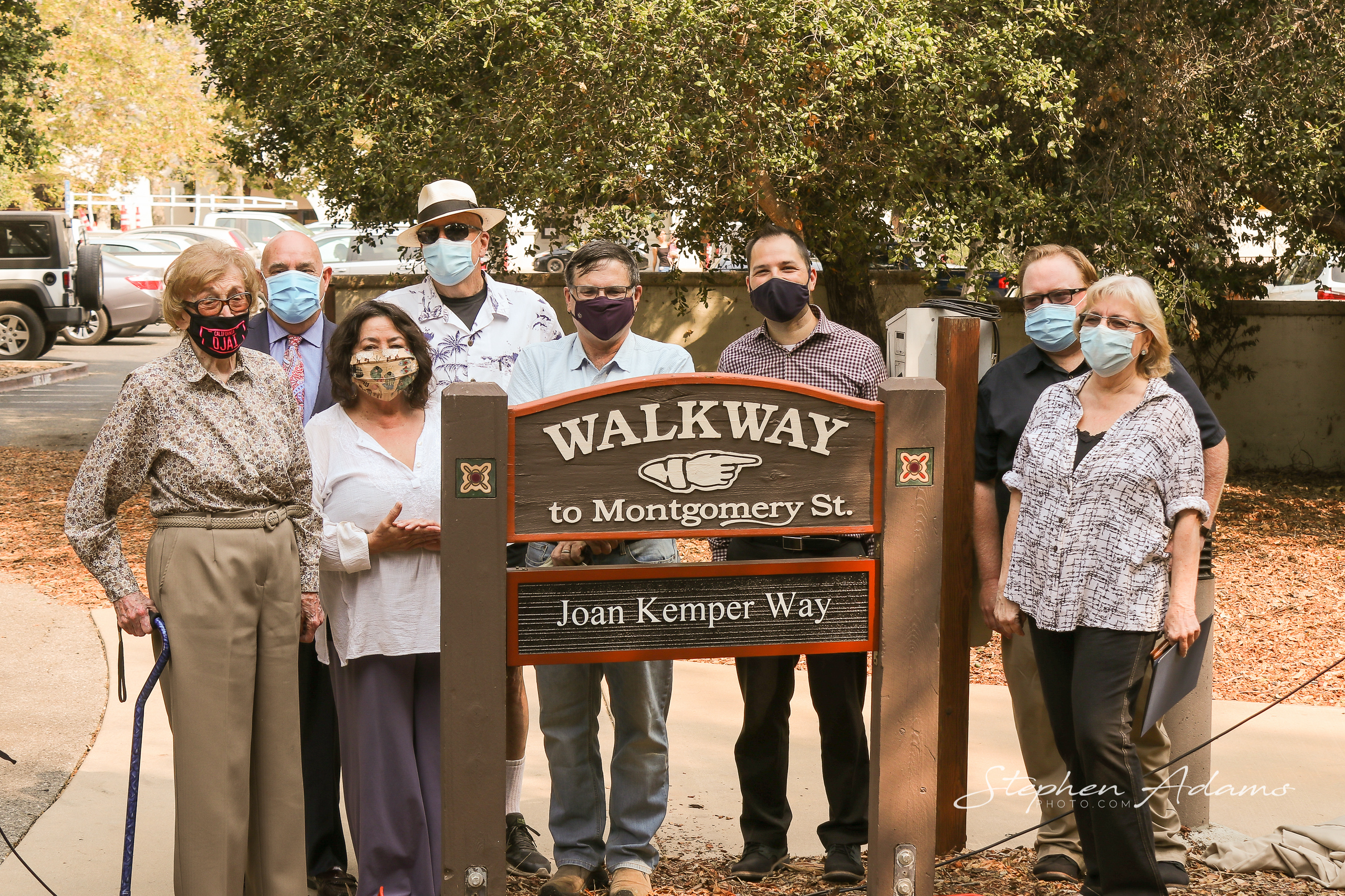

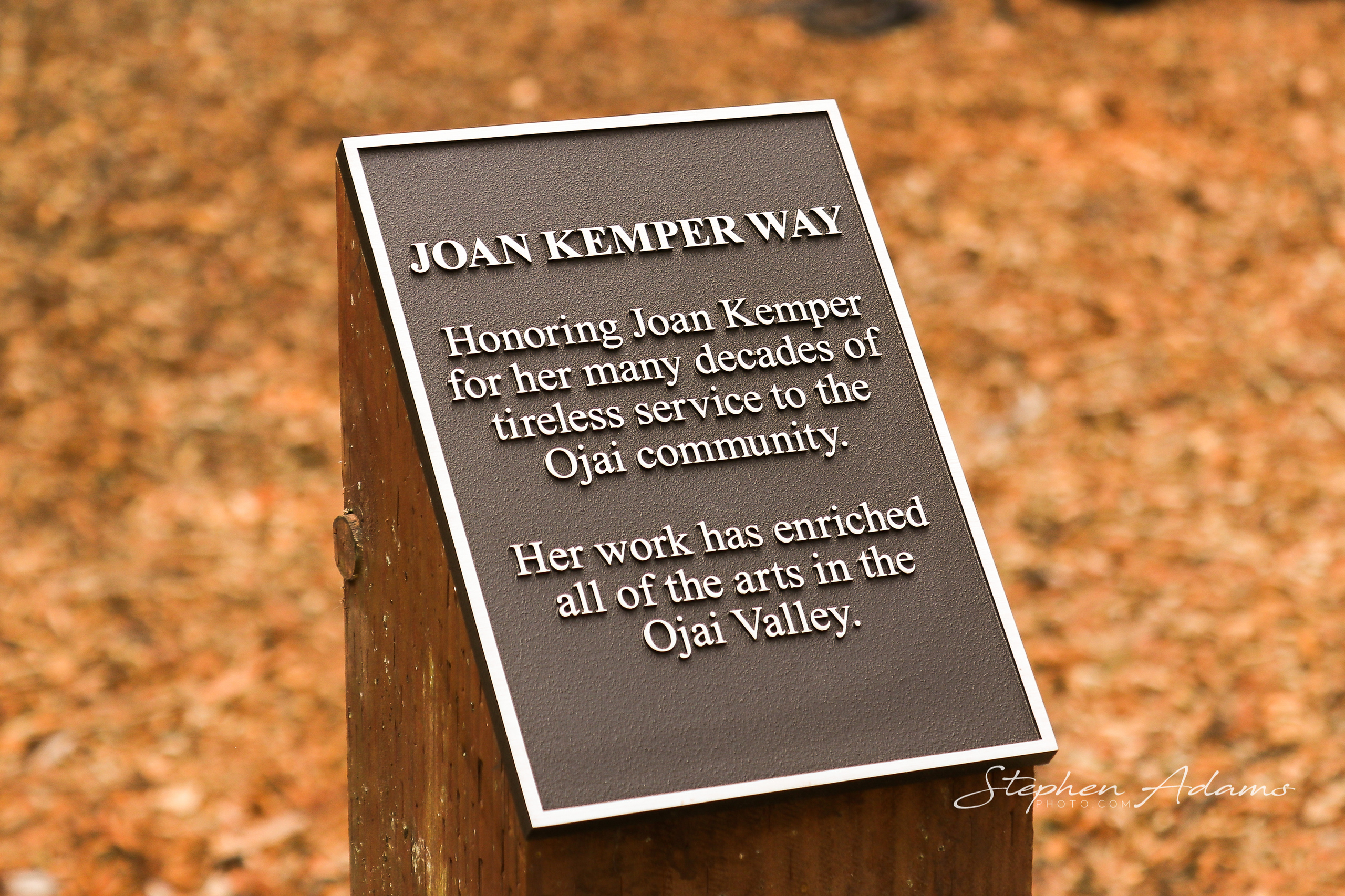
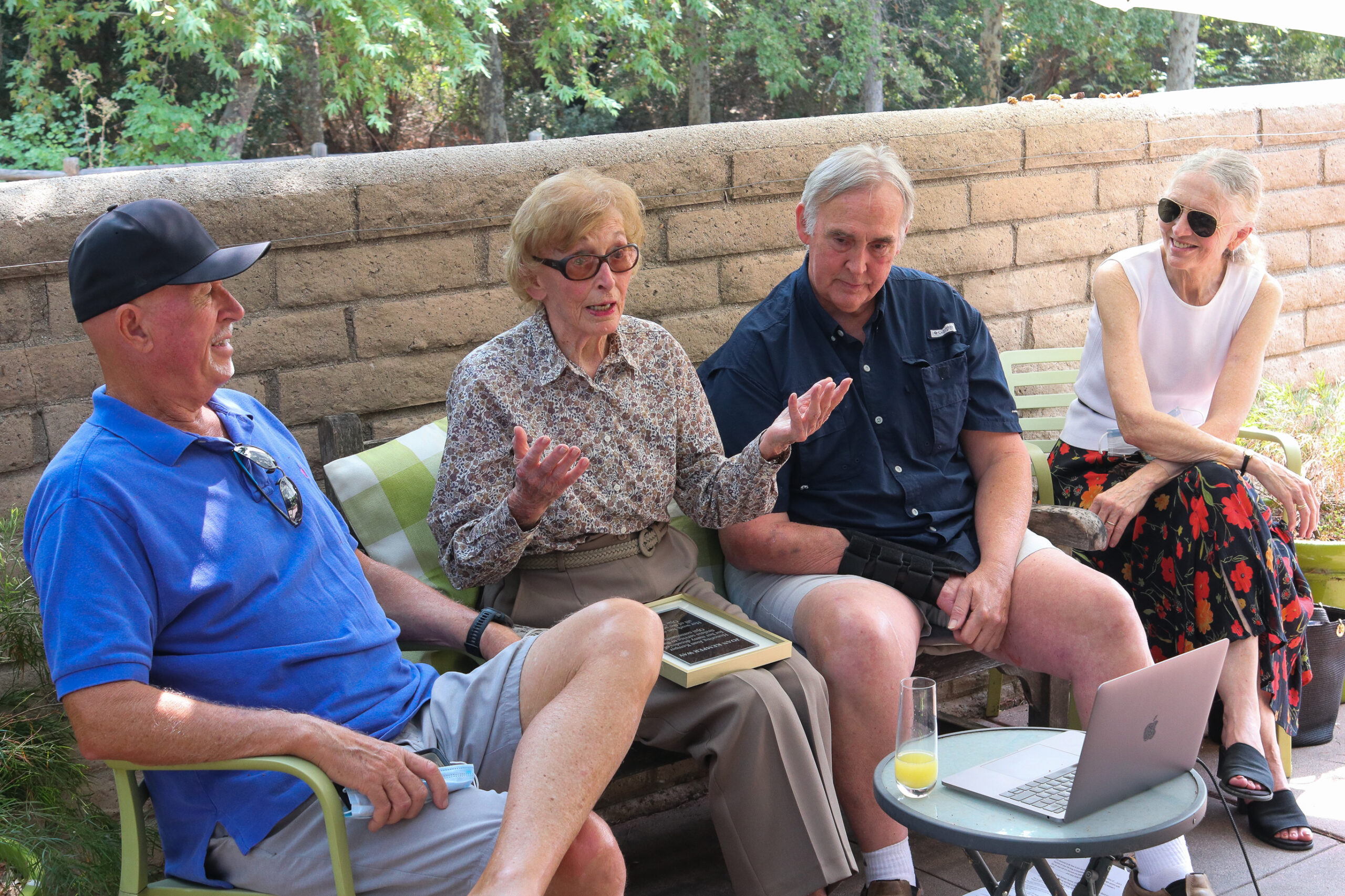
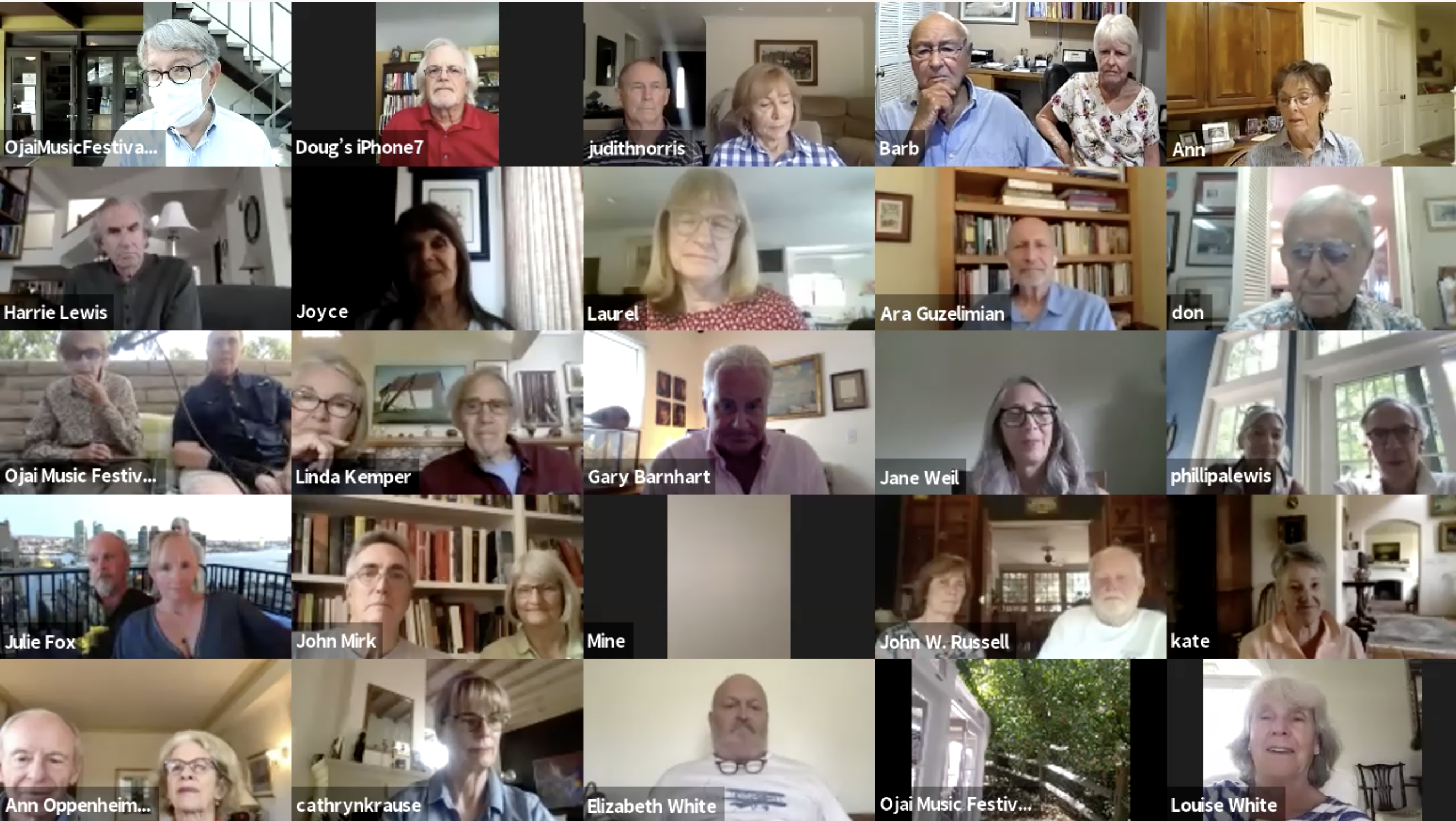
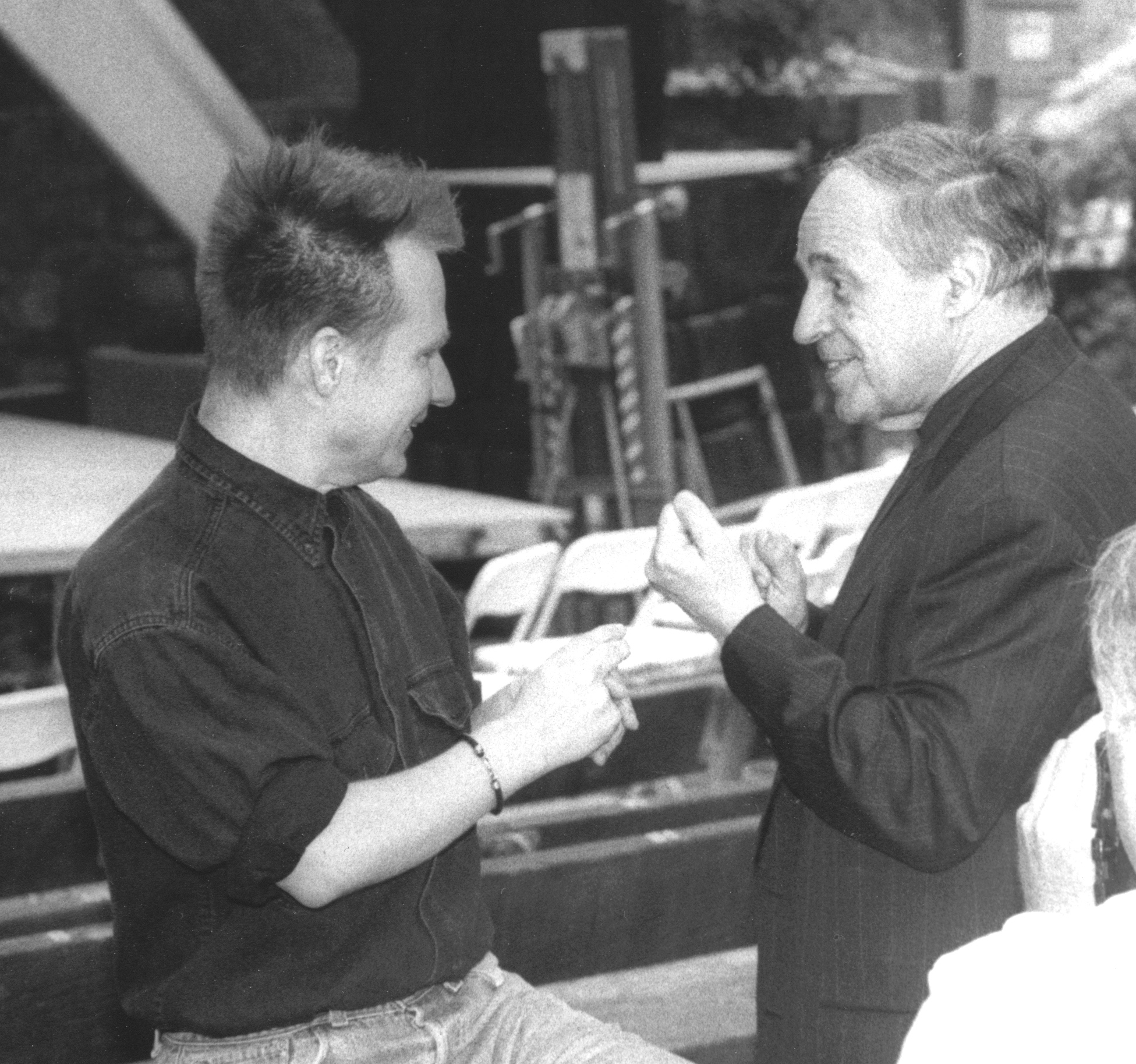


 All of
 Steve Reich was recently called “our greatest living composer” (The New York Times), “America’s greatest living composer.” (The Village VOICE), “…the most original musical thinker of our time” (The New Yorker) and “…among the great composers of the century” (The New York Times).. From his early taped speech pieces It’s Gonna Rain (1965) and Come Out (1966) to his and video artist Beryl Korot’s digital video opera Three Tales (2002), Mr. Reich’s path has embraced not only aspects of Western Classical music, but the structures, harmonies, and rhythms of non-Western and American vernacular music, particularly jazz. “There’s just a handful of living composers who can legitimately claim to have altered the direction of musical history and Steve Reich is one of them,” states The Guardian (London).
 Olga Neuwirth was born in Graz, Austria, in 1968.
 Ojai has been a creative laboratory for today’s pathbreaking artists
 Welcome an Ojai Music Festival artist into your home for ten days? What? Someone we had never met…a total stranger? Deirdre Daly, Ojai Music Festival Housing Manager, is quite persuasive. Cheryl Armstrong and Mirta Milares said yes.