Blog

  • Tania León, composer

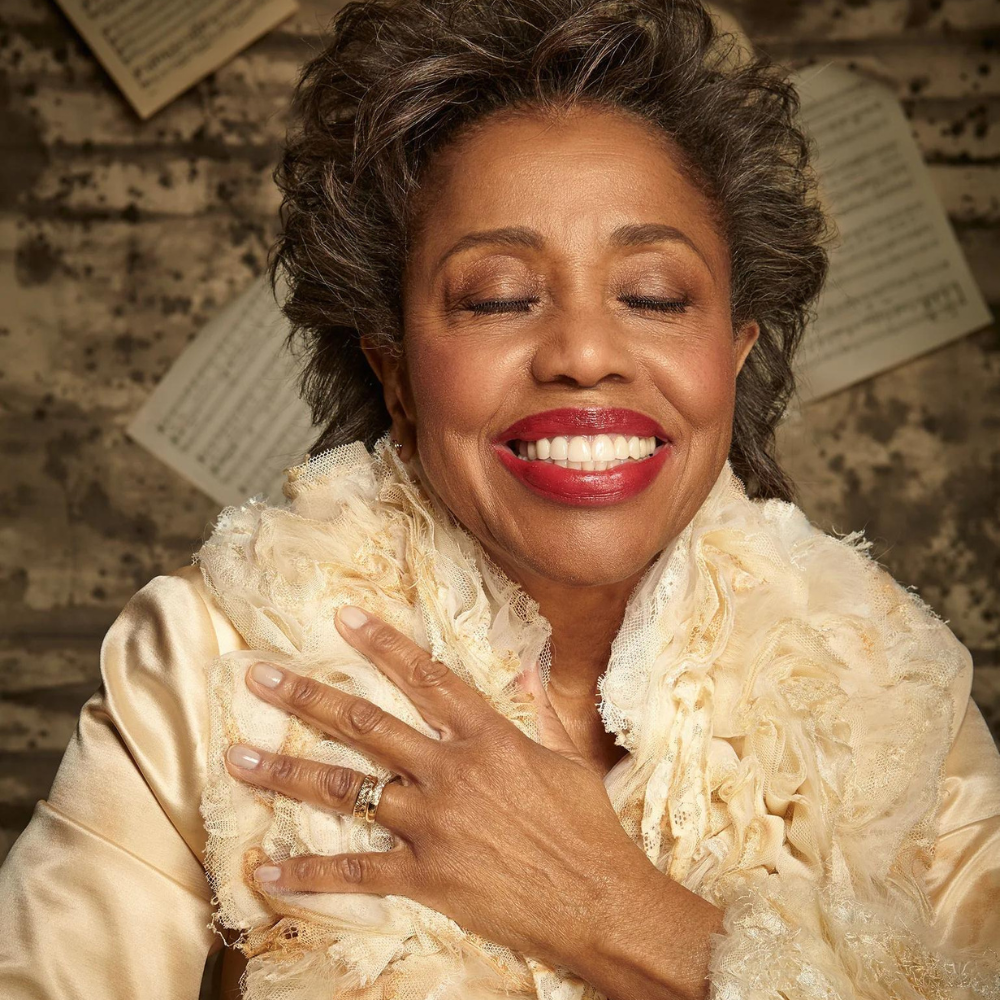
    Tania León, composer

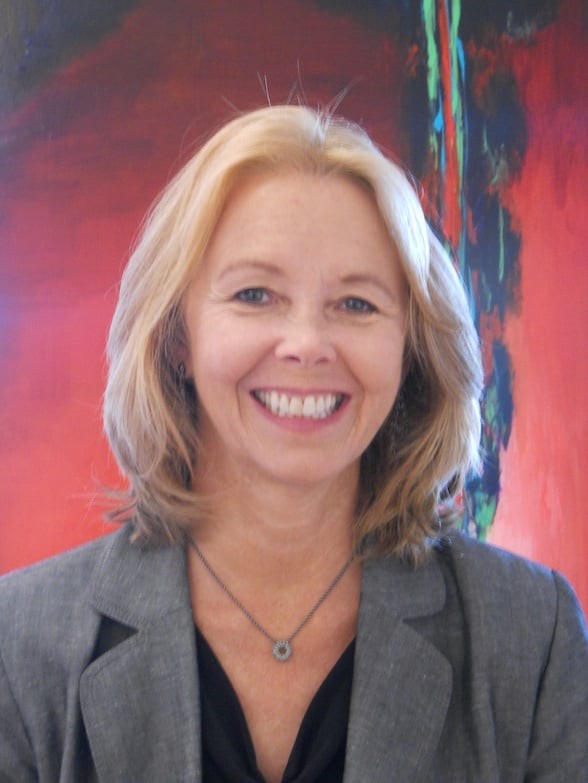
    Tania León (b. Havana, Cuba) is highly regarded as a composer, conductor, educator, and advisor to arts organizations. Her orchestral work Stride, commissioned by the New York Philharmonic, was awarded the 2021 Pulitzer Prize in Music. In 2022, she was named a recipient of the 45th Annual Kennedy Center Honors for lifetime artistic achievements. In 2023, she was awarded the Michael Ludwig Nemmers Prize in Music Composition from Northwestern University. Most recently, León became the London Philharmonic Orchestra’s next Composer-in-Residence—a post she will hold for two seasons, beginning in September 2023. She will also hold Carnegie Hall’s Richard and Barbara Debs Composer’s Chair for its 2023-2024 season.

    Recent premieres include works for the Los Angeles Philharmonic, Arkansas Symphony Orchestra, Detroit Symphony, NDR Symphony Orchestra, Grossman Ensemble, International Contemporary Ensemble, Modern Ensemble, Jennifer Koh’s project Alone Together, and The Curtis Institute. Appearances as guest conductor include Orchestre Philharmonique de Marseille, Gewandhausorchester, Orquesta Sinfónica de Guanajuato, and Orquesta Sinfónica de Cuba, among others. Upcoming commissions feature a work for the League of American Orchestras, and a work for Claire Chase, flute, and The Crossing Choir with text by Rita Dove.

    A founding member and first Music Director of the Dance Theatre of Harlem, León instituted the Brooklyn Philharmonic Community Concert Series, co-founded the American Composers Orchestra’s Sonidos de las Américas Festivals, was New Music Advisor to the New York Philharmonic, and is the founder/Artistic Director of Composers Now, a presenting, commissioning and advocacy organization for living composers. Honors include the New York Governor’s Lifetime Achievement, inductions into the American Academy of Arts and Letters and the American Academy of Arts and Sciences, and fellowship awards from ASCAP Victor Herbert Award and The Koussevitzky Music and Guggenheim Foundations, among others. She also received a proclamation for Composers Now by New York City Mayor, and theMadWoman Festival Award in Music (Spain).

    León has received Honorary Doctorate Degrees from Colgate University, Oberlin, SUNY Purchase College, and The Curtis Institute of Music, and served as U.S. Artistic Ambassador of American Culture in Madrid, Spain. A CUNY Professor Emerita, she was awarded a 2018 United States Artists Fellowship, Chamber Music America’s 2022 National Service Award, and Harvard University’s 2022 Luise Vosgerchian Teaching Award. In 2023, Columbia University’s Rare Book & Manuscript Library acquired Tania’s León’s archive.

    Visit Tania Leon’s Website

  • Katinka Kleijn, cello

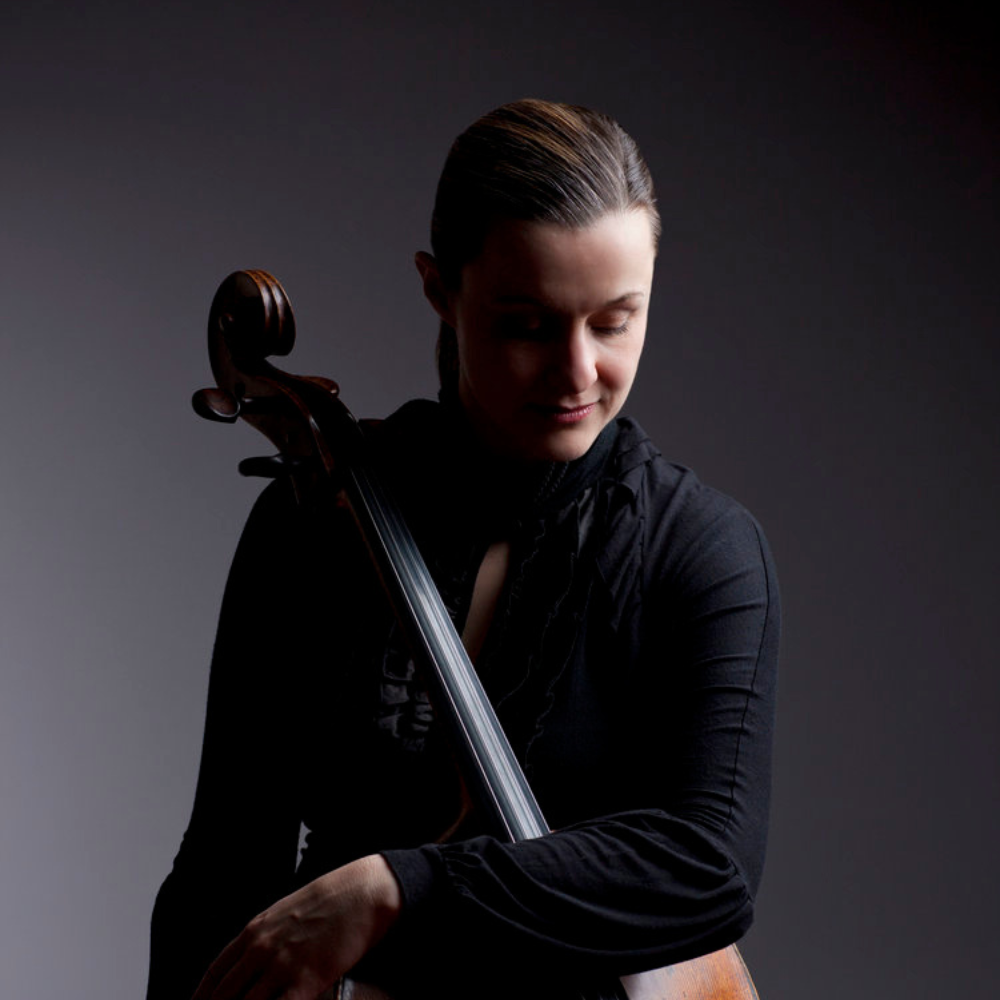
    Katinka Kleijn, cello

    Hailed by The New York Times as “a player of formidable expressive gifts,” Dutch-born cellist Katinka Kleijn enjoys a genre-defying, interdisciplinary career. Classically trained, she has since cultivated an exploratory, interactive creative practice at the fertile intersection of improvisation, composition, and performance art.

    Much of Kleijn’s work illuminates the cello’s anthropomorphic qualities, often by placing the instrument in thought-provoking new contexts. In 2019, Kleijn and cellist Lia Kohl waded with 30 cellos in Chicago’s Eckhart Park Pool for their devised piece Water On the Bridge. Similarly, Kleijn’s The Body as a Variable Resistor (2021) uses a shared-circuit synthesizer to articulate relationships between the human and cello body. RESIDUUM (2022), a short experimental film for Cello and Trash, pairs Kleijn’s cello with large amounts of mylar, plastic bottles and soda cans. An ongoing collaboration with Aliya Ultan, the film received its premiere at NYC’s Roulette Intermedium April 2023. Her collaborations with composer Daniel Dehaan and the Chicago-based performance art duo Industry of the Ordinary resulted in the widely publicized Intelligence in the Human-Machine (2014), a duet between Kleijn’s cello and her own brainwaves which Time magazine called “a balancing act for Kleijn’s whole body.”

    Kleijn presents many of her conceptual projects as co-constructions with the performer(s) or audience, calling upon them to collectively negotiate a way forward. Inspired by Civil War–era drum commands, her composition Forward Echo, for 11 improvisers (2019), performed by Ensemble Dal Niente at Big Ears Festival, tasks two spatially separated ensembles with reacting to one another based on each other’s rhythms. Alternately, Kleijn’s silent video project Screenplay in 4 (2021) explores touch as a vector for human connection and its new implications in pandemic-enforced solitude.

    An active musician in classical and contemporary classical spheres, Kleijn is a member of the Chicago Symphony Orchestra and International Contemporary Ensemble. She has performed as a soloist with the Chicago Symphony Orchestra, the Hague Philharmonic, and the Chicago Sinfonietta, and presented her solo multimedia presentations at the Library of Congress, North Carolina Performing Arts, and the Chicago Humanities Festival. Kleijn’s 2016 world premiere performance of Dai Fujikura’s cello concerto at Lincoln Center was released by SONY Japan. As an improviser, she has collaborated with musicians like Bill MacKay, Ken Vandermark, Macie Stewart, Joe McPhee, Claire Rousay, Caroline Davis, Damon Locks, and Du Yun.

    Kleijn is a Drag City recording artist, releasing STIR with Bill MacKay (2019), Momentum 5: Stammer (triptych) with Ken Vandermark (2021), An Ayler Xmas with Mars Williams (2017),  and SINE NOMINE with Mark Feldman (2022).

    Visit Katinka Kleijn’s Website

  • JACK Quartet

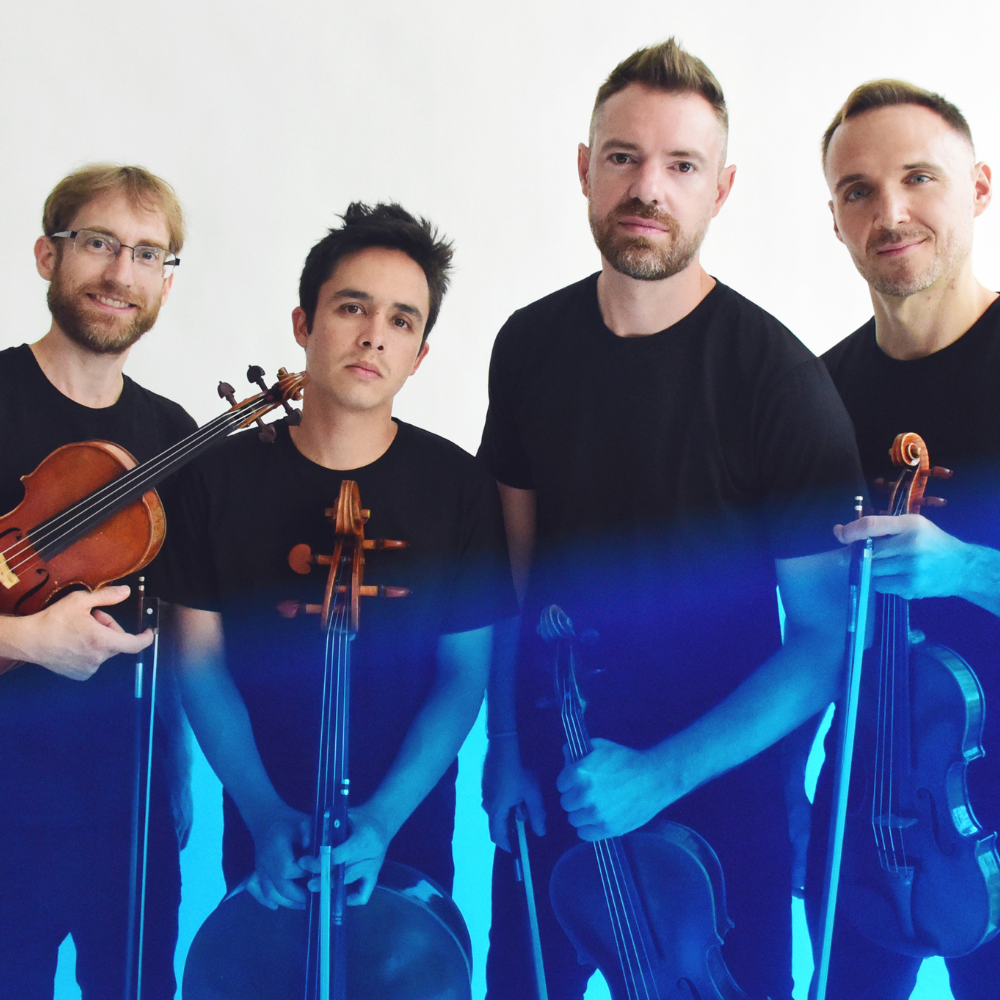
    JACK Quartet

    Undeniably our generation’s “leading new-music foursome,” the GRAMMY®-nominated JACK Quartet’s “stylistic range, precision and passion have made the group one of contemporary music’s indispensable ensembles” (The New York Times). Comprising violinists Christopher Otto and Austin Wulliman, violist John Pickford Richards, and cellist Jay Campbell, JACK Quartet celebrates their landmark 20th anniversary season in 2024-2025, embarking on their third decade as a pioneering string quartet synchronized in their mission to create an international community through transformative, mind-broadening experiences and close listening. Founded in 2005, the ensemble operates as a nonprofit organization dedicated to the performance, commissioning, and appreciation of 20th and 21st century string quartet music, delving deeply into challenging new compositions and musical practices outside the classical mainstream. Through intimate, long-standing relationships with many of today’s most creative voices, JACK Quartet has a prolific commissioning and recording catalog, has been nominated for three GRAMMY® Awards, and is the 2024 recipient of Chamber Music America’s Michael Jaffee Visionary Award.

    Among the highlights of the 2024-2025 season, JACK Quartet officially marks their 20th anniversary with a celebratory concert at 92NY in New York City, featuring the world premiere of a new JACK-commissioned work by Anthony Cheung; the U.S. premiere of JACK commission Juri Seo’s Three Imaginary Chansons at Lincoln Center; and the world premiere of Ellen Fullman’s Energy Archive at the Beyond: Microtonal Music Festival 2025 in Pittsburgh. In addition, JACK Quartet celebrates their long association with composer John Zorn with the release of Zorn’s complete string quartets on Tzadik Records, as well as an album release concert at Brooklyn’s Roulette Intermedium.

    International engagements include JACK Quartet’s annual marathon of performances at Wigmore Hall in the UK and appearances at Pierre Boulez Saal and Konzerthaus Berlin in Germany, along with appearances in Toronto, Barcelona, and Lugano and Winterthur, Switzerland. The season also brings the European premiere of Natacha Diels’ Beautiful Trouble at Konzerthaus Berlin.

    The JACK Quartet embraces close collaboration with the composers they perform with, yielding a radical embodiment of the technical, musical, and emotional aspects of their work. Through their successful nonprofit model, JACK Quartet has both self-commissioned and been commissioned to create new works with artists such as Philip Glass, Julia Wolfe, Helmut Lachenmann, and Caroline Shaw, with upcoming and recent premieres including works by John Luther Adams, George Lewis, Catherine Lamb, Liza Lim, Tyshawn Sorey, Amy Williams, and John Zorn. The world’s top composers choose JACK because of their singular dedication to innovation and experimentation.

    According to Musical America, “many of their recordings are must-haves, for anyone interested in new music.” They have been nominated for multiple GRAMMY® Awards, the most recent being their albums of music by John Luther Adams—both were nominated in the 2022 and 2023 Best Ensemble Performance category. Other albums feature music by Helmut Lachenmann, Catherine Lamb, Du Yun, Nick Dunston, Zosha di Castri, Iannis Xenakis, and upcoming releases of the complete quartets of Elliott Carter and John Zorn.

    Having long observed how the social, cultural, and economic realities of institutional access disproportionately and unfairly exclude many people, JACK Studio offers composers paid opportunities to develop new work, hear their music performed by JACK Quartet, consult with mentors in the field, and receive recorded documentation. JACK Studio receives hundreds of applications each season and selects up to 15 composers or artists for two distinct opportunities: Two-Year Residencies, offering a longer-term relationship with JACK Quartet, and Reading Sessions, in which recipients have existing works for string quartet read by JACK Quartet.

    More than 40 composers have worked with JACK Quartet through JACK Studio thus far, hailing from Argentina, Belarus, Canada, Germany, Malaysia, Mexico, Myanmar, South Africa, Syria, and the United States. Their projects have been performed by JACK Quartet at venues including TIME:SPANS, Central Park, the Lucerne Festival, MoMA PS1, and Mannes School of Music, in addition to being recorded for professional releases. Commissioned artists have been paired with musical mentors including Marcos Balter, Clara Iannotta, George Lewis, Catherine Lamb, Georg Friedrich Haas, Donnacha Dennehy, Claire Chase, and Nadia Sirota.

    JACK Quartet has performed to critical acclaim at venues such as Carnegie Hall (USA), Lincoln Center (USA), Berlin Philharmonie (Germany), Wigmore Hall (United Kingdom), Muziekgebouw (Netherlands), The Louvre (France), Kölner Philharmonie (Germany), the Lucerne Festival (Switzerland), La Biennale di Venezia (Italy), Suntory Hall (Japan), Bali Arts Festival (Indonesia), Festival Internacional Cervantino (Mexico), and Teatro Colón (Argentina). Among their honors, they have earned an Avery Fisher Career Grant and Fromm Music Foundation Prize, been selected as Musical America’s 2018 “Ensemble of the Year, and received Lincoln Center’s Martin E. Segal Award, New Music USA’s Trailblazer Award, and the CMA/ASCAP Award for Adventurous Programming.

    JACK Quartet makes their home in New York City, where they are the Quartet in Residence at the Mannes School of Music at The New School and provides mentorship to Mannes’s Cuker and Stern Graduate String Quartet. They also teach each summer at New Music on the Point, a contemporary chamber music festival in Vermont for young performers and composers. JACK has long-standing relationships with the University of Iowa String Quartet Residency Program, where they teach and collaborate with students each fall and spring.

    Visit JACK Quartet’s Website

  • Susie Ibarra, composer & percussion

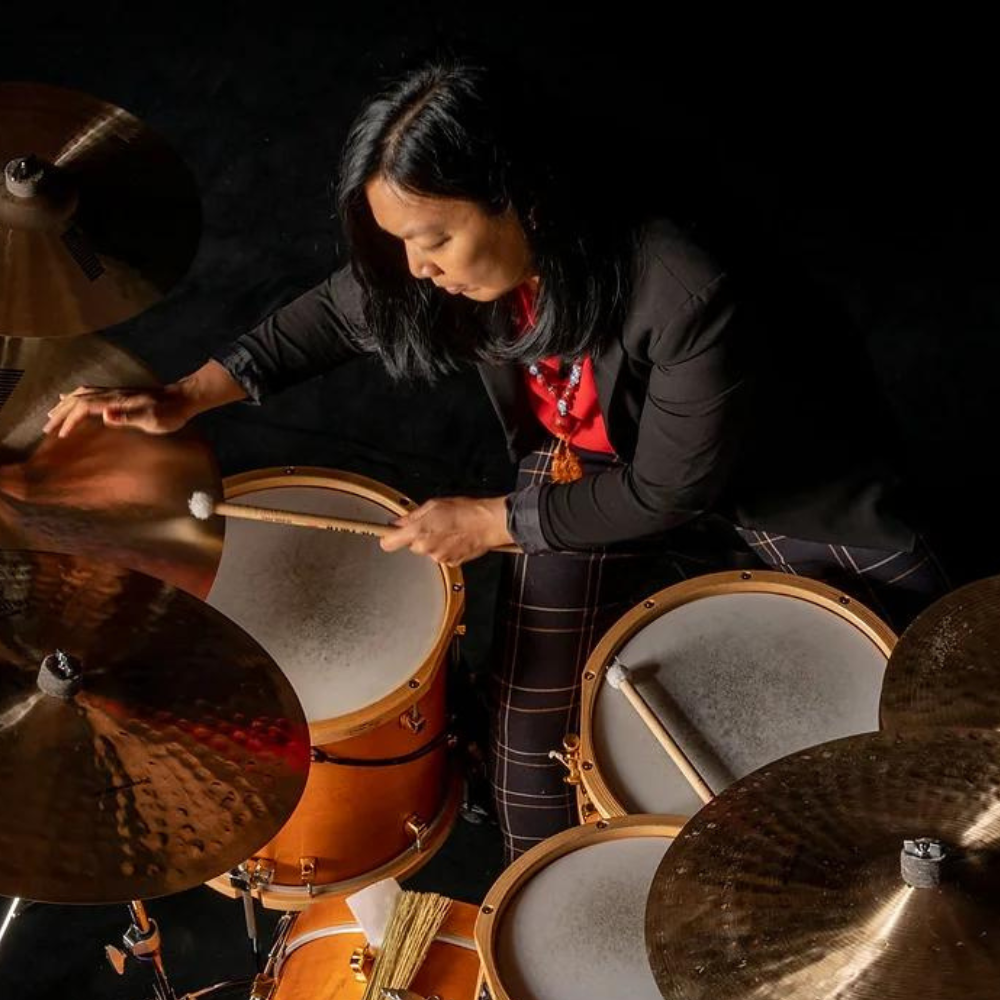
    Susie Ibarra, composer & percussion

    Susie Ibarra is a Filipinx composer, percussionist, and sound artist. Her interdisciplinary practice spans formats, including performance, mobile sound-mapping applications, multi-channel audio installations, recording, and documentary. Many of Ibarra’s projects are based in cultural and environmental preservation: she has worked to support Indigenous and traditional music cultures, such musika katatubo from the North and South Philippine islands; her sound research advocates for the stewardship of glaciers and freshwaters; and she collaborates with The Joudour Sahara Music Program in Morocco on initiatives that preserve sound-based heritage with sustainable music practices and support the participation of women and girls in traditional music communities.

    She is a recipient of the Foundation For Contemporary Arts Award in Music/ Sound (2022), a National Geographic Storytelling Fellowship (2020); United States Artists Fellowship in Music (2019); the Asian Cultural Council Fellowship (2018); and a TED Senior Fellowship (2014). 

    Susie Ibarra is a Yamaha, Vic Firth, and Zildjian Drum Artist.

    Her album, Talking Gong ( New Focus Recordings 2021), features soloists and ensemble members Claire Chase ( bass, alto , flute and piccolo) and Alex Peh ( piano) , with its title piece commissioned by SUNY New Paltz when Ibarra was Davenport Composer in Residence 2018. The album is inspired by traditional Filipino southern gong music, Maguindanaon kulintang music and by birdsongs of the region.

    Water Rhythms: Listening to Climate Change (2020) is a collaboration with glaciologist, geographer, and climate scientist Dr. Michele Koppes, which maps water rhythms from source to sink. Ibarra’s composition is derived from field recordings of five global watersheds, including the Greenland ice sheet and glacier-fed rivers of the Himalayas. Water Rhythms is an acoustic story of human entanglements with a changing climate and landscape. The premiere of Water Rhythms was presented by Fine Acts Foundation and TED at Jack Poole Plaza, Vancouver, British Columbia, Canada and Innisfree Gardens, Millbrook, NY (2020). It has also been shown at The Countdown Summit, Edinburgh, Scotland (2021); as part of Nothing Makes Itself at the ARKO Art Center, Seoul, Korea (2021); and as a multi-channel sound installation at Fridman Gallery, Beacon, NY (2021) and the San Francisco Exploratorium (2022).

    Ibarra’s piece Fragility Etudes, was a commissioned film by Asia Society Triennial 2021 We Do Not Dream Alone. These compositions are rhythmic studies for solos and ensemble which reflects humanity’s interdependence.  Ibarra explores conduction, polyrhythms and concepts from the physics of glass.  Fragility Etudes was filmed in residency and premiered at MASSMoCA in live performance 2021. The film is directed by collaborating multimedia artist Yuka C. Honda. September 2022 Ibarra conducted multi-ensemble Fragility Etudes in Zamane Festival Morocco. She was commissioned for a new work for percussion in which she created RITWAL solo percussion Susie Ibarra, for the UNDRUM Festival produced by Architek Percussion and Suoni Per Il Popolo 2021 for video which premiered in June 2021.

    As a producer, Ibarra collaborates with Splice to create sound packs based in environmental sounds, traditional musical cultures, and her own extended percussion language. Sounds of the Drâa Valley Morocco is a sound pack featuring six traditional ensembles and soloists from South Saharan Morocco (2022). Ibarra has also collaborated with composer and bassist Richard Reed Parry on two sound packs and a new album of compositions focused on breath cycles and heart beats, Heart and Breath: Rhythm and Tone Fields (OFFAIR Records, 2022).

    Visit Susie Ibarra’s Website

  • Marcos Balter, composer

    Marcos Balter, composer

    Praised by The Chicago Tribune as “minutely crafted” and “utterly lovely,” The New York Times as “whimsical” and “surreal,” and The Washington Post as “dark and deeply poetic,” the music of composer Marcos Balter (b.1974, Rio de Janeiro, Brazil) is at once emotionally visceral and intellectually complex, primarily rooted in experimental manipulations of timbre and hyper-dramatization of live performance.

    Past honors include the American Academy of Arts and Letters Music Award, fellowships from the John Simon Guggenheim Foundation, Civitella Ranieri Foundation, and the Tanglewood Music Center (Leonard Bernstein Fellow), two Chamber Music America awards, as well as commissions from the New York Philharmonic, Los Angeles Philharmonic, New World Symphony, Chicago Symphony Music Now, The Crossing, Meet the Composer, Fromm Foundation at Harvard, The Holland/America Music Society, The MacArthur Foundation, and the Art Institute of Chicago.

    Recent performances include those at Carnegie Hall, Köln Philharmonie, Queen Elizabeth Hall, Wigmore Hall, ArtLab at Harvard University, Lincoln Center, Walt Disney Hall, Teatro Amazonas, Sala São Paulo, Park Avenue Armory, Miller Theater, Villa Medici, Teatro de Madrid, Bâtiment de Forces Motrices de Genève, and the Museum of Contemporary Art of Chicago. Recent festival appearances include those at Tanglewood Contemporary Music Festival, Ecstatic Music Festival, Acht Brücken, Aldeburgh Music Festival, Aspen, Frankfurter Gesellschaft für Neue Musik, Darmstadt Ferienkurse, and Banff Music Festival. Past collaborators include the rock band Deerhoof, dj King Britt and Alarm Will Sound, yMusic and Paul Simon, Claire Chase and the San Francisco Symphony, the International Contemporary Ensemble, JACK Quartet, Ensemble Dal Niente, Orquestra Experimental da Amazonas Filarmonica, American Contemporary Music Ensemble, American Composers Orchestra, and conductors Karina Canellakis, Susanna Malkki, Matthias Pintscher, and Steven Schick.

    His works are published by PSNY (Schott), and commercial recordings of his music are available through New Amsterdam Records, New Focus Recording, Parlour Tapes+, Oxingale Records, and Navona Records.

    He is the Fritz Reiner Professor of Musical Composition at Columbia University, having previously held professorships at the University of California San Diego, Montclair State University, and Columbia College Chicago, visiting professorships at the University of Pittsburgh, Northwestern University, and the University of Pennsylvania, and a pre-doctoral fellowship at Lawrence University. He currently lives in Manhattan, New York.

    Visit Marcos Balter’s Website

  • Bach to the Future with Emi Ferguson

    Bach to the Future with Emi Ferguson

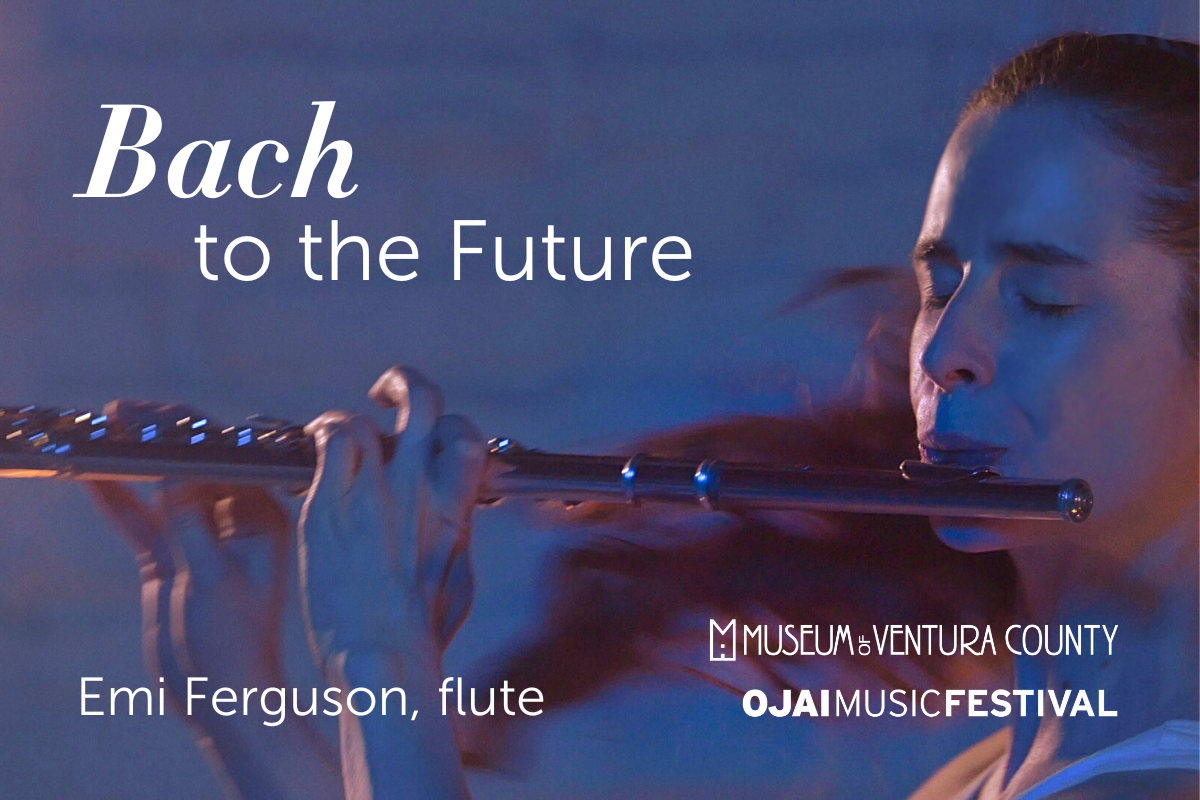
    Bach to the Future; Emi Ferguson, flute; Museum of Ventura County, Ojai Music Festival

    THU November 7.2024 | 5-7PM | Museum of Ventura County (100 East Main St, Ventura)

    It was a mesmerizing evening with flutist Emi Ferguson, a favorite of Ojai Music Festival audiences, on November 7 at the Museum of Ventura County.

    After enjoying the company of others and exploring the museum’s latest exhibits, Emi led attendees through a beautiful journey of the flute through time and place. Special thanks to Emi for creating a playlist of the program and other fun resources to come back to time and time again when we need the beauty of music to give us comfort and joy.

    THE PROGRAM

    Improvisation (2021)
    Seyfollah Shokri

    Puis qu’en oubli (~1350)
    Guillaume de Machaut (arr. Michael Hersch)
    with the Flux Quartet

    Syrinx (1913)
    Claude Debussy

    Fantasia in A Major (1733)
    G.P. Telemann

    Huitzitl (2007)
    Gabriela Ortiz

    Air (1995)
    Londonderry Air (1977) arr. Emi Ferguson (2024)
    Tōru Takemitsu

    Kembang Suling, Mvt II (1996)
    Gareth Farr

    Allemande & Sarabande from BWV 1013 (1719)
    J.S. Bach

    Fantasia in E Minor (1733)
    G.P. Telemann

    Handkerchief Scene, from Memoirs of a Geisha (2005)
    John Williams

  • Volunteer at Holiday Home Tour & Market!

    Docent guiding a tour


    Become a docent and guide tours at the Holiday Home Tour, or sign up to help at the Holiday Marketplace on November 15 & 16, 2025.

    Serving as a Docent at one of our four homes is a FUN way to volunteer! As a docent, you have an opportunity to view a beautiful home, meet new people, and get to know members of the Ojai Festival Women’s Committee.

    Volunteering at the marketplace involves helping with load-in and load-out, and assisting staff and vendors with any other needs. Note that some marketplace shifts may require heavy lifting.

    Each shift is a 3.5-hour commitment, and you can sign up for more than one. We encourage you to sign up with a spouse or a friend!

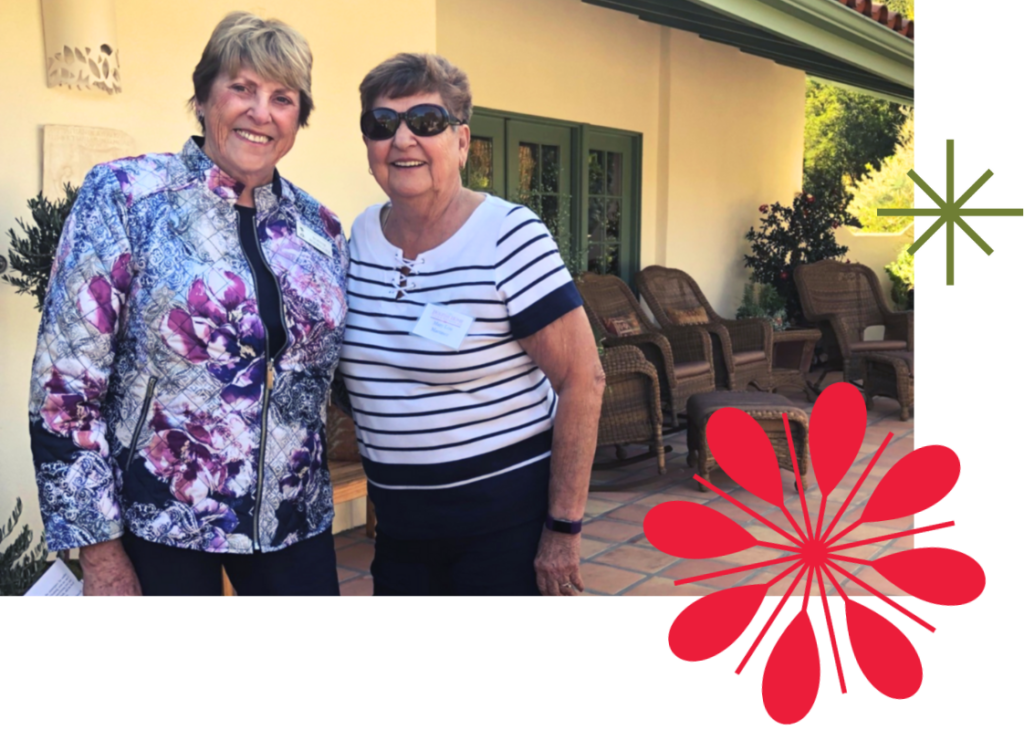
    Two docents pose and smile arm-in-arm

    Sign Up Today!

    In an effort to use less paper, you can sign up online via the button below.

    Questions? Contact us at (805) 646-2094 or info@ojaifestival.org

    Return to the 2025 Holiday Home Tour & Marketplace page >

  • Meet the 2024 Holiday Marketplace Vendors

    Meet the 2024 Holiday Marketplace Vendors

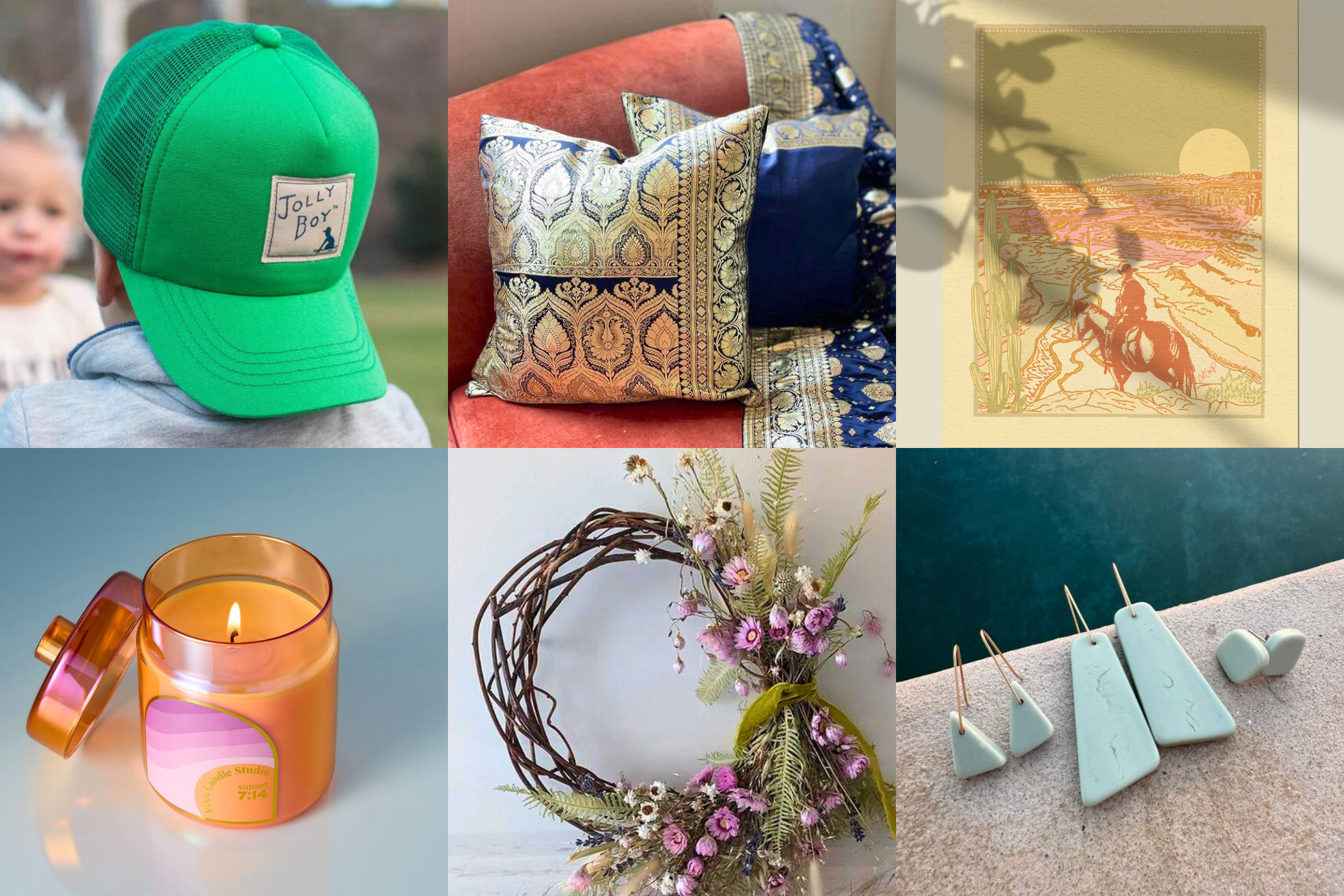
    Photos featuring the merchandise of 2024 Holiday Marketplace vendors
    Top: Jolly Boy Threads, The Whole 9, Sunrise Via Lola
    Bottom: Pixie Candle Studio, Rosehip Ramble, Surf Gems

    Meet the vendors! All of the following small businesses, artists, and artisans will be participating in this year’s Holiday Home Tour & Marketplace. The Marketplace is free and open to the public at Libbey Park, November 16 & 17, 2024, from 10am – 4:30 pm. Join us for gift shopping and holiday fun!

    NEW! Convenient, no-hassle check-out directly at vendor booths!

    A portion of the sales from Marketplace vendors benefits the Ojai Festival and its BRAVO Education and Community Programs.


    Housewares

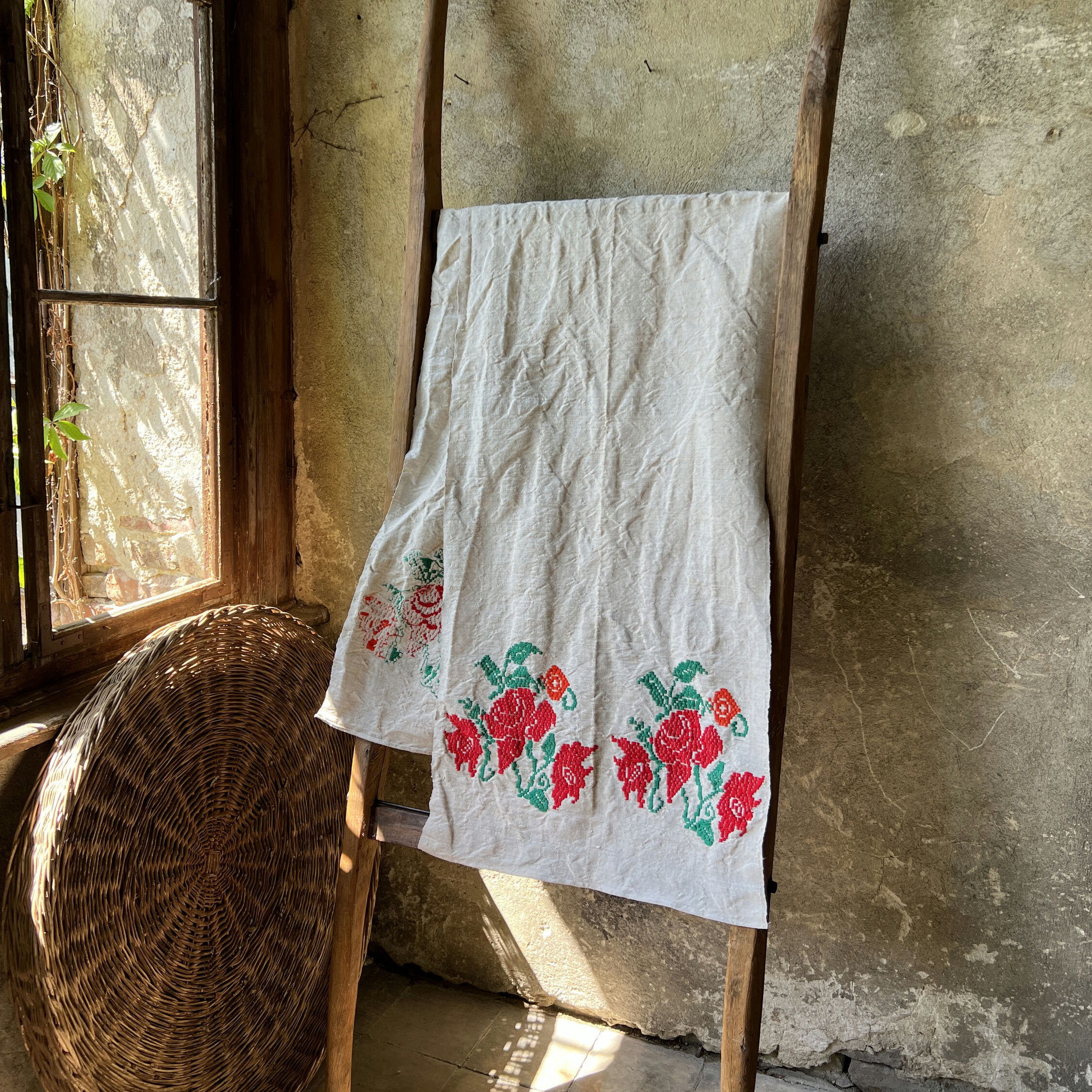
    Linen towel
    Lineage Botanica
    Ambrosia/Long Life Linen

    Reusable linen bags that keep produce fresh for weeks

    Website

    Atlantica Organics

    Handmade rugs, textiles, pillows, bags, Kilims, and runners

    Website

    Bohemian Bowls

    Zero-waste & sustainable global goods vendor: up-cycled & plastic free alternatives to everyday items using natural materials including bowls, utensils, hammoks, and more

    Website

    Lavender Blue

    French provincial tablecloths, napkins, runners, baskets, trays, and more

    Website

    Lineage Botanica

    Antique Eastern European heritage textiles

    Website

    Louise Barrett Textiles/Design

    Ethnographic textiles from all over the world, including Central Asia, Bhutan, India, the Middle East, Indonesia, Africa, and Guatemala.

    Sweetmello

    Reusable fabric products: bowl cozies, wax food wraps, pouches and bags, reusable food bags, and more

    Website

    T D Rocks

    Colorful banded rhyolite rock planters, spheres, slabs, and more

    Based in Ojai!

    Temascali

    Handmade accessories and clothes


    One-of-a-Kind Art and Gifts

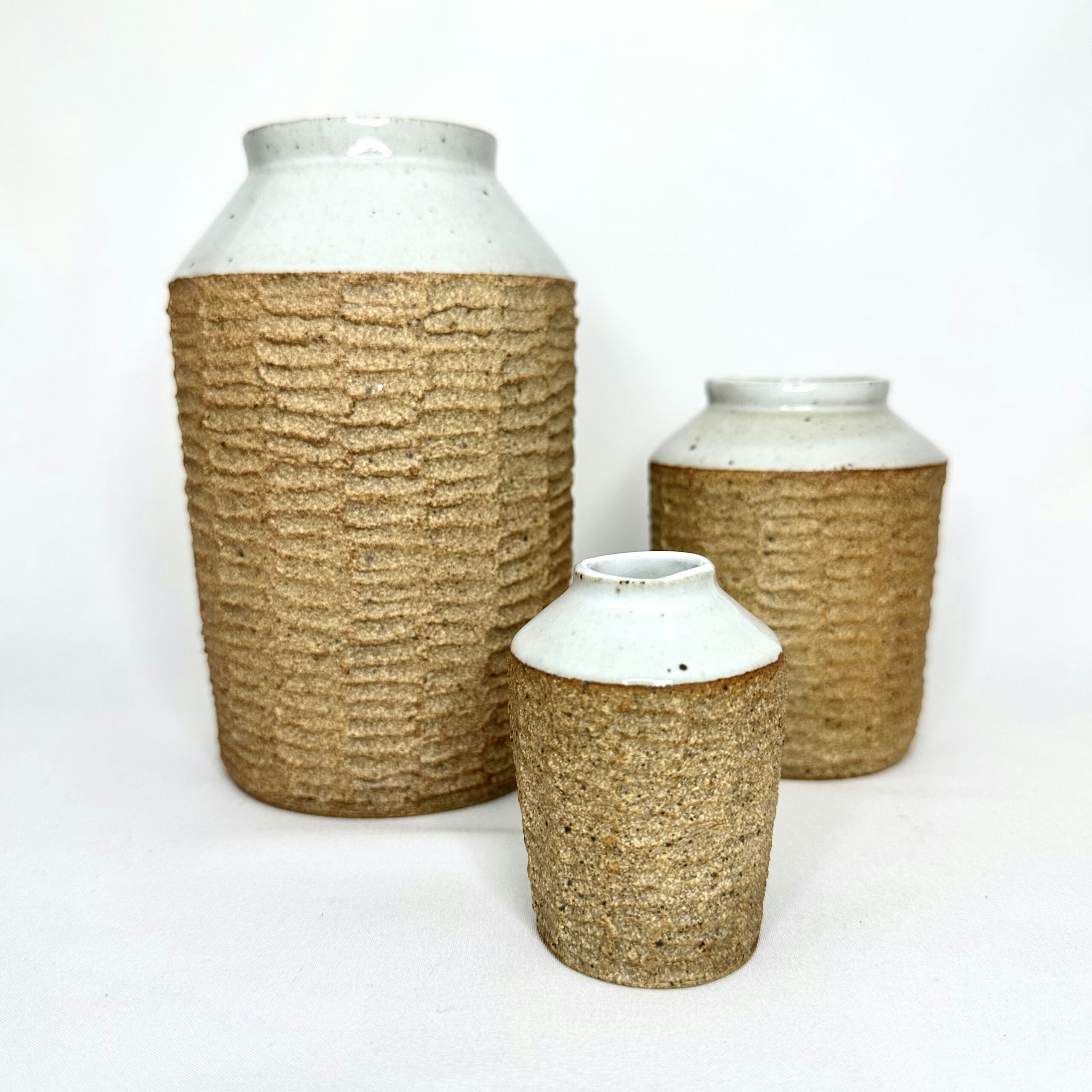
    Ceramic vases
    Ceramics by Cullen
    Ancient Zen Remedies

    Sound healing tools such as singing bowls, therapy drums, and crystal bowls, as well as bracelets, smudge sticks, incense, dream catchers, and eco-friendly ethnic accessories.

    Website

    Art Mina

    Eco-friendly cotton flour sack kitchen towels, napkins, tote bags, and T-shirts, illustrated and hand-screen printed by artist Mina Wilcox

    Website

    Beca Piascik Hand Papermaker

    Handmade paper products: notebooks, cards, holiday ornaments, wall hanging pieces, handmade paper mirrors

    Website

    Ceramics by Cullen

    Unique wheel-thrown and hand-sculpted ceramics

    Elements in Motion

    Original, one-of-a-kind Kinetic Sculptures (also called, “mobiles”) hand crafted from Semi-Precious Gemstones and Crystals. There is a singular comment when people see these in person: “I have never seen anything like this before”!

    Website

    Firestick Pottery

    Handmade ceramics made by local artists.

    Based in Ojai!

    Website

    Golden Bee Candles and Crochet

    Handcrafted beeswax candles and handwoven and crocheted blankets and home decor.

    Website

    Marie McKenzie Art

    Original rtwork inspired by kelp

    Based in Ojai

    Website

    Martin Sosa Design

    Ojai-themed stickers, prints, art, and more!

    Based in Ojai

    Website

    My Mother is a Superhero

    My Mother is a Superhero is a bilingual children’s book series. We sell children’s books, plush dolls, tshirts, and flashcards.

    Website

    Neil The Wandmaker

    Handmade magickal wands

    Website

    Poppies Art & Gifts

    Local art/gift shop full of artists that sell jewelry, prints, fiber art, ceramics, gourd art, garden art, and more

    Based in Ojai!

    Website

    Rosehip Ramble

    Dried floral wreaths

    Based in Ojai!

    Website

    Sunrise Via Lola

    Framed and unframed art prints and originals

    Based in Ojai!

    Website

    The Whole 9

    Repurposing the Indian saree into Luxurious Home Decor and more items like throws, cushions, table runners, Swristlets, shawl kimonos, and more!

    Website

    To Live a Colorful Life

    Description

    Website


    Jewelry and Apparel

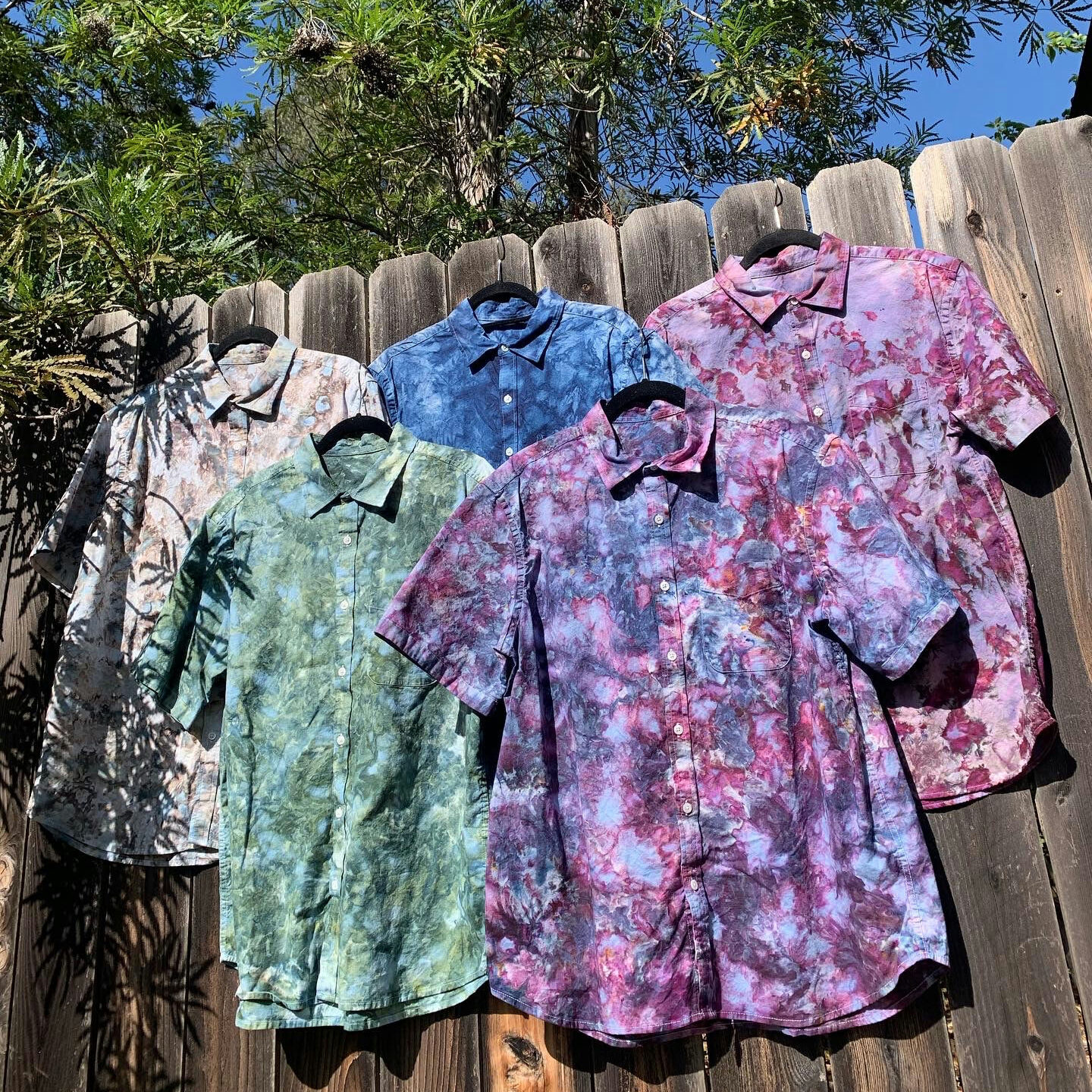
    Colorful collared shirts
    Sylvi Lyster Hand Dyed Goods
    Bazaar Boutique

    Handcrafted clothing, crystal stone jewelry, aromatherapy soy candles, leather bags, hats.

    Website

    Be Bindaas

    Hand block printed clothes & textiles in 100% sustainable cotton clothing

    Blue Boheme

    Bohemian women’s clothing

    Website

    Cali Bracelet

    Handmade bracelets, blankets, bags

    Campiello V

    Beaded jewelry created locally using semi-precious stones, murano glass beads and sterling silver

    Website

    Christie’s Bowtique

    Handmade vegan leather bows

    Based in Ojai!

    Chris Ward Jewelry

    Unique organic jewelry using lots of raw opals and tourmalines and other stones

    Website

    Cindy Style Jewelry

    Wire wrapped hand crafted semi precious stones

    Based in Ojai!

    Website

    Comes a Time Vintage

    Second-hand vintage items thoughtfully curated, ranging mostly from the 1940s- 90s

    Based in Ojai!

    Dale Michele

    Women’s clothing & matching accessories: sweaters, jackets, blouses & tops , ultra soft lounge sets, wraps, luxe faux fur trimmed capes

    Website

    Ingkarat Apparel

    Harem Pants, comfy Rompers, cotton pants

    Website

    Jolly Boy Threads

    Childrens hats, tees, hoodies, adult hats, joggers, and accessories

    Website

    Laguna Beach Glass Jewelry

    Beach Glass and Art Glass Jewelry

    Little Muse Designs

    Unique handwoven jewelry utilizing tiny Japanese glass beads, gemstones and fine metals

    Website

    Made by Hava Monet

    Upcycled original clothing pieces

    Miyuki Studios

    Antique/vintage Japanese kimonos, kimono jackets, vintage clothing, bags, shoes

    Plumage Jewelry

    Handmade gold-filled and sterling silver gemstone jewelry

    Website

    Ramina Rechard

    Hand made custom design pearl & gem jewelry

    Website

    Ruby’s Fashion Closet (Park Lain Fashion)

    Women’s Apparel for all shapes and sizes

    Sanctuary Goods

    A highly curated selection of vintage clothing, accessories, and home goods with a modern Californian aesthetic.

    Santa Barbara Yarns & Finished Goods

    Hand-spun yarn, hand-knit/crocheted hats, gloves, wraps, and beaded and forged jewelry.

    Website

    Savanna Lilly Designs

    Hand-spun yarn, hand-knit/crocheted hats, gloves, wraps, and beaded and forged jewelry.

    Website

    Sierra Creek Studio

    Handmade, one-of-a-kind shoulder, crossbody, sling, belt, and market tote bags

    Website

    Square Colored Jewelry

    Hand-dyed clothing and accessories from cotton corduroy shirts to silk scarves tops and dresses and beyond!

    Website

    Sunny’s Gift

    Crochet flowers and animals handmade jewelry

    Surf Gems

    Hand-crafted up-cycled jewelry made of resin waste from glassing surfboards – products include earrings, necklaces, bolo ties, key chains, and more

    Website

    Sylvi Lyster Hand Dyed Goods

    Hand-dyed clothing and accessories from cotton corduroy shirts to silk scarves tops and dresses and beyond!

    Website

    Tierra

    Handmade grounding earth-clay jewelry

    Based in Ojai!

    Website

    West Coast Kimono

    Vintage Silk Kimonos circa 1960 to 1990’s

    Yantras Collection

    Handmade clothing for men women and kids. singing bowl for meditation cashmere scarves and accessories


    Eats and Treats

    Jars of honey
    Mission Beekeeping
    LuLu Belle

    Small batch seasonal locally sourced fresh (organic when possible) fruit jams, jellies, and marmalades

    Website

    Mission Beekeeping

    Raw, local honey from Ojai, Camarillo and Carpinteria

    Based in Ojai!

    Website

    Ooolala Toffee

    English Toffee, toffee cookies, toffee bars, zucchini bread

    Website

    Sanders and Sons

    A family business offering hand-made artisanal gelatos and sorbets.

    Website

    Sea Soil Sky

    hHerb & mushroom teas, latte powders, & drink mixes, plus nature photography

    Website


    Bath and Body

    Bars of soap
    Ojai Botanika
    805 Body Art

    Natural otanical perfume, solid lotions, natural makeup

    Based in Ojai!

    Website

    Be Wyld Child

    Face painting and body art

    Based in Ojai!

    Website

    From the Heart of Ojai

    Hand-crafted aromatherapy bath and body products

    Based in Ojai!

    Website

    Herban Body Care

    Nurturing the skin with healing elements formulated by nature.

    Website

    Kopa Kauai

    handmade, high-quality soaps and skincare products that reflect a blend of traditional craftsmanship and island-inspired ingredients

    Website

    Oceanic Oasis

    Artisan soaps, soy candles, body scrubs, body lotions, shampoo bars, and crochet toys

    Website

    Ojai Botanika

    Organic soaps, soy candles, wax melts, botanical bath salts and room mists with unique designs and quality scents inspired by nature and many beautiful aspects of Ojai

    Based in Ojai!

    Website

    Ojai Native Skincare

    Luxurious organic skincare from Ojai Valley

    Based in Ojai!

    Website

    Old California Botanicals


    Locally sourced personal care and home goods capturing the quality of heritage heirloom botanicals (including Ventura County citrus and lavender) farmed in California and fresh local beeswax

    Website

    Pixie Candle Studio

    Handmade candles

    Based in Ojai!

    Website

    Plant Dreaming Deep

    Hand poured candles, bath, and body products from Pasadena, CA

    Website

    Terra Vela

    Artisan crafted soy wax candles, hand poured in small batches with original-blend scents

    Website

    Wise Work

    A Natural Loofah infused with vegan glycerin soap

    Website


    If you are interested in becoming a vendor a the Holiday Marketplace, click one of the links below:

  • Artist in Residence Program Receives Ojai Women’s Fund Grant

    Artist in Residence Program Receives Ojai Women’s Fund Grant

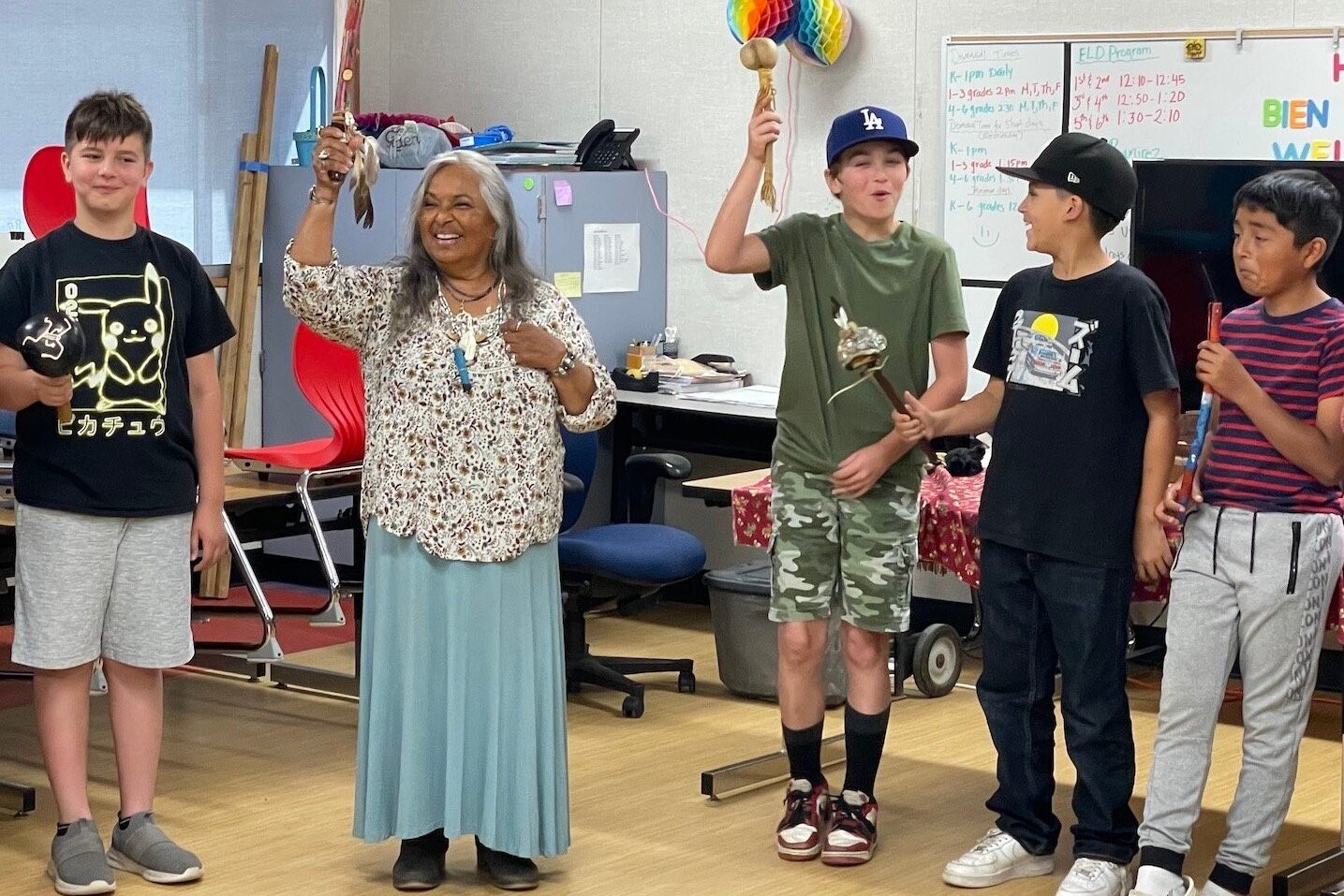
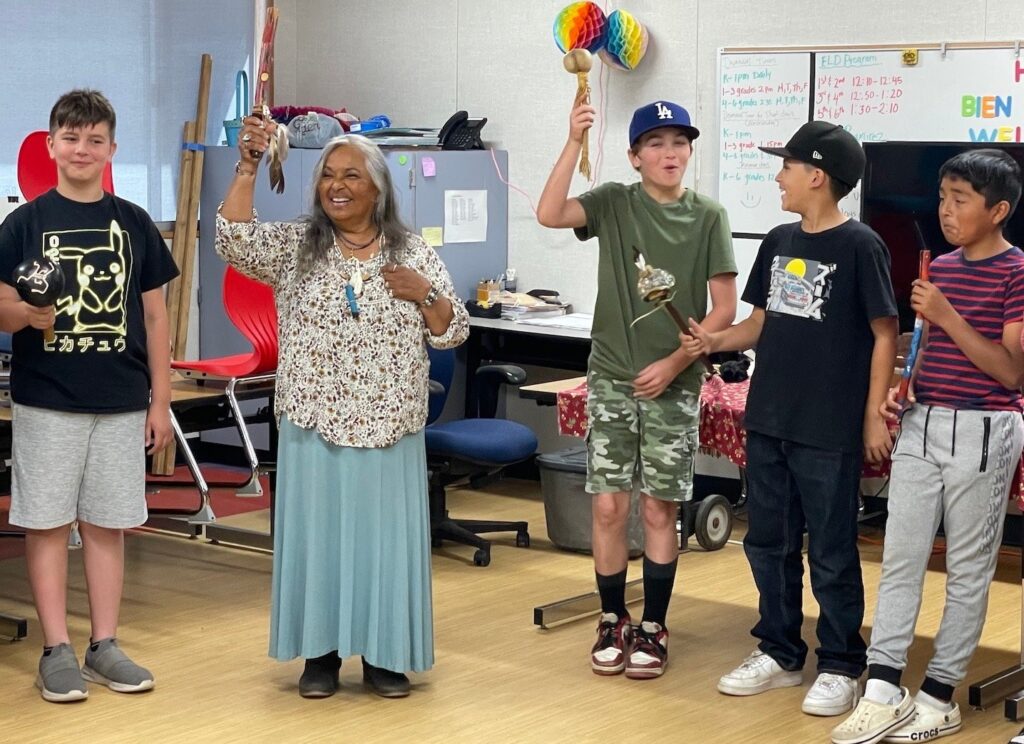
    Artist in Residence, Julie Tumamait-Stenslie, making Chumash music with students
    Artist in Residence, Julie Tumamait-Stenslie, making Chumash music with students

    In 2023, the Ojai Music Festival’s BRAVO Education and Community Program was honored to accept a grant from The Ojai Women’s Fund for our Artist in Residence Program during our 2023 school year. The Ojai Women’s Fund is a volunteer collective Giving Circle dedicated to making substantial grants on an annual basis. The recipient organizations target critical needs in the Ojai Valley (focus areas include the arts, education, the environment, health services, and social services).

    The following article was shared in the Ojai Women’s Fund August 2024 Newsletter.

    Ojai Women's Fund Logo

    Ojai Festivals, LTD. Artists in Residence Program, $15,000

    BRAVO Coordinator, Laura Walter

    The Ojai Music Festival Artists-in-Residence program has brought the joy of live music into the classrooms of Ojai’s children. Our grant enabled about 450 OUSD students from Topa Topa and Mira Monte Elementary Schools in Ojai and Sunset Elementary School in Oak View to have a personal experience with musicians right in their own classrooms.

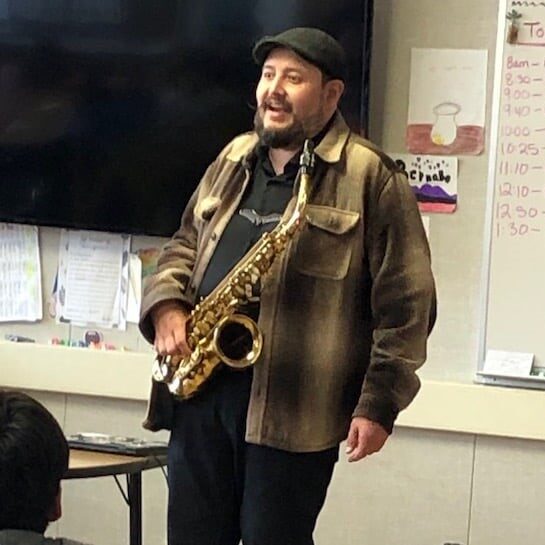
    The artists, Julie Tumamait-Stenslie with Chumash music, Rosanne Forgette with drums, and Ruben Salinas on saxophone, shared their music and instruments to build a relationship with music that deepens the love of music. At each interactive Artists-in-Residence presentation, the musicians talk with the students about the instruments they play, the history and cultural background of the music they perform, and their paths to becoming professional artists. Other artists who participate in the program include Kathleen Robertson (violin), Dave Cipriani (Indian slide guitar), and Shelley Burgon (harp).

    “They get exposure whether they want to play an instrument or be an audience member,” said Laura Walter, education coordinator for the Ojai Music Festival, so it becomes an “intentional part of their experience of beauty.” It also opens the door to a pathway for music in their future.

    “Thank you for coming to Mira Monte School. I really enjoyed the song you played from Star Wars. Next year, I’m going to try playing the flute. I want to play an instrument for my career too,” wrote student Selena after Salinas’ performance.

    “Thank you for letting us play your instruments, telling your stories, and showing us dance,” said Jasper after Tumamait-Stenslie shared her Chumash music and culture.

    “Thank you for letting us play all those cool instruments! I liked it when we got to go inside the circle, and we made all the instruments really loud or quiet or medium,” said Eve when the entire class played percussion instruments.

    “This is why I love working with children,” said Walter, “being together and caring about each other is what is important.”

    Mira Monte students keeping time with the music
    Mira Monte students keeping time with the music
    Artist in Residence Ruben Salinas
    Artist in Residence Ruben Salinas
    Mira Monte student enjoying the performance
    Mira Monte student enjoying the performance
    Ojai Music Festival BRAVO Education and Community Programs
  • AMOC* brings Harawi to California

    AMOC* brings Harawi to California

    Members of AMOC* Bobbi Jene Smith, Julia Bullock, and Or Schraiber.
    Members of AMOC* Bobbi Jene Smith, Julia Bullock, and Or Schraiber.

    Julia Bullock, soprano
    Conor Hanick, piano
    Bobbi Jene Smith, dancer/choreographer
    Or Schraiber, dancer/choreographer

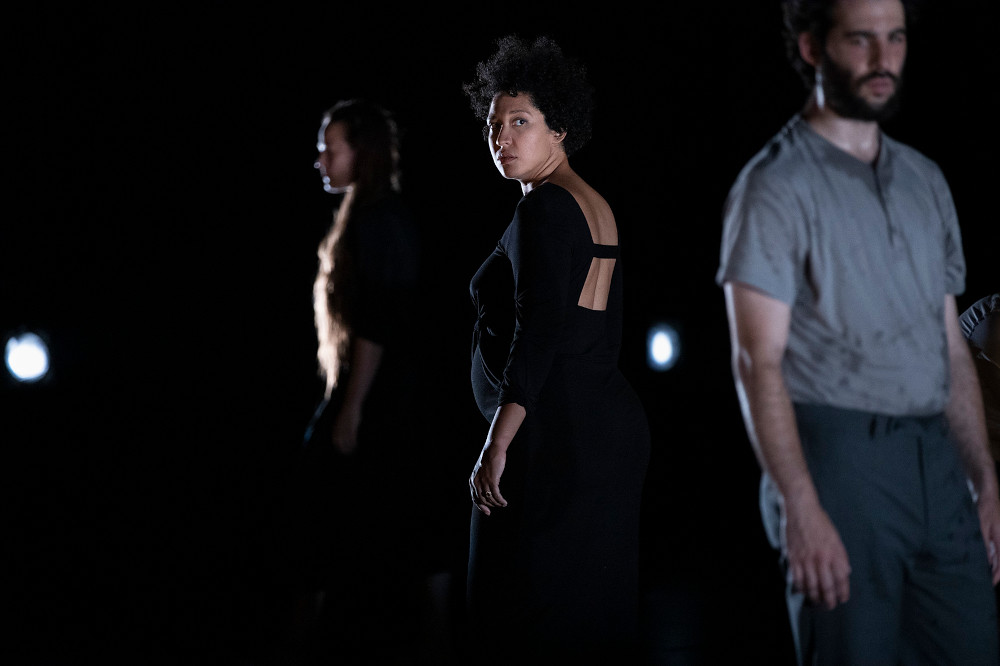
    The 2022 Ojai Music Festival Music Director, AMOC* (American Modern Opera Company), returns to Southern California to present Harawi, Olivier Messiaen’s deeply affecting song cycle for voice and piano in a newly physicalized and dramatized version. Over the course of a dozen interconnected love songs – the first installment in a series of song cycles known as the composer’s Tristan trilogy – dancers Bobbi Jene Smith and Or Schraiber bring Messiaen’s romantic surrealism to life through their original choreography. All four artists – Smith and Schraiber, plus pianist Conor Hanick and soprano Julia Bullock – are contributing members of AMOC*, an adventurous, enterprising collective of artists that has been called “blindingly impressive” and “preternaturally talented” by The New York Times. By incorporating dance, this unique production of Harawi opens up Messiaen’s song cycle, adding a new dimension and greater intensity to its portrayal of love and loss.

    Harawi was meant to be premiered at the 2022 Ojai Festival by the artists of AMOC* but was waylaid when soprano Julia Bullock became ill with COVID-19 and was unable to travel to California. Now, this moving song cycle will come to life in performances in Los Angeles on October 1, presented in association with the Wallis Theater in Beverly Hills and in Santa Barbara on October 4, produced with our friends at UCSB Arts and Lectures. For UCSB tickets: use promo code OJAI24 and get a 20% discount. Deadline is October 3.

    2022 Ojai Talks on “Harawi”
    “Harawi” teaser trailer
  • Revisit the 2024 Libbey Bowl Concerts!

    Revisit the 2024 Libbey Bowl Concerts!

    Patrons share their favorite Festival experiences

    Relive your favorite Libbey Bowl moments from the 2024 Ojai Music Festival. Watch either whole concerts or individual pieces from each concert. Subscribe to our YouTube channel to stay up-to-date with new video releases.

    “The Ojai Music Festival has always meant a wonderful blend of tradition and modernism. I look forward to hearing new and exciting modern and contemporary artists and works always followed by a beautiful and reliable classic. Over the years I have met new people and celebrated new friendships with people I may never have met if not for the festival. I look forward to this event each year.”

    “An introduction for me to hear new artists perform whom  I ordinarily wouldn’t not be familiar with and to be awakened to new sounds and proficiency of the artists.”

    Watch Entire Concerts

    Opening Concert
    Friday Morning Concert
    Friday Evening Concert
    Saturday Morning Concert
    Saturday Evening Concert
    Sunday Morning Concert
    Finale Concert

    Watch Individual Pieces

    Kaija Saariaho, “Lichtbogen”
    Helmut Lachenmann, “Pression”
    Kaija Saariaho, “Fall”
    John Zorn, “Road Runner”
    Missy Mazzoli, “Dark with Excessive Bright”
    Sofia Gubaidulina, “Five Etudes”
    John Adams, “Shaker Loops”
    Kaija Saariaho, “Six Japanese Gardens”
    Jörg Widmann, “Chorale Quartet”
  • Ojai Holiday Home Tour Highlights

    View this gallery featuring a few of our favorite snapshots from past Home Tours!

  • Ojai Music Festival Receives Grant from Ventura County

    Ojai Music Festival Receives Grant from Ventura County

    OJAI MUSIC FESTIVAL RECEIVES
    AN ARTS AND CULTURE INVESTMENT FUND GRANT FROM THE COUNTY OF VENTURA AND VENTURA COUNTY COMMUNITY FOUNDATION

    Download the PDF version

    (July 30, 2024 – OJAI CA) — The Ojai Music Festival is pleased to announce it is a recipient of the Arts and Culture Investment Fund Grant from the County of Ventura and the Ventura County Community Foundation.

    The $75,000 grant will support the internationally recognized annual Ojai Music Festival, which presents classical and contemporary music featuring today’s most innovative and celebrated artists; an expansion of its year-round activities, that will include public performances and partnerships in the Ojai community and the broader Ventura County; and the broadening of its BRAVO education program in public schools with SCORE, a music composition class for high school students.

    “We are deeply grateful to the County and the Board of Supervisors for this very generous and meaningful support,” said Ara Guzelimian, Artistic and Executive Director of the Ojai Music Festival. “This marks an important milestone moment in the cultural life of Ventura County, recognizing and supporting the ever-growing range of vibrant arts activity in our communities.”

    The Arts and Culture Investment Fund is Ventura County’s first dedicated arts and culture grant program, which as approved by the Board of Supervisors as part of the County’s 2023 Recovery Plan to support ongoing recovery from the pandemic. Funding supports both nonprofit arts and culture organizations and artists based in Ventura County. For more information and the Arts and Culture Investment Fund and a complete list of grant recipients, please visit www.ventura.org/arts.

    About the Ojai Music Festival
    The Ojai Music Festival represents an ideal of adventurous, open-minded, and openhearted programming in the most beautiful and welcoming of settings, with audiences and artists to match its aspirations. Entering its 79th year, the Festival remains a creative laboratory for thought-provoking musical experiences, bringing together innovative artists and curious audiences in an intimate, idyllic outdoor setting. Each Festival’s narrative is guided by a different Music Director, whose distinctive perspectives shape programming — ensuring energized festivals year after year.

    Throughout each year, the Ojai Music Festival contributes to Southern California’s cultural landscape with in-person and online programming as well as robust educational offerings that serve thousands of public-school students and seniors. The organization’s apex is the world-renowned Festival, which takes place over four days in the breathtaking Ojai Valley in Ventura County. During the immersive experience, a mingling of the most curious take part in concerts, symposia, free community events, and social gatherings. The intimate Festival weekend, considered a highlight of the international music summer season, welcomes up to 5,000 patrons and reaches exponentially more audiences worldwide through streaming and broadcasts of concerts and discussions throughout the year.

    Since its founding in 1947, the Ojai Music Festival has presented expansive programming in unusual ways with an eclectic mix of new and rarely performed music, as well as refreshing juxtapositions of musical styles. Through its signature structure of the Artistic Director appointing a different Music Director each year, Ojai has presented a “who’s who” of music including Mitsuko Uchida, Rhiannon Giddens, AMOC* (American Modern Opera Company), Vijay Iyer, Patricia Kopatchinskaja, and Barbara Hannigan in recent years; throughout its history, featured artists have included Aaron Copland, Igor Stravinsky, Michael Tilson Thomas, Kent Nagano, Pierre Boulez, John Adams, Esa-Pekka Salonen, Robert Spano, Pierre-Laurent Aimard, David Robertson, Eighth Blackbird, George Benjamin, Dawn Upshaw, Leif Ove Andsnes, Mark Morris, Jeremy Denk, Steven Schick, Matthias Pintscher, and Peter Sellars. The 79th Ojai Music Festival, June 5 to 8, 2025, will welcome flutist Claire Chase as Music Director.

    ###

  • Thank You!

    Your application for the Ojai Holiday Market, November 15 & 16, 2025, was received. You will receive an email confirmation shortly. If you have any questions, please contact the Ojai Music Festival at info@ojaifestival.org.

    You can now close this page. Happy Holidays!

    Ojai Holiday Home Tour & Marketplace
  • 2024 Ojai Holiday Home Tour & Marketplace

    2024 Ojai Holiday Home Tour & Marketplace

    Saturday & Sunday, November 16 & 17

    Ojai Holiday Home Tour & Marketplace, presented by the Ojai Festival Women's Committee

    How to purchase tickets:

    • The Box Office
      • Located at the Holiday Marketplace at Libbey Park (210 S. Signal Street), one is at the fountain area and another is at the building closest to the Libbey Bowl. Look for red signs reading WILL CALL
      • Tickets are $50. Credit card purchases only
      • Hours are 10PM-4PM on Saturday and 10AM-3PM Sunday
    • Ticket Outlets

    Preview the Four Homes and Florists

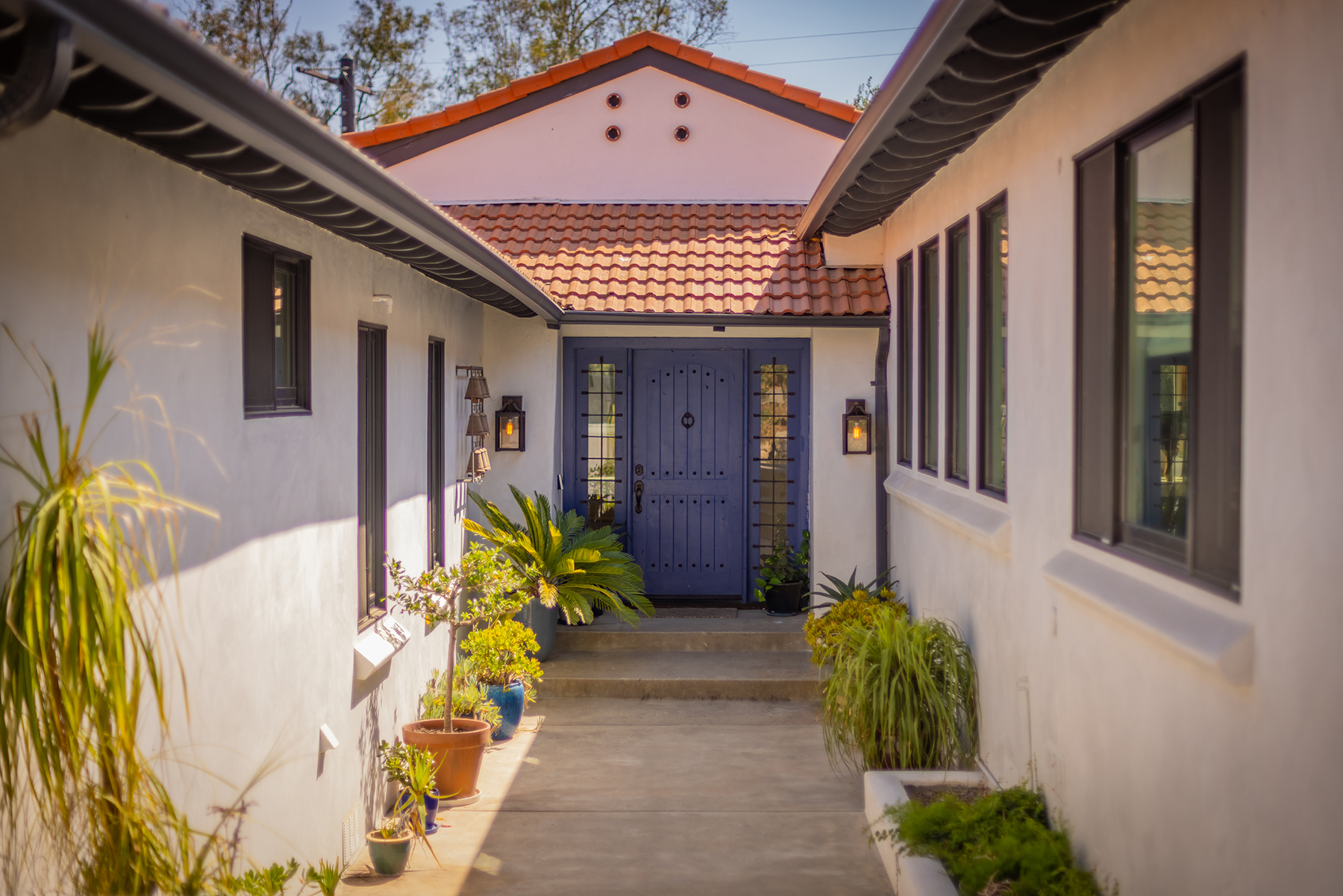
    Villa Valencia

    Have you ever driven by a home and instantly been enamored of it, yearning to see inside and out? Here is your opportunity to indulge your curiosity, with a house both elegant and livable. Exuding French vibes, you feel transported to that wine country, although this property is
    surrounded by fragrant orange groves. Inside the main house, with its massive ceilings, postcard-worthy views from every window, generous rooms, and simplicity abounding, one can only imagine how beautiful a stay in this home would be. Of course, the pool and guest house complete the picture, with areas of restful quiet and tranquility in between.

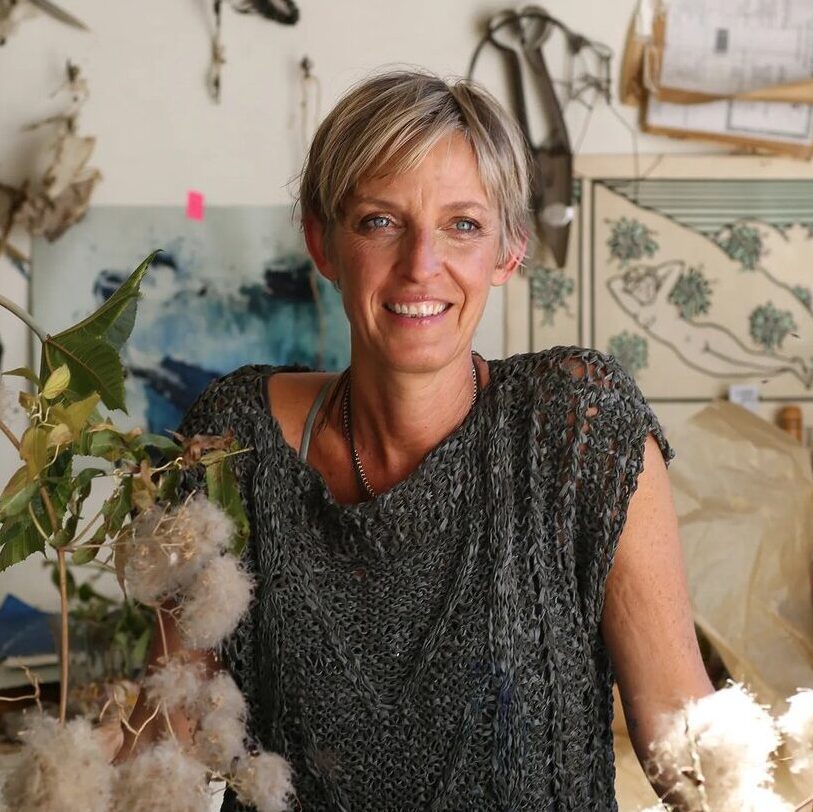
    Floral Desginer: Louesa Roebuck

    “The way of the flowers” has been studied for centuries. As an artist, floral designer and author, Louesa Roebuck demonstrates that one needs to understand the rules in order to bend them. In her two critically acclaimed books, Foraged Flora and Punk Ikebana, Louesa has composed stunning arrangements and installations that unite cultural influences with an exhilarating freedom from conventional floral design using regionally foraged and gleaned materials.

    After moving to California from Ohio in 1998, Louesa worked at the influential Chez Panisse, which profoundly shaped the direction of her career.  She continued her education of California culture and beauty working with clothing and textile designer Erica Tanov, then opened “August,” a seminal fashion, art, and community hub illustrating the intersection of luxury apparel and environmentally and socially responsible textile practices. In 2008, Louesa returned to her lifelong love of foraged floral work.

    In addition to creating floral art, arrangements and installations for many illustrious clients, her work has been featured in several national and international media including Vogue, GOOP, The New York Times, Wall Street Journal, Wired Magazine, Los Angeles Times, Architectural Digest, C Magazine, Gardenista, Sunset, Martha Stewart Living and more.

    Working with locally seasonal foraged and sourced flora to bring Ojai’s ever-evolving abundance into Casa Valencia, Louesa has revealed how floral art, sculpture and Holiday designs can be created by embracing the flora right outside your door, inspiring you to cultivate your own vision by inviting the wonders of the natural world into your home.

    Louesa lives with her partner Curtis and their three dogs in the hills above Ojai, and considers all of California her home. She, and her autographed books can often be found in their local gallery showroom, Art Port. Her books are also available at your local bookstore and online booksellers.

    Visit Louesa Roebuck’s Website

    Sespe Creek Sanctuary

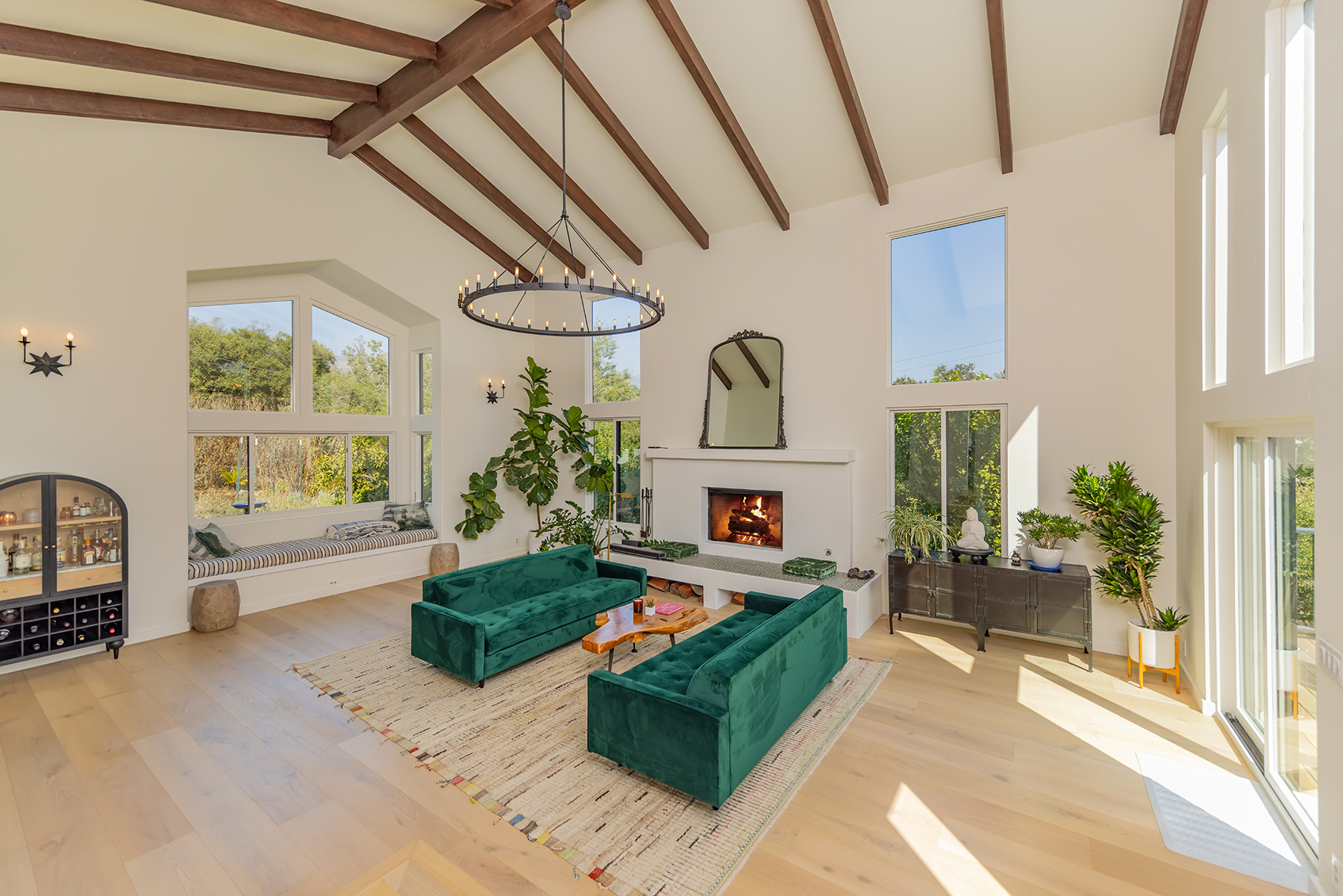
    When two artists, who work from home, design their dream house, you can be sure the creative space will be fabulous. Combining Spanish modern, farmhouse, and bohemian elements, it is an eclectic delight! Location is key, close to town but at the end of a cul-de-sac, built into a hillside surrounded by nature. Art and personal touches give each space dramatic personality, with several sets of stairs separating the many levels. Hand-painted Moroccan tiles are found throughout the kitchen. The living room with vaulted ceiling and prodigious windows offers the perfect place to entertain with the home theater system, showcasing the owner’s successful career as a television writer. The muse of her father inspires her in the dramatic deep green office with perfectly chosen wallpaper. The poolside wooden deck is surrounded by urban greenery and the sounds of Sespe Creek with a perfect view of the Pink Moment. A professional recording studio is an impressive bonus.

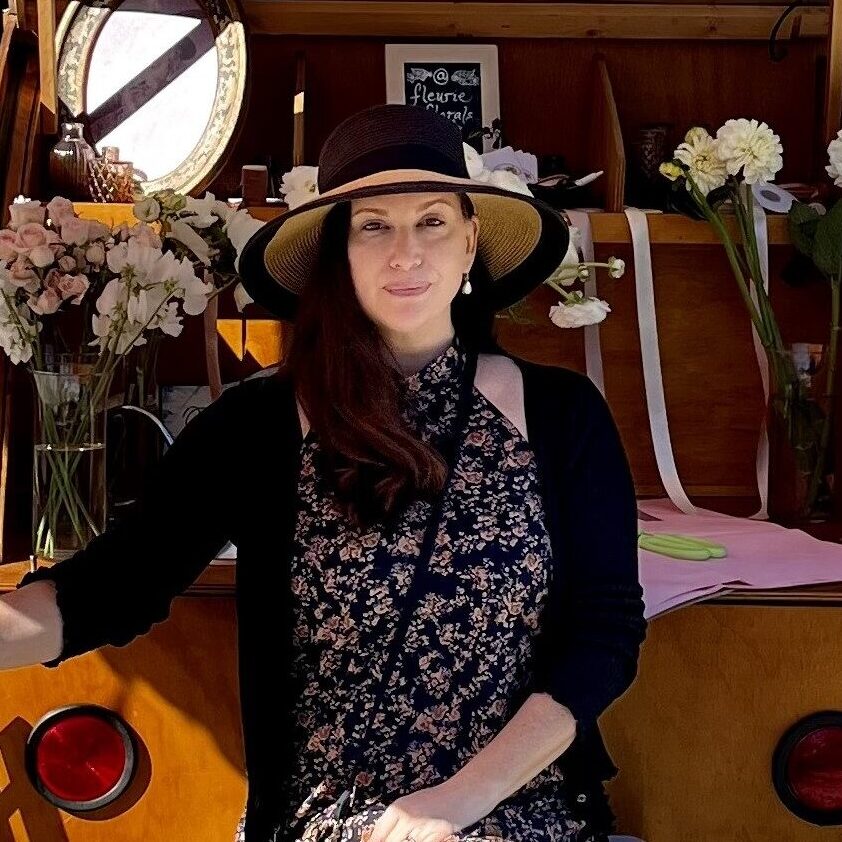
    Floral Designer: Emily Denver – Fleur Ojai 

    The owner of two sustainable floral businesses, Emily Denver is a pioneer in the field to vase, sustainable floristry movement. Fleur Ojai offers luxury florals for small gatherings and events, set design and home staging. Fleurie Florals is a tiny, traveling floral experience contained in a custom-made teardrop trailer, perfect for parties, workshops, and get togethers of all kinds.

    Emily is known for her luxurious and natural style, beautifully blending colors and textures that honor the flowers. Mentored by a master florist from France at the age of 17, her design philosophy has become rooted much deeper than traditional floral technique. Emily has been fortunate to have traveled, worked, designed and taught around the world. Along the way, she has created everything from Shakespearean landscapes and English gardens, to becoming an expert on floriography, The Language of Flowers.

    Emily has also lent her design aesthetic to her own line of jewelry, handbags, resort wear, and interior design. From shop windows on Melrose, to custom designing jewelry to match evening gowns for Award Season, her motto has continued to be: Good design is good design.

    Born in Ventura County and raised all over the United States, Canada and Europe, Emily opened her floral studio and shop in Los Angeles in 2008. After a decade of running her successful floral business, she returned home to Ventura county’s jewel, Ojai, to create a home base of art and poetry, nature and music, creativity and passion, and of course, flowery goodness for herself, her family and her community. Creating Holiday designs for Sespe Creek Sanctuary for this year’s Holiday Home Tour has been a joy and a pleasure for her.

    Emily’s floral design and styling has been featured in The Knot, Town & Country, Country Living, Vogue, Martha Stewart, Wedding Chicks, Style Me Pretty, Magnolia Rouge, and Green Wedding Shoes.

    Visit Emily Denver’s Website

    Signal Vista

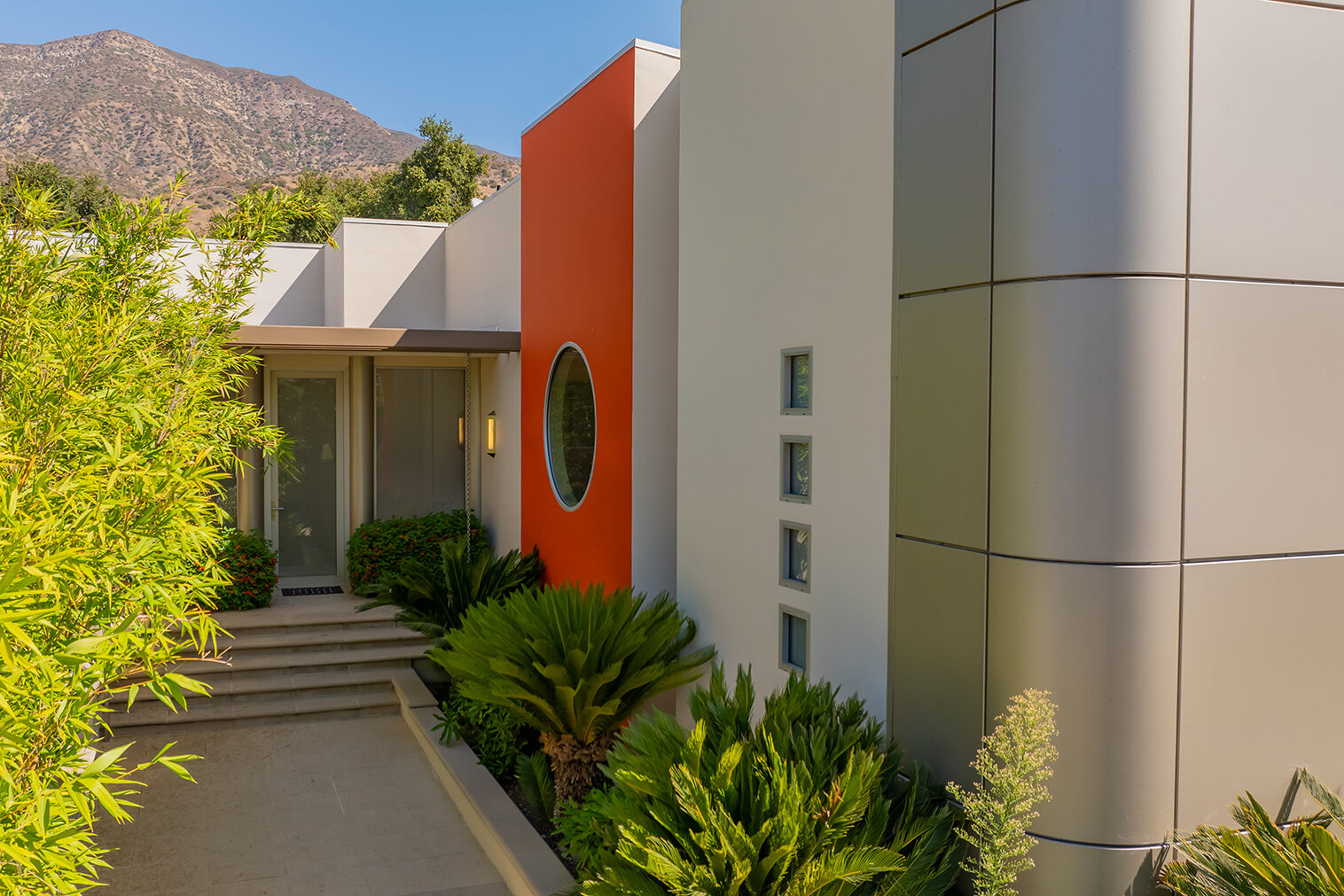
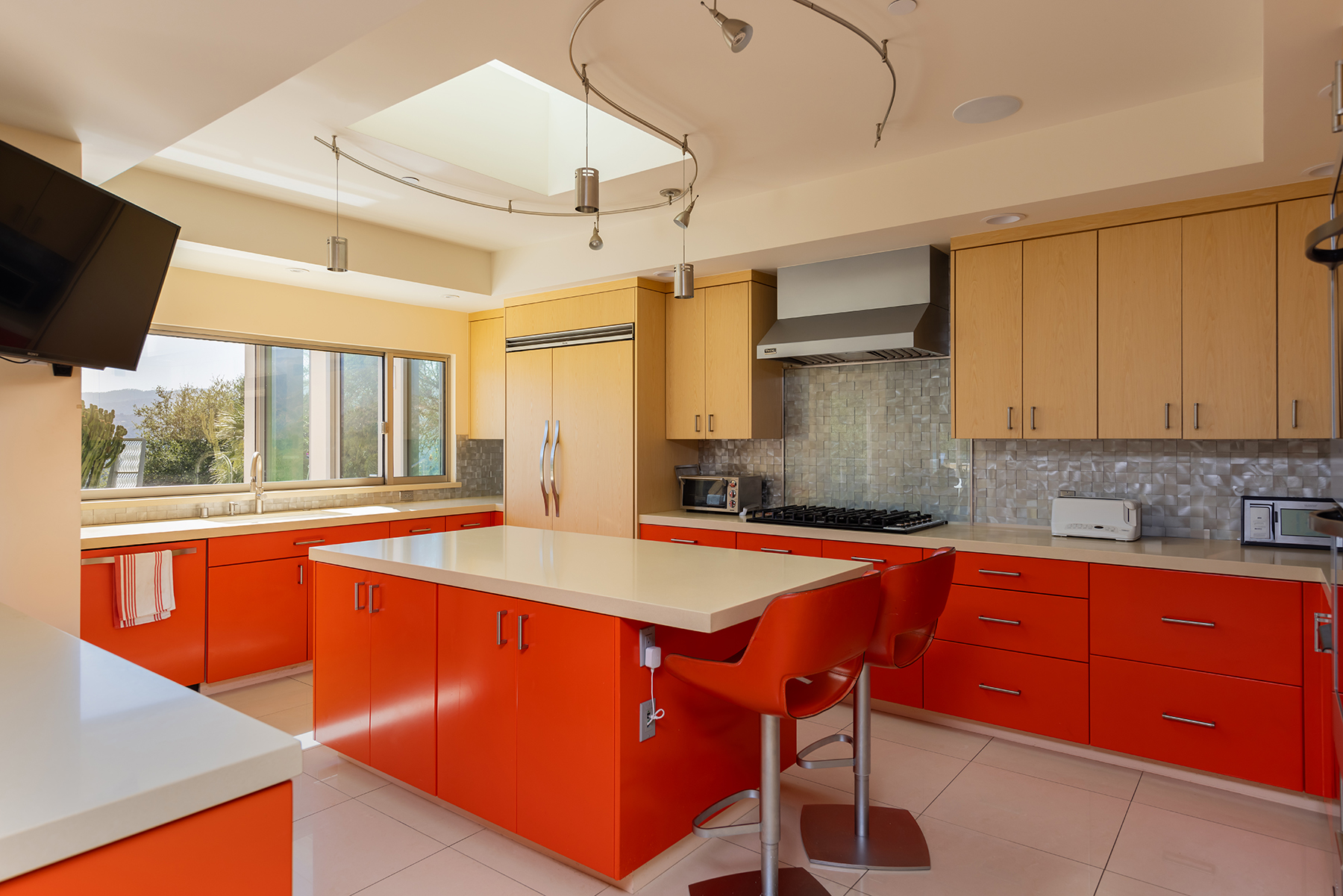
    A magnificent hilltop minimalist masterpiece, designed by the owners themselves. Beyond the stainless-steel front doors, sleek contemporary lines are accented with impressive original artwork displayed throughout. Floor to ceiling windows and glass doors maximize the stunning views of the East End and the Topa Topas. The primary bedroom has two glass walls to take in the gorgeous beauty, and the huge his and hers bathrooms and wardrobes alone are worth the visit. The large outdoor terrace is “bounded” by a sparkling pool with infinity edges on three sides and leads to gorgeous desert and South African landscaping.

    Floral Designer: Lynn Malone

    Floral design has always been a passion for Lynn, from picking and making Mother’s Day flowers as a child, to working for nearly three decades at local nonprofit and government organizations who needed florals for their events, always within a tight budget. A self-taught designer, Lynn spent twenty years learning to create beautiful florals affordably, primarily by incorporating seasonal and foraged flowers, foliage and other natural elements.

    In 2013, Lynn semi-retired to open her own flower shop, Digs, which quickly became one of Ojai’s “go to” flower shops and later evolved into three different floral design studios after the shop was sold. After five years in retail floristry, she decided it was time to REALLY retire. Soon afterward, she realized she missed the flowers and floral interactions with friends and clients. Lynn currently designs for friends, an occasional wedding, and local organizations, including the Ojai Music Festival, the Ojai Land Conservancy and Rotary Clubs, creating unique florals for events and fundraisers on a budget. She occasionally leads floral workshops for local groups to help facilitate community gatherings around floral design.

    Lynn serves as the design liaison for the Holiday Home Tour, matching designers and their unique styles with the homes on the tour and providing support for designers, homeowners and committee members. Having spent most of her floral career designing for multitudes of clients with their own unique styles and needs, Lynn has learned to be flexible in her approach to floral design in keeping with different needs and aesthetics of clients and friends. She has enjoyed working with the homeowners of two of this year’s Holiday Homes, each with very diverse styles, and each themed around different holidays.

    Collector’s Cottage

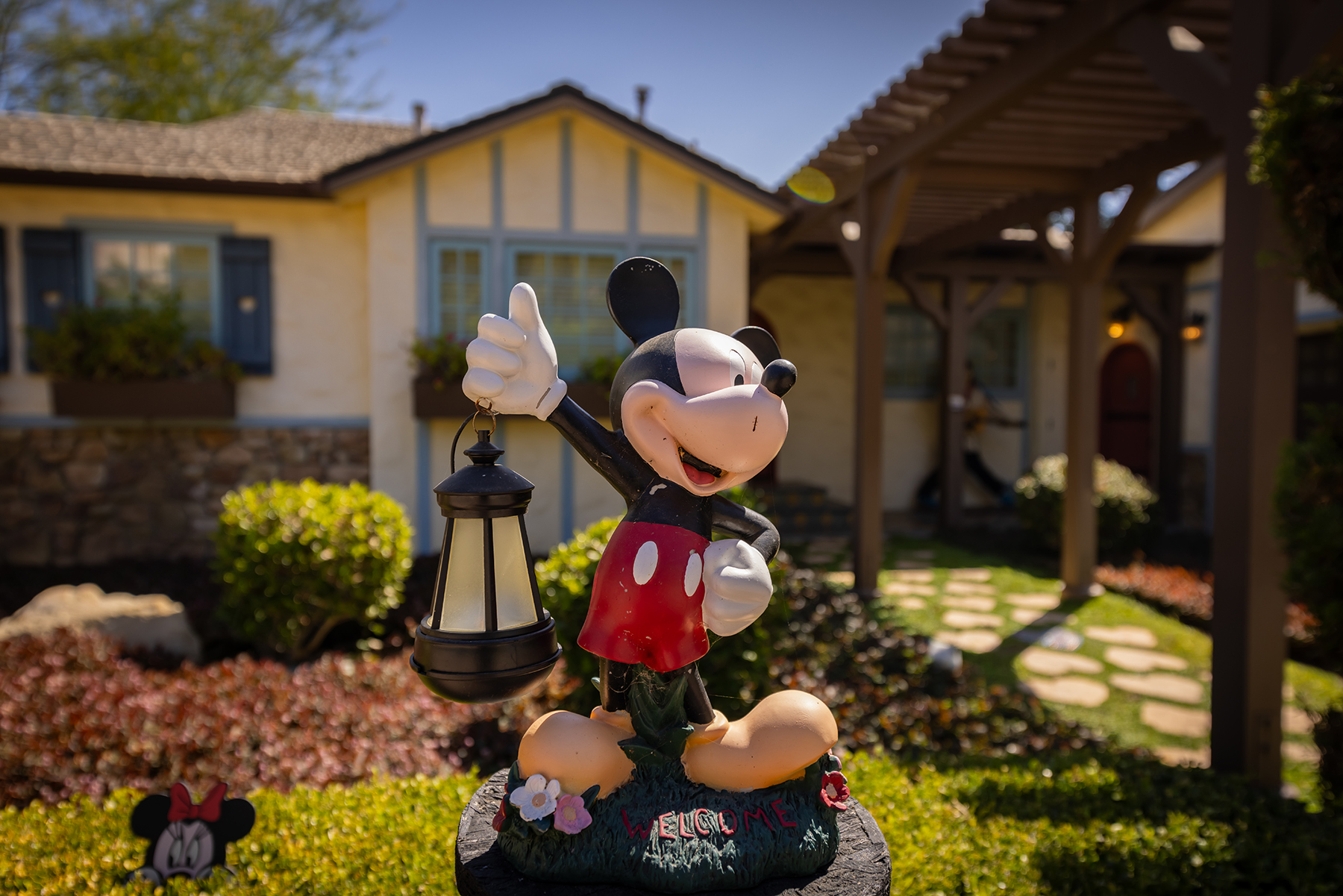
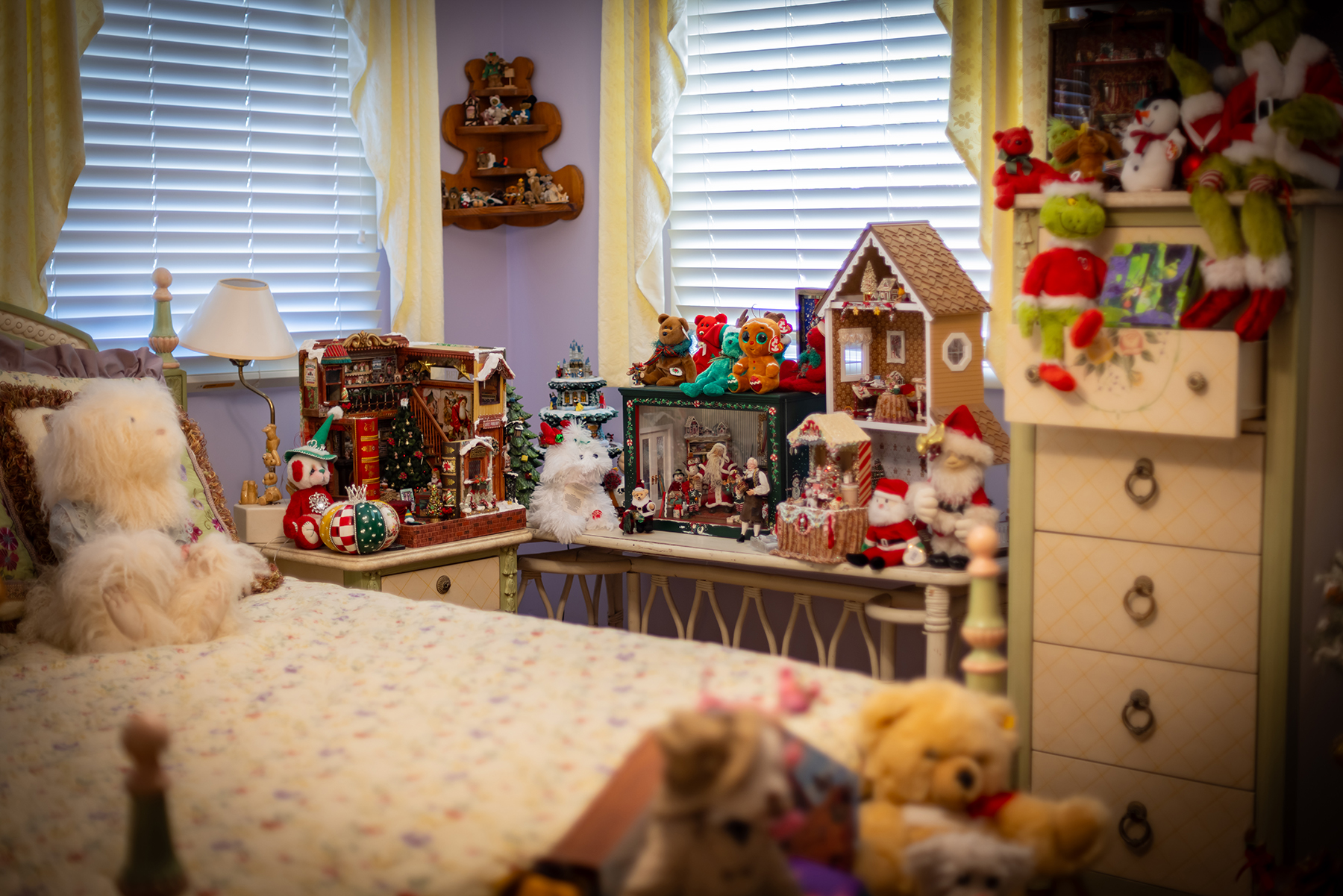
    A charming storybook cottage, right out of a Snow White fairy tale, houses a local mini-museum of myriad collectibles. Each themed room is full to the brim with delights from bears to Barbies to Beanie Babies, from Elvis to Alice in Wonderland, and so much more. See if you can guess the names of all the costumed Bears. Be mesmerized by the train set that fills a large room, as it chugs around the Disneyland village. You’ll feel like a child again as you revisit fantasy favorites from your youth and be impressed with many significant items of sophisticated one-of-a-kind memorabilia.

    Floral Designer: Lynn Malone

    Floral design has always been a passion for Lynn, from picking and making Mother’s Day flowers as a child, to working for nearly three decades at local nonprofit and government organizations who needed florals for their events, always within a tight budget. A self-taught designer, Lynn spent twenty years learning to create beautiful florals affordably, primarily by incorporating seasonal and foraged flowers, foliage and other natural elements.

    In 2013, Lynn semi-retired to open her own flower shop, Digs, which quickly became one of Ojai’s “go to” flower shops and later evolved into three different floral design studios after the shop was sold. After five years in retail floristry, she decided it was time to REALLY retire. Soon afterward, she realized she missed the flowers and floral interactions with friends and clients. Lynn currently designs for friends, an occasional wedding, and local organizations, including the Ojai Music Festival, the Ojai Land Conservancy and Rotary Clubs, creating unique florals for events and fundraisers on a budget. She occasionally leads floral workshops for local groups to help facilitate community gatherings around floral design.

    Lynn serves as the design liaison for the Holiday Home Tour, matching designers and their unique styles with the homes on the tour and providing support for designers, homeowners and committee members. Having spent most of her floral career designing for multitudes of clients with their own unique styles and needs, Lynn has learned to be flexible in her approach to floral design in keeping with different needs and aesthetics of clients and friends. She has enjoyed working with the homeowners of two of this year’s Holiday Homes, each with very diverse styles, and each themed around different holidays.

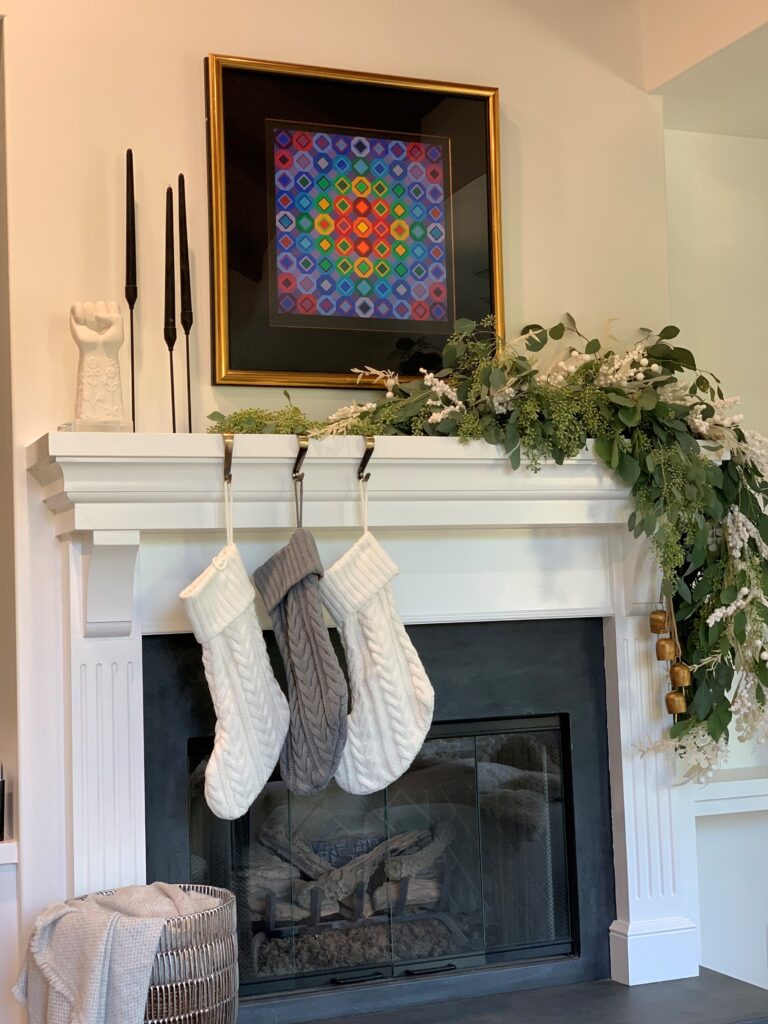
    Festive, decorated hearth
    Maison Ojai, one of the homes on the 2023 Tour

    Information

    Tour Hours
    Marketplace Hours

    10AM – 4PM
    10AM – 4:30PM

    Described as the best holiday home tour in the region, guests visit four exceptional homes during the 2024 Ojai Holiday Home Tour & Marketplace. The tour offers a diverse array of homes that reflect the unique charm of Ojai, and it celebrates the festive seasons adorned with floral inspirations by local Ojai designers.

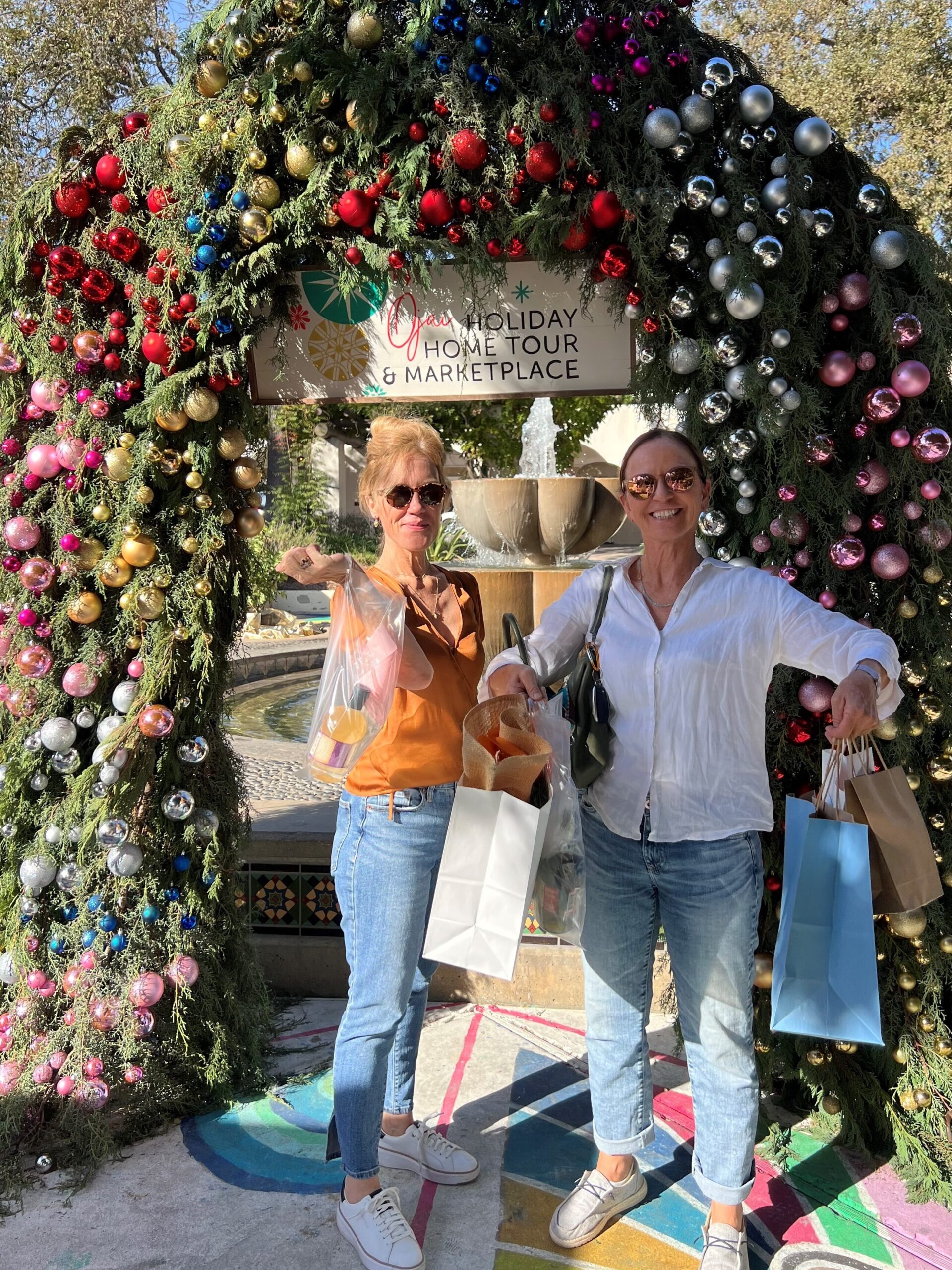
    Shoppers pose under decorative archway
    Shoppers at the 2023 Holiday Marketplace

    Marking 28 years in 2024, the Holiday Home Tour & Marketplace welcomes visitors from Los Angeles, Santa Barbara, and Ventura Counties. Tours are guided by a team of volunteer docents in each home.

    In addition to touring four beautiful Ojai homes, visitors to the event can do holiday shopping early at the Marketplace. On both days, 65+ vendors and artisans sell unique and handmade goods in Libbey Park from 10AM-4:30PM.

    NEW! Convenient, no-hassle check-out directly at vendor booths.

    The Holiday Home Tour & Marketplace is the Ojai Festival Women’s Committee‘s largest fundraiser. Proceeds benefit the Ojai Music Festival and its BRAVO Education and Community Programs.

    Meet the Musicians

    During the marketplace, hear performances by students of the BRAVO programs from elementary to high school grades. Throughout the home tour, enjoy live music by the following local talents.

    Home Tour Musicians:

    Santa Barbara Flute Ensemble
    Fern Barishman
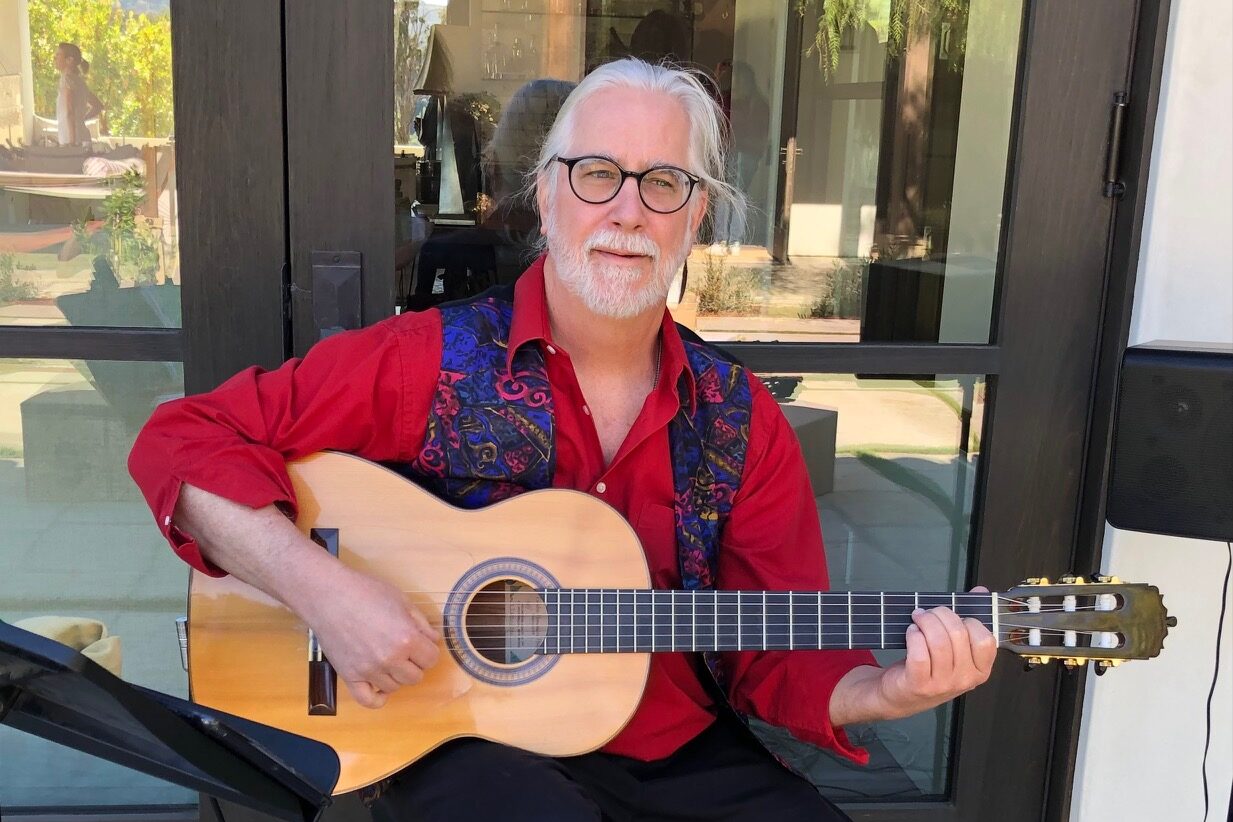
    Caressa Cowan (pictured)
    Kerri Climer
    David and Eilam
    Alex Fager (pictured)
    Bonnie Griffin
    George Lemire
    Lyra Quartet
    Madrigali
    Mood Swing
    Ojai Library Ukulele Club
    Dori Riggs
    Ray Sullivan (pictured)
    Morgan Swaidan

    Support the Holiday Home Tour & Marketplace
    Photos of students in the BRAVO program


    The Women’s Committee invites you to keep the Holiday Home Tour & Marketplace a part of your annual holiday tradition by becoming a sponsor or a volunteer.

    As one of the largest financial supporters of the Ojai Music Festival and its BRAVO Education and Community Programs, the Women’s Committee is proud of its essential role in our community’s future through this annual staple.

    Sign up as a Vendor!

    The 2024 marketplace is now full, with 75 vendors. If you are a 2024 vendor and would like to check or edit your vendor information, log in to the portal below. If you would like for us to reach out to you when applications open up for the 2025 Marketplace, use the button below!

  • OJAILIVE: 2024 Live Stream Replays

    OJAILIVE: 2024 Live Stream Replays

    Since 2012, the Ojai Music Festival has expanded its global footprint building a worldwide audience and has deepened connections with patrons throughout the year with free Live Stream Broadcasts. The 78th Festival, June 6 to 9, continues this offering with acclaimed pianist Mitsuko Uchida as Music Director.

    You can watch the free live streams of the Libbey Bowl concerts from the Festival’s home page which will begin Thu, June 6 at 8pm. The complete evening concerts will only be available at the time of the performance. UPDATE: Full morning concerts and highlights of the evening concerts are now available below and on our YouTube channel (7/1/24). 

    Stay updated on new Festival videos by subscribing to our YouTube channel.


    For more context on this year’s Festival, enjoy these links:


    THU June 6, 2024

    Selections from the 8:00PM OPENING CONCERT
    Libbey Bowl  

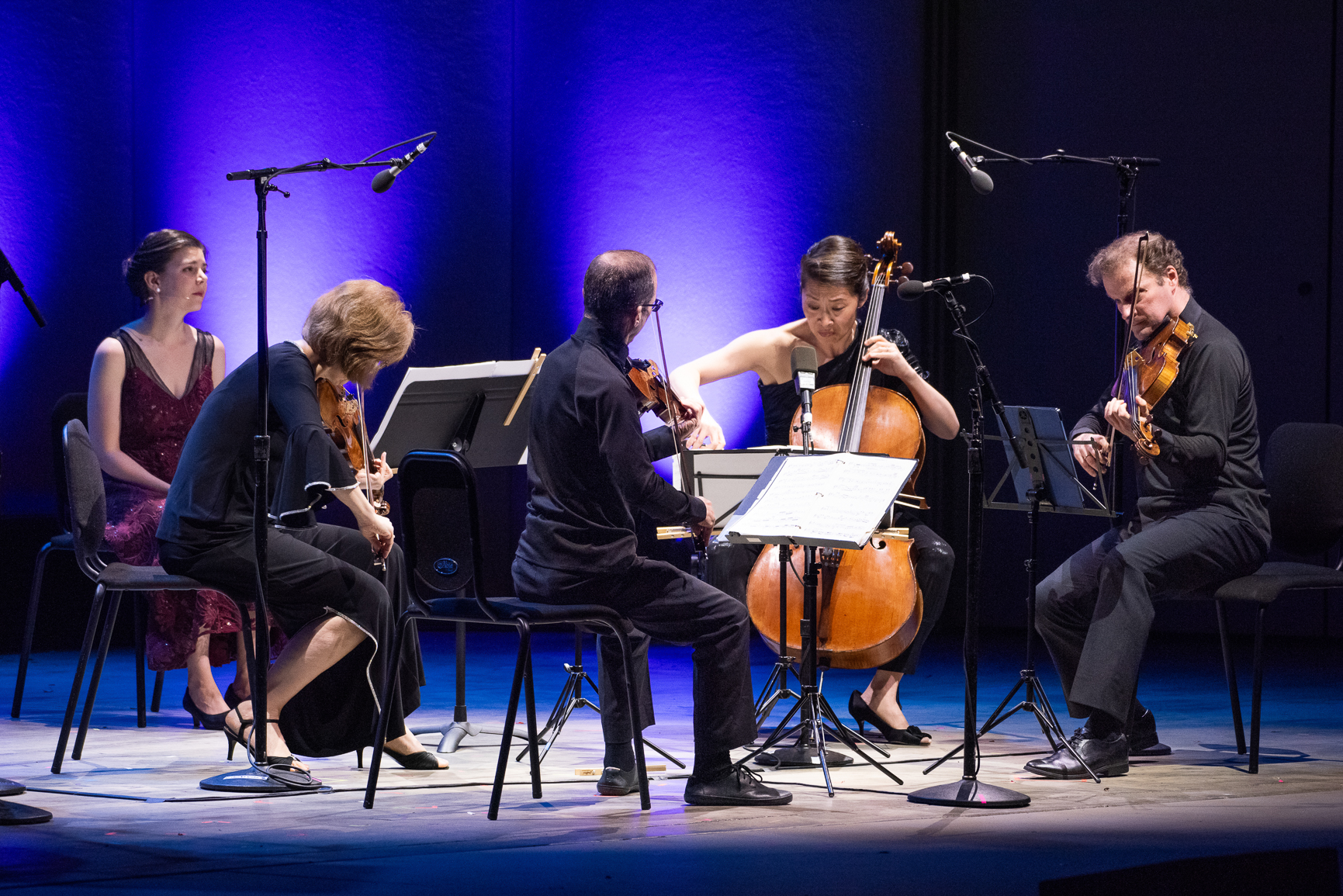
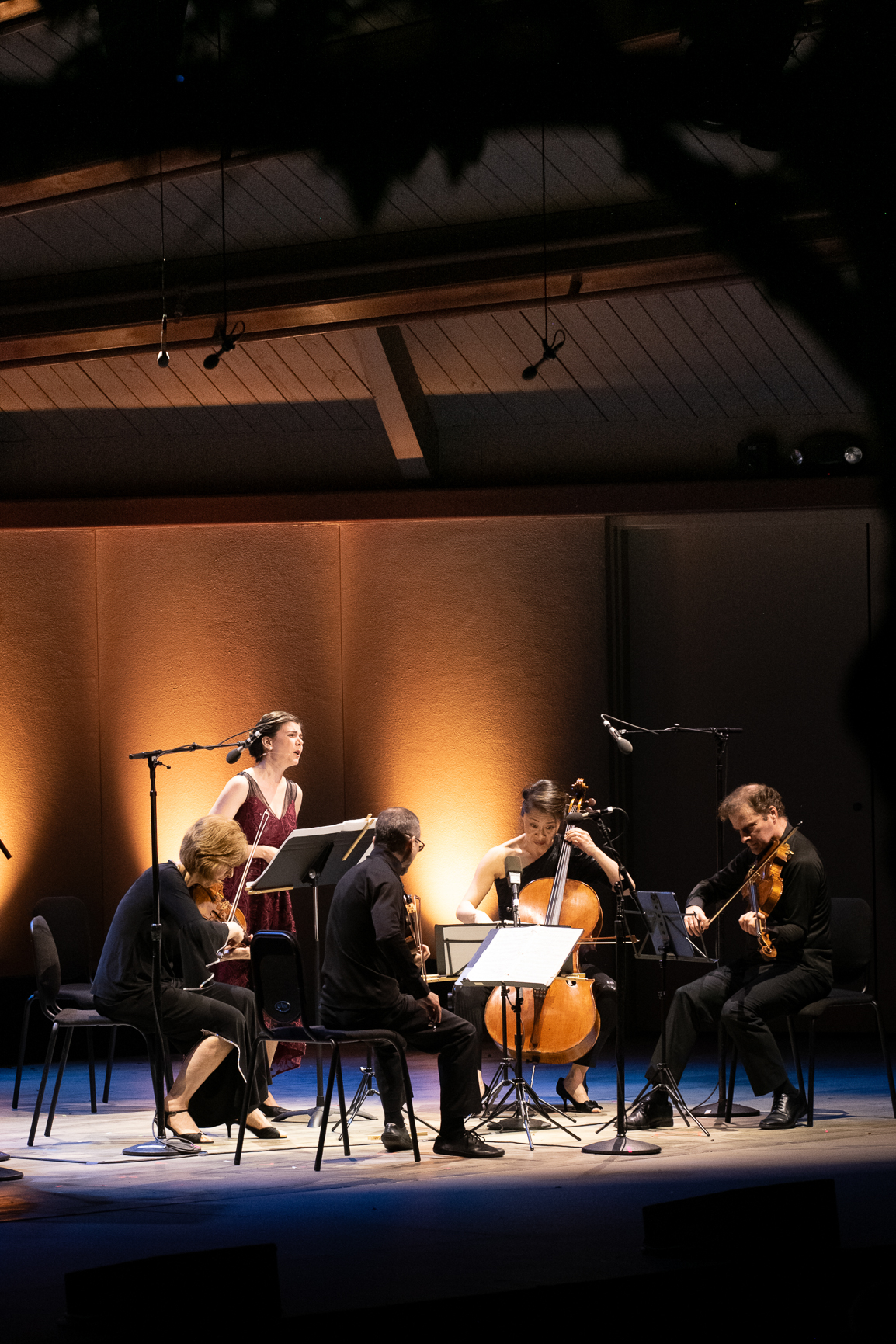
    Brentano String Quartet | Lucy Fitz Gibbon soprano 

    HAYDN   String Quartet in C major, Op. 33, No. 3 (“Bird”) 
    SCHOENBERG   Six Little Piano Pieces, Op. 19  
    SCHOENBERG   String Quartet No. 2 in F-sharp minor, Op. 10 

    FRI June 7, 2024

    10:00AM 

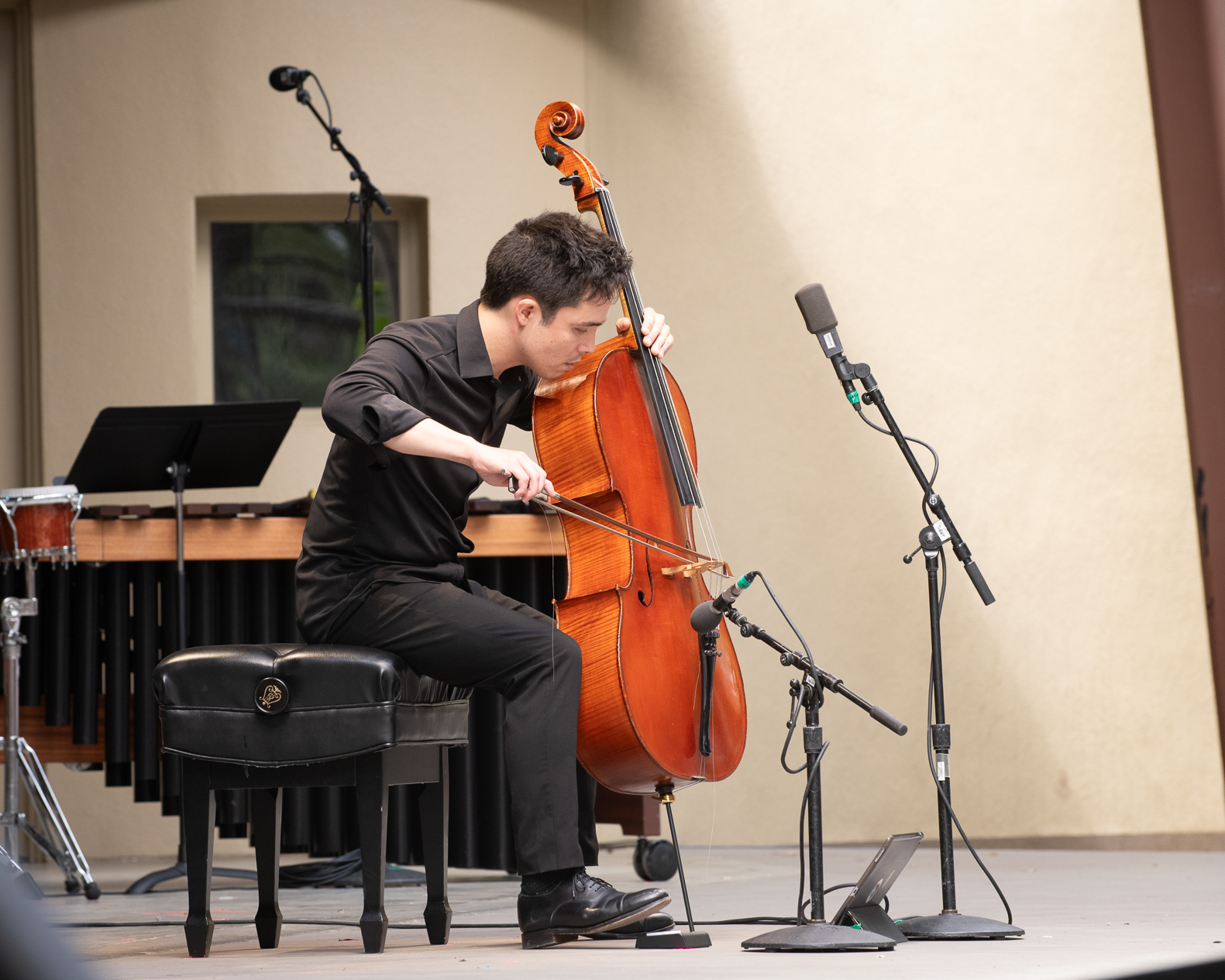
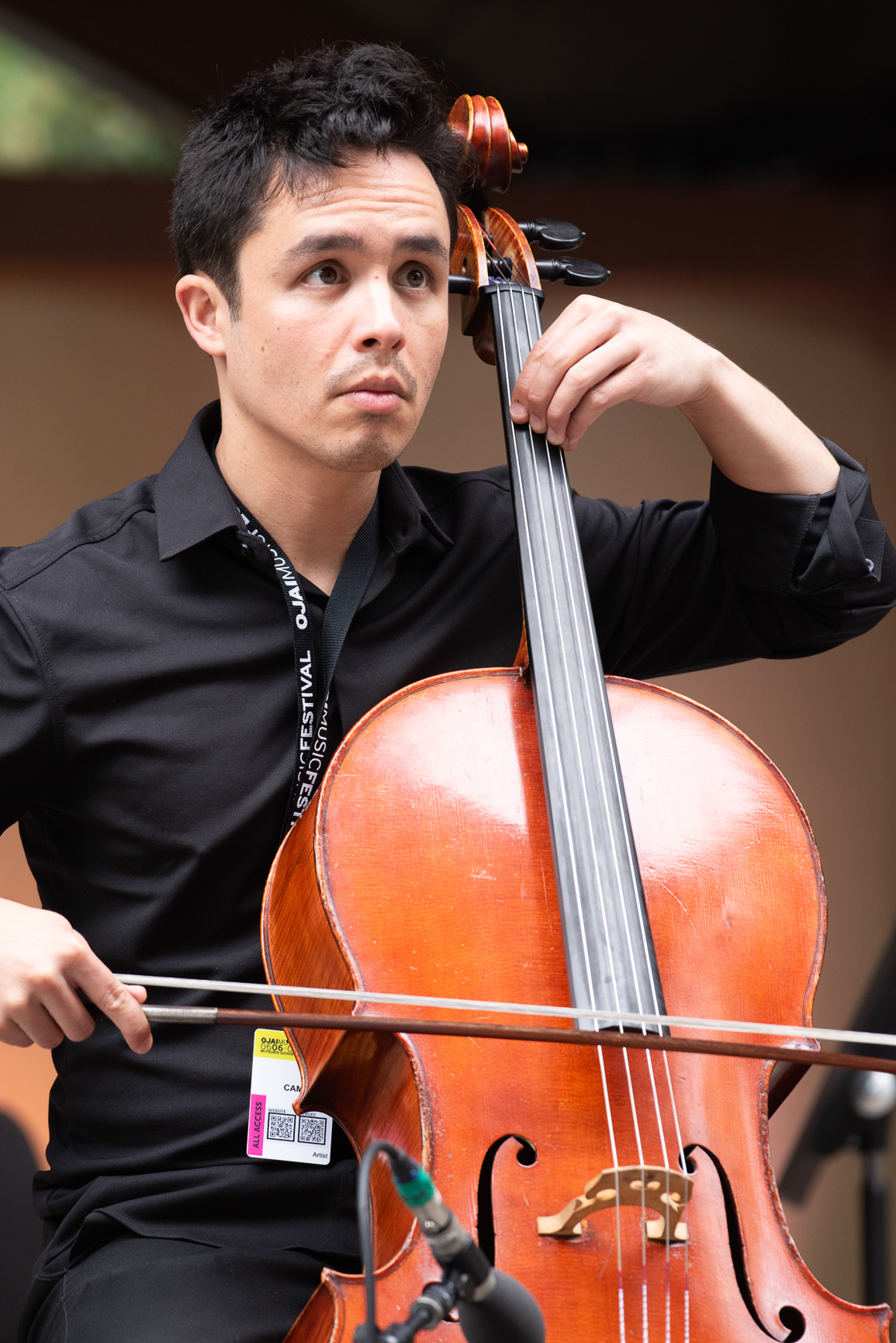
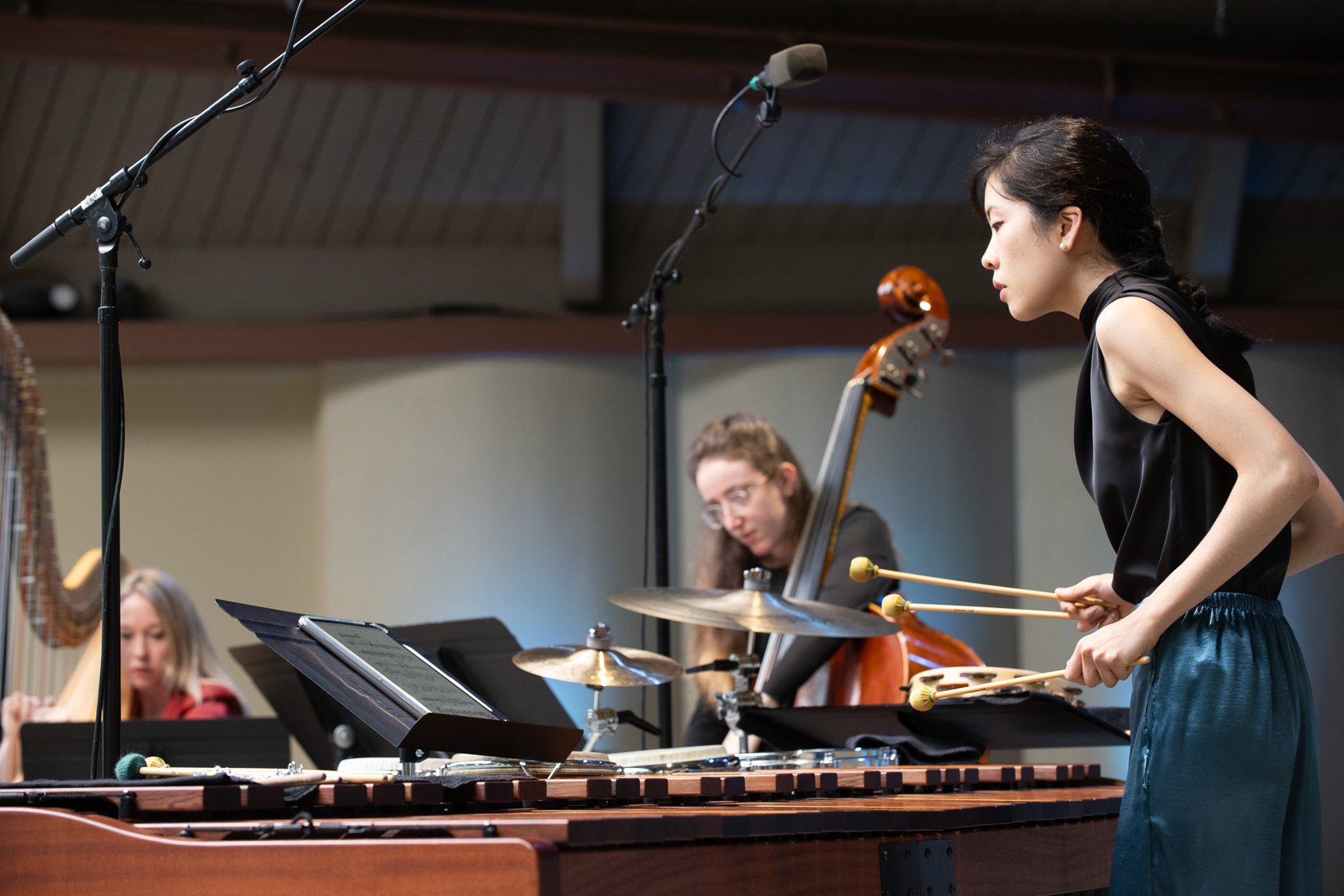
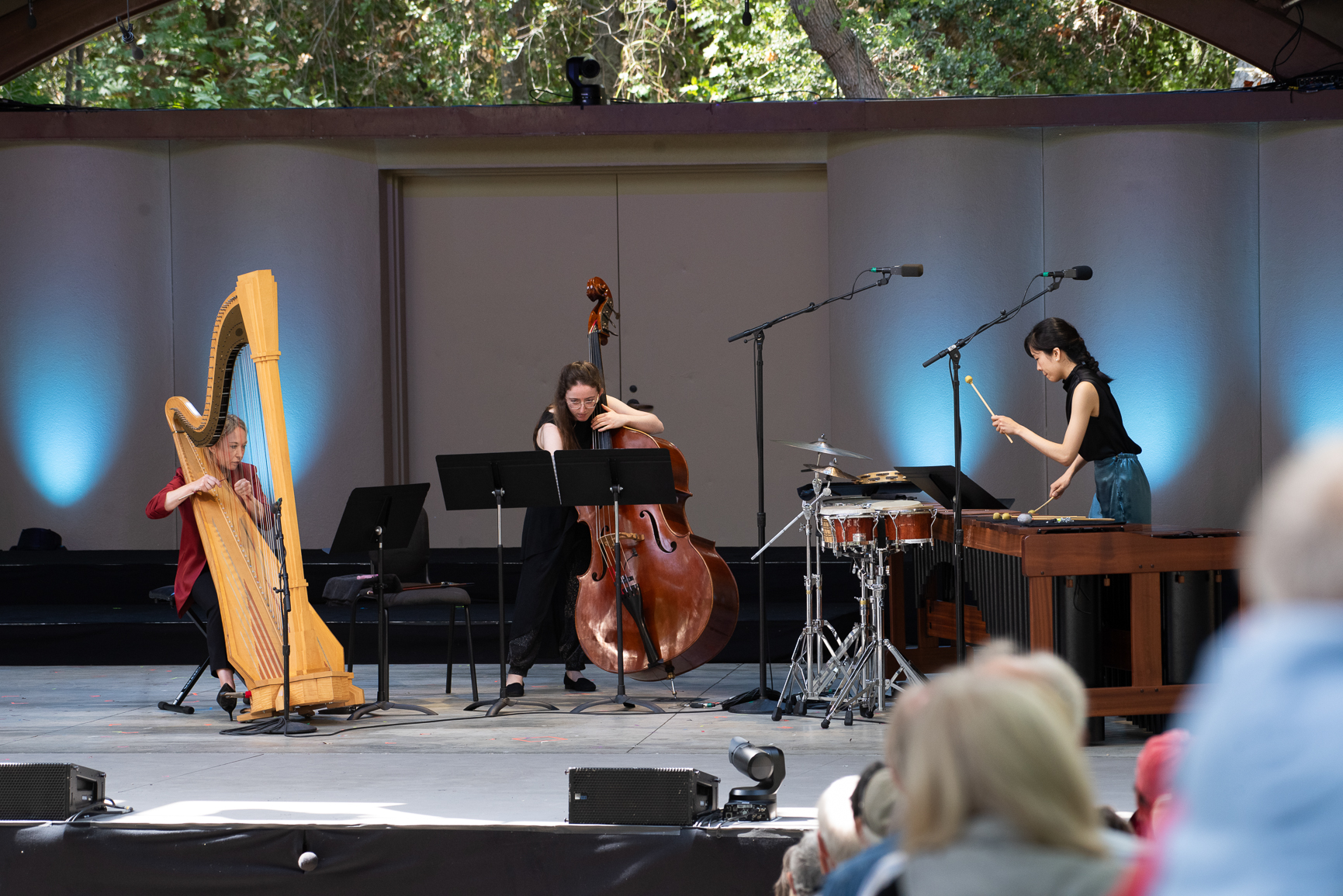
    Julie Smith Phillips harp | Jay Campbell cello | Sae Hashimoto percussion | Naomi Shaham double bass | Brentano String Quartet 

    KAIJA SAARIAHO   Fall             
    HELMUT LACHENMANN   Pression 
    SOFIA GUBAIDULINA   Five Etudes         
    BARTÓK   String Quartet No. 5 

    Selections from the 8:00PM concert

    José Maria Blumenschein concertmaster and leader 
    Mahler Chamber Orchestra 

    STRAVINSKY   Fanfare for a New Theater
    WEBERN   Five Movements for Strings, Op. 5
    SCHOENBERG  Chamber Symphony No. 1, Op. 9

    SAT June 8, 2024

    10:00AM

    Ljubinka Kulisic accordion | Rick Stotijn double bass | Musicians of the Mahler Chamber Orchestra 

    JOHN ZORN Road Runner       
    MISSY MAZZOLI   Dark with Excessive Bright 
    JOHN ADAMS   Shaker Loops 


    Selections from the 8:00PM concert

    José Maria Blumenschein concertmaster and leader | Aliisa Neige Barrière conductor | Vicente Alberola clarinet  

    DEBUSSY (arr. Benno SACHS)   Prelude to the Afternoon of a Faun 
    KAIJA SAARIAHO Lichtbogen 
    ESA-PEKKA SALONEN   Elegy (from kínēma

    SUN June 9, 2024

    10:00AM

    Alexi Kenney violin | Sae Hashimoto percussion | Ljubinka Kulisic accordion | Brentano String Quartet 

    BIBER  Passacaglia for solo violin 
    KAIJA SAARIAHO  Six Japanese Gardens 
    HAYDN From The Seven Last Words of Christ 
    SOFIA GUBAIDULINA  In Croce 

    Selections from the 5:30PM concert

    José Maria Blumenschein concertmaster and leader |  
    Mahler Chamber Orchestra 

    HAYDN   Symphony No. 46 in B major, Hob. I:46 
    JÖRG WIDMANN Chorale Quartet (Choralquartett), version for chamber orchestra

  • 2024 Press Coverage

    2024 Press Coverage

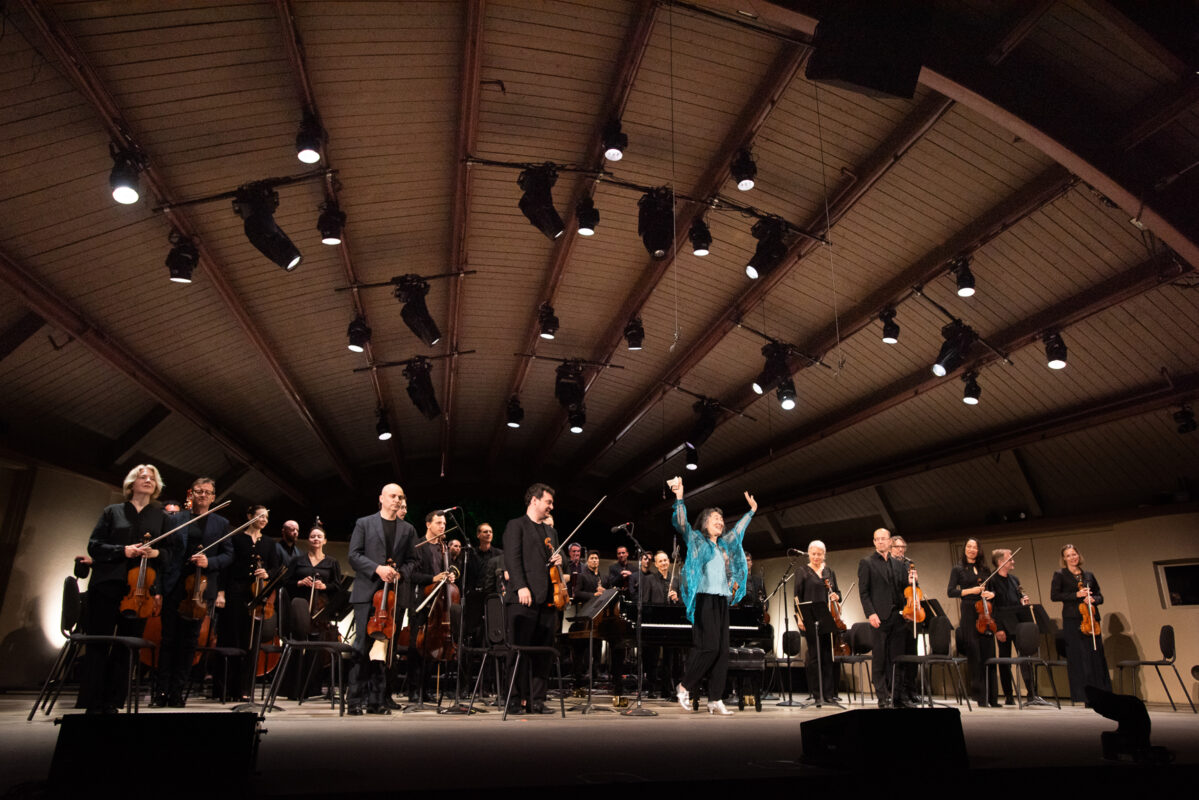
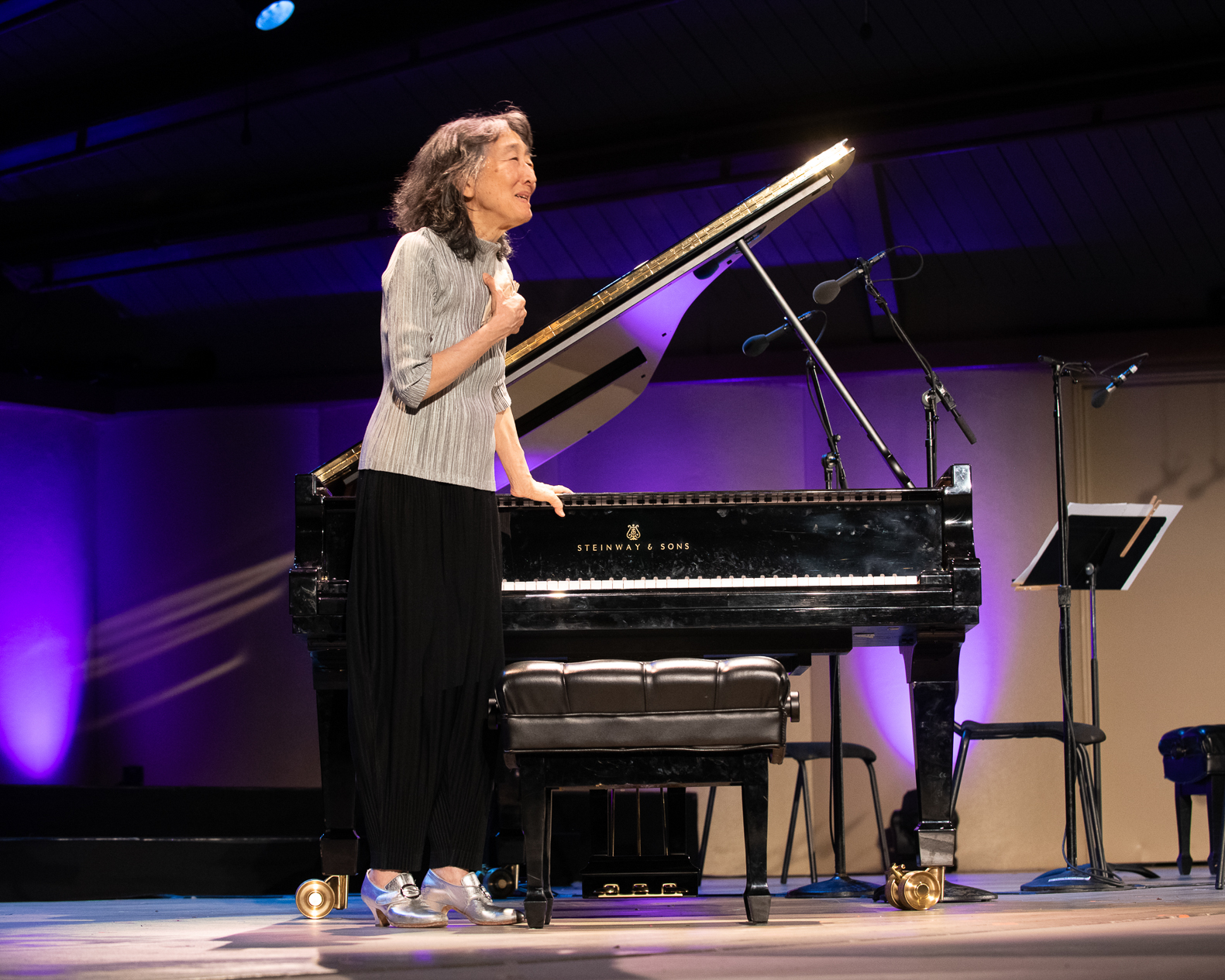
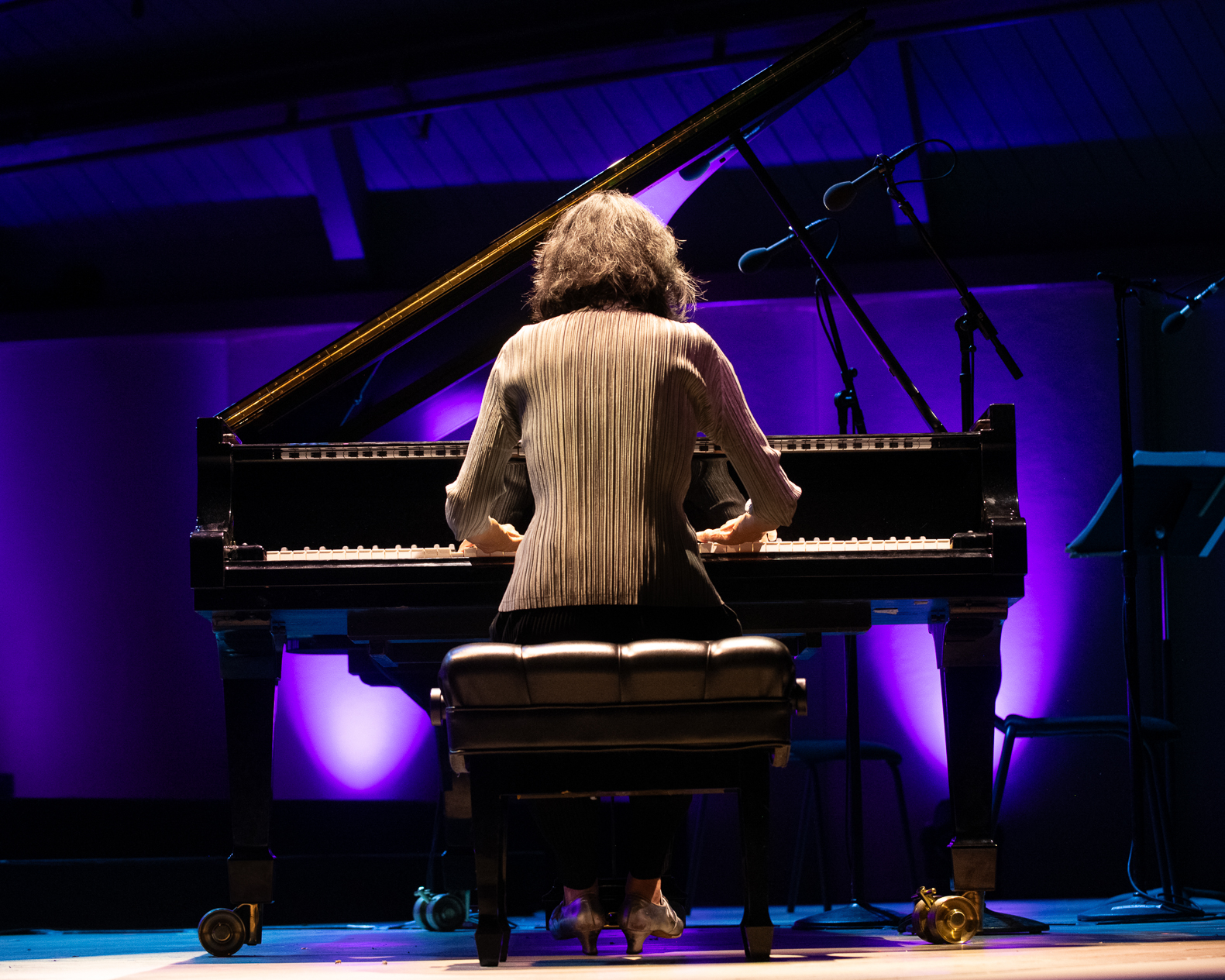
    Thank you for joining us at our 78th Festival, June 6-9, 2024. It was a glorious time to be in our communal festival experience, particularly in the company of our wondrous Music Director, Mitsuko Uchida. We were graced by her performances of extraordinary depth and insight along with the exhilaration of her partnership with the generous, brilliant musicians of the Mahler Chamber Orchestra and the 2024 featured artists.
    Take a look at excerpts from the press. 

    “…we’re talking about Ojai, where open-minded audiences take in music accompanied by nature and snack on freshly picked pixie tangerines. Uchida might have seemed like a headliner, but this festival is about sharing the wealth.”

    New York Times

    “What’s so extraordinary about the Ojai Music Festival, now in its 78th year? Many things, actually, including its brevity (this year running June 6 through 9); challenging and often sharply contrasting programming; and a rich concentration of talent…”

    Wall Street Journal

    “Uchida’s playing was so uncompromisingly ethereal that its purpose seemed meant to open the listener’s mind a crack.”

    Los Angeles Times

    “In programming cahoots with artistic director Ara Guzelimian, Uchida managed to tap many important and lesser-heard musical touchpoints over the weekend, including paying respects to Saariaho, who died just more than a year ago. Her Lichtbogen, conducted here by her daughter Aliisa Neige Barriere, has a shimmering, evanescent atmosphere, mixing acoustic and electronic elements with abiding sensitivity…”

    SB Independent

    “The Ojai moment came during the cadenza of the second movement, Larghetto, when the piano, in its highest register, evokes the entrancing power of Papageno’s magic bells. A silence descended over Libbey Bowl that was so complete that the only sounds were the piano, the croaking of frogs, the rustling of crickets, and the songs of night birds. It was as if Uchida’s playing had somehow entranced us all.”

    San Francisco Classical Voice

    “[Alexi] Kenney, 30, who has seemed on the verge of stardom for some time, certainly became one of the highlights of this festival (he made his Ojai debut in 2021). Along with Kafka Fragments, he gave a brilliant solo performance, with innocuous abstract projections by visual artist Xuan, of another hour-long work called Shifting Ground, consisting of 11 pieces by various composers, also at the Ojai Valley School.

    Classical Voice North America
  • 2024 Festival Gallery

    2024 Festival Gallery

    Concert Photos

    Photos by Timothy Teague

  • Ojai Music Festival Announces 2025 Music Director

    Ojai Music Festival Announces 2025 Music Director

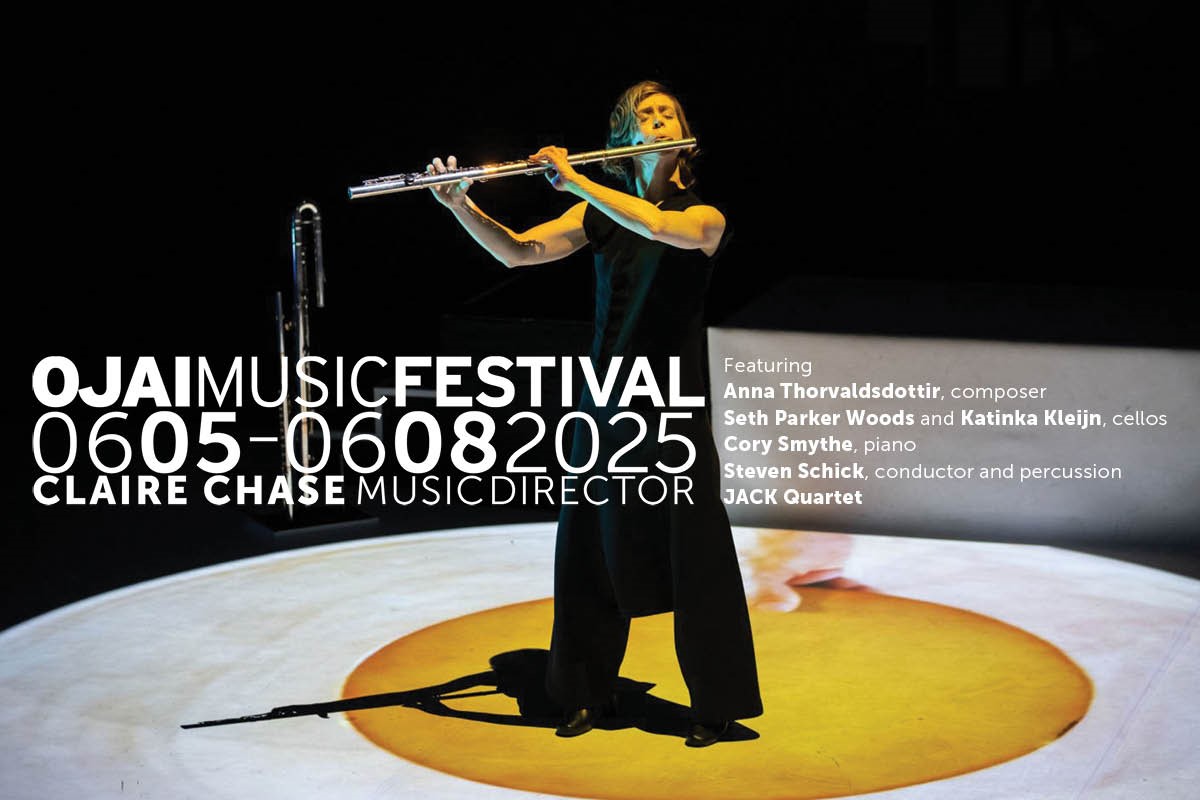
    Ojai Music Festival, 06.06-06.08-2025, Claire Chase Music Director
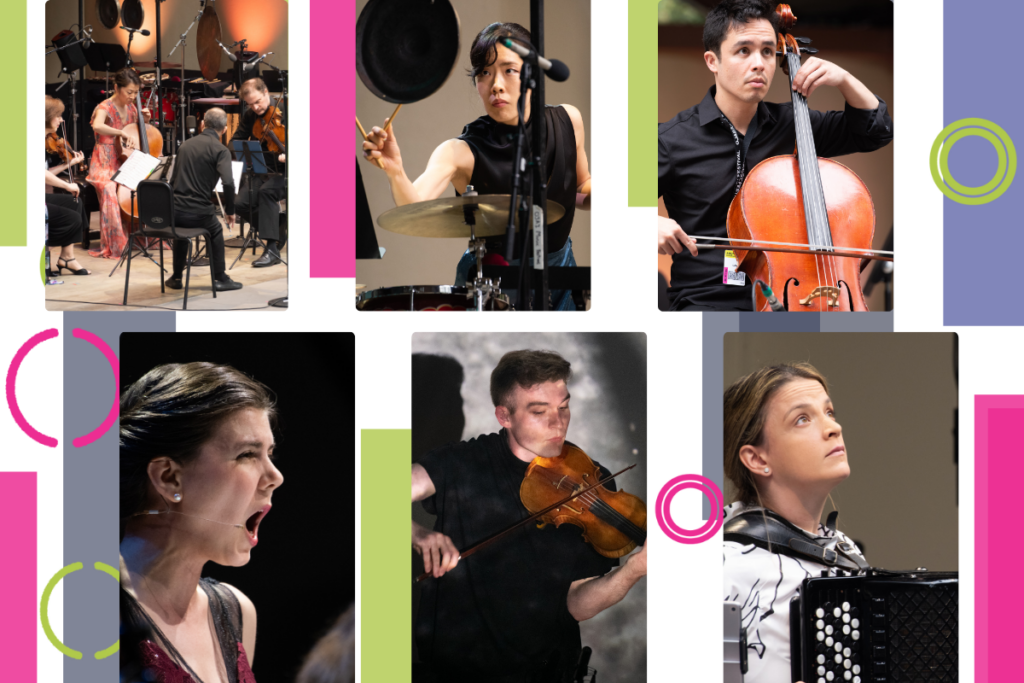
Featuring Thorvaldsdottir, composer; Seth Parker Woods and Katinka Kleijn, cellos; Cory Smythe, piano; Steven Schick, conductor and percussion; JACK Quartet

    “Claire Chase is one of the boldest, most inventive and irresistibly joyous musicians I have ever known. She is such a generative force in all that she does, embracing composers, audiences, and entire communities with generosity. She is the perfect match for Ojai’s spirit of adventure, and I can’t wait to imagine the possibilities together for the 2025 Festival!”

    Ara Guzelimian, Artistic and Executive Director

    (April 10, 2024 – Ojai, California) – As the Ojai Music Festival anticipates the upcoming 78th Festival (June 6-9, 2024) with Music Director Mitsuko Uchida, Artistic and Executive Director Ara Guzelimian announces flutist Claire Chase as Music Director for the 2025 Festival. Since the late 1940s, the Ojai Music Festival’s tradition has been to welcome a new Music Director each year to ensure vitality and diversity in programming across Festivals.  Initial details for Chase’s 2025 Festival (June 5 to 8, 2025) will be announced in June 2024. 

    “When Ara called me with the invitation, I nearly dropped the phone! The Ojai Festival has been a kind of dreamland for me since I was a kid growing up in Southern California, and I have the deepest affection for the audiences at Ojai – I don’t know that a more curious, adventurous, and open-eared group of listeners exists anywhere in the world. I’m tremendously excited to work with Ara to craft experiences that I hope will animate, complicate, and celebrate the connections between musics of the past and the beating-heart present,” shares Claire Chase.

    Previously, Chase performed at the Ojai Music Festival with the International Contemporary Ensemble (ICE) in 2015 with that year’s Music Director Steven Schick, in 2016 with Music Director Peter Sellars, and in 2017 with Music Director Vijay Iyer. 

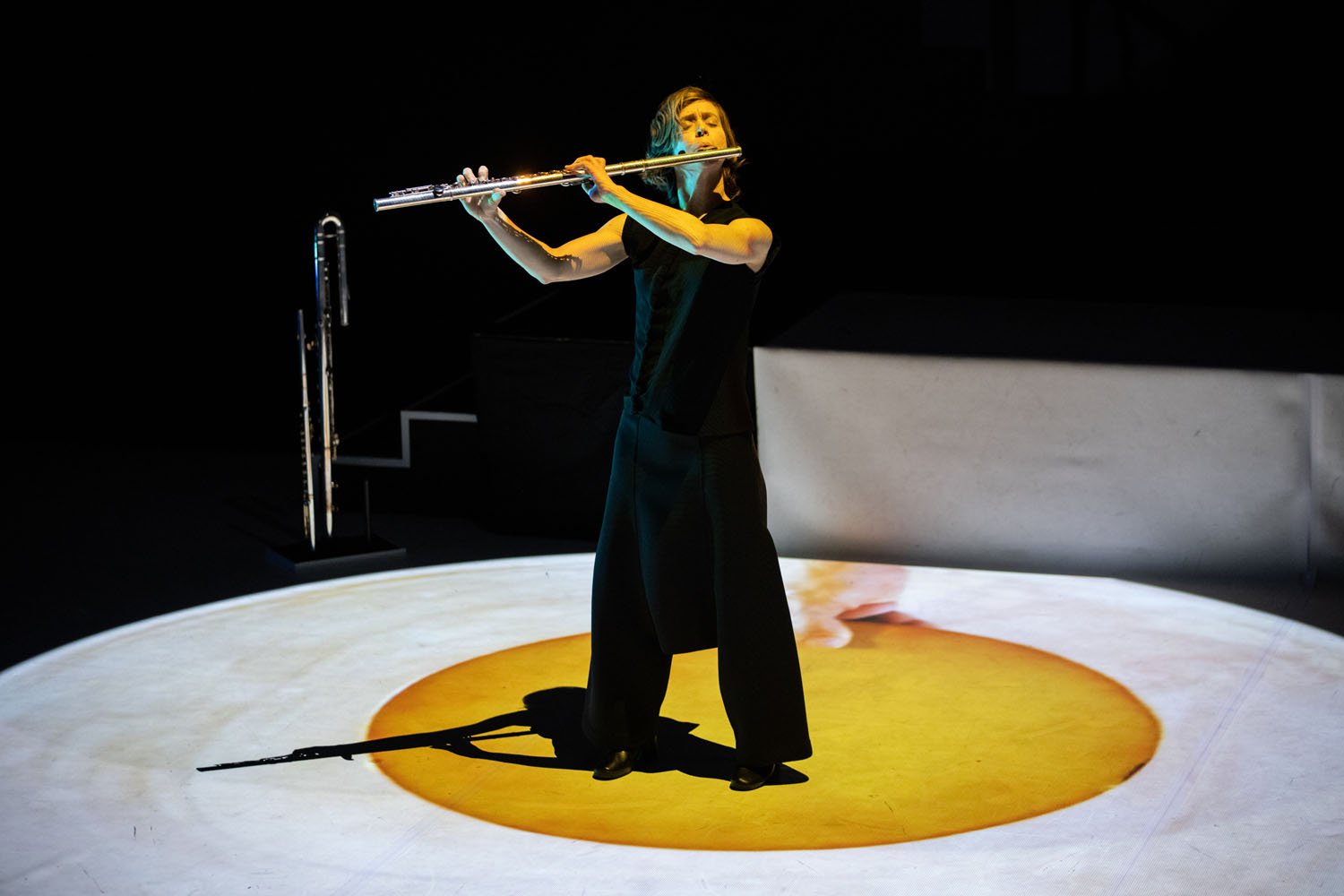
    Claire Chase, described by The New York Times recently as “the North Star of her instrument’s ever-expanding universe,” is a musician, interdisciplinary artist, and educator. Passionately dedicated to the creation of new ecosystems for the music of our time, Chase has given the world premieres of hundreds of new works by a new generation of artists, and in 2013 launched the 24-year commissioning project Density 2036. Now in its eleventh year, Density 2036 reimagines the solo flute literature over a quarter-century through commissions, performances, recordings, education, and an accessible archive at density2036.org. Chase co-founded the International Contemporary Ensemble in 2001, was named a MacArthur Fellow in 2012, and in 2017 was awarded the Avery Fisher Prize from Lincoln Center for the Performing Arts. Chase is currently Professor of the Practice of Music at Harvard University’s Department of Music, a Creative Associate at The Juilliard School, and a Collaborative Partner with Esa-Pekka Salonen and the San Francisco Symphony.  For complete biographical information on Claire Chase, visit OjaiFestival.org.

    Details of the 2025 Ojai Festival programming and artists will be announced in June 2024.

    ARA GUZELIMIAN, ARTISTIC AND EXECUTIVE DIRECTOR 

    Ara Guzelimian is the Artistic and Executive Director of the Ojai Music Festival, having begun in that position in July 2020. The appointment culminates many years of association with the Festival including tenures as director of the Ojai Talks and as Artistic Director from 1992–97. Guzelimian stepped down as Provost and Dean of the Juilliard School in New York City in June 2020, having served in that position since 2007.  He continues at Juilliard as Special Advisor.

    Prior to the Juilliard appointment, he was Senior Director and Artistic Advisor of Carnegie Hall from 1998 to 2006. Guzelimian serves as artistic consultant for the Marlboro Music Festival and School in Vermont. He is a member of the steering committee of the Aga Khan Music Awards, the artistic committee of the Borletti-Buitoni Trust in London, and a board member of the Amphion and Pacific Harmony Foundations. He is also a member of the music visiting committee of the Morgan Library and Museum in New York City. In 2020, Guzelimian was appointed to the advisory panel of the Birgit Nilsson Foundation in Sweden.

    Previously, Guzelimian held the position of Artistic Administrator of the Aspen Music Festival and School in Colorado, and he was long associated with the Los Angeles Philharmonic, first as producer for the orchestra’s national radio broadcasts and, subsequently, as Artistic Administrator. Guzelimian is editor of Parallels and Paradoxes: Explorations in Music and Society (Pantheon Books, 2002), a collection of dialogues between Daniel Barenboim and Edward Said. In September 2003, he was awarded the title Chevalier des Arts et des Lettres by the French government for his contributions to French music and culture.

    OJAI MUSIC FESTIVAL 

    The Ojai Music Festival represents an ideal of adventurous, open-minded, and openhearted programming in the most beautiful and welcoming of settings, with audiences and artists to match its aspirations. Now in its 78th year, the Festival remains a creative laboratory for thought-provoking musical experiences, bringing together innovative artists and curious audiences in an intimate, idyllic outdoor setting. Each Festival’s narrative is guided by a different Music Director, whose distinctive perspectives shape programming — ensuring energized festivals year after year.

    Throughout each year, the Ojai Music Festival contributes to Southern California’s cultural landscape with in-person and online programming as well as robust educational offerings that serve thousands of public-school students and seniors. The organization’s apex is the world-renowned Festival, which takes place over four days in Ojai, a breathtaking valley 75 miles from Los Angeles, which is a perennial platform for the fresh and unexpected. During the immersive experience, a mingling of the most curious take part in concerts, symposia, free community events, and social gatherings. The intimate Festival weekend, considered a highlight of the international music summer season, welcomes up to 5,000 patrons and reaches exponentially more audiences worldwide through streaming and broadcasts of concerts and discussions throughout the year.

    Since its founding in 1947, the Ojai Music Festival has presented expansive programming in unusual ways with an eclectic mix of new and rarely performed music, as well as refreshing juxtapositions of musical styles. Through its signature structure of the Artistic Director appointing a different Music Director each year, Ojai has presented a “who’s who” of music including Mitsuko Uchida, Rhiannon Giddens, AMOC* (American Modern Opera Company), Vijay Iyer, Patricia Kopatchinskaja, and Barbara Hannigan in recent years; throughout its history, featured artists have included Aaron Copland, Igor Stravinsky, Michael Tilson Thomas, Kent Nagano, Pierre Boulez, John Adams, Esa-Pekka Salonen, Robert Spano, Pierre-Laurent Aimard, David Robertson, Eighth Blackbird, George Benjamin, Dawn Upshaw, Leif Ove Andsnes, Mark Morris, Jeremy Denk, Steven Schick, Matthias Pintscher, and Peter Sellars.

    EXPERIENCE THE 78TH OJAI MUSIC FESTIVAL, JUNE 6-9, 2024

    The 78th Ojai Music Festival, June 6 to 9, 2024, welcomes as Music Director pianist Mitsuko Uchida, one of the most universally admired artists of our time. Mitsuko Uchida last performed at the 2004 Festival and was co-music director in 1998.

    Uchida, who will perform each Festival evening in works by Schoenberg and Mozart, welcomes 2024 collaborators the Mahler Chamber Orchestra, Brentano String Quartet, violinist Alexi Kenney, cellist Jay Campbell, harpist Julie Smith Phillips, soprano Lucy Fitz Gibbon, percussionist Sae Hashimoto, accordionist Ljubinka Kulisic and bassist Rick Stotijn. 

    Works By Kaija Saariaho are woven throughout the 2024 Festival, including Dreaming Chaconne, Fall, Six Japanese Gardens, and Lichtbogen, conducted by Saariaho’s daughter Aliisa Neige Barriere. Highlights of the 2024 Festival also include music of John Adams, Bartók, Biber, Cage, Debussy, Sofia Gubaidulina, Kurtág, Helmut Lachenmann, Missy Mazzoli, Esa-Pekka Salonen, Stravinsky, Jörg Widmann, and John Zorn.

    In collaboration with Baryshnikov Arts, Shifting Ground features violinist Alexi Kenney and video projections by Xuan, juxtaposing Baroque works by Bach and Matteis, with recent music by Kaija Saariaho, Angélica Negrón, Paul Wiancko, and Salina Fisher.  The 2024 Festival integrates music from both the First and Second Viennese Schools, from Haydn and Mozart to Berg, Webern, and multiple works by Arnold Schoenberg in honor of the 150th Anniversary of his birth.

    Single tickets and day passes to the 2024 Festival are available online at OjaiFestival.org or by calling (805) 646-2053. Follow Festival updates at OjaiFestival.org.

    # # #

  • 2024 Concert Program Notes

    Thursday, June 6, 2024 | 8:00pm
    Libbey Bowl

    Brentano String Quartet: Mark Steinberg and Serena Canin violins, Misha Amory viola, Nina Lee cello | Mitsuko Uchida piano | Lucy Fitz Gibbon soprano

    Joseph HAYDN

    String Quartet in C major, Op. 33, No. 3 (“Bird”)
    I.  Allegro moderato
    II. Scherzo: Allegretto
    III. Adagio ma non troppo
    IV. Finale: Rondo: Presto
    Brentano String Quartet

    Arnold SCHOENBERG   

    Six Little Piano Pieces, Op. 19
    I.    Leicht, zart (light, delicate)
    II.  Langsam (slow)
    III. Sehr langsam (very slow)
    IV. Rasch, aber leicht (brisk, but light)
    V. Etwas rasch (somewhat brisk)
    VI. Sehr langsam (very slow)
    Mitsuko Uchida piano

    INTERMISSION

    Wolfgang Amadeus MOZART    

    Fantasia in D minor, K. 397
    Mitsuko Uchida piano

    Arnold SCHOENBERG   

    String Quartet No. 2 in F-sharp minor, Op. 10
    I.  Mässig (moderato)
    II.  Sehr rasch (very fast)
    III. Litanei (“Litany”): Langsam (slow) (poetry of Stefan George)
    IV. Entrückung (“Rapture”): Sehr langsam (very slow) (poetry of Stefan George)
    Brentano String Quartet | Lucy Fitz Gibbon soprano

    Wit, Fantasy, Rapture

    Only a little more than a century and a quarter separates the quartets by Haydn and Schoenberg that frame our opening program, and both works emerged from the same Austro-German tradition. Yet being able to hear, on the same program, the shift in what had been thought musically possible by the time we reach the final movement of the Schoenberg allows us to relive one of the most momentous turning points in the history of Western music.

    Schoenberg’s Second Quartet embodies a musical Copernican Revolution in its quest for “the emancipation of the dissonance” — that is, the dissolution of the laws and conventions of tonal harmony that had served as the bedrock for that tradition. (The presence of a solo soprano alongside the classical quartet of string players is merely one aspect of the work’s innovations.) The fourth and final movement, in which this rupture dramatically occurs, represents a pivotal moment for the birth of the Modernist outlook.

    Modernism’s unfolding — in particular, its embrace of the so-called atonality (never a very helpful word) that Schoenberg transformed into a lingua franca for 20th-century composers — would be experienced by many as traumatic and destabilizing. Yet the composer described the introductory music to the Second Quartet’s notorious finale in terms of the poetic vision he chose to set: “becoming relieved from gravitation — passing through clouds into thinner and thinner air, forgetting all the troubles of life on earth …”

    But Haydn, too, must be credited with radically changing perceptions of what the language of music can encompass. One of the leading architects of Classical style, Haydn depicted a stunning negation of the order on which it is based in the evocation of Chaos in his late masterwork The Creation.

    The dichotomy becomes possible only through the deliberate subversion of tonal rules and the expectations established by Classical style. Haydn continually generates ideas from the tension between conventional patterns and his subtle ways of undermining them — the driving force of this composer’s much-lauded “wit.” With his tirelessly innovative output of string quartets and symphonies, Haydn developed genres principally meant for entertainment into vehicles for sophisticated contemplation (without ever losing sight of the former).

    It was only with the Op. 33 set, written in 1781 — when he was approaching 50 — that Haydn actually began using the term string quartet (preferring the term divertimento prior to that). He announced that these quartets had been written “in a new and special way.” The nickname “Bird” refers to the imaginary evocation of avian chirping in the first movement, but we can also hear the wonderful opening of the C major Quartet as a teasing exploration of tonality that alternately seizes and lets go of the home key in surprising feints.

    Mozart must have been especially enchanted by the contrast in mood between the Adagio’s intimacy and the unbuttoned comedy of the final movement. Haydn was one of the few living composers he deeply admired, and the two became friends after Mozart had settled in Vienna in 1781. Each welcomed the influence of the other.

    The Fantasia in D minor dates from 1782, the same year Haydn’s Op. 33 quartets were published, but was likely left unfinished. Only after Mozart’s death was the manuscript published. For the missing measures at the end of the piece, Mitsuko Uchida supplies her own ending based on the opening. The Fantasia’s tempo changes several times, suggesting an improvisational attitude: At the heart is an aria-like Adagio of cutting pathos. The tonal shift to D major in the Allegretto conclusion has the effect not so much of a resolution of the grief preceding it as of a past joy recalled.

    Uchida oscillates with ease between the idioms of the First and Second Viennese Schools. Just five minutes or so in duration, the Six Little Piano Pieces comprising Schoenberg’s Op. 19 can seem, in her hands, to “anticipate” the variability of Mozart’s Fantasia. These hermetic, freely atonal miniatures dating from early 1911 — the first five were composed in a single day — condense implicitly longer forms (such as an entire aria in No. 5) into aphorisms. Schoenberg’s later systematic codification of his ideas led to the charge that it is overly “cerebral,” but this music vibrates with emotional intensity and expression — above all in the last piece, No. 6, written independently in 1911 in response to the death of his admired Mahler.

    Turmoil in Schoenberg’s personal life is inseparable from the composition of the epochal Second Quartet. He started writing it in 1907, when he was experiencing marital strain with his first wife, Mathilde, along with a kind of separation anxiety over the departure of his champion Mahler for the New World. The strain worsened, and Mathilde left her husband in 1908 to pursue a relationship with the Expressionist painter Richard Gerstl. After Schoenberg persuaded Mathilde to return, Gerstl committed suicide. The painter’s boldly original work, meanwhile, left a strong mark on the composer.

    Ironically, Schoenberg seems on one level to be moving into a more Classical direction in this score. While his First String Quartet is cast in a large-scale single movement, the Second is a shorter composition that reverts to the familiar four-movement design, the first three of which adhere to the paradigm of a sonata form first movement, a scherzo, and a slow movement. The final movement, the longest, omits a key signature (though Schoenberg set the others in F-sharp minor, D minor, and E-flat minor, respectively).

    Schoenberg’s sardonic humor emerges in the scherzo, whose middle section quotes the Viennese folk song “O du lieber Augustin.” Originating in the plague years, the song’s phrase “alles ist hin!” (“It’s all over!”) might serve as an epigram for this turning point in musical and cultural history.

    In his Transfigured Night of 1899— another piece informed by his relationship with Mathilde — Schoenberg had combined poetic inspiration with string chamber music. But he actually incorporates texts by the German Symbolist poet Stefan George (1868- 1933) into the last two movements of the Second Quartet. Adding a soprano was all the more provocative, since the string quartet was understood as the quintessentially instrumental form of discourse. More than Beethoven in the Ninth, Mahler’s song movements in the Wunderhorn symphonies would seem to be the pertinent model for Schoenberg.

    The slow Litany movement unfolds as a set of variations — not on a theme per se, but on fragments and themes derived from the opening movement and the scherzo. George’s text expresses a mood of gloom, grief, and longing that casts a retrospective light on the preceding movements. Entrückung (“Rapture”), the text used in the finale, opens with the line Ich fühle luft von anderem planeten (“I feel air from another planet”).

    Conventional tonality is affirmed by the “gravitational” pull of the tonic, but in the brave new world into which Schoenberg ventures here, the loss of that compass triggers an exhilarating sense of weightlessness. Even with the return to F-sharp major at the conclusion, the sensation of a radiantly floating vision of a new reality lingers.

    —THOMAS MAY

    Friday, June 7, 2024 | 8:00am
    Zalk Theater, Besant Hill School

    OJAI DAWNS

    Jay Campbell cello | Sae Hashimoto percussion | Ljubinka Kulisic accordion

    Giuseppe COLOMBI 
          

    Kaija SAARIAHO
                   

    Helmut LACHENMANN 

    Helmut LACHENMANN
     

    Sofia GUBAIDULINA 
          

    Ciaccona
    Jay Campbell cello

    Dreaming Chaconne
    Jay Campbell cello

    Intérieur I
    Sae Hashimoto percussion

    Toccatina
    Jay Campbell cello

    In Croce
    Jay Campbell cello | Ljubinka Kulisic accordion

    Sound Production

    Last night’s opening concert invited questions about what it means to evolve and innovate within a shared language — the system of Western tonality as shaped and challenged by Haydn, Mozart, and Schoenberg. We continue this morning with a trio of contemporary composers who interrogate our assumptions about instruments themselves and the kinds of sounds they produce.

    We open the program with Kaija Saariaho’s Dreaming Chaconne, her contribution to a project she helped to organize to celebrate the 50th birthday of her compatriot, the Finnish cellist Anssi Karttunen. A total of 31 composers from 12 countries were invited to create a variation on one of the earliest pieces known to be written for solo cello: a chaconne by the Italian composer Giuseppe Colombi (1635-94) for an earlier and larger form of the cello called a basso (which Jay Campbell plays as a prelude to Saariaho’s variation). None of the composers was aware of which colleagues had also been invited to participate — hence the title Mystery Variations for the overall project.

    Saariaho’s fabric of slow trills between stopped notes and natural harmonics, feathery slides, and tremolos forms a sonic veil behind which the shape of Colombi’s chaconne remains only as a spectral memory.

    The eminent German composer Helmut Lachenmann, who was invited by Mitsuko Uchida to a residency at the Marlboro Music School and Festival last year, has for decades pursued his fascination with what he terms the “anatomy” of sound and its production. Intérieur I is a breakthrough work from the mid-1960s that embodies Lachenmann’s radically new focus on composition as the production of sounds and the conditions under which this occurs. Percussion instruments had been a kind of last timbral frontier for Modernism. But Lachenmann’s approach defamiliarizes the musician’s and audience’s relationship with the panoply of largely untuned percussion instruments.

    Various types of drumsticks, mallets, even the player’s hands are not used in the expected ways but produce odd rubbings and ghostly tremolos: a kind of music “in which the sound events are chosen and organized so that the manner in which they are generated is at least as important as the resultant acoustic qualities themselves,” as the composer described his concept of instrumental musique concrète.

    The mindfulness Lachenmann demands is immediately apparent in the briefer and later Toccatina, originally written for solo violin but performed here in Jay Campbell’s arrangement for cello. Referring to the classical toccata, the title plays on the idea of instrumental virtuosity through dexterous touching and fingering of the instrument. (The Italian root toccare, “to touch,” itself draws attention to the physical production of sound.)

    Lachenmann adapts percussive effects in mesmerizing ways, asking the player to tap the metal screw of the vertically held bow onto the instrument’s strings (and even includes an extra clef detailing the positions of these contact points). Campbell likens performing Toccatina to undertaking “a very intense tightrope walk. The sound is so tiny and fragile. It’s very playful — and dangerous.”

    Sofia Gubaidulina came of age as an outsider in the Soviet Union — an artist of half-Russian, half-Tatar origins — which encouraged her openness to exploring unconventional sonorities. Many of her compositions reconsider the raw material— the physical manifestations — of musical facts: pulses, breaths, tunings. At the same time, Gubaidulina’s Russian Orthodox faith has inspired her to interpret these “facts” in spiritual and even mystical terms.

    In Croce incorporates the Christian symbol indicated by the title (“On the Cross”) into the music itself through a series of literal and figurative “crossings” of register and texture between the instruments: cello and organ in the original version of 1979 and cello and bayan (Russian button accordion) in the later arrangement we hear. But the surface plan of this drama is not as schematic as a simple summary might indicate. Gubaidulina encourages a suspension of our sense of ordinary time as we enter this labyrinth of fluctuating intensities.

    Gubaidulina extracts a remarkable variety of colors from the unusual pairing of instruments, stretching each to its limits. The bayan begins in a lofty, diatonic A major space, while the cello emerges from the depths on a low E, striving to break free with anguished chromatic slides. They gradually exchange positions, reaching a climax where the two lines cross. The piece ends with the cello sounding almost flute-like in its otherworldly high perch against the deep rumbling of the bayan far below — where the cello, in a final gesture, again meets its counterpart via a descending glissando.

    —THOMAS MAY

    Friday, June 7, 2024 | 10:00am
    Libbey Bowl

    Julie Smith Phillips harp | Jay Campbell cello | Sae Hashimoto percussion | Rick Stotijn double bass

    Brentano String Quartet: Mark Steinberg and Serena Canin violins, Misha Amory viola, Nina Lee cello

    Kaija SAARIAHO               

    Fall
    Julie Smith Phillips harp

    Helmut LACHENMANN 

    Pression
    Jay Campbell cello

    Sofia GUBAIDULINA       

    Five Etudes
    I.              Largo
    II.             Allegretto
    III.           Adagio
    IV.           Allegro disparate
    V.             Andante
    Julie Smith Phillips harp | Sae Hashimoto percussion | Rick Stotijn double bass

    Béla BARTÓK    

    String Quartet No. 5
    I.              Allegro
    II.             Adagio molto
    III.           Scherzo: alla bulgarese
    IV.           Andante
    V.             Finale: Allegro vivace
    Brentano String Quartet

    Incorrect Paths

    Over the past decade, Mitsuko Uchida has invited three of the four composers on this morning’s program to participate in the composer residency program at the Marlboro Music Festival — artists she admires as “some of the most compelling musical thinkers of our time.” (Music by two other former composers-in-residence — György Kurtág and Jörg Widmann — can also be heard on Sunday’s programs.)

    The late Kaija Saariaho in fact returned to collaborate with the Marlboro musicians over two back-to-back summers in 2014-15. Fall is an arresting example of Saariaho’s ability to convey an assemblage of freely associated images through the interchange of acoustic and electronic sounds and a poetics of timbre. Scored for solo harp and electronics, Fall is the second-to-last section of her ballet score Maa (Finnish for “land,” “earth,” “world”). In lieu of a plotted scenario, Maa explores themes of “passing from one state to another; opening doors, gates, falling, crossing the Water,” the composer writes. Fall in particular evokes “an idea about falling into an underworld.” It traces an arc that begins in the harp’s highest register, where the soloist is instructed to play “sorrowfully, always with expression,” and culminates in a violently downward-sweeping glissando.

    What associations do we bring to each instrument, even before a note emerges? In his pivotal early piece Pression for solo cello, the German composer Helmut Lachenmann challenges us to radically rethink what the cello represents — and, in the process, aims to provoke us out of complacent “habits” in approaching the phenomenon of a performance. Lachenmann uncovers “such a subtle spectrum of pitch to noise that, by the end of the piece, you start hearing noises in interesting new ways,” cellist Jay Campbell points out. “When I play it, I feel like I’m discovering the cello again.”

    Pression intensifies our focus on the physicality of the cello and of the musician’s relationship with this body of wood and tense strings stretched over a bridge, of finger flesh versus bow wood and hair. Only at the center of the piece is a “normal” note produced in the expected way. Even the score is unconventional — not the code for an already finished composition but a graphical prescription illustrating what actions the cellist is to take.

    Sofia Gubaidulina is similarly represented by an important early work. In fact, she has characterized Five Etudes for harp, double bass, and percussion from 1965 as the work in which she first found her distinctive voice. Born in the great crossroads city of Kazan on the Volga River in the Tatar Republic, she came of age in the Soviet Union and took to heart the words of advice she received from Dmitri Shostakovich, who led her examination committee when she graduated from the Moscow Conservatory in 1959: “Don’t be afraid to be yourself. My wish for you is that you should continue on your own, incorrect path.”

    Gubaidulina’s originality in Five Etudes is apparent in both the formal design and the unusual soundscape. Instead of a traditional genre — she has no interest in the gradual improvement of technique suggested by the conventional etude — the work comprises five miniatures in different tempos. With her configuration of harp, double bass, and tuned and untuned percussion, Gubaidulina constructs an intriguing variety of sonic pictures framed by mysterious double bass pizzicati that seem to emerge from deep in the earth. She evokes the energy of improvised jazz (second piece) and of a manic scherzo (in the fourth piece, a “desperate Allegro”), while the central Adagio brings to mind an archaic ritual or elegy, eventually merging with silence. “From this moment, I realized that I would pay no attention at all to anybody else,” Gubaidulina remarked of Five Etudes. “I would do as I liked.”

    The interest in the materiality of instruments and their sonorities manifested by the first three works on our program is mirrored by the string quartets of Béla Bartók. His six contributions to the genre span three decades, mapping the Hungarian composer’s development as an artist. They form a cycle that is regularly compared to Beethoven’s quartets, a pinnacle of formal, expressive, and technical innovation.

    The tactile energy of the “Bartók” or “snap” pizzicato — in which the string(s) is plucked vertically and released so powerfully that it rebounds against the fingerboard — is a well-known example of the palette of “special effects,” along with exaggerated sliding, playing with the wood of the bow, raspy scratching at the bridge, and other techniques that are integrated into the language of the quartets. Bartók’s tireless research into Eastern European and North African folk music informs myriad aspects of the quartets, each of which inhabits a distinctive world.

    The String Quartet No. 5, the only one of the six commissioned for an American audience, originated when the legendary music patron Elizabeth Sprague Coolidge, its dedicatee, requested Bartók to contribute a work for a chamber music festival she was sponsoring. The composer, who would reluctantly emigrate to the United States in 1940, was still living in Budapest and reportedly isolated himself to complete the score within a month in the late summer of 1934, at the beginning of an especially productive creative period; the Kolisch Quartet gave the premiere at the Library of Congress in 1935.

    Regarded as less overtly experimental and more extroverted than its predecessors, the Quartet No. 5 unfolds in five movements showing Bartók’s ongoing fascination with arch form: Revolving around a lively scherzo at the center are two slow movements, which themselves are framed by two fast-paced outer movements. The opening Allegro, in turn, is shaped as a microcosm of arch form, with the material from the exposition reversed when presented again in the reprise. Bartók posits an alternative to Schoenberg’s 12-tone method in his novel use of a melody-centered chromaticism.

    Another Bartók signature, the composer’s so-called “night music” style, comes to the fore in the mysterious atmospheres and arresting timbral vocabulary of the slow movements. The central Scherzo adapts the uneven rhythmic patterns and vigor of Bulgarian folk music. A vivid sense of combustible energy drives the finale. Punctuated by sudden pauses, this vehement music swerves into an enigmatic episode toward the end that renders the material in an out-of-tune, amusement-park-like parody.”

    —THOMAS MAY

    Friday, June 7 & Saturday June 8 | 3:30pm
    Greenberg Center

    SHIFTING GROUND

    Alexi Kenney violin | Xuan visual art

    Rafiq BHATIA     

    J.S. BACH           

    Paul WIANCKO

    Descent

    Allemande from Violin Partita No. 2 in D minor, BWV 1004

    Allemande from X Suite

    Angélica NEGRÓN          

    The Violinist for violin and electronics, story by Ana Fabrega

    J.S. BACH           

    Nicola MATTEIS               

    Kaija SAARIAHO               

    Salina FISHER    

    Grave from Violin Sonata No. 2 in A minor, BWV 1003

    Alia Fantasia

    Nocturne for solo violin

    Hikari for solo violin

    Mario DAVIDOVSKY     

    Synchronisms No. 9 for violin and tape

    Matthew BURTNER         

    Elegy (Muir Glacier 1889-2009) for violin and glacier sonification

    J.S. BACH 

    Chaconne from Violin Partita No. 2 in D minor, BWV 1004

    Artist’s Statement by Alexi Kenney

    I must have been about 10 years old when I first heard J.S. Bach’s Chaconne, introduced to me by my then-teacher Jenny Rudin. I remember being first overwhelmed by its magnitude, its complexity, its difficulty, then enchanted by its mysterious power to hold me enraptured and transported for a full 13 minutes.

    Over the years, the Chaconne has come to occupy maybe the biggest and most important place of any piece of music in my life: It provides a meditative landscape for me to think through creative thoughts; it continues to be the piece I turn to to get myself back into playing shape after taking breaks away from the violin; and, several years ago, it was the only way that seemed to make sense to process the death of the same teacher who had taught it to me when I was young.

    Through my lifetime of loving the Chaconne came the idea that inspired Shifting Ground: Bach is connected to everything. Beyond his music’s most important capacity to speak straight to the soul, Bach’s influence ripples through time and transcends genre. The structures, harmonies, and counterpoint he mastered are present in just about every genre of music we listen to today, and certainly have lived in the consciousness of almost all classical composers and performers who came after him.

    Shifting Ground is a program whose titular word ground bears homage to Bach’s era, the Baroque, in which a bass line (also called a ground bass) is repeated with embellishments and variations on top of it. This is the form that the Chaconne takes over the span of its 13 minutes: a constant cycling and recycling of the same bass line, on top of which Bach constructs a whole life.

    This program is also an excavation of music’s roots, and an observation of their manifestation and development through time. It opens with Rafiq Bhatia’s Descent, where the solo violin dangerously careens down the entire length of its register until it hits rock bottom. Kaija Saariaho, Paul Wiancko, and Salina Fisher all intentionally used Bach as a jumping-off point for their works on this program. Nicola Matteis was Bach’s contemporary, yet I feel as though his spiritual and almost ambient music could easily be written today. Angélica Negrón’s raucous and beautiful nightmare The Violinist is a narrated short story that provides a moment of respite and humor in the program, while Mario Davidovsky explodes Bach’s world into outer space, creating chamber music between violin and synthesizer. In the final piece before the Chaconne, Matthew Burtner’s Elegy ruminates on the impermanence and fragility of our natural surroundings, placing the violin over a field recording of Muir Glacier as it slowly melts due to climate change. And finally the Chaconne, a sort of extension of all that we have heard, and a final meditation on humanity itself.

    Friday, June 7, 2024 | 8:00pm
    Libbey Bowl

    Mahler Chamber Orchestra
    Mitsuko Uchida piano and director
    José Maria Blumenschein concertmaster and leader

    Igor STRAVINSKY             

    Fanfare for a New Theater
    Matthew Sadler and Alexander Freund trumpets

    Anton WEBERN Five Movements for Strings, Op. 5

    I.             Heftig bewegt (violently animated)
    II.            Sehr langsam (very slow)
    III.           Sehr bewegt (very animated)
    IV.           Sehr bewegt (very animated)
    V.            In zarter Bewegung (with gentle movement)

    Arnold SCHOENBERG   

    Chamber Symphony No. 1, Op. 9

    INTERMISSION

    Wolfgang Amadeus MOZART    

    Piano Concerto in E-flat major, K. 482
    I.              Allegro
    II.             Andante
    III.           Allegro
    Mitsuko Uchida piano and director

    Creative Outbursts

    Igor Stravinsky knew how to call an audience to attention. His Fanfare for a New Theater has the honor of throwing the first musical pitch for this evening’s concert. But this is no standard-issue fanfare. Written for the opening of the New York State Theater at Lincoln Center in 1964 (since renamed the David H. Koch Theater), the piece is of late vintage and represents the composer’s late period, when he had come to admire and experiment with the serial method of Arnold Schoenberg and his followers.

    More than a matter of new methods, Stravinsky’s shocking embrace of a personal approach to serialism had philosophical implications, challenging the longstanding polarization of 20th-century Modernism into pro-Stravinsky versus pro-Schoenberg camps.

    Two trumpets, less than a minute of music: Fanfare manages, with such minimal means, to compress an astonishingly complex yet vivid sonic picture of unity and individuality, of festivity both solemn and playful.

    It was, specifically, his admiration of the music of Schoenberg’s student Anton Webern that brought Stravinsky around to the untapped potential of the “method of composing with 12 tones which are related only with one another” (as Schoenberg once defined his 12- tone serial technique). Webern himself internalized, with an uncanny intensity, what he learned from his teacher but transformed it into a distinctive language of his own.

    Five Movements for Strings, an arrangement for string orchestra from 1929 of Webern’s Five Movements for String Quartet, was his first contribution to the genre. He had composed the latter in 1909, the year after Schoenberg’s epochal String Quartet No. 2 (which was performed on last night’s opening program). Webern had also concluded his formal study with his mentor in 1908 and soon adopted his own approach to the unrestricted atonality that Schoenberg was pioneering. For example, Webern pushed the principle of brevity and compression to an extreme, developing a signature aphoristic style that his teacher likened to “a novel in a single gesture, a joy in a breath.”

    The range of expressive and sonic terrain encompassed by Five Movements certainly belies the composition’s relatively brief duration: the fifth movement, with its poetry of spareness, is the longest but lasts only about four minutes; the shortest, at the center, is less than a minute. Webern mimics aspects of a Classical long-form work with an opening allegro based on contrasts; a muted slow movement; a skittish scherzo; another, rather unworldly, slow movement (calling for ghostly sul ponticello); and a finale that seems to dramatize the dissolution of organized sound into silence “with tender animation.”

    Schoenberg responded to the new century’s pervasive sense of artistic crisis with an astonishing outburst of creativity. His ongoing quest to advance the musical tradition to which he felt so profoundly connected led to his experiments with a language no longer tethered to the gravitation toward a tonal center — to what became known as atonality. A pivotal work tending in this direction is the Chamber Symphony No. 1 of 1906. “I believed I had now found my own personal style of composing … and that a way had been shown out of the perplexities in which we young composers had been involved,” Schoenberg recalled, describing the initial joy he felt after completing the score. But he soon found this assessment to be “as lovely a dream as it was a disappointing illusion.” The Chamber Symphony thus sets the stage for the even more radical breakthroughs of works like the String Quartet No. 2 two years later. It is not “atonal” (Schoenberg anchors the piece in E major) but it does rely on a harmonic vocabulary that is tonally ambiguous.

    By scoring the work for 15 soloists, Schoenberg renounces the gigantizing tendencies of late Romanticism (though he had yet to complete his massive oratorio Gurre-Lieder) in favor of concision and compression. Time is compressed as well: the dimensions of a full-scale symphony are concentrated into 20 or so minutes, though Schoenberg maximizes the sense of expressive content. Architecturally ingenious, the Chamber Symphony can be parsed as a seamless symphony incorporating a first movement (brief introduction — another rousing fanfare idea to compare with Stravinsky’s — and exposition), a scherzo and trio, a slow movement, and a finale (presenting a recapitulation) — or as a single-movement sonata with interludes bridging the main sections.

    Schoenberg referred to the “centrifugal” tendencies of his thematic material. Through its restlessly overlapping gestures and polyphonic adventures, the Chamber Symphony conveys a sense of hyperactively firing musical synapses — as if the composer were trying to portray the process of evolution itself. The effect is as exhausting as it is exhilarating.

    Dating from December 1785, an especially fecund period of Mozart’s piano concerto production, the Piano Concerto in E-flat major tends to be eclipsed by the two concertos he had written earlier that year. But K. 482 explores a unique soundscape of its own by replacing the oboes with the mellow sonority of clarinets and engaging the woodwinds in elegantly intimate conversations with the piano soloist, who makes her entrance playing material that will have an integral role in the development of the first movement. Mozart fills the canvas of this spacious opening movement with a prodigal abundance of thematic and lyrical ideas (in contrast with Haydn’s tendency towards the thrifty use of material).

    The shift to a minor key (C minor) for the variation-based Andante initially comes as a surprise but, in Mozart’s hands, gives the concerto an indelible emotional depth. His obsession with opera also leaves a mark. Mozart was already hard at work composing the first of his collaborations with Lorenzo Da Ponte, Le Nozze di Figaro (which would be premiered in the following May). Something of the bittersweet Eros that pervades Figaro might be said to flavor the Andante as well.

    Another surprise is the gently sensuous, minuet-like andantino episode that arrives in the middle of the catchy finale — more evidence of the Figaro sound waiting in the wings. An amiable nod to the temperament of Mozart’s friend Haydn, who understood his younger peer’s genius like no one else, appears near the very end — yet in a touch that fully reaffirms Mozart’s own personality, as composer and pianist alike.

    —THOMAS MAY

    Saturday, June 8, 2024 | 10:00am
    Libbey Bowl

    Ljubinka Kulisic accordion | Rick Stotijn double bass
    Musicians of the Mahler Chamber Orchestra

    John ZORN       

    Road Runner
    Ljubinka Kulisic accordion

    Missy MAZZOLI

    Dark with Excessive Bright
    Rick Stotijn double bass | José Maria Blumenschein concertmaster and leader
    Musicians of the Mahler Chamber Orchestra

    John ADAMS     

    Shaker Loops
    Shaking and Trembling
    Hymning Slews
    Loops and Verses
    A Final Shaking

    Musicians of the Mahler Chamber Orchestra: Alexandra Preucil, May Kunstovny, and Naomi Peters violins, Yannick Dondelinger viola, Stefan Faludi and Christoph Richter cellos, Naomi Shaham double bass

    Changing Contexts

    However straightforward they may seem on the surface, musical quotations can open up astonishingly complex, even subversive dimensions. Like the language of Western tonal harmony itself, their effect in a composition is deeply reliant on context. Schoenberg’s famous allusion to a Viennese folk song in the second movement of his landmark String Quartet No. 2, for example, has generated endless interpretations.

    A lot of fun is to be had with the restless collage of quotations that the uber-prolific John Zorn has jam-packed into Road Runner. But their manic velocity and the randomness give the piece a surreal (if not sinister) edge. The epitome of the downtown New York composer, Zorn composed Road Runner in 1985, the year of his breakthrough album of Ennio Morricone covers, The Big Gundown, (and a decade before launching his experimental Tzadik Records label).

    No interpretation can be the same, since Zorn loads the piece with options for improvising and “noodling” on the accordion. Illustrated by pasted-on cutouts of images of the Warner Brothers cartoon characters Wile E. Coyote and Road Runner, the graphic score comprises 23 short, block-like sections that proceed spasmodically, like a stop-start animated film. The quotes shift abruptly from classical rep (“a la Liszt Hungarian Rhapsody”) to pop culture (the Dragnet theme) and dance styles, with instructions to “make mistakes, drunkenly” or “knock on door” mixed in among other frenzied gestures.

    “Dark with excessive bright thy skirts appear, / Yet dazzle Heaven, that brightest Seraphim / Approach not, but with both wings veil their eyes”: Along with her allusions to Baroque style, Missy Mazzoli’s composition takes its title from a literary quotation — namely, this passage from the beginning of Book III of Paradise Lost, in which Milton attempts to describe the ineffable by depicting God.

    Another quote is in order: “Her phrases remind me of a great novelist’s sentences, even those of my favorite novelist, Henry James, in the way that they seem always to be searching, falling back, leaping forward; in their hesitation and their charge, their faltering and their determination.” — from the writer Garth Greenwell, who was enlisted to write the liner notes for the BIS recording of the solo violin version of Dark with Excessive Bright.

    Musical America’s Composer of the Year in 2022, Mazzoli has earned acclaim in particular as an opera composer: Her remarkable Breaking the Waves received a new production this spring at Detroit Opera, and she is at work on a Met commission to adapt George Saunders’s Lincoln in the Bardo. Mazzoli has become a sought-after voice in the concert hall as well, receiving commissions from such ensembles as the Los Angeles Philharmonic, Chicago Symphony, National Symphony, and, in the case of Dark with Excessive Bright, the Australian Chamber Orchestra, which co-commissioned the piece in 2018 with the London-based Aurora Orchestra.

    Initially written for ACO’s principal double bassist Maxime Bibeau, Dark with Excessive Bright shows Mazzoli’s fascination with the drama inherent in the concerto format. The phrase by Milton that she chose as her title “is a surreal and evocative description of God, written by a blind man,” Mazzoli writes. “I love the impossibility of this phrase, and felt it was a strangely accurate way to describe the dark but heartrending sound of the double bass itself.”

    Immersing herself in Baroque and Renaissance music while composing the piece, Mazzoli became intrigued by Bibeau’s double bass, “a massive instrument built in 1580 that was stored in an Italian monastery for hundreds of years and even patched with pages from the Good Friday liturgy. I imagined this instrument as a historian, an object that collected the music of the passing centuries in the twists of its neck and the fibers of its wood, finally emerging into the light at age 400 and singing it all into the world. While loosely based in Baroque idioms, this piece slips between string techniques from several centuries, all while twisting a pattern of repeated chords beyond recognition.”

    John Adams’s early work Shaker Loops, which first established his wider reputation, has in turn been quoted in other contexts. This music can be heard accompanying pivotal scenes in films as disparate as the Charles Bukowski– inspired Barfly (1987) and Io sono l’amore (2009, from Luca Guadagnino’s “Desire” trilogy). Showing the composer’s fondness for punning and allusive titles, Shaker Loops combines the prominent use of “shakes” (another term for trills) with the looping technique that Steve Reich made into a springboard for his brand of Minimalism.

    Shaker Loops developed from an earlier piece Adams wrote during the mid-1970s period of electronic experimentalism that preceded his turn to the idioms of Minimalism. Scored for a string septet (three violins, viola, two cellos, and contrabass), the original Shaker Loops was premiered in San Francisco in December 1978, but Adams published a version for string orchestra in 1983, codifying some of the aspects in the original score that had been left up to the performers. This revised version can also be played by a septet — the format in which we hear the piece this morning — which, according to the composer, brings out the “clarity and individualism” of the piece.

    Adams hit on a metaphoric connection between the string techniques he uses extensively throughout the piece — quivering tremolos on a single note or between different notes — and the ecstatic, transcendent dancing of the apocalyptic religious sect colloquially known as the Shakers, although he does not actually quote any Shaker tunes (such as “Simple Gifts,” the signature of Copland’s Appalachian Spring).

    “Loops” refers to the Minimalist technique of repeating short fragments from a prerecorded tape over and over: When the same track is duplicated and replayed at different rates with the original track, an acoustical moiré pattern emerges that seems to change despite the repetitions. Shaker Loops is built from this inherent dichotomy between stasis and change, the motoric and spiritual.

    Shaker Loops is designed in four movements, each seamlessly connected to the next. The two outer sections mirror each other in their frenetic “shaking” and dramatic contrasts of volume. The contemplative second section (“Hymning Slews”) counterbalances this rapturous restlessness with haunting string glissandi in slow-motion grace. (Slew is another term from the electronic realm, referring to these glides between notes.) “Loops and Verses” mediates between tranquility and the agitated shaking music. This section climaxes in a series of tempo accelerations for the ensemble that Adams singles out as “the emotional high point of the piece.” The registration drifts upward to segue into “A Final Shaking,” which briefly incandesces before turning inward.

    Shaker Loops was the first John Adams work to capture the attention of Peter Sellars. “It was thrilling,” the director recalls, “because here was music that was genuinely dramatic. Shaker Loops builds up these incredible sweeps of tension and then goes into astonishing release and then adrenalin-inspired visionary states: That is absolutely what you hope for in theater. I realized that this is theater music, with the ability to build and sustain tension.””

    —THOMAS MAY

    Saturday, June 8, 2024 | 8:00pm
    Libbey Bowl

    Mahler Chamber Orchestra Mitsuko Uchida piano and director
    José Maria Blumenschein concertmaster and leader
    Aliisa Neige Barrière conductor
    Vicente Alberola clarinet

    Claude DEBUSSY             

    Prelude to the Afternoon of a Faun (arr. Benno SACHS)

    Kaija SAARIAHO

    Lichtbogen
    Aliisa Neige Barrière conductor

    INTERMISSION

    Esa-Pekka SALONEN

    Elegy (from kínēma)
    Vicente Alberola clarinet

    Wolfgang Amadeus MOZART

    Piano Concerto in B-flat major, K. 595
    I.              Allegro
    II.             Larghetto
    III.           Allegro
    Mitsuko Uchida piano and director

    Color Theory

    The solo flute’s melody wafts by, as if carried by a breeze — a dream lazily materializing, undecided as to its direction. The opening bars of Debussy’s Prelude to the Afternoon of a Faun never seem to lose the capacity to cast their tantalizing spell, lulling our overstimulated systems with the pleasures of ambiguity.

    This was a moment of great awakening, however, for Pierre Boulez. He declared that the faun-blown flute “brought new breath to the art of music” and hailed Debussy’s early piece for ushering in nothing less than the birth of musical modernism: “Overthrown was not so much the art of development as the very concept of form itself.” Like the last movement of Schoenberg’s Second String Quartet, with which we opened the festival, these gentle strains represent one of the key turning points of modern music.

    In fact, for all the differences between the French and German traditions — differences emphasized by Debussy himself, who once gleefully referred to the development section in a Beethoven symphony as the part where he could step out to enjoy a cigarette break — Schoenberg was keen to champion his colleague. In 1918, he founded the Society for Private Musical Performances, with the aim of offering sympathetic audiences in Vienna first-rate, thoroughly prepared presentations of a wide range of contemporary composers. (Critics were forbidden entry.)

    Numerous compositions by Debussy appeared on the programs, which featured chamber orchestra versions of larger orchestral scores. An arrangement of Prelude to the Afternoon of a Faun for 12 instruments made by Benno Sachs, one of Schoenberg’s rehearsal conductors, was scheduled for 1922 but had to be canceled when post-war hyper-inflation forced the Society to close. This is the version we hear in tonight’s performance.

    Debussy’s point of departure, Stéphane Mallarmé’s Symbolist poem L’Après- midi d’un faune from 1865 (published in 1876), conveyed a radically innovative vision of its own. (Mallarmé also inspired Boulez’s longest work, Pli selon pli.) In this poem, Mallarmé modernized the ancient pastoral eclogue of Virgil into a dramatic monologue revolving around the erotic rhapsodies of its protagonist, a lustful rural god who takes the shape of a human- goat hybrid. The faun fantasizes about his dalliances with nymphs “in the heat of the afternoon,” as Debussy described it.

    The enigmatic “prelude” appended to the title refers to the composer’s initial plan to write a triptych (including an “interlude” and a final “paraphrase” as well) for a dramatic reading of the poem planned by Mallarmé. But Prelude stands complete on its own terms, a self-contained musical interpretation of Mallarmé’s ode to sex and art. The sensation of the ebb and flow of desire and of borderline states in this music has a particular translucency in Sachs’s chamber scoring.

    Kaija Saariaho once remarked that she was especially drawn to Debussy in her early years because of his “fantastic ear” and “because his music is so fluid in form and yet so difficult to analyze.” Lichtbogen, too, begins with the sound of a flute (in this case, an alto flute), but its sustained drone on F-sharp opens the portal into a vastly different cosmos of shimmering, hallucinatory sonorities created from discreetly blended acoustic instruments and live electronics.

    In the early 1980s, Saariaho chose Paris as her home and became associated with Boulez’s IRCAM research center there. Lichtbogen is the first composition she created using computer tools from IRCAM “in the context of purely instrumental music,” as the composer notes. Although Lichtbogen is not a work of program music, Saariaho refers to her impressions of seeing the aurora borealis in the Arctic sky when she began composing it on a commission from the French Ministry of Culture. (The German title — literally, a “bow of light” — refers to an electric arc.)

    “When looking at the movements of these immense, silent lights which run over the black sky, first ideas concerning the form and language for the piece started to move in my mind,” Saariaho writes, though she leaves unresolved the question as to whether there is any “dependence… between this phenomenon of nature and my piece.” Saariaho was also well-acquainted with Goethe’s description of the almost-imperceptible transitional states between light and shade in his Theory of Colors and has referred, in other contexts, to that source as an inspiration in the development of her musical thinking overall.

    But a single musical gesture served as the source generating the mesmerizing color-fields of timbre that form the soundscape of Lichtbogen. Saariaho undertook a computer analysis of a harmonic on the cello produced with extra bow pressure, magnifying and distributing its components. The nine instrumentalists and live electronics weave an aural texture that seems static while actually changing subtly and gradually — like a mobile sculpture in radically slowed-down motion.

    The loss of this extraordinary voice in contemporary music has been keenly felt since Saariaho’s passing a year ago. The fourth movement of the clarinet concerto kínēma by her friend and compatriot Esa-Pekka Salonen serves as an elegy in her memory on this occasion. Originally composed in 2021 for Christoffer Sundqvist (principal clarinet with the Finnish Radio Symphony Orchestra), kínēma comprises a series of five “scenes,” as Salonen calls them. He drew the musical material from his score for the 2021 Finnish film Odotus (“The Wait”), a romantic drama set on an isolated archipelago in the Baltic Sea. The fourth movement is an homage to the legendary Finnish film director Jörn Donner.

    By virtue of its position as the very last of his piano concertos — premiered early in 1791, the year of his premature death — K. 595 has long carried associations of leave-taking as well. A hiatus of three years separates this work from his previous concerto (K. 537), reflecting the decline in demand ascribed to changes in public taste as well as economic recession.

    The Concerto in B-flat major is characterized by the pared-down simplicity of Mozart’s late style. Gone is the brightness of trumpets and drums typical of the great concertos from the 1780s, with an emphasis on intimate, chamber-like textures instead. Mozart similarly composes with notable economy in his treatment of the thematic material, tending towards monothematic elaboration of the opening Allegro’s main theme, for example.

    The in medias res accompaniment at the outset recalls the opening of the great G minor Symphony from 1788 and marks the first of several enigmatic gestures to come — woodwind flourishes that interrupt the main theme, the recurrent grace-note giggles. Mozart’s abrupt changes of key are especially remarkable here.

    The keyboard writing is luminous. The soloist does not engage in contests of feat but rather exchanges of confidence with the orchestra. Mozart deepens the emotional contours of the Larghetto’s radiant song through the simplest of gestures — momentary mutings or new timbral shadings. Even the more conventionally extroverted attitude of the finale gives way to unusual harmonic excursions. For all the catchy familiarity of its main theme, Mozart’s subtle variations underline the constancy of change and transience.

    —THOMAS MAY

    Sunday, June 9, 2024 | 10:00am
    Libbey Bowl

    Alexi Kenney violin | Sae Hashimoto percussion | Brentano String Quartet: Mark Steinberg and Serena Canin violins, Misha Amory viola, Nina Lee cello | Jay Campbell cello | Ljubinka Kulisic accordion

    Heinrich Ignaz Franz BIBER     

    Passacaglia for solo violin
    Alexi Kenney violin

    Kaija SAARIAHO               

    Six Japanese Gardens
    I.              Tenju-an Garden of Nanzen-ji Temple
    II.             Many Pleasures (Garden of the Kinkaku-ji)
    III.           Dry Mountain Stream
    IV.           Rock Garden of Ryoan-ji
    V.             Moss Garden of the Saiho-ji
    VI.           Stone Bridges
    Sae Hashimoto percussion

    Joseph HAYDN

    From The Seven Last Words of Christ
    Sonata II Grave e cantabile (“Hodie mecum eris in paradiso”) Sonata V Adagio (“Sitio”)
    Sonata VI Lento (“Consummatum est”)
    Brentano String Quartet

    Sofia GUBAIDULINA       

    In Croce
    Jay Campbell cello | Ljubinka Kulisic accordion

    Paths and Pilgrimages

    How often do we hear a composition described as a “journey” we are invited to undertake? The Western classical tradition in particular has encouraged forms — the best example of which is the sonata form refined by Haydn and Mozart — that evoke a sense of actively traversing a series of musical “events” to reach a “destination” (such as the presentation of a new theme, or the transition to another key).

    The much older passacaglia form takes its Italian name from a combination of the Spanish words “to walk” and “street” (whether from street performances or the practice of instrumentalists taking some steps while performing). The simple, continually repeating bass line that characterizes this basic form can suggest a pilgrim’s steady progress against the ever-changing landscape of melody and ornamentation — as in Heinrich Ignaz Franz Biber’s Passacaglia in G minor, one of the earliest extant works for solo violin. (The difference between a passacaglia and a chaconne — such as Bach’s D minor Chaconne, with which this piece by Biber is often compared — became erased over time, but that is another story.)

    Solo but not standalone, the Passacaglia is the capstone of the great Bohemian-Austrian composer’s monumental cycle of 15 Rosary Sonatas (one for each of the 15 Mysteries comprising the Roman Catholic set of prayers known as the Rosary). While the violin is accompanied through the rest of the work, it emerges alone in the Passacaglia, with a return to “normal” tuning following the series of unusual or “scordatura” tunings used for each sonata from the second onward. (Note that the term sonata depicts a musical type different from the aforementioned classical sonata.)

    Biber’s original manuscript also prefixes each sonata with a specific engraving corresponding to the devotional mystery in question. An image of a guardian angel watching over a walking child graces the Passacaglia, and the four-note bass pattern that is repeated 65 times, forming the musical foundation of the piece, is associated with a hymn to the guardian angel. Violinist Alexi Kinney likens the Passacaglia to a “portal movement” or gateway that marks “the beginning of something and the end of something: a death-and-rebirth moment.”

    In Buddhist practice, walking represents an important mode for encouraging meditative focus. Kaija Saariaho does not explicitly refer to Buddhism in her commentary on Six Japanese Gardens but describes the work simply as “a collection of impressions of the gardens I saw in Kyoto during my stay in Japan in the summer of 1993 and my reflections on rhythm at that time.” Yet some of her movement titles refer to specific Zen Buddhist temples in the Kyoto region. Even more, the combination of acoustic and electronic musical environments (including monk-like vocal chanting among the pre-recorded samples activated in live performance by the soloist) can awaken responses that bring to mind the meditative function of Zen gardens.

    “I’m not a religious person,” Saariaho said in a 2014 interview with the conductor Clément Mao-Takacs. “For me, music is a study of my own self and of the human spirit. I’ve always believed music to be very deep, or at least it can be very deep.” It is in this sense that Saariaho explored the legacy of the Baroque Passion genre, for example, in her innovative La Passion de Simone (featured at the 2016 edition of the Ojai Music Festival). The focused attention on specifically musical aesthetics that her earlier Six Japanese Gardens fosters likewise seems to parallel the mindfulness sought by Buddhist meditation.

    All six parts of the work, writes Saariaho, “give a specific look at a rhythmic material, starting from the simplistic first part, in which the main instrumentation is introduced, going to complex polyrhythmic or ostinato figures, or alteration of rhythmic and purely coloristic materials. The selection of instruments played by the percussionist is voluntarily reduced to give space for the perception of rhythmic evolutions.”

    This reduction of colors, however, is counteracted by the electronic part, which extends to include a new palette of “nature’s sounds, ritual singing, and percussion instruments” recorded by percussionist Shiniti Ueno, for whom the score was written. It is inscribed “in memory of Toru Takemitsu.”

    Regarded as one of Haydn’s boldest compositions — and one of his best known during his final years — The Seven Last Words of Our Savior on the Cross was commissioned in 1786 for the Good Friday service held at an underground chapel in the southwestern Spanish port city of Cádiz.

    “After a short service, the bishop ascended the pulpit, pronounced the first of the seven words, and delivered a sermon on it, after which he left the pulpit and fell to his knees before the altar,” wrote Haydn in his preface to a published edition of the score. His task was to supply music to fill the intervals between these moments of silent prayer and the celebrant’s return to the pulpit to continue with the next of the Seven Words. (Word in this context applies to what are actually statements by Jesus on the Cross — and one question — as distilled from the three Gospel accounts though not all contained in any single one.)

    In 1787, Haydn published a reduction for string quartet, and he prepared a choral version in 1796. But The Seven Last Words was composed initially for orchestra — an entirely instrumental piece consisting of a string of seven slow movements. These in turn are framed by a slow introductory movement and a Presto finale (the work’s only fast movement) representing the earthquake that follows the death of Jesus.

    Each of the seven sonata movements between these refers to one of the traditional Seven Last Words. Haydn later recalled the challenge posed by striving to write “seven adagios lasting ten minutes each, and to succeed one another without fatiguing the listeners: indeed, I found it quite impossible to confine myself to the appointed limits.”

    The Brentano Quartet has a long relationship with this music: At the beginning of the century, it commissioned former U.S. Poet Laureate Mark Strand to write new texts to stand in for the sermons traditionally delivered between the movements. For this performance, they present Sonatas 2, 5, and 6.

    Two concurrent but diametrical paths, represented by the solo cello and accordion, map out an actual cross to complete the spiritual journey in Sofia Gubaidulina’s In Croce. 000 ADD JUMP LINK

    For Gubaidulina, now 92, the material, mortal nature of sounds becomes linked to the search for transcendence. The distinction between staccato and legato playing, for example, which is a basic technical issue with implications for the expressive nature of a phrase, leads Gubaidulina to reflections on the promise of faith as a redemption from the brokenness of everyday reality: “I understand ‘religion’ in the literal meaning of the word,” as she has said: “As re-ligio, that is to say the restoration of connections, the restoration of the binding-together or legato of life.”

    —THOMAS MAY

    Sunday, June 9, 2024 | 2:30pm
    Greenberg Center

    KAFKA FRAGMENTS

    Lucy Fitz Gibbon soprano | Alexi Kenney violin

    György KURTÁG (b. 1926)            Kafka Fragments, Op. 24 (1985-87)

    Part I
    1.            Die Guten gehn im gleichen Schritt…
    2.            Wie ein Weg im Herbst
    3.            Verstecke
    4.            Ruhelos
    5.            Berceuse I
    6.            Nimmermehr (Excommunicatio)
    7.            “Wenn er mich immer frägt”
    8.            Es zupfte mich jemand am Kleid
    9.            Die Weissnäherinnen
    10.          Szene am Bahnhof
    11.          Sonntag, den 19. Juli 1910 (Berceuse II) (Hommage à Jeney)
    12.          Meine Ohrmuschel…
    13.          Einmal brach ich mir das Bein
    14.          Umpanzert
    15.          Zwei Spazierstücke
    16.          Keine Rückkehr
    17.          Stolze (1910/15 November, zehn Uhr)
    18.          Träumend hing die Blume
    19.          Nichts dergleichen

    Part II
    20.          Der wahre Weg
    (Hommage-message à Pierre Boulez)

    Part III
    21.          Haben? Sein?
    22.          Der Coitus als Bestrafung
    23.          Meine Festung
    24.          Schmutzig bin ich, Milena…
    25.          Elendes Leben
    26.          Der begrenzte Kreis
    27.          Ziel, Weg, Zögern
    28.          So fest
    29.          Penetrant jüdisch
    30.          Verstecke (Double)
    31.          Staunend sahen wir das große Pferd
    32.          Szene in der Elektrischen

    Part IV
    33.          Zu spät (22 Oktober 1913)
    34.          Eine lange Geschichte
    35.          In memoriam Robert Klein
    36.          Aus einem alten Notizbuch
    37.          Leoparden
    38.          In memoriam Johannis Pilinszky
    39.          Wiederum, wiederum
    40.          Es blendete uns die Mondnacht

    Pushing the Limits

    “There is no ‘to have,’ only a ‘to be,’ a ‘to be’ longing for the last breath, for suffocation.” (Part III, no. 1)

    The koan-like paradoxes that György Kurtág sets to music in Kafka Fragments find their uncanny reflection in the composer’s musical language, in which simplicity is allied with impossibility. Soprano Lucy Fitz Gibbon, who shows a deep affinity for Kurtág’s style, observes that the Hungarian composer’s works can be “as much about discovering the poetry” in the texts he sets “as about discovering what we would consider to be music. His pitches and rhythms are a deeply thought- out, distilled refraction of language itself.”

    Kurtág’s infinite care with each gesture — which, in turn, makes the most extravagantly taxing demands of concentration on the performers — betrays an undying sense of wonder that the phenomenon of music can even exist.

    It’s as if nothing in Kurtág’s universe can be taken for granted. For all the hyper- awareness of transience that peers through Kafka Fragments, this is an artist who knows how to wait. Approaching his 100th birthday in 2026, Kurtág has to date published a catalog of works that, heard in their entirety, last only about 10 hours; he waited until his early 90s to premiere his only opera, Fin de Partie, an adaptation of Samuel Beckett’s Endgame, which was staged at La Scala in 2018.

    Kurtág spent a life-changing period in Paris in the late 1950s before returning to Budapest during the Cold War. (He still resides there, in the Budapest Music Center, on a street fittingly renamed after his lifelong friend and mentor, György Ligeti.) The first work he composed upon returning, a string quartet, was officially designated Kurtág’s Op. 1. Pierre Boulez’s concerts introducing the Second Viennese composers and other avant-garde trends (all verboten back in Communist Hungary) opened up new vistas — as did the discovery of new trends in literature and theater. Kurtág’s exposure to Anton Webern and Samuel Beckett alike left indelible marks on his musical thinking.

    Another creative catalyst was the treatment that the depressed composer received from the therapist Marianne Stein, who encouraged a kind of back-to- basics recalibration of values that radically freed up his imagination. Kafka Fragments, like his Op. 1 string quartet, is dedicated to Stein. An additional impetus that can be felt in this work is the liberating effect of writing pedagogical piano pieces for children, a practice Kurtág began in 1973 and continued long thereafter, with the aim of stimulating the sense of play in music-making.

    As with Beckett, during his Paris sojourn Kurtág alighted on Franz Kafka, with whom he shares his Jewish heritage and a multilingual cultural upbringing, as a kindred spirit. But instead of the celebrated stories and novels, Kurtág was drawn to Kafka’s notebooks, diaries, and letters (especially his deeply personal confessions to the Czech journalist and translator Milená Jesenská) as sources from which to cull a collection of textual fragments. When he began setting these to music in 1985, Kurtág soon discovered that the process was addictive, comparing his preoccupation to “a little boy nibbling at forbidden sweets.”

    Kafka Fragments grew into a four-part design comprising 40 numbers and premiered at the Witten Festival in April 1987; it has become one of Kurtág’s most frequently recorded and performed compositions. Half of the pieces are less than a minute long, while a few last several minutes — including the sole number contained in Part II (“The True Path”), which Kurtág designated as an “hommage-message à Pierre Boulez”).

    Kafka Fragments poses endless enigmas in its marriage of de-contextualized literary extracts and ultra-condensed musical gestures. Each medium seems at times to aspire to become the other, much as the violinist strives to exchange identities with the soprano, while the latter, notes Fitz Gibbon, is implicitly asked “to imitate the instrument.”

    How are we to approach this collage of piercing, imagistic snapshots (“The onlookers freeze as the train goes past” in No. 10, “Scene at the Station”) and miniature parables, where a grim beauty shares the stage with hopeless hilarity? Should we think of Kurtág’s work as a song cycle, a duo between the singer and the violinist, a noirish cabaret experiment, a trailblazing genre of theater — or even opera? Regular Ojai Music Festival audiences will recall that Peter Sellars’s famous staging imagined the soprano as an American housewife going about her daily routine so as to extract the “hidden worlds, hidden meanings, and hidden emotion” of this “theater of restraint.”

    Kurtág inscribes unforgettable musical counterpoint onto Kafka’s dreamlike imagery of locomotion and exile, fragility, erotic angst, and artistic self-doubt. Yet he posits no unifying narrative beyond the intrepid gaze aimed at the absurdity of the human condition. Violinist Alexi Kenney points out that a remarkable variety of drama is “already inherent within the piece.” Kafka Fragments negotiates a tightrope walk that “runs the gamut of emotional experience,” including lots of humor alongside its starkly existential epiphanies. Perhaps, Kenney says, the total effect comes closest to that of a tightly constructed opera.

    For Fitz Gibbon, the absurdism of the demands on the performers is integral to the story of “struggle” embedded in the texts and their “meditation on our own inadequacy and understanding of our frailty. The striving towards some version of perfection makes the music even more worthwhile. There’s something beautiful about pushing yourself towards a limit that you can never reach. The striving itself is both humbling and deifying.”

    —THOMAS MAY

    Sunday, June 9, 2024 | 5:30pm
    Libbey Bowl

    Mahler Chamber Orchestra Mitsuko Uchida piano and director
    José Maria Blumenschein concertmaster and leader

    Joseph HAYDN Symphony

    No. 46 in B major, Hob. I:46
    I.              Vivace
    II.             Poco Adagio
    III.           Menuet: Allegretto
    IV.           Presto e scherzando

    Jörg WIDMANN                Chorale Quartet (Choralquartett), version for chamber orchestra

    INTERMISSION

    Wolfgang Amadeus MOZART    

    Piano Concerto in G major, K. 453
    I.              Allegro
    II.             Andante
    III.           Allegretto – Presto
    Mitsuko Uchida piano and director

    Memories and Journeys

    Music among friends: This has been a unifying thread of Mitsuko Uchida’s vision for the 2024 edition of the Ojai Music Festival. She joins with her close friends from the Mahler Chamber Orchestra to close this year’s edition of the festival with a program framed by a legendary pair of musical friends. Vienna in the late 18th century was the kind of milieu — all too familiar to us today — that fanned the fires of professional jealousy. Yet Haydn was struck with admiring wonder for his colleague from a younger generation. In 1787 he wrote: “If I could only impress on the soul of every friend of music …how inimitable are Mozart’s works, how profound, how musically intelligent, how extraordinarily sensitive!”

    Mozart’s love of Haydn’s music is in turn evident from the influences he eagerly absorbed at different points in his career, affecting both the content and the craft of his own work. The intense pathos of Mozart’s great G minor works, for example, or the apocalyptic D minor doom that envelops Don Giovanni, certainly owe something to the expressionism Haydn pioneered with his so-called Sturm und Drang manner of the late 1760s / early 1770s.

    While Haydn’s “storm and stress” symphonies of this period — harbingers of Romanticism’s emotional intensity — are usually associated with darkly tragic minor keys, the major-key Symphony No. 46 (composed in 1772, back-to-back with the “Farewell” Symphony) is a tonal rarity by virtue of being set in B major. At the time, when well-tempered tuning was still becoming established as the standard, the “remoteness” represented by the key’s five sharps would have been more keenly apparent. But even more than 250 years later, we can still hear Haydn’s wildly daring attitude in playing with expectations. He pretends to simply give up on the first movement’s evelopment section after less than a minute, for example, but the apparent “reprise” is a false flag that plunges us into a stormy passage of real transformation.

    Both middle movements unfold as parades of primarily rhythmic and harmonic events, as if melody is deliberately being suppressed. But the minuet’s music turns out to be highly memorable thanks to Haydn’s stroke of architectonic genius in the finale. Energetically forward driven and punctuated by bright splashes of color from the horns, the finale grinds to a halt and suddenly yields to a lengthy recall of the minuet. It’s as if the process of musical memory, of reprise — so essential to our enjoyment and in particular to the Classical aesthetic — has somehow gone haywire in this symphony. Eventually, the orchestra snaps out of its unprovoked reverie and gets on with the business of the finale. But the shock of such an extensive musical flashback resounds.

    The influence of the past can be liberating, even revolutionary. Beethoven would later use a similar stratagem in the finale of his Fifth Symphony. Jörg Widmann, too, frequently engages with the legacy of the First Viennese Classical composers — in the most intriguingly oblique ways. Five of his string quartets reflect in some way or other on Beethoven’s Op. 130. Chorale Quartet, originating from an earlier quartet by Widmann, reveals a strange relationship with music by Haydn that we encountered earlier this weekend (The Seven Last Words).

    The 50-year-old Widmann, a native of Munich who is also a virtuoso clarinetist and teacher, composes prolifically across many genres but is especially at home in chamber music. No surprise, then, that he has developed a clos  e musical friendship with Mitsuko Uchida. The Mahler Chamber Orchestra gave the world premiere of the chamber orchestra version of Chorale Quartet in 2020.

    Initially, Chorale Quartet was composed in 2003 as a single-movement string quartet (the second of his 10 quartets to date). This slow movement “does not directly reflect” the Haydn source, notes Widmann, but could not have been written “without knowing that work.” Along with the “shocking urgency” of Haydn’s Seven Last Words, he finds “the relaxed and serene acceptance of death” it expresses even more “disturbing.”

    Widmann’s own music undertakes an unsettling “final journey” — a key word, he notes, for his conception of the piece — that begins “at the end of the path” with “final tones, phrases from the past which originate from nowhere and do not lead anywhere.” Extended techniques draw attention to the excruciating physicality of musical production — “the horrifying friction of skin on wood” — which is juxtaposed with chorale-like melodies. But their relationship remains ambiguous. Writes Widmann: “I am interested in investigating how, through the course of the work, sound effects no longer represent desolation, and tonal elements no longer represent confidence.”

    Uchida and her friends close the festival with Mozart’s K. 453 Piano Concerto in G major from April 1784 — a vintage year indeed of his concerto production. Especially prized for its refined intimacy, this concerto was performed by Barbara (“Babette”) Ployer, the niece of a Salzburg court official, a few months after Mozart completed it — possibly as a display piece for Ployer, a student he found especially impressive; she was both a pianist and a composer. He even sketched her in the margin of one of his manuscripts.

    Mozart plays with the rousing gestures of a march rhythm in several of his concertos from this period — here quickly veering into subtle mixtures of light and shade that might have seemed a nonsequitur from a less-gifted composer. It’s fascinating to compare and contrast his sense of wit with that of his older friend Haydn.

    “If I absolutely had to name my all-time favorite piece of music, I think I would vote for the Andante,” Leonard Bernstein once declared in one of his lecture- concerts. The prayerlike lyricism and haunting harmonic fluctuations of this movement embody a vein of Mozart’s piano concertos for which Uchida has long shown an uncanny affinity. Some even hear a kinship here with the “Et incarnatus est” from the Mass in C minor. Mozart offers a perfect counterbalance to the Andante’s introspection with the finale’s sunlit theme, which looks ahead to Papageno’s chirpy charm. The tune actually has another famous avian association: Mozart recorded that his pet starling was able to whistle it back (though with a few variants of its own). Five variations follow, each further varying the two repeated halves that comprise the theme. Mozart adds a sparkling, rapid-fire coda, in which the theme returns, as if in the perfectly timed denouement of a wordless comic opera.

    —THOMAS MAY

  • Your Favorite 2024 Festival Moments

    Your Favorite 2024 Festival Moments

    Concert Photos

    Photos by Timothy Teague


    Audience & Staff Spotlight

    Photos by Timothy Teague
  • Xuan, new media artist

    Xuan, new media artist

    Xuan, new media artist, is also a filmmaker and pianist working at the intersection of music, visual art, and technology.

    A trained classical pianist, she actively develops innovative, cross-disciplinary projects that broaden the immersive scope of new music and performance through the lens of “visual music.” Her work encompasses experimental animation, abstract scenography, music videos, interactive installations and large-scale projection mapping. Her music-driven films explore themes of femininity, power, inner conflict, and multicultural identity.

    She has collaborated with artists such as Glenn Kotche, Pierre Jodlowski, Ben Wendel, Nina Shekhar, Annika Socolofsky, Eighth Blackbird, Third Coast Percussion, Anzû Quartet, Akropolis Quintet, Nois Quartet, Parhelion Trio, Rubiks Collective, and Ensemble Garage — which have led to live performances at the Metropolitan Museum of Art, the MCA Chicago, the Smithsonian Museum, University of South Carolina, UNC Chapel Hill, CU Boulder, Carnegie Mellon University, SF Jazz, Le Poisson Rouge, Ad Astra Music Festival, Mizzou International Composers Festival, and CAP UCLA’S Tune In Festival. Xuan was selected to create projections for Art on the MART (2021), “the largest permanent digital art projection in the world” on the on the 2.5-acre façade of the Merchandise Mart in Chicago, in collaboration with Grammy-winning ensemble Eighth Blackbird and Michael Gordon.

    Her interactive installations have been exhibited at the ErsterErster Gallery in Berlin; the ibug Urban Art Festival in Reinchenbach; and Design Biennale 2019 in Zürich; the RESCUE Residency in Santo Stefano di Magra, Italy; Sound Forms 2021 in Hong Kong; and at the Rail Yards in Albuquerque, as part of Onebeat’s 10th anniversary celebration in 2022. She was invited to be an artist-in-residence at the Digital Graffiti Festival at Alys Beach in 2023 and the ATLAS B2 Residency in 2024.

    Visit Xuan’s Website

  • Season 4 of OJAICAST: 2024 Festival Preview Podcast

    Season 4 of OJAICAST: 2024 Festival Preview Podcast

    SEASON 4

    This season on OJAICAST, we have one very special episode where host Emily Praetorius gets to talk in-depth with Artistic and Executive Director Ara Guzelimian about what magic is in store for us at the 2024 Ojai Music Festival (June 6-9). From Mozart to Schoenberg and Haydn to Gubaidulina, we take a musical tour of the Festival programming with some extra insights into Music Director Mitsuko Uchida’s close connections with the fabulous roster of musicians joining her this year.

    Episode 1

    Mozart: Piano Concerto No. 17 in G major, K.453 – 3. Allegretto
    Performed by Mitsuko Uchida and the English Chamber Orchestra with Jeffrey Tate

    Mozart: Piano Concerto No. 22 in E-Flat Major, K. 482 – I. Allegro
    Performed by Mitsuko Uchida and the English Chamber Orchestra with Jeffrey Tate

    Sophia Gubaidulina: Five Etudes for Harp, Double Bass and Percussion
    Performed by Christina Rozhkova, Alexander Suslin and Mark Pekarsky

    Schoenberg: 6 Little Piano Pieces, Op. 19 – 6. Sehr langsam
    Performed by Mitsuko Uchida

    Sophia Gubaidulina: In Croce
    Performed by Maria Kliegel and Elsbeth Moser

    Helmut Lachenmann: Interieur
    Performed by Sae Hashimoto

    Kaija Saariaho: Lichtbogen
    Performed by Avanti Chamber Orchestra

    György Kurtág: Kafka Fragments – No. 19
    Performed by Ah Young Hong and Patricia Kopatchinskaja

    John Zorn: Road Runner
    Performed by Frode Haltli

    Haydn: Symphony No. 46 in B Major, Hob.I:46 – 4. Finale. Presto e scherzando
    Performed by the English Chamber Orchestra with Daniel Barenboim

    Mozart: Piano Concerto No. 17 in G major, K.453 – 3. Allegretto
    Performed by Mitsuko Uchida and the English Chamber Orchestra with Jeffrey Tate

    Emily Praetorius, host and producer
    Louis Ng, recording engineer

    OJAICAST theme by Thomas Kotcheff and Louis Weeks

    Also available on SPOTIFY and APPLE PODCASTS

    OJAICAST SEASON 3
    OJAICAST SEASON 2
    OJAICAST SEASON 1

    ABOUT OUR OJAICAST HOST 
    Emily Praetorius, a former Ojai Music Festival Rothenberg Intern Fellow, is a composer from Ojai, CA. She recently received her DMA from Columbia University in 2023 where she studied composition with Georg Friedrich Haas and George Lewis. Her pieces have been performed by several New York City based ensembles such as Yarn/Wire, Mivos Quartet, TAK and Wet Ink Ensemble. Recent works include a solo viola work on violist Carrie Frey’s 2023 album Seagrass and a current collaboration with violin-viola duo andPlay. After 10 years of living in New York City where she studied, composed and co-owned Kuro Kirin Espresso & Coffee, she returned to her hometown of Ojai to live in the sunshine and go hiking every weekend.